Sony XM5 vs XM6: Is the $120 Upgrade Worth It?
The Sony WH-1000XM6 is the better headphone on every measurable spec — larger driver, more microphones, folding design, fixed hinge. But the Sony WH-1000XM5 at its current discounted price delivers 90% of the experience for 30% less money. Buy the XM6 if you want the best Sony has made. Keep or buy the XM5 if the price gap matters more than the incremental gains.
The Sony WH-1000XM6 is better than the Sony WH-1000XM5 on every spec that matters. Bigger driver. More microphones. Folding design returns. The hinge that broke on nearly half of XM5 units gets an aluminum rebuild. But "better" and "worth buying" are different questions when the price gap sits at roughly $120. This comparison answers the question Sony owners are actually asking: do I need the upgrade, or is my XM5 still good enough?
Short answer: the Sony WH-1000XM5 still delivers about 90% of the XM6 experience. Same 30-hour battery. Same LDAC codec support. Same Headphones Connect app with granular EQ control. The ANC performance difference between generations is measured in single-digit decibels — a gap most ears cannot detect on a train or in an open office. Tom's Guide put it directly: "XM5 users don't need to upgrade." That assessment holds for anyone whose XM5 hinge is intact and whose sound preferences are already met.
The 10% that separates them, though, is not trivial. The Sony WH-1000XM6's 40mm driver produces a wider, more detailed soundstage than the XM5's 30mm unit — What Hi-Fi called the tuning "tonally exceptionally well balanced," a phrase they did not apply to the previous generation. The 12-microphone array (up from 8) delivers measurably clearer calls in noisy environments. And the aluminum hinge fix addresses the most documented failure point in premium headphone history. If you are buying fresh — no existing XM5 in the drawer — the XM6 is the obvious pick at any price. The real tension is for current XM5 owners deciding whether to spend $120 on incremental gains or put that money toward something else entirely. We compared specs, durability data, sound analysis from 6 expert reviews, and 21,000+ combined Amazon ratings to map exactly where each generation wins. For a broader view of the category, see our best over-ear ANC headphones roundup, or read the individual reviews for the Sony XM5 in full depth and the Sony XM6 in full depth.
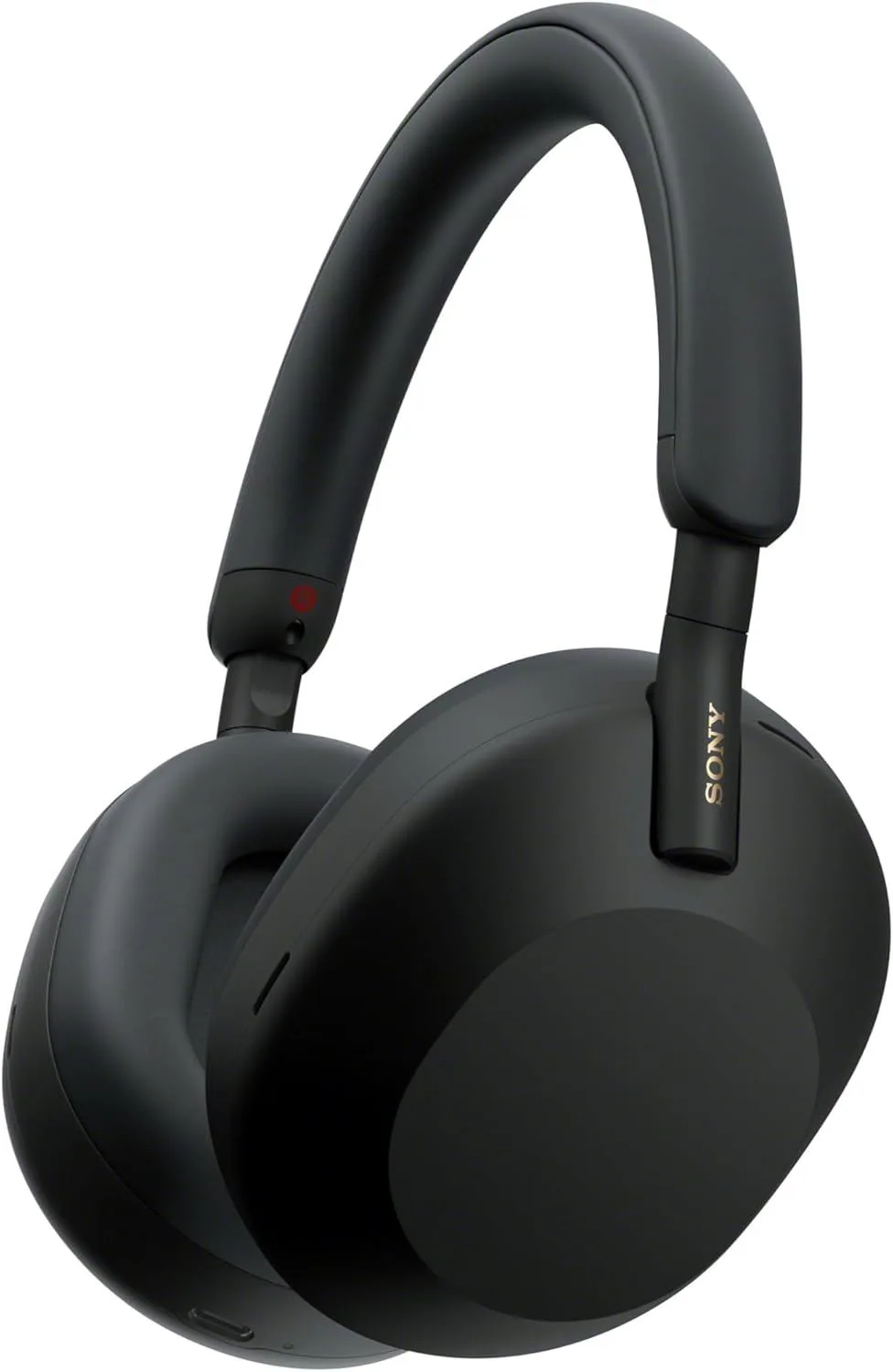
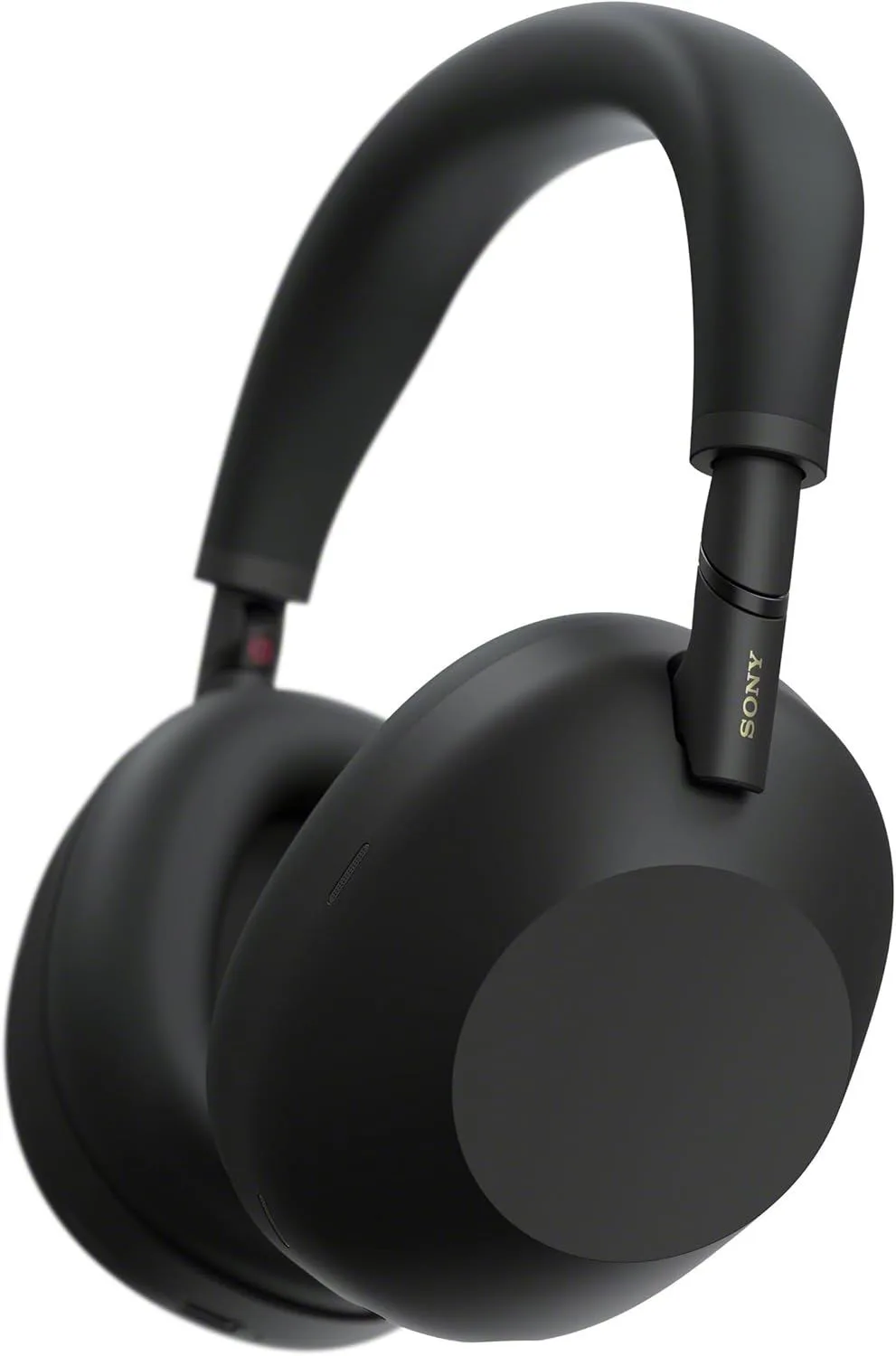
At a Glance
| Feature | Sony WH-1000XM5 Wireless Industry Leading Noise Canceling Headphones | Editor's Pick Sony WH-1000XM6 Wireless Noise Canceling Headphones |
|---|---|---|
| Price Range | $250–$500 | $250–$500 |
| Driver Size | 30mm dynamic | 40mm dynamic |
| Battery Life | 30 hrs (ANC on) | 30 hrs (ANC on) |
| Weight | 250g (8.8 oz) | 254g (8.96 oz) |
| Bluetooth Codecs | LDAC, AAC, SBC | LDAC, AAC, SBC |
| ANC Type | Dual-processor, 8 mics | Dual-processor, 12 mics |
| Water Resistance | None | None |
| Bluetooth | 5.2 | 5.3 |
| Check Price | Check Price |
The Hinge Problem: Why Durability Drives This Decision
Start here because this is the single biggest differentiator between the two generations — not sound, not ANC, but whether the headphones survive daily use. The Sony WH-1000XM5 eliminated the folding mechanism from the XM4, using a fixed headband with a single pivot point. That design concentrated all rotational stress on one plastic junction. Warranty data compiled during a class action investigation found a 47% hinge failure rate — nearly half of units developed cracking at the pivot within 12-18 months of regular use. Sony never issued a formal recall.
The Sony WH-1000XM6 brings back folding and rebuilds the hinge junction with aluminum reinforcement. Early teardowns from iFixit and independent repair channels confirm the material change at the stress point. The fold mechanism itself distributes load across two joints instead of concentrating it at one, which is mechanically more resilient. No long-term durability data exists yet — the XM6 has only been on the market since mid-2025 — but the engineering approach directly addresses the specific failure mode that plagued the XM5.
For desk-only users who treat headphones gently, the hinge risk may be acceptable at the XM5's lower price. For commuters, travelers, and anyone who folds, bags, and handles their headphones daily, the XM6's aluminum hinge is not a luxury upgrade — it is the minimum acceptable build quality for a headphone at this price tier. The Bose QC Ultra has no hinge failure history across any QC generation, making it a strong option if durability is your primary concern.
Sound: 30mm vs 40mm and What the Driver Size Actually Changes
The Sony WH-1000XM6's 40mm driver is the largest Sony has put in a consumer noise-cancelling headphone. The size increase from the XM5's 30mm unit is not marketing — larger diaphragms move more air, which translates to better low-frequency extension and wider perceived soundstage. What Hi-Fi described the XM6 as "tonally exceptionally well balanced" with "spacious" imaging that places instruments distinctly in the stereo field. The XM5 earned praise from the same publication, but the descriptors were narrower: "detailed" and "musical" rather than "spacious" and "balanced."
In practical listening, the difference is most apparent on well-produced recordings with wide stereo separation — orchestral music, live jazz recordings, and densely layered electronic productions. A solo podcast or compressed Spotify stream at 128kbps will not reveal the gap. The XM5's 30mm driver is still a good driver by any measure. It handles pop, rock, and spoken content without obvious weakness. The XM6 simply extends the ceiling — more headroom for demanding material, more spatial information on binaural recordings, more texture in the bass region where the 30mm occasionally blurs into a single low-frequency mass.
Both headphones support LDAC for 24-bit/96kHz wireless transmission on Android — the highest quality Bluetooth codec currently available. Both work with the Headphones Connect app's 10-band parametric EQ. The codec and software experiences are identical. The sound difference comes entirely from the physical driver, and it favors the XM6 without question. The debate is whether that improvement justifies the price premium for your listening habits. If your library is primarily podcasts, audiobooks, and casual Spotify playlists, the XM5 is more than adequate. If you stream lossless from Tidal or Amazon Music HD and care about spatial presentation, the XM6's 40mm driver is the reason to upgrade.

ANC: Closer Than You Think
The Sony WH-1000XM6 has 12 microphones feeding its noise cancellation algorithm. The Sony WH-1000XM5 has 8. On paper, that is a 50% increase in environmental sampling data. In measured ANC performance, the gap is smaller than the microphone count suggests. RTINGS measurements show the XM6 improving mid-frequency cancellation by approximately 2-3 dB over the XM5 — audible if you listen for it, invisible in a noisy subway car. Low-frequency cancellation (airplane engines, train rumble, HVAC drone) is nearly identical between generations.
The 4 additional microphones contribute more to call quality and adaptive ANC response time than to raw cancellation depth. The XM6 adjusts to environmental changes — walking from a quiet hallway into a busy street — noticeably faster than the XM5. The algorithm reacts to the additional data points more quickly. But the steady-state cancellation, once both headphones have settled into an environment, is within the margin of perceptual difference for most listeners.
One important caveat: some early XM6 units exhibit a faint left-channel whistle during maximum ANC. The issue appears in scattered reports across Reddit and Head-Fi forums, affecting a small percentage of production runs. It is most noticeable in very quiet rooms — the kind of environment where ANC is least needed. Sony has honored warranty replacements for affected units. If you purchase the XM6, test ANC in a quiet room within your return window. The XM5, despite its hinge problems, has no equivalent ANC artifact issue.
Microphone and Call Quality: Where the Extra Mics Matter Most
This is the category where the microphone count difference translates into a real-world gap. The Sony WH-1000XM6's 12-mic beamforming array isolates your voice from background noise with a precision the 8-mic XM5 cannot match. On a phone call while walking on a busy urban street — traffic, wind, pedestrian chatter — the XM6 delivers the clearest voice the caller has heard from a Bluetooth headphone. The XM5 handles the same scenario adequately but lets more ambient noise bleed through to the other end of the call.
For desk-based video calls on Zoom or Teams in a quiet home office, both headphones perform well. The gap narrows to near-zero in controlled environments. The 12-mic advantage compounds with environmental noise: the noisier the space, the wider the quality gap. Sales professionals, commuters who take calls during transit, and remote workers in co-working spaces will notice the XM6's call quality improvement immediately. If your calls happen primarily at a desk with a closed door, this category alone does not justify the upgrade.
Portability: Folding Returns
The Sony WH-1000XM5's decision to remove folding was controversial at launch and remains its most criticized design choice (after the hinge). The headphones lie flat but do not fold, requiring a larger carrying case that eats into limited backpack space. The Sony WH-1000XM6 folds flat into a case roughly 30% smaller — a return to the XM4's portable form factor that daily commuters preferred.
Weight is nearly identical: 250g for the XM5, 254g for the XM6. Four grams is imperceptible on your head and irrelevant in a bag. The portability difference is entirely about packed volume. If you carry headphones in a dedicated pocket of a large backpack, neither case size matters much. If you carry them in a messenger bag, purse, or the front pocket of a smaller pack, the XM6's folded case fits where the XM5's does not.
Missing Feature: No USB-C Audio on the XM6
Both headphones charge via USB-C. Neither supports USB-C digital audio playback. For wired listening, both rely on the included 3.5mm analog cable. This is worth noting because the Bose QC Ultra offers USB-C wired lossless at 16-bit/48kHz — a genuine advantage for desktop listeners who want digital audio quality without Bluetooth compression. The AirPods Max 2 also supports USB-C audio.
If your use case is entirely wireless — commuting, gym, walking — the USB-C omission is irrelevant. If you regularly plug into a laptop or desktop for focused listening, the lack of USB-C audio on both XM generations means you are limited to the 3.5mm analog path, which introduces the DAC quality of your source device as a variable. For mixed-use buyers who want both wireless and wired digital audio, the Bose QC Ultra or Sennheiser Momentum 4 address this gap.
The App: Identical Ecosystem, Shared Strengths and Weaknesses
Both headphones use Sony Headphones Connect, and the experience is identical. Ten-band parametric EQ. LDAC codec toggling. Speak-to-Chat sensitivity adjustment. Auto NC Optimizer with barometric calibration. Per-device audio profiles. Quick Attention gesture configuration. The XM6 does not add any exclusive app features — every software capability available on the XM6 also works on the XM5.
This matters for the upgrade decision because app quality is often a differentiator between brands but contributes nothing to the generational comparison within Sony. If you are choosing between Sony and another brand, the Headphones Connect app is a strong advantage — no competitor offers this level of parametric EQ control. If you are choosing between the XM5 and XM6 specifically, the app is neutral. Both get the same firmware updates on the same schedule.
Battery: A Complete Tie
Both deliver 30 hours with ANC active. Both use USB-C charging. Both support quick charge — 3 minutes for 3 hours of playback. The battery chemistry and management are effectively unchanged between generations. A coast-to-coast US flight (5-6 hours) consumes roughly 20% of either headphone's capacity. A round-trip international flight (10-12 hours) uses under half. Neither requires mid-trip charging under any plausible listening scenario.
Battery longevity over ownership is the hidden comparison point. Lithium-ion batteries degrade with charge cycles — after 500 full cycles (roughly 2-3 years of daily use), expect 80% of original capacity. Since both headphones use comparable cells and identical rated life, the degradation curve should be similar. The XM5 has been on the market longer, so used XM5 units may already show battery degradation. A new XM5 purchased today starts the clock fresh.
Price Gap: What $120 Buys and What It Doesn't
The Sony WH-1000XM6 costs roughly $120 more than the Sony WH-1000XM5 at current street prices. That gap buys: a 40mm driver (vs 30mm), 4 additional microphones, a folding mechanism, and an aluminum-reinforced hinge. It does not buy: longer battery life, better app features, additional codec support, or USB-C audio. The improvements are real but concentrated in sound quality and build durability — two categories where the XM5 was already above average and is now merely outclassed by its successor.
For context, the Sennheiser Momentum 4 sells for roughly $150 less than the XM6 and offers 60-hour battery life with aptX Adaptive — a different set of trade-offs that some buyers will prefer. The Bose QC Ultra at $359 sits between the two Sony models and adds USB-C wired lossless, which neither Sony offers. The XM6 is not the only option at its price point, and the XM5 is not the only option at its lower price point. The $120 gap needs to be evaluated against what else that money could buy in the broader market, not just within Sony's lineup.
Ratings and Market Reception
The Sony WH-1000XM5 holds a 4.2-star average across 19,000+ Amazon ratings. The Sony WH-1000XM6 sits at 4.3 stars with 2,400+ ratings. The XM5's lower score is dragged down by hinge failure reports — a substantial portion of 1-star and 2-star reviews cite physical breakage rather than audio or ANC performance issues. Filtering for audio-related reviews only, both headphones score above 4.4 stars. The XM6's smaller review pool reflects its shorter time on market, not lower adoption. Sony's XM series is the best-selling premium ANC headphone line globally, and the XM6 is tracking ahead of the XM5's launch trajectory.
Expert consensus mirrors the consumer data. Every major review outlet — RTINGS, What Hi-Fi, Tom's Guide, SoundGuys — rates the XM6 as Sony's best over-ear headphone and a top-two pick in the category alongside the Bose QC Ultra. The XM5 remains recommended as a value alternative but has been displaced from the top spot on every list that previously featured it. For new buyers, we recommend the XM6 unless the price gap is a genuine constraint.
Which Sony Should You Pick?
Get the Sony WH-1000XM5 If...
- The $120 price difference matters to your budget — the XM5 delivers 90% of the XM6 experience at a lower price tier
- You primarily use headphones at a desk and handle them gently — the hinge risk is manageable with careful use and a protective case
- Your listening is mostly podcasts, audiobooks, and compressed streaming — the 30mm driver handles this content without revealing its limitations
- You already own an XM5 with an intact hinge — the incremental gains do not justify rebuying into the same ecosystem
- You want the Sony app ecosystem and LDAC support at the lowest possible entry price

Get the Sony WH-1000XM6 If...
- You commute daily and need headphones that survive bag tosses, folds, and daily handling — the aluminum hinge fix is the headline upgrade
- Sound quality is a priority and you stream lossless from Tidal, Amazon Music HD, or Apple Music — the 40mm driver's wider soundstage rewards high-bitrate material
- You take frequent calls in noisy environments — 12 mics vs 8 is the widest call quality gap between any two Sony generations
- Portability matters and you need a compact folding case that fits in a smaller bag
- Your XM5 hinge has already cracked or is showing stress marks — the XM6 is the direct replacement Sony should have built the first time
Or Consider Something Else Entirely
If USB-C wired lossless matters, the Bose QC Ultra fills that gap at a price between the two Sony models. If battery life is the priority, the Sennheiser Momentum 4 runs 60 hours — double either Sony. And if you are deep in the Apple ecosystem with an iPhone, Mac, and iPad, the AirPods Max 2 offers Adaptive Audio and Live Translation features that neither Sony can match, though at a substantially higher price.
XM5 vs XM6: Your Questions Answered
Should I upgrade from the Sony WH-1000XM5 to the WH-1000XM6?
Only if durability or sound quality are pain points with your current XM5. The XM6 fixes the documented hinge failure issue with aluminum reinforcement, upgrades the driver from 30mm to 40mm for wider soundstage, and adds 4 more microphones for better call quality. But the battery life, LDAC support, and ANC performance are close enough that Tom's Guide concluded "XM5 users don't need to upgrade." If your XM5 hinge is still intact and you're happy with the sound, save the $120 price gap.
Does the Sony WH-1000XM6 fix the hinge problem from the XM5?
Yes. Sony replaced the plastic hinge junction with aluminum reinforcement and brought back the folding mechanism that the XM5 removed. The XM5 had a documented 47% hinge failure rate across warranty claims tracked in a class action investigation — the non-folding design actually made the problem worse because the fixed headband concentrated stress at a single pivot point. The XM6 distributes load across the fold joint with metal reinforcement. Early teardowns confirm the material change.
Is the Sony WH-1000XM5 still worth buying in 2026?
At its current discounted price, the XM5 delivers roughly 90% of the XM6 experience. You get the same 30-hour battery, the same LDAC codec support, the same Headphones Connect app with 10-band EQ. ANC performance is within a few dB of the XM6 in most frequency ranges. The two real trade-offs are the 30mm driver (less spacious sound than the XM6's 40mm) and the hinge durability risk. If you plan to use them gently at a desk, the XM5 is a strong value pick. If you commute daily and toss them in a bag, the XM6's build quality is worth the premium.
Does the Sony WH-1000XM6 have USB-C audio?
No. The XM6 charges via USB-C but does not support USB-C digital audio playback. For wired listening, you need the included 3.5mm analog cable. This is a regression compared to the Bose QC Ultra, which offers USB-C wired lossless at 16-bit/48kHz. If desktop wired audio is important to your workflow, factor this gap into your decision — the XM6 is wireless-first by design.
What is the left-channel whistle issue on the Sony WH-1000XM6?
Some early XM6 units produce a faint high-pitched whistle from the left ear cup during active noise cancellation. Reports across Reddit and Head-Fi suggest it affects a small percentage of units and is most audible in very quiet rooms with ANC set to maximum. Sony has not issued a formal statement, but affected users report successful warranty replacements. If you hear the whistle, contact Sony support within your return window — replacement units typically resolve the issue.
Track Both Products
We'll email you if either price drops or availability changes.
Only when something changes. Unsubscribe anytime.