AirPods Max 2 vs AirPods Max: Is the H2 Chip Worth $100?
The Apple AirPods Max 2 is the clear upgrade for new buyers entering the Apple headphone ecosystem. The H2 chip's Adaptive Audio, Conversation Awareness, and Live Translation are features the original Max will never receive. For existing Apple AirPods Max owners, the calculus is harder — same design, same weight, same battery life, and a $100 premium for internal improvements. Apple's announced 1.5x ANC improvement awaits independent verification.
Generational Upgrade Assessment
The Apple AirPods Max 2 is the better buy for anyone purchasing their first pair of Apple over-ear headphones — and the answer is not close. Every feature Apple added to the H2 chip is exclusive to the new model: Adaptive Audio, Conversation Awareness, Live Translation, Voice Isolation, and enhanced Personalized Spatial Audio. None of these will arrive on the original Apple AirPods Max through a firmware update. The H1 chip cannot run them. For new buyers, the only real question is whether the $100 price increase fits the budget.
For existing Apple AirPods Max owners, the decision is more nuanced. Apple kept the external design identical — same stainless steel headband, same aluminum ear cups, same 392g weight that drew complaints when it launched in 2020. Battery life remains at 20 hours, unchanged despite the H2 chip's documented efficiency gains in AirPods Pro 2. The upgrades are entirely internal: a faster chip running smarter audio processing algorithms. Whether that justifies replacing a headphone you already own depends on how much you value the new smart features versus how much you wish Apple had trimmed weight, extended battery, or refreshed the industrial design.
This is a pre-release comparison. The Apple AirPods Max 2 was announced on March 16, 2026 and ships in early April. Every performance claim in this article — including the 1.5x ANC improvement — comes from Apple's marketing materials and press briefings. No independent lab has tested the production hardware. We will update this comparison with verified measurements once units are available. Until then, we are comparing announced specs against the original Max's independently verified track record, and noting every claim that lacks third-party validation. For broader context on how both models stack up against non-Apple alternatives, read our Sony XM6 detailed review and our Bose QC Ultra detailed review.
At a Glance
| Feature | Editor's Pick Apple AirPods Max 2 — H2 Chip, Lossless Audio, Enhanced Active Noise Cancellation | Apple AirPods Max Wireless Over-Ear Headphones |
|---|---|---|
| Price Range | $500+ | $250–$500 |
| Driver Size | 40mm Apple dynamic | 40mm Apple dynamic |
| Battery Life | 20 hrs (ANC on) | 20 hrs (ANC on) |
| Weight | 392g | 392g |
| Bluetooth Codecs | AAC, Apple Lossless (USB-C) | AAC only (Bluetooth) |
| ANC Type | H2 chip, 1.5x ANC | H1 chip, 8+ mics |
| Water Resistance | None | None |
| Bluetooth | 5.3 | 5.0 |
| Check Price | Check Price |
Noise Cancellation: Apple's Biggest Claim Awaits Proof
Apple states the Apple AirPods Max 2 delivers 1.5 times the noise cancellation of the original, powered by the H2 chip's computational audio engine. This is an announced spec, not an independently measured result. No RTINGS data, no What Hi-Fi measurements, no SoundGuys frequency analysis — none of the standard third-party validation that exists for the original Apple AirPods Max, the Sony XM6 reviewed in detail here, or the Bose QC Ultra reviewed in depth.
What we do know: the original Apple AirPods Max already measured well in independent ANC testing when it launched. RTINGS placed it in the upper tier of premium noise-cancelling headphones, behind the Sony XM5 in certain frequency ranges and Bose 700 in others but ahead in some. A 1.5x improvement — if accurate — would place the Apple AirPods Max 2 at or near the top of independent ANC rankings. The H2 chip runs the same computational audio pipeline that powers ANC on the AirPods Pro 2, which independently tested as one of the strongest noise-cancelling earbuds ever measured. The chip has a proven track record. Whether Apple extracted 1.5x improvement in an over-ear form factor is the open question.
The practical implication: if you are buying before independent reviews publish in late April or May, you are trusting Apple's claim. If the 1.5x figure proves accurate, the Apple AirPods Max 2 will likely compete directly with the Sony XM6 at its measured ANC level and the Bose QC Ultra at its verified performance for the ANC crown — headphones that currently have verified measurement data supporting their performance. If you can wait 4-6 weeks for reviewers to run frequency-response and ANC isolation tests, you will know whether Apple's claim holds up.
H2 Chip Smart Features: The Real Differentiator
Noise cancellation gets the headline, but the biggest difference between these two headphones is the H2 chip's smart audio features. Five capabilities exist on the Apple AirPods Max 2 that the original Apple AirPods Max will never receive:
Adaptive Audio dynamically blends ANC and Transparency mode based on your environment. Walking from a quiet office into a busy street, the headphone adjusts the noise cancellation level without you touching a button or opening the control center. The H1 chip in the original Max runs ANC and Transparency as binary modes — one or the other, manually toggled. Users who switch between environments frequently (commuters, hybrid workers moving between office and hallway conversations) will feel this difference immediately.
Conversation Awareness detects when you start speaking and automatically lowers media volume while amplifying the voice of the person in front of you. When the conversation ends, music fades back up. On the original Apple AirPods Max, you must either remove the headphones, long-press the Digital Crown for Transparency mode, or use the Noise Control button. It works, but it is a manual process that interrupts flow.
Live Translation provides real-time spoken language translation directly through the headphones, processing audio on-device via the H2 chip's neural engine. Apple has not published the full list of supported languages for the Max 2 specifically, but the feature mirrors what shipped on AirPods Pro 2 — which launched with support for Chinese (Mandarin), French, German, Japanese, Korean, and Spanish. This is a feature with zero equivalent on the original Max and no aftermarket workaround.
Voice Isolation on calls uses the H2 chip's machine learning models to isolate your voice from background noise. The original Max uses standard microphone beamforming — effective in moderate noise, but it struggles in loud environments like busy cafes or outdoor settings. Apple's press materials describe the H2 version as a generational improvement for call quality, though again, independent call quality testing has not occurred yet.
Enhanced Personalized Spatial Audio builds on the original Max's spatial audio by using the H2 chip's processing power to create a more refined head-tracked experience. Apple claims improved precision in sound placement and a wider, more natural soundstage. The original Apple AirPods Max supports Spatial Audio with Dolby Atmos, but the personalization layer — which uses the TrueDepth camera on iPhone to scan your ear shape — is more limited on the H1 chip. The H2 version applies that scan data with finer granularity.
Physical Design: Identical in Every Measurable Way
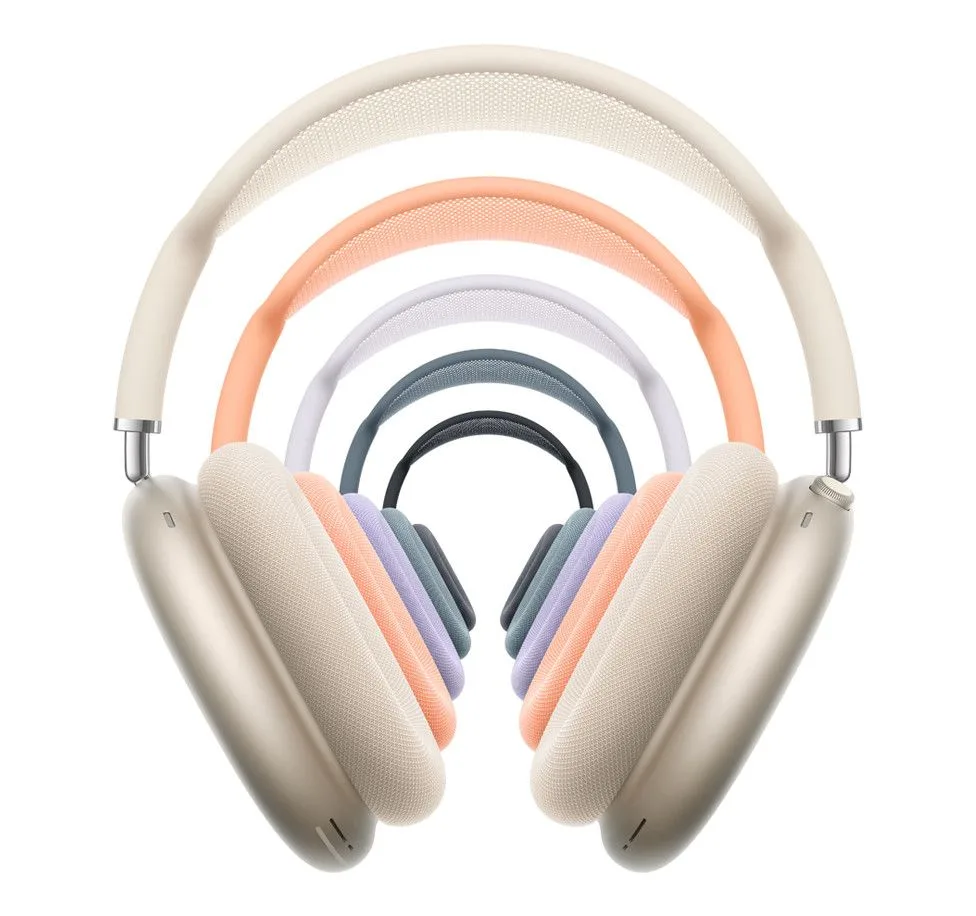
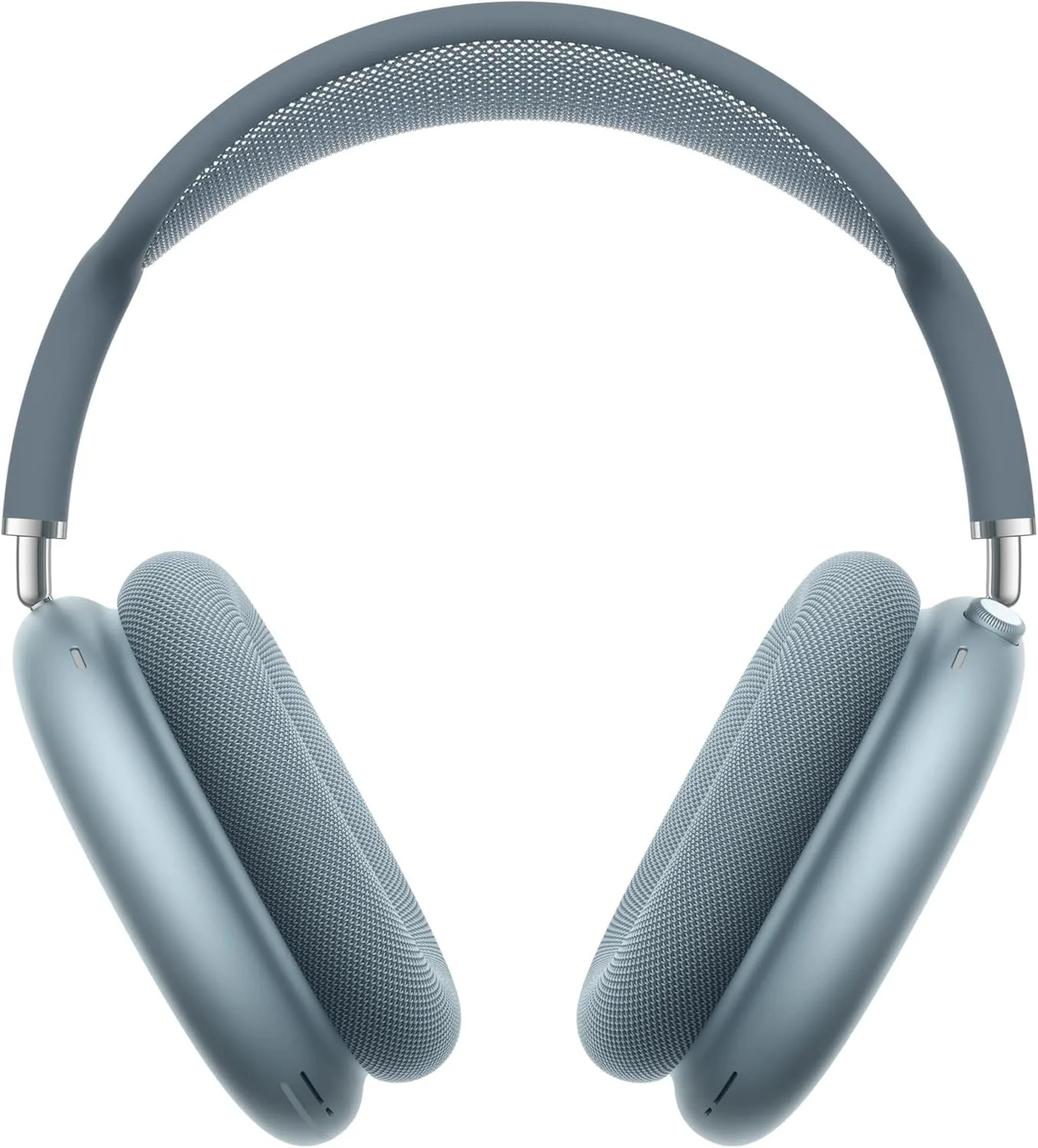
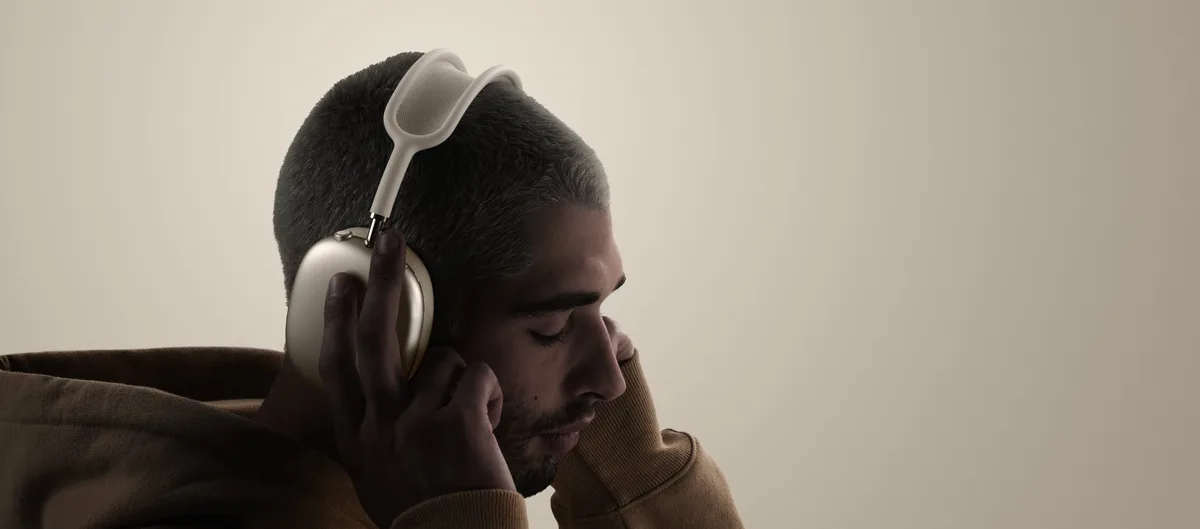
This is the most polarizing aspect of the Apple AirPods Max 2. Apple changed nothing about the external design. Same stainless steel headband with the telescoping arms. Same anodized aluminum ear cups. Same mesh knit canopy. Same Digital Crown. Same 392 grams on the scale — the exact weight that prompted years of user complaints about neck fatigue during extended listening sessions.
The weight matters because the competitive field has moved. The Sony XM6 weighs just 254g. The Bose QC Ultra comes in at 260g. Both deliver ANC performance in the same tier as the original Apple AirPods Max at roughly 130g less. That is not a trivial gap. During a 6-hour flight or an 8-hour work day, 130 extra grams on your head compounds into noticeable neck strain. Apple had four years to address this. They did not.
The counter-argument: the Apple AirPods Max design earned praise for build quality and premium materials that competitors have not matched. The stainless steel and aluminum construction feels more expensive than the plastic-dominant builds from Sony and Bose. The mesh canopy distributes headband pressure better than traditional padded headbands for some head shapes. If you own the original Max and find it comfortable, the Apple AirPods Max 2 will feel identical. If weight was already a problem, the second generation does not solve it.
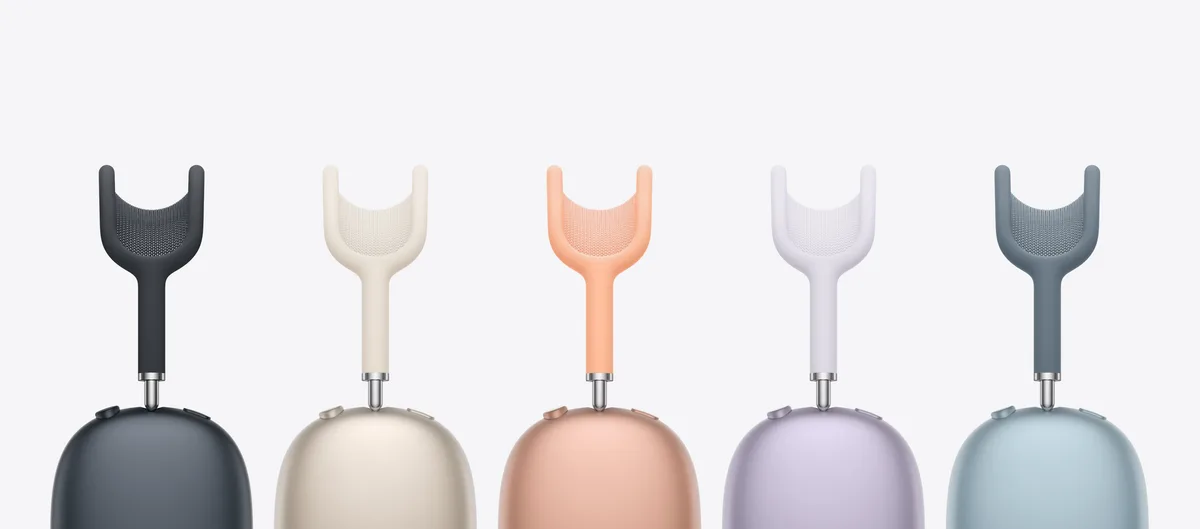
Both models ship in the same color options with the same ear cushion attachment system. The original Max's magnetic ear cushions are physically compatible with the Max 2 — Apple confirmed this in press materials. Third-party ear cushions that fit the first generation will fit the second.
Battery Life: A Missed Opportunity
Both headphones are rated at 20 hours of listening with ANC active. The Apple AirPods Max 2 uses the H2 chip, which Apple has demonstrated is more power-efficient than the H1 — the AirPods Pro 2 achieved better battery life than the Pro 1 with a smaller case battery, specifically because of H2 efficiency gains. That efficiency improvement apparently went into powering the new smart features (Adaptive Audio, Conversation Awareness, Live Translation) rather than extending total listening time.
Twenty hours is adequate for most use cases. It covers three full workdays of 6-7 hour listening, or a round-trip transatlantic flight with battery to spare. The original Apple AirPods Max consistently met its 20-hour rating in independent testing, and there is no reason to expect the Apple AirPods Max 2 to fall short of the same figure. But adequate is not impressive. The Sony XM6 delivers 30 hours with ANC active. The Bose QC Ultra delivers 24 hours. The Sennheiser Momentum 4 pushes 60 hours. Apple's battery life has gone from acceptable in 2020 to below average in 2026, and the generational refresh did nothing to close the gap.
Quick charge performance is unchanged: 5 minutes of charging yields 1.5 hours of playback. Lightning is gone — both the original Max (USB-C refresh) and the Max 2 charge via USB-C. If you still own the original Lightning version from 2020, the USB-C change on either model is a welcome transition.
Bluetooth and Connectivity: A Quiet Upgrade
The Apple AirPods Max 2 ships with Bluetooth 5.3, up from Bluetooth 5.0 on the original. The practical differences: improved connection stability when multiple Bluetooth devices are active nearby, slightly lower latency for video sync, and better power management during idle states. BT 5.3 also supports LE Audio as a protocol, though Apple has not confirmed whether the Max 2 uses LE Audio for its audio streaming or sticks with the classic A2DP profile with AAC codec.
Both models support Apple's automatic device switching within the iCloud ecosystem — move from iPhone to Mac to iPad, and the headphones follow the active audio source. The original Max did this well after several firmware updates smoothed out the early reliability issues. The Apple AirPods Max 2 should handle this more cleanly from launch, given both the matured software stack and the Bluetooth 5.3 hardware improvements.
Neither model supports LDAC, aptX, or any high-resolution Bluetooth codec. Apple uses AAC exclusively over Bluetooth. For lossless audio, both require a wired connection — Lightning-to-3.5mm on the original 2020 model, or USB-C wired on the 2024 USB-C refresh and the Max 2. If wireless lossless matters to you, the Sony XM6 with its LDAC support is the better option.
Sound Signature and Driver Performance
Both models use a 40mm Apple-designed dynamic driver. Apple states the Apple AirPods Max 2 delivers improved audio fidelity through the H2 chip's real-time computational audio processing — not a driver change, but a processing change. The H2 runs more complex EQ and spatial algorithms in real time, which Apple claims produces a richer, more detailed soundstage compared to the H1's processing.
The original Apple AirPods Max earned strong marks for sound quality from What Hi-Fi (4.5/5), Tom's Guide, and RTINGS. The tuning leans warm with controlled bass and a wide soundstage — a signature that Apple fans praised as rich without being muddy. Since the Apple AirPods Max 2 uses the same physical driver, the baseline tuning should be similar, with the H2 chip's computational layer adding refinement on top.
Until independent reviewers can A/B test both models in controlled conditions, the sound quality difference remains speculative. The hardware is the same driver. The difference is the processing chip. For reference, the AirPods Pro 2 (H2) did measure differently from the AirPods Pro 1 (H1) on frequency response charts, suggesting the H2's processing does alter the final output. Whether that alteration registers as an improvement on a full-size over-ear driver is the question independent testing will answer.
Apple Ecosystem Integration: Both Strong, One Stronger
The Apple AirPods Max already integrates tightly with iOS, macOS, and iPadOS — spatial audio with head tracking for Apple TV+ and supported apps, automatic switching between devices signed into the same iCloud account, "Hey Siri" hands-free activation, Find My network tracking, and Audio Sharing to listen with a second pair of AirPods.
The Apple AirPods Max 2 adds to this foundation. Adaptive Audio is an ecosystem feature — it works with iPhone, iPad, and Mac, adjusting based on environmental context that the H2 chip processes locally. Conversation Awareness integrates with the media playback stack across all Apple devices, pausing or ducking audio when you speak. Live Translation pipes through the Translate app on iPhone. These are not standalone features; they are deep hooks into Apple's software platform that require both the H2 hardware and the Apple device on the other end.
For Android users, neither Apple AirPods Max is a strong recommendation. Basic Bluetooth audio works, but every smart feature — Adaptive Audio, Conversation Awareness, Live Translation, automatic switching, Personalized Spatial Audio, Find My — requires an Apple device. At the $450-$550 price point, the Sony XM6 with LDAC and 30-hour battery or the Bose QC Ultra with USB-C lossless deliver platform-agnostic smart features that work identically on Android and iOS.
Pricing: The $100 Question
The Apple AirPods Max 2 launches at $549. The original Apple AirPods Max (USB-C version) currently sells for around $450, with periodic discounts dropping it below $400 during sales events. That is a $100-$150 gap depending on timing.
For the $100 premium at full retail, you get: H2 chip, Adaptive Audio, Conversation Awareness, Live Translation, Voice Isolation on calls, enhanced Personalized Spatial Audio, Bluetooth 5.3, and Apple's claimed 1.5x ANC improvement. You do not get: longer battery life, lighter weight, a refreshed design, LDAC or any high-res Bluetooth codec, improved portability, or a folding mechanism.
The value proposition depends on your starting point. A new buyer choosing between the two is paying $100 for the H2 chip's entire feature set — we recommend the Max 2 for first-time buyers, since these features will define the Max platform for the next 3-4 years until a Max 3 arrives. An existing Apple AirPods Max owner is paying $549 (the full price of a second headphone) for the same physical product with a better chip inside. The math is different for each buyer.
Price context within the category: the $Sony WH-1000XM6 sells for around $400. The $Bose QuietComfort Ultra sells for around $360. Both weigh 130+ grams less, both have independently verified ANC performance, both have longer battery life, and both work equally well on Android and iOS. The Apple AirPods Max 2 at $549 is the most expensive option in the premium ANC headphone category, and its advantages are almost entirely Apple-ecosystem features that competitors cannot replicate — and do not need to, for non-Apple users.
The Case for the Original Apple AirPods Max in 2026
The original Apple AirPods Max remains a strong product. It carries a 4.6-star average across 16,400+ Amazon reviews. Its ANC, sound quality, and build quality have been independently verified across dozens of publications and measurement databases. The USB-C refresh resolved the original model's most criticized hardware limitation (the Lightning port). At its current street price, it offers Apple's over-ear headphone experience at $100 less than the Max 2.
What you give up by choosing the original: every H2 chip feature listed above. These are not coming via firmware update. Apple's chip strategy is clear — new features require new silicon. The H1 chip will continue to receive bug fixes and minor improvements, but Adaptive Audio, Conversation Awareness, and Live Translation are H2-exclusive permanently.
The original Max makes the most sense for buyers who primarily want premium ANC and sound quality from Apple without needing the latest smart features, and who would rather save the $100 for ear cushion replacements, a case, or put toward other gear. It also makes sense for buyers who want to wait — use the original Max for a year while independent reviews validate the Max 2's claims, then upgrade to the Max 2 at a potential discount during the 2027 holiday season.
Where Both Models Sit in the Broader Market
Neither AirPods Max model exists in a vacuum. The premium ANC headphone market in 2026 includes the Sony XM6 at roughly $400 with LDAC, 30-hour battery, 12-microphone call quality, and a folding design at 254g. The Bose QC Ultra sits around $360 with USB-C wired lossless, class-leading comfort at 260g, and automatic ANC calibration. Both have been independently tested and verified.
The Apple AirPods Max 2 competes on Apple ecosystem depth, not on raw specs. It is heavier than both competitors, has shorter battery life than both, lacks LDAC and USB-C wired audio, and costs $150-$190 more. What it offers instead — Adaptive Audio, Conversation Awareness, Live Translation — are features that Sony and Bose do not have and are unlikely to replicate, because they require Apple's tight hardware-software integration. For buyers already committed to iPhone, Mac, and iPad, these features may justify the premium. For everyone else, the Sony and Bose options deliver more for less.
Which AirPods Max Is Right for You?
Get the Apple AirPods Max 2 If...
- You are buying your first pair of Apple over-ear headphones — the H2 chip features will define this product line for years, and paying $100 more now avoids buying into a dead-end chip
- Adaptive Audio and Conversation Awareness match your daily routine — commuters, hybrid workers, and anyone who frequently transitions between focused listening and conversation
- Live Translation is a real use case for you — international travel, multilingual workplaces, language learning contexts where real-time spoken translation adds practical value
- You want the latest Apple silicon for long-term software support — Apple historically extends new features to current-gen chips first, and the H2 will receive capabilities the H1 will not
- Call quality in noisy environments is a priority and you want Voice Isolation powered by the H2's neural engine
Get the Apple AirPods Max If...
- Budget matters and you want Apple's over-ear sound and ANC at $100 less — the original Max's audio and ANC performance are independently verified and still rank well in the category
- You plan to wait for independent reviews of the Max 2 — use the original Max now and upgrade later if the H2 claims hold up, potentially at a lower price
- The smart features (Adaptive Audio, Live Translation, Conversation Awareness) do not match your use case — if you listen to music at a desk and rarely take calls on your headphones, the H1 chip handles that workflow identically
- You already own the original Max and are satisfied with its performance — spending $549 for the same physical design with internal upgrades is a harder value case than buying the Max 2 as a first purchase
- You want a proven product with 16,400+ reviews and years of real-world reliability data rather than a pre-release product with unverified claims
AirPods Max 2 vs Max: Your Questions Answered
Is the AirPods Max 2 worth $100 more than the original AirPods Max?
That depends on what you value. The $100 premium buys you the H2 chip with Adaptive Audio, Conversation Awareness, Live Translation, Voice Isolation, and enhanced Personalized Spatial Audio. If you already own the original Max and primarily listen to music without needing smart audio features, the upgrade is harder to justify. For new buyers choosing between the two, the H2 chip features represent the kind of additions Apple rarely discounts later — the original Max never received these capabilities via software update despite years of requests.
Does the AirPods Max 2 have better noise cancellation than the original?
Apple claims a 1.5x improvement in ANC performance powered by the H2 chip. No independent testing from RTINGS, What Hi-Fi, or any third-party lab has verified this claim as of March 2026. The original AirPods Max already rated well on ANC in independent measurements. Whether the H2 upgrade produces a perceptible real-world difference remains unconfirmed until units ship in April and reviewers can run controlled tests.
Can I get Live Translation on the original AirPods Max?
No. Live Translation requires the H2 chip and will not come to the original AirPods Max via software update. The H1 chip lacks the on-device neural processing needed for real-time translation. This is a hardware limitation, not a software choice. If Live Translation is a must-have feature — frequent international travel, multilingual work environments — the AirPods Max 2 is the only Max that supports it.
Are the AirPods Max 2 heavier than the Sony XM6 or Bose QC Ultra?
Yes, by a wide margin. Both the AirPods Max 2 and the original Max weigh 392g. The Sony WH-1000XM6 weighs approximately 254g and the Bose QuietComfort Ultra weighs 260g. That is a 132-138g difference — roughly the weight of a smartphone. During sessions longer than 2-3 hours, the weight gap becomes noticeable as neck fatigue. Apple has not addressed this in the second generation.
Should I wait for reviews before buying the AirPods Max 2?
Yes, if you can wait. The AirPods Max 2 was announced March 16, 2026 and ships in early April. All current performance claims — 1.5x ANC, improved spatial audio, battery life — come from Apple marketing materials and controlled press briefings, not independent testing. If you need headphones now, the original AirPods Max at its current price or the ${xm6.shortName} are both independently verified performers. If you can wait 4-6 weeks for independent reviews, you will have real data to inform the decision.
Track Both Products
We'll email you if either price drops or availability changes.
Only when something changes. Unsubscribe anytime.