Headphone Fit Guide: Over-Ear vs On-Ear vs In-Ear vs Open-Ear
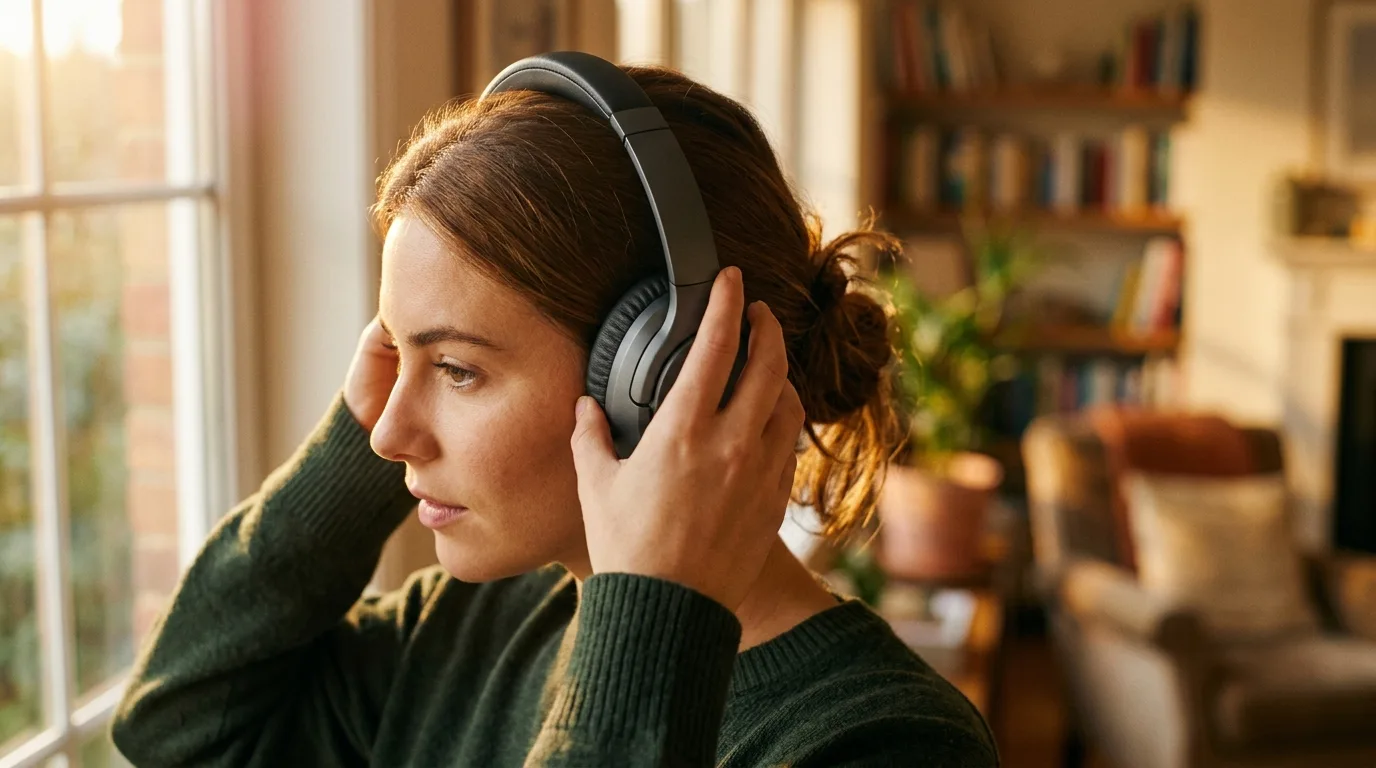
Four fit types dominate the headphone market, and each one balances comfort, noise isolation, portability, and usability. This guide maps those differences to real-world listening scenarios so you pick the right form factor before comparing brands or features.
We analyzed owner feedback across eight products, pulling common complaints and praise around fit, clamping force, ear tip comfort, and long-session durability. The research covers measurement data from RTINGS and SoundGuys, editorial commentary from What Hi-Fi and Tom's Guide, and thousands of owner reports on Amazon and Reddit. Fit is personal — head circumference, ear shape, glasses, and hairstyle all affect which design works for you. But the physics of each form factor creates predictable strengths and weaknesses that apply to every buyer. This guide walks through each fit type, the comfort variables that matter most, common fit-related mistakes, and our pick for the most universally comfortable headphone available right now.
Fit Type Comparison Overview
Why Fit Matters More Than Any Spec on the Box
Fit trumps specs. A headphone with the highest ANC rating, best codec support, and longest battery life becomes worthless if it hurts your ears after an hour. Comfort failures are the most common reason for headphone returns on Amazon, outpacing sound quality complaints and defective units by a wide margin. We recommend trying any headphone for at least a week before judging fit.
Fit determines three things simultaneously: how long you can wear the headphones before discomfort forces you to stop, how well noise cancellation performs (seal quality controls ANC effectiveness), and how much ambient sound leaks in or out.
And every fit problem compounds.
A loose over-ear seal bleeds bass. A too-tight in-ear tip causes ear canal fatigue. An on-ear pad pressing into glasses temples creates a pressure headache within 45 minutes. What feels fine for 10 minutes in a store can become unbearable during a 4-hour flight or an 8-hour workday.
The spec sheet tells you driver size, frequency response, and battery hours. It tells you nothing about whether the headband distributes weight evenly across your skull, whether the ear cups clear your earlobes without pinching, or whether the clamping force matches your head circumference. Those physical interactions — not electrical specifications — determine whether you actually use the headphones you bought.
Over-Ear Fit: Maximum Isolation, Maximum Comfort Ceiling
Over-ear headphones surround the entire ear with a padded cushion, creating a sealed chamber between the driver and your eardrum. This design offers the deepest passive noise isolation of any fit type because the cushion blocks sound physically before ANC engages electronically. The Bose QuietComfort Ultra and Sony WH-1000XM6 both use this form factor, and their ANC benchmarks depend on that physical seal as much as their microphone arrays.
Ear cup depth and width are the two measurements that determine over-ear comfort. The interior cavity must be deep enough that your ear does not touch the driver baffle — contact creates pressure on the outer ear (pinna) that becomes painful within 30 minutes. Width matters equally: ears that press against the inner wall of the cup experience the same contact pressure. The Bose QuietComfort Ultra has the deepest ear cavities in the premium tier, which is why comfort reviews consistently rank it first. The Sennheiser Momentum 4 runs slightly shallower, and owners with larger ears report occasional pinna contact during long sessions.
Clamping force is the inward pressure the headband spring applies to hold the headphones on your head. Too little clamp and the headphones slide during head movement. Too much and you feel constant temple pressure that builds into a headache. Most over-ear models ship with higher clamping force that loosens over 2-3 weeks as the headband padding compresses and the spring fatigues slightly. The Sony WH-1000XM6 has moderate clamp out of the box — firm enough for a secure fit during walking but not so tight that desk users notice pressure.
Weight distribution separates tolerable from comfortable during sessions longer than 2 hours. The headband must spread its load across the crown of the head without concentrating pressure on a single point. Padded headbands distribute weight better than thin bands, but padding thickness is not everything — the curvature of the headband relative to the curvature of your skull determines where pressure concentrates. The Sony WH-CH720N at 192g is the lightest over-ear model we cover, and weight alone makes it a strong pick for all-day desk use where ANC depth is secondary to 8-hour comfort.
Cushion material affects both comfort and seal quality. Protein leather (synthetic leather with a soft surface coating) creates the best acoustic seal and looks premium, but traps heat against the skin — a problem in warm environments or during exercise. Mesh and woven fabric breathe better and stay cooler, but allow more sound leakage in both directions. The Bose QuietComfort Ultra uses a protein leather outer with a softer inner contact surface, balancing seal quality with skin feel. For hot climates or sweat-prone users, aftermarket mesh cushion replacements from Dekoni and Wicked Cushions are available for most popular models.
In-Ear Fit: Portability Meets Isolation
In-ear earbuds sit inside the ear canal with a silicone or foam tip creating an acoustic seal. This is the most portable fit type — each earbud weighs 5-7g, fits in a pocket-sized charging case, and works with hats, helmets, and active movement. The Apple AirPods Pro 3 and Beats Fit Pro represent two approaches to in-ear fit: stem-style and wing-tip stabilized.
Ear tip sizing is the single most important comfort variable for in-ear models. Every ear canal is a different diameter and shape, and the wrong tip size causes one of two problems: too small and the earbud falls out during movement (plus bass disappears through the gap), too large and canal pressure builds into a dull ache within 20 minutes.
One millimeter changes everything.
Most earbuds ship with 3 tip sizes (S/M/L). The Apple AirPods Pro 3 includes four sizes (XS/S/M/L) and runs an ear tip fit test through the phone to confirm seal quality. This test matters — a 1mm difference in tip diameter changes both comfort and sound.
Silicone versus foam tips present a clear choice. Silicone tips are durable (lasting 12+ months), easy to clean, and maintain a consistent shape. They create a good but not perfect seal because they cannot conform to irregular canal shapes. Foam tips (Comply, Dekoni) compress on insertion and expand to fill the canal, conforming to its exact contour. This delivers 3-5 dB better passive isolation and a more secure fit during movement. The downside: foam tips degrade with earwax and moisture, requiring replacement every 2-4 months at roughly $15-20 per set.
Wing tips and stabilizer fins add a secondary contact point at the antihelix (the inner ridge of the outer ear). The Beats Fit Pro uses flexible wing tips that wedge into this ridge, keeping the earbud locked in place during running, jumping, and head movement. This design solves the primary in-ear weakness — physical security during sport. The cost is that wing tips add insertion complexity and can create pressure on the antihelix during sessions over 3 hours. For desk and commute use where the earbud stays stationary, wing tips add unnecessary contact pressure. For gym and outdoor sport, they prevent mid-workout repositioning.
Nozzle angle affects how deeply the earbud sits in the canal and how naturally it aligns with your ear anatomy. A straight nozzle points directly into the canal. An angled nozzle tilts toward the ear canal's natural curvature, reducing the insertion depth needed for a good seal. The Apple AirPods Pro 3 uses an angled nozzle design that sits shallower in the canal, reducing the "plugged" feeling that bothers some users. Deeper insertion (common in audio-focused models) provides better isolation but increases the occlusion effect — your own voice sounds boomy and hollow because bone-conducted sound gets trapped.
On-Ear Fit: The Compact Middle Ground
On-ear headphones rest on top of the outer ear (pinna) without enclosing it. They are lighter and more compact than over-ear models — easier to carry, less prone to overheating, and often foldable. The JBL Tune 520BT budget pick uses this design at its price point, delivering basic wireless audio without the bulk of full-size cans.
The primary comfort limitation of on-ear fit is ear pressure. The entire weight of the headphone rests on the cartilage of the outer ear through a relatively small pad. Unlike over-ear designs where weight transfers to the headband and crown, on-ear pads concentrate force on the pinna. After 60-90 minutes, most users experience soreness at the top of the ear where the pad applies the most pressure. Glasses wearers face a compounded problem: the pad presses the glasses temple arm into the ear, creating a pinch point that becomes uncomfortable even faster.
Sound isolation is limited by design. On-ear pads do not create a sealed chamber — sound leaks in and out around the edges. This makes on-ear headphones a poor choice for loud environments (transit, open offices, airplanes) and a poor pairing with ANC, which requires a good seal to calibrate its cancellation algorithms. Where on-ear excels is quiet environments: home listening, small offices, and low-noise commutes where full isolation is unnecessary and the lighter weight matters more.
On-ear models have a narrower comfort window than either in-ear or over-ear. Over-ear distributes pressure across the crown and around the ear. In-ear distributes pressure across the ear canal wall. On-ear concentrates pressure on the pinna, which has less soft tissue to absorb it. If your primary listening sessions last under 60 minutes, on-ear is a viable lightweight option. For sessions over 90 minutes, over-ear or in-ear designs are more sustainable.
Open-Ear and Bone Conduction: Ambient Awareness by Design
Open-ear headphones deliver sound without blocking the ear canal. The Shokz OpenRun Pro 2 uses bone conduction — transducers on the cheekbone vibrate sound through the skull directly to the cochlea, bypassing the outer ear entirely. This leaves both ear canals completely open to environmental sound: traffic, conversation, doorbells, crosswalk signals. For runners, cyclists, and outdoor exercisers, this is a safety feature that no sealed headphone can replicate.
Bone conduction fit wraps around the back of the head with transducer pads resting on the cheekbones just in front of the ears. The band applies light pressure to keep the transducers in contact with the bone — too little pressure and bass vibrations lose energy before reaching the cochlea, too much and the contact points ache after an hour. The Shokz OpenRun Pro 2 weighs 29g and uses a titanium band that holds shape without excessive clamping. Most users report comfort for 2-4 hour sessions, with the transducer pads being the first pressure point to cause fatigue.
Open-ear clip and hook designs (like the Bose Ultra Open Earbuds and some Oladance models) hook over the outer ear and project sound toward the canal without entering it. These avoid bone conduction's sound character limitations — they sound closer to traditional speakers since they use air-conducted sound — but leak audio to nearby people in quiet environments. Fit depends on ear shape: thick earlobes and unusual helix curves can prevent a secure hook placement, and there is no tip sizing system to compensate. Try before buying if possible.
Sound quality concessions are the price of ambient awareness. Bone conduction cannot match the bass depth or isolation of sealed designs — physics limits how much low-frequency energy transfers through bone. The Shokz OpenRun Pro 2 improved this with its DualPitch bass enhancement system, but a direct comparison with even mid-range in-ear models reveals the gap.
But safety wins. Open-ear air conduction models sound better than bone conduction but still lack the bass response of sealed designs. Choose open-ear when safety and awareness outweigh audio fidelity — not as a general-purpose replacement for sealed headphones.
How Fit Affects ANC Performance
Active noise cancellation calibrates its anti-noise signal based on the assumption that the ear cup or ear tip forms a consistent seal. When that seal breaks — glasses temple penetrating the cushion, wrong ear tip size, head movement shifting the cup — the calibration becomes inaccurate and cancellation drops. This is not a defect; it is physics. ANC cannot cancel sound that bypasses the seal entirely.
Full-size noise cancellation and seal integrity: The Sony WH-1000XM6 uses 12 microphones to sample ambient noise and generate inverse waveforms. Those microphones calibrate against the sealed volume inside the ear cup. When glasses break the seal at one point, the acoustic environment changes unpredictably — sound enters from a narrow gap while the rest of the cup remains sealed. The ANC system cannot compensate for this asymmetric leak, resulting in 5-10 dB of cancellation loss at low frequencies. The Bose QuietComfort Ultra's deeper, softer cushions absorb glasses frames better, which is one reason it maintains ANC consistency across more head and glasses combinations.
In-ear ANC and tip fit: The Apple AirPods Pro 3 runs an active fit test before ANC engagement, checking seal quality through microphone feedback. If the seal is poor, ANC performance drops measurably. A proper tip fit is worth 8-12 dB of additional noise reduction over a loose fit — the difference between hearing airplane engine drone clearly and hearing it as a faint background hum. This is why tip sizing is not a minor preference; it is a functional requirement for noise-cancelling earbuds to work as advertised.
Fit for Different Head Sizes and Shapes
Headphone manufacturers design for the median adult head: roughly 56-58cm circumference. Smaller and larger heads face predictable fit challenges that vary by form factor.
Smaller heads (under 54cm): Over-ear headphones slide forward and down because the headband cannot contract enough. The ear cups sit too low, pressing on the jaw rather than enclosing the ears. Lighter models with adjustable headband stops help — the Sony WH-CH720N at 192g stays in place better on smaller heads than heavier flagships. In-ear models are size-neutral since tip sizing handles the variability. On-ear models work well for smaller heads because the reduced clamp (less headband extension) means less ear pressure.
Larger heads (over 60cm): Clamping force increases as the headband extends further, creating more temple and jaw pressure. The headband padding stretches thinner at maximum extension, concentrating crown pressure on a smaller contact area. The Bose QuietComfort Ultra has one of the longest headband adjustment ranges in the premium tier, making it more accommodating for larger heads. For very large heads, on-ear models with short headband travel may not extend far enough to reach the ears properly.
Head shape considerations: Round skulls distribute headband pressure evenly. Flatter skulls concentrate pressure at two side points where the headband first contacts bone. Narrow jaws change the ear cup angle, sometimes creating a gap at the bottom of the cushion that leaks bass. Protruding ears may contact the inner wall of over-ear cups. None of these variations make any form factor impossible — but they change which specific model within that form factor will be most comfortable.
Sport-Specific Fit Requirements
Physical activity introduces three fit challenges that stationary use does not: impact shock from foot strikes and jumps, sweat degrading grip and materials, and head movement that shifts headphone position. Each fit type handles these differently.
Running: Foot impact creates a vertical bounce that dislodges poorly fitted headphones. Over-ear models are impractical — they slide, overheat, and break their ANC seal with each stride. In-ear models with wing tips (like the Beats Fit Pro) or deep-insertion foam tips stay secure through stride impact. The Shokz OpenRun Pro 2 wraps around the back of the head and stays locked in place regardless of pace, making it the default choice for road and trail runners who also need ambient awareness. Our full bone conduction review covers sport durability in detail.
Weight training: Lying on a bench presses over-ear headphones against the back of the head, shifting them forward or dislodging them entirely. In-ear models avoid this completely. Wing-tip earbuds and bone conduction both work for weight training, though bone conduction vibrations can distract during heavy lifts where jaw clenching is common (clenching changes the bone conduction path and alters the sound).
Cycling: Helmet compatibility eliminates over-ear and on-ear options. In-ear models work under helmets but block traffic sounds — a safety concern on roads. Bone conduction sits entirely outside the ear and below most helmet shells, making the Shokz OpenRun Pro 2 the default cycling headphone. Open-ear clip models also work under helmets if the hook placement does not interfere with the helmet strap.
Sweat resistance: IPX4 or higher is mandatory for sport use. Over-ear models rarely carry IP ratings — sweat degrades protein leather cushions and corrodes drivers. In-ear sport models range from IPX4 (light sweat) to IP57 (rain and brief submersion). The Shokz OpenRun Pro 2 carries IP55, handling sweat and rain for running and cycling. Check the IP rating before buying any headphone for sport — "water resistant" without a specific IP number means nothing. See our sport and active roundup for tested picks.
Extended Comfort: What Changes After Two Hours
Most headphone reviews are written after 30-60 minutes of use. Comfort changes materially after the 2-hour mark, and the variables that matter shift from initial impression to sustained tolerance.
Over-ear after 2+ hours: Headband crown pressure becomes the dominant discomfort. Even well-padded headbands create a pressure point at the top of the skull that accumulates. Heat buildup inside protein leather cushions makes ears warm and sometimes itchy. Weight becomes noticeable in the neck — the difference between 250g and 350g is negligible for 30 minutes but obvious at hour three. The Bose QuietComfort Ultra at 260g with its plush cushions remains the benchmark for 4+ hour sessions among the products we cover. The detailed comfort section in our review breaks down the all-day experience.
In-ear after 2+ hours: Ear canal fatigue builds as the tip maintains constant pressure against the canal walls. Silicone tips create more localized pressure points than foam because they do not distribute force as evenly. Some users develop a "full" feeling in the ear canal that progresses to a dull ache. Taking the earbuds out for 5-10 minutes every 90 minutes resets canal fatigue better than pushing through. The Apple AirPods Pro 3's shallow insertion depth makes it more tolerable for extended sessions than deep-insertion audiophile models.
On-ear after 2+ hours: This is where on-ear fit breaks down. Pinna soreness intensifies because cartilage does not adapt to sustained pressure — unlike skin and soft tissue, cartilage has no blood flow to carry away compression metabolites. Most users reach their limit between 60-120 minutes with on-ear models. Taking breaks helps, but the fundamental geometry of pressing a pad against ear cartilage limits long-session viability.
Bone conduction after 2+ hours: The transducer contact points on the cheekbones create mild pressure fatigue that builds slowly. The back-of-head band can create a subtle awareness of its presence that grows with time. At the 3-4 hour mark, most users prefer to take a break — not from pain, but from a low-level awareness that something is pressing against their face.
Common Fit Mistakes and How to Avoid Them
Using the medium ear tips without testing all sizes. Most in-ear earbuds ship with medium tips pre-installed. Buyers assume medium is the default and never try the alternatives. Your ear canals may be asymmetric — different sizes for left and right is normal and more common than identical canals. Test every included tip size in both ears independently.
Buying over-ear headphones for the gym. Over-ear models were not engineered for physical activity. They slide during movement, trap sweat against the ear, degrade from moisture exposure, and most lack any water resistance rating. The Beats Fit Pro or Shokz OpenRun Pro 2 are purpose-built for active use. Our premium flagship comparison focuses on stationary use where over-ear excels.
Ignoring glasses compatibility. If you wear glasses more than 4 hours per day, your headphone choice must account for temple arm interaction with ear cushions. Testing without glasses and then wearing them daily leads to returns. Bring your actual glasses to any in-store test, and use Amazon's 30-day return window to test over-ear models with your frames during real workdays.
Choosing by weight spec alone. Not enough. A 300g headphone with excellent weight distribution can feel lighter on the head than a 240g model with poor headband design. Weight is one variable among four (alongside clamping force, cushion depth, and headband curvature). The Sennheiser Momentum 4 at 293g wears lighter than its spec suggests because of balanced headband geometry. The spec sheet gives you a number; wearing the headphone gives you a fit assessment.
Skipping the break-in period. New over-ear headphones almost always clamp tighter than they will after 2-3 weeks of use. The headband padding compresses, the spring relaxes slightly, and the clamp loosens.
Give them a week.
Returning headphones within the first 3 days because they feel tight misses this break-in period. Give any new model at least a week of daily use before judging clamping comfort — unless the tightness causes actual pain (not just firm awareness), in which case the model is simply too tight for your head.
Which Fit Type Matches Your Life
Desk workers and commuters (2+ hour sessions): Over-ear is your best fit type. The Bose QuietComfort Ultra leads on all-day comfort and maintains ANC consistency across most head shapes and glasses combinations. See our full comfort breakdown for extended-wear details. If you prefer the Sony sound profile, our head-to-head comparison breaks down both options.
Mixed-use buyers (commute + gym + errands): In-ear earbuds handle the widest range of scenarios. The Apple AirPods Pro 3 balances portability with strong ANC and a shallow-insertion design that suits longer sessions. Wing-tip earbuds like the Beats Fit Pro add sport security if active use is frequent. Our earbud head-to-head compares the two leading in-ear options.
Runners and cyclists: Bone conduction or open-ear is the only responsible fit choice for road activity. The Shokz OpenRun Pro 2 is the default recommendation — it stays locked in place, handles sweat and rain, and keeps both ears fully open to traffic. Sound quality takes a back seat; safety is the priority.
Budget buyers in quiet environments: On-ear models work well for sessions under 90 minutes in low-noise settings. The JBL Tune 520BT at its price point delivers basic wireless audio with multipoint Bluetooth. Skip on-ear if your sessions regularly exceed 90 minutes or if you need noise isolation.
Frequently Asked Questions
Which headphone fit type is best for glasses wearers?
Over-ear models with deep, soft ear cushions cause the fewest problems because the padding wraps around the temples rather than pressing against them. The Bose QuietComfort Ultra is the standout here — its cushion depth accommodates most frame styles without creating pressure points. On-ear models are the worst option for glasses wearers because the ear pad presses the temple arm directly into the skull. In-ear and open-ear designs bypass the issue entirely since they make no contact with the temple area. If you wear thick-frame glasses, test any over-ear model for at least 30 minutes before committing.
How do I know if my headphones are too tight?
Three warning signs appear within the first 30 minutes: red marks on the tops of your ears (over-ear) or ear cartilage soreness (on-ear), a headache forming above your temples from excessive clamping force, and jaw tension that worsens when chewing or talking. New headphones often clamp tighter out of the box and loosen over 2-3 weeks as the headband padding compresses. If discomfort persists beyond the break-in period, the headband spring tension is too strong for your head size. Some models allow headband bending to reduce clamp — check the manual before attempting this.
Do foam ear tips block more noise than silicone?
Memory foam tips conform to the unique shape of your ear canal, creating a tighter acoustic seal than silicone. This improves passive noise isolation by 3-5 dB on average, which compounds with ANC performance. The Apple AirPods Pro 3 ships with silicone tips but supports aftermarket foam replacements from Comply and Dekoni. Foam tips wear out faster — expect replacement every 2-4 months with daily use compared to 12+ months for silicone. The choice comes down to isolation versus longevity and cost.
Can headphone fit affect sound quality?
A poor seal between the ear pad (or ear tip) and your skin leaks bass frequencies first. Low-end response drops measurably when over-ear cushions sit on top of glasses frames or when in-ear tips are the wrong size. ANC also degrades because the external microphones calibrate to a sealed environment — air gaps let noise bypass the cancellation entirely. Getting the right fit is not just about comfort; it directly determines whether the headphone performs to its rated specs.
Are bone conduction headphones comfortable for all-day wear?
Bone conduction models like the Shokz OpenRun Pro 2 sit on the cheekbone in front of the ear, leaving the ear canal completely open. Most users find them comfortable for 3-5 hours before the transducer contact points create mild pressure fatigue. They weigh under 30g, so neck and head fatigue are minimal. For all-day desk use, traditional over-ear or in-ear models are more comfortable past the 4-hour mark. Bone conduction excels in 1-3 hour active sessions where ambient awareness matters more than extended comfort.
Our Top Recommendation
Based on our research, the Bose QuietComfort Ultra is our top pick — users who want the most comfortable premium anc headphones with excellent noise cancellation and set-and-forget simplicity.
Get Our Top 3 Picks
Get our top 3 picks for your budget — one email, then only updates.
Only when something changes. Unsubscribe anytime.