ANC Buying Guide: What Actually Matters in 2026

Active noise cancellation uses microphones and signal processing to reduce unwanted ambient sound before it reaches your ears. ANC headphones range from budget models under one hundred dollars to flagship pairs above four hundred, and the performance gap between tiers is wider than most buyers expect.
The gap is massive.
This guide explains the technology, ranks the specs that matter, and maps each price bracket to the right product. We analyzed measurement data from RTINGS and Headphone.com, cross-referenced 40,000+ owner reviews across 18 ANC products, and consulted editorial rankings from What Hi-Fi, Tom's Guide, and SoundGuys.
The goal is not to sell you the most expensive pair — it is to help you match cancellation performance to the environments where you actually listen. A commuter on a loud subway platform needs different ANC depth than someone working in a quiet home office. Start with where you listen, and the right tier becomes obvious.
ANC Technology Overview
What Active Noise Cancellation Actually Does
Active noise cancellation is a process where microphones on a headphone sample ambient sound, a digital signal processor generates an inverse waveform, and the speaker plays that inverted signal alongside your audio to reduce perceived background noise. The technology targets low-frequency, steady-state sounds most effectively.
Three architectures exist. And the differences explain why some headphones cancel noise better than others. Our deep dive into ANC technology covers the physics in detail. Each design places microphones in different positions relative to your ear, which changes what frequencies get cancelled and how fast the system responds to new sounds.
Feedforward ANC places microphones on the exterior of the ear cup or earbud shell. These mics capture ambient noise before it enters the ear canal. The processor has more lead time to calculate the inverse wave, but the mics sit far from the ear, so the correction can be imprecise at higher frequencies. Feedforward is the simplest ANC architecture and appears in most budget models.
Feedback ANC places a microphone inside the ear cup, near the driver. This mic hears exactly what your ear hears, so the correction is more accurate — but the processor has less time to react because the sound has already reached the listening space. Feedback ANC handles low frequencies well but can create instability (audible whistling or oscillation) if not carefully tuned.
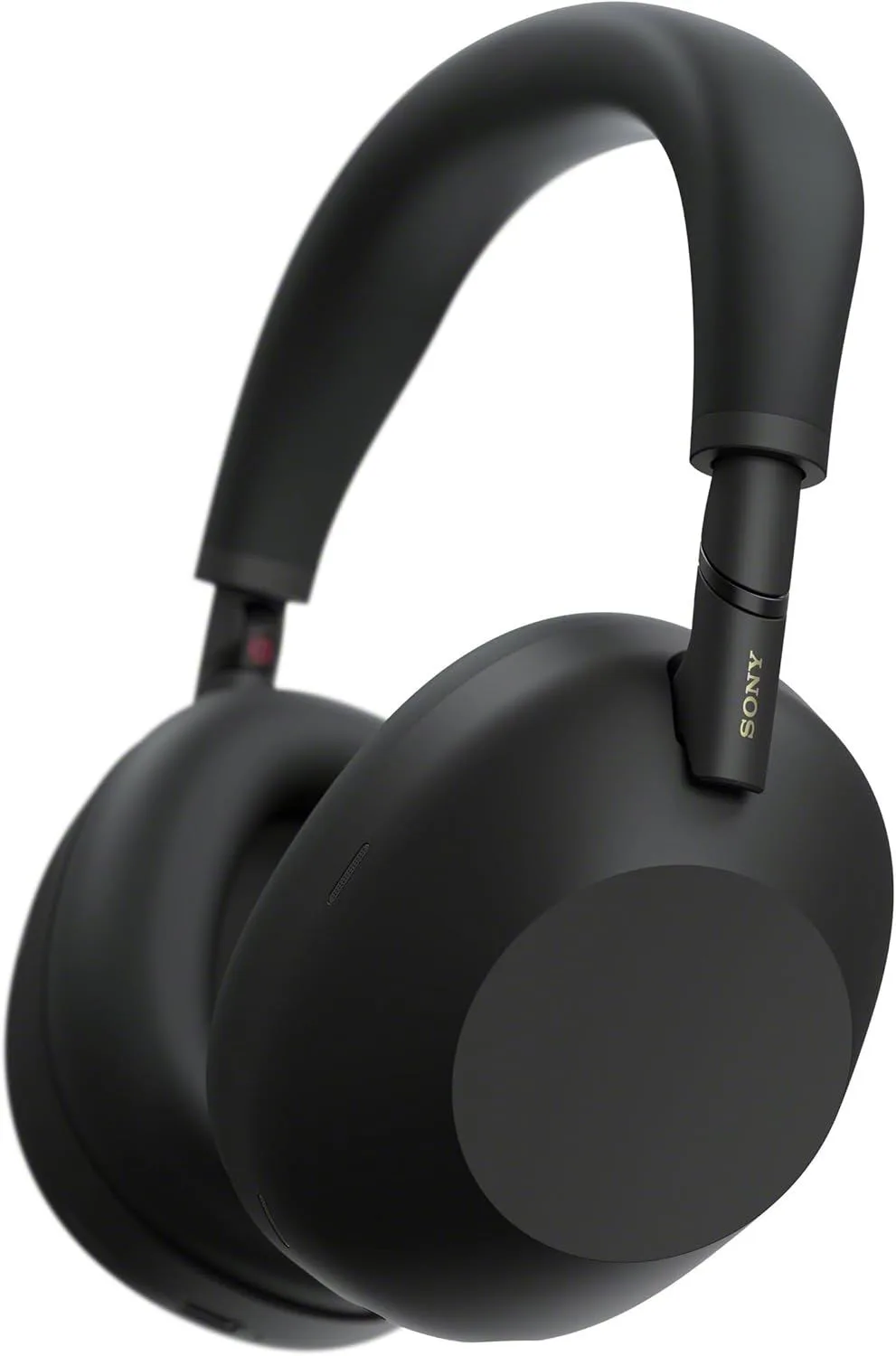
Hybrid ANC combines both microphone positions — external mics for early detection and internal mics for correction accuracy. The Sony WH-1000XM6 uses a 12-microphone hybrid system (8 external, 4 internal). The Bose QuietComfort Ultra uses an 8-mic hybrid design. Hybrid is the gold standard in current headphones because it covers a wider frequency range than either approach alone. Every pair above the mid-range price tier now uses hybrid architecture.
The Specs That Actually Separate ANC Tiers
Marketing specs like "up to 98% noise reduction" are measured in ideal lab conditions that never occur in real life. The specifications below are the ones that predict real-world ANC performance based on independent measurement data and controlled comparisons.
Microphone architecture (feedforward / feedback / hybrid): As covered above, hybrid systems cancel across a wider frequency band. Budget feedforward-only designs leave noticeable gaps in the 500-2000 Hz range where human speech and keyboard clatter live. If your primary noise source is voices in an open office, a feedforward-only pair will disappoint.
Processing chip and algorithm generation: The DSP chip determines how quickly the system adapts to changing noise. The Sony WH-1000XM6 runs a dedicated V2 Integrated Processor that recalculates cancellation 700 times per second. Older or cheaper chips recalculate less frequently, causing brief gaps in cancellation when the noise environment shifts — like when a train enters a tunnel or an air conditioner cycles on. You hear these gaps as momentary "bleed-through."
Effective frequency range: RTINGS measures ANC effectiveness across the full audible spectrum (20 Hz to 20 kHz). Premium models like the Sony WH-1000XM6 reduce noise by 25-40 dB in the 50-500 Hz range where engines and HVAC drone live. Mid-tier models like the Anker Soundcore Space One reduce the same frequencies by 15-25 dB.
That 10-15 dB gap is the audible difference between "quiet" and "silent." Above 1 kHz, even premium ANC struggles — passive isolation from tight ear cushions or foam ear tips does more work in that range.
Adaptive vs. fixed ANC: Fixed ANC applies one cancellation profile at all times. Adaptive ANC continuously adjusts based on ambient conditions — reducing cancellation in quiet rooms (saving battery) and increasing it on loud transit. The Sony WH-1000XM6, Bose QuietComfort Ultra, and Apple AirPods Pro 3 all use adaptive systems. The Anker Soundcore Q30 at the budget tier uses three fixed modes (Transport, Outdoor, Indoor) that you switch manually. Adaptive is more convenient but fixed modes work fine if you stay in one environment.
How ANC Architecture Affects Sound Quality
ANC is not free. The inverse waveform that cancels noise also interacts with your music, and every ANC implementation introduces some degree of audio coloration. Lower-cost noise-cancelling systems produce a noticeable "pumping" effect where bass notes fluctuate as the cancellation algorithm adjusts. Premium systems minimize this, but even the best introduce subtle changes to the frequency response when ANC is active versus off.
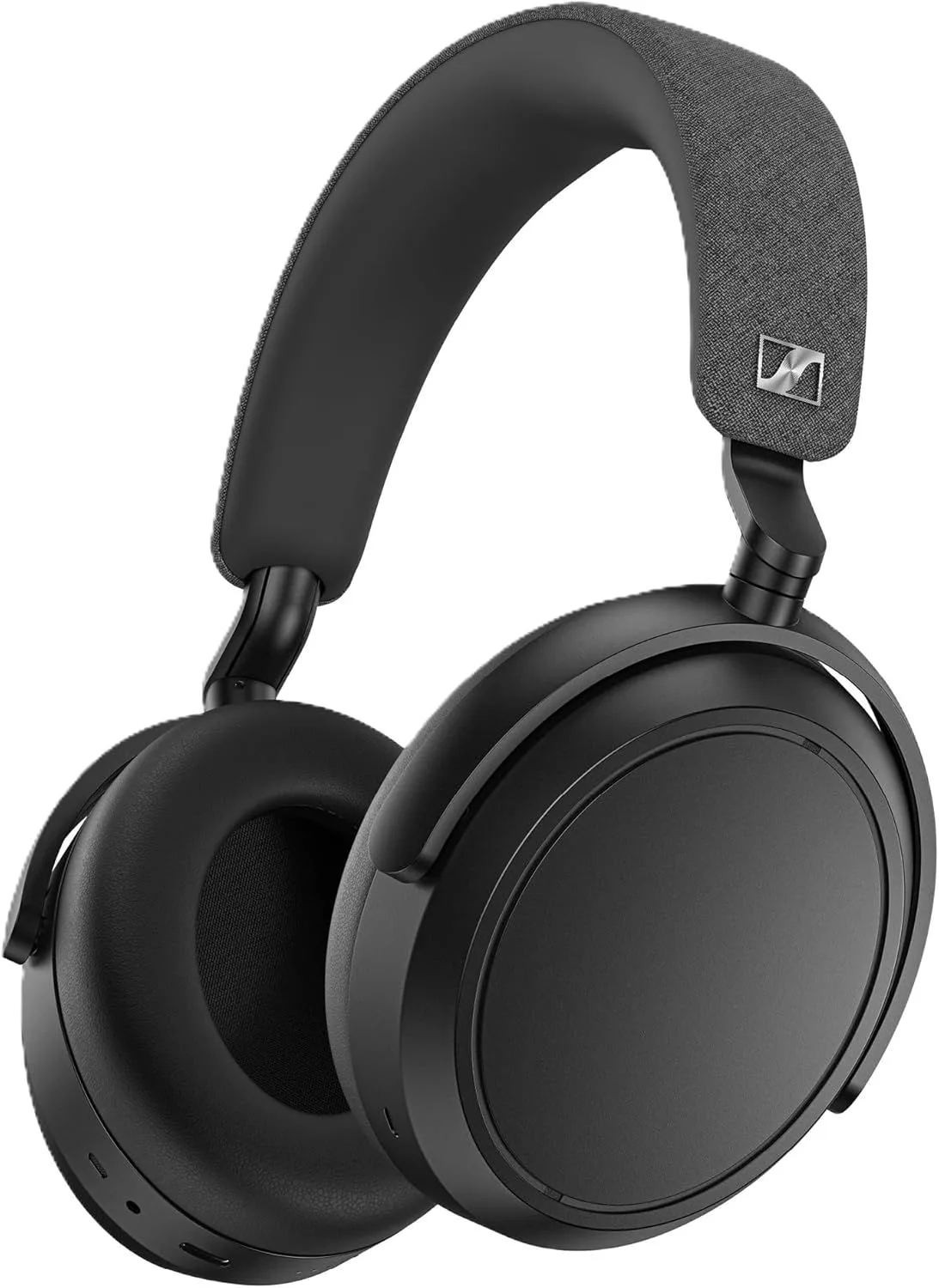
The Sennheiser Momentum 4 handles this tension better than most. Sennheiser's driver tuning compensates for ANC-induced coloration with an EQ correction curve that activates automatically when noise cancellation switches on. The result is a smaller audible difference between ANC-on and ANC-off listening — important for listeners who prioritize sound accuracy over maximum cancellation depth.
ANC hiss is a low-level background noise generated by the ANC circuit itself. In quiet rooms with no music playing, you can hear it as a faint static or whooshing. Premium pairs minimize hiss to the point where most listeners cannot detect it.
Budget models produce more audible hiss — the Anker Soundcore Q30 has noticeable hiss in silent environments, though it disappears the moment music plays. If you plan to use ANC without audio (just for silence), hiss tolerance matters.
Wind noise handling varies widely. External feedforward mics are exposed to wind, which the ANC algorithm misinterprets as ambient noise and tries to cancel — producing a harsh rumbling artifact. The Sony WH-1000XM6 and Apple AirPods Pro 3 include dedicated wind-noise detection that automatically adjusts mic behavior outdoors. Budget models lack this feature, making their ANC unusable on windy days or during brisk walking.
Battery Drain: The Hidden Cost of Cancellation
ANC requires continuous processing power, which drains the battery 20-35% faster than passive listening. Every manufacturer lists two battery specs: ANC-on and ANC-off. The ANC-on number is the one that matters for daily use if you plan to keep cancellation active, which most buyers do.
The Sennheiser Momentum 4 leads with 56 hours of ANC-on playback — enough for an entire work week of 8-hour days without charging. The Sony WH-1000XM6 delivers 40 hours with ANC on, which covers most weekly commuting schedules with room to spare. In earbuds, the Apple AirPods Pro 3 gets 6 hours per charge with ANC (30 hours total with case), while the Sony WF-1000XM5 gets 8 hours per charge (24 hours total).
Quick-charge capability matters more than maximum battery for daily users. A 3-minute charge on the Sony WH-1000XM6 adds 3 hours of playback. The Bose QuietComfort Ultra adds 2.5 hours from a 5-minute charge. These emergency top-ups rescue a dead headphone before a morning commute and remove the anxiety of forgetting to charge overnight.
Matching Cancellation Level to Your Environment
Different noise environments stress different parts of the ANC system. Buying more cancellation than your environment demands wastes money. Buying less leaves you listening at higher volumes to compensate — which defeats the hearing-protection benefit that makes ANC worth having.
Airplanes and loud transit (85+ dB ambient): This is where premium ANC earns its price. The sustained low-frequency drone of a jet engine or subway car is the ideal target for hybrid cancellation. The Sony WH-1000XM6 and Bose QuietComfort Ultra cut cabin noise to the point where you hear music at volume 30% instead of 70%. For frequent flyers, premium ANC is a hearing-health investment, not a luxury. See our XM6 vs Bose QC Ultra breakdown for cancellation depth measurements in transit conditions.
Open-plan offices (55-70 dB ambient): Steady HVAC noise cancels well even on mid-tier hardware. The larger challenge is intermittent speech, which no ANC system fully blocks. The Anker Soundcore Space One handles office noise adequately at a fraction of flagship pricing. Premium ANC adds marginal benefit in offices — the real differentiator for desk workers is comfort during extended sessions and multipoint Bluetooth for phone-plus-laptop switching.
Coffee shops and co-working spaces (60-75 dB ambient): A mix of conversation, espresso machines, and background music. Mid-tier ANC reduces the machine noise and muffles voices without eliminating them — which many users prefer for maintaining situational awareness. The JBL Tune 770NC at its price point handles coffee-shop noise well enough that upgrading to premium ANC for this specific environment is hard to justify.
Quiet home offices (30-45 dB ambient): ANC provides minimal benefit here because there is little noise to cancel. Passive isolation from closed-back ear cups does most of the work. If home is your primary listening environment, redirect budget from ANC depth toward driver quality and comfort. The Sennheiser Momentum 4 excels here — its ANC is mid-tier in absolute terms but its sound tuning is among the best in the category.
Five ANC Myths That Waste Buyer Money
Myth 1: Higher microphone count means better cancellation. The Bose QuietComfort Ultra uses 8 microphones and matches or beats many 10-mic competitors. Microphone placement, DSP quality, and algorithm sophistication matter more than raw count. Treat mic count as a marketing number, not a performance predictor.
Myth 2: ANC blocks all noise. It does not. No current system fully eliminates sound. ANC reduces steady low-frequency noise by 25-40 dB. Sudden high-frequency sounds (voices, alarms, dog barks) are attenuated by 5-15 dB at best. If you need total silence, combine ANC headphones with foam ear tips and play low-volume white noise — that layered approach gets closer than any single technology.
Myth 3: More expensive always means better ANC. The Apple AirPods Max 2 costs more than the Sony WH-1000XM6 but independent measurements show comparable or slightly lower cancellation depth. The premium pays for build materials (aluminum, stainless steel), ecosystem features (spatial audio, automatic switching), and industrial design — not additional cancellation performance.
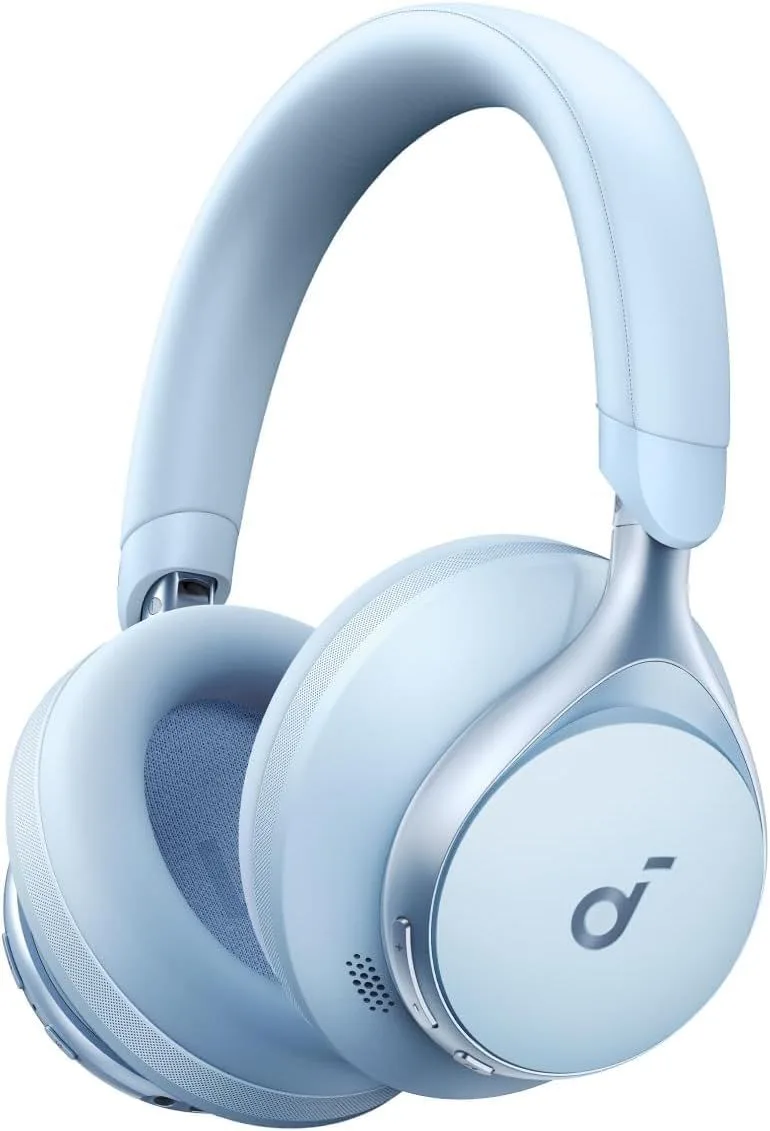
Myth 4: Affordable noise-cancelling headphones are not worth buying. Not even close. The under-one-hundred-dollar tier has improved faster than any other segment. The Anker Soundcore Space One delivers hybrid ANC, LDAC codec support, and 40-hour battery for a fraction of flagship pricing. RTINGS measurements confirm it cancels 70-80% as much noise as the Sony WH-1000XM6 in the critical low-frequency band. For moderate-noise environments, that percentage is enough. Our affordable noise-cancelling picks rank the models that punch above their price.
Myth 5: ANC headphones sound worse than non-ANC models. This was true five years ago. Current hybrid systems introduce minimal coloration when well-engineered. The Sony WH-1000XM6 and Sennheiser Momentum 4 both sound better with ANC on than many non-ANC headphones in their price range. The processing overhead that once degraded audio quality has been largely solved by faster, more capable DSP chips.
ANC Price Tiers: What Each Budget Level Delivers
Under one hundred dollars: Entry-level hybrid or feedforward-only ANC. The Soundcore Q30 at its price point sets the floor — functional noise reduction that handles steady noise in offices and transit. Companion apps offer EQ adjustment and ANC mode selection.
Build quality is plastic, comfort is adequate for sessions under 3 hours, and sound is tuned for bass-forward consumer taste. These models prove ANC is no longer a premium-only feature.
One hundred to two hundred dollars: The value sweet spot. Hybrid ANC becomes standard, codec selection expands to include LDAC or aptX Adaptive, and build quality improves with metal hinges and memory foam cushions. The Anker Soundcore Space One and JBL Tune 770NC define this tier. Cancellation depth approaches 75-80% of flagship performance. For buyers in moderate-noise environments, this tier delivers the best return per dollar.
Two hundred to three hundred and fifty dollars: Premium performance. Hybrid ANC with adaptive processing, multipoint Bluetooth, premium driver tuning, and all-day comfort engineering. The Sennheiser Momentum 4 at its price combines 56-hour battery with balanced Sennheiser sound. The Apple AirPods Pro 3 at two hundred dollars sets the standard for earbud-format cancellation. Diminishing returns begin here — the gap between this tier and flagships above it is narrower than the gap between this tier and the budget range below.
Above three hundred and fifty dollars: Flagship territory. The Sony WH-1000XM6 and Bose QuietComfort Ultra represent the cancellation ceiling.
But diminishing returns hit hard here. Every decibel of additional noise reduction requires disproportionate engineering investment at this level, which is why flagship ANC improves incrementally between generations rather than in leaps. Worth the premium for frequent travelers on loud transit, daily subway commuters, and listeners who work in consistently noisy environments. For everyone else, the two-hundred-dollar tier delivers 90% of the experience at 55% of the cost.
Earbuds vs. Over-Ear: Which Form Factor for Cancellation?
Over-ear headphones have a structural ANC advantage: the ear cup itself provides 15-25 dB of passive isolation before the electronics activate. ANC adds another 20-35 dB on top. Combined, premium over-ear models reduce ambient noise by 40-55 dB across the low-frequency spectrum. No earbud matches this because silicone or foam tips provide only 10-18 dB of passive isolation, giving ANC less of a foundation.
Even so, the Apple AirPods Pro 3 has closed the gap more than any previous earbud generation. Apple's H2 chip runs computational ANC at 48,000 adjustments per second, and in controlled measurements, it approaches the cancellation depth of mid-tier over-ear models. For mixed-use buyers who move between gym, commute, and desk, earbuds offer practical versatility that over-ear models cannot match. Our AirPods Pro 3 vs WF-1000XM5 comparison measures the earbud ANC ceiling.
The deciding factor is your primary listening environment. If you spend most listening time seated — at a desk, on a plane, on a train — over-ear noise cancellation delivers deeper reduction and longer comfort windows. If you split time between active movement and stationary listening, earbuds avoid the bulk, heat, and hairstyle disruption of full-size cans. Both form factors have crossed the "good enough" ANC threshold for the majority of environments.
Common Buying Mistakes With Noise-Cancelling Headphones
Testing ANC in quiet retail stores. A showroom floor at 45 dB does not test ANC performance. The noise environment where you need cancellation is the environment where you should test it. Order with a return policy that gives you a real-world trial period. Amazon's 30-day window is specifically useful here — test on your actual commute, in your actual office, during your actual travel schedule.
Buying flagship ANC for quiet environments. If you work from home in a quiet room, the Sony WH-1000XM6 delivers maybe 5% more useful cancellation than the Anker Soundcore Space One in that setting. The other 95% of the price premium pays for capabilities you will rarely activate. Match tier to environment, not to aspiration.
Ignoring transparency mode quality. Transparency mode (also called Aware mode or Ambient mode) uses the ANC microphones in reverse — amplifying outside sound instead of cancelling it. This matters because you toggle transparency every time someone speaks to you, every time you cross a street, every time you order coffee.
Bad transparency ruins the experience.
A transparency mode that sounds tinny or robotic degrades the daily experience as much as weak ANC. The Bose QuietComfort Ultra and Apple AirPods Pro 3 have the most natural-sounding transparency modes currently available. See how the top contenders compare in our Momentum 4 vs XM5 head-to-head.
Overlooking ear tip fit for ANC earbuds. ANC earbuds rely on a tight acoustic seal between the ear tip and your ear canal. A loose-fitting tip bleeds ambient sound directly into the canal, bypassing the ANC system entirely. Most earbud packages include three tip sizes — test all three.
Fit determines everything.
Foam tips (Comply, SpinFit) conform better than silicone and improve both passive isolation and ANC effectiveness. The Apple AirPods Pro 3 includes an adaptive seal test in the setup process; the Sony WF-1000XM5 does the same through its companion app.
Chasing the newest model when the previous generation drops in price. The XM5 at its current price delivers 90-95% of the Sony WH-1000XM6's ANC performance at a lower cost. The difference is marginal. ANC algorithms improve incrementally between generations — the biggest jumps happened between 2020 and 2023. Since 2023, each new flagship generation offers 5-10% ANC improvement, not the 30-40% leaps of earlier years.
Previous-generation flagships at discounted prices are the best-value ANC products on the market. We recommend this approach for most buyers — the biggest difference between generations is diminishing while the savings remain substantial.
Where to Start Based on Your Noise Environment
Frequent flyers and loud-transit commuters: The Sony WH-1000XM6 is our top pick for maximum cancellation depth. Its 12-mic hybrid system and V2 processor set the current benchmark for low-frequency noise reduction. Read our full XM6 review for RTINGS-sourced ANC measurements. If you prefer Bose's comfort profile, the Bose QuietComfort Ultra is within 5% on cancellation and wins on ear cushion softness during flights.
Remote workers and office listeners: The Sennheiser Momentum 4 balances cancellation depth, sound accuracy, and marathon battery (56 hours). Multipoint Bluetooth switches between phone and laptop without manual pairing. For this use case, comfort and battery matter more than peak ANC — and the Sennheiser Momentum 4 leads on both. Browse our premium noise-cancelling picks for the full office-focused ranking.
Budget-conscious buyers in moderate noise: The Anker Soundcore Space One delivers hybrid ANC, LDAC support, and 40-hour battery at mid-range pricing. It handles office HVAC, coffee shop ambiance, and moderate transit noise without leaving obvious gaps. Our affordable noise-cancelling roundup covers three headphones that deliver 75-80% of flagship cancellation at 25% of the price.
Earbud buyers who need portability and cancellation: The Apple AirPods Pro 3 leads on adaptive ANC, transparency mode quality, and iPhone ecosystem integration. Android users should compare the Sony WF-1000XM5 (LDAC support, deeper bass) and the Samsung Galaxy Buds3 Pro (Galaxy AI features, SSC Hi-Fi codec with Samsung phones). Our QC Ultra Earbuds vs WF-1000XM5 comparison covers the two best cross-platform options.
Previous-generation bargain hunters: The Sony WH-1000XM5 at its current discounted price is the best ANC value in the market. It uses the same hybrid architecture as its successor with slightly fewer microphones and an older processor — close to 95% of the newer model's cancellation at a reduced cost. Check the XM5 vs Bose QC Ultra comparison to see where the older flagship still competes.
Frequently Asked Questions
How does active noise cancellation work?
ANC uses external microphones to capture ambient sound, then an onboard processor generates an inverse sound wave that cancels the incoming noise before it reaches your ear. Feedforward systems place mics on the outside of the ear cup. Feedback systems place mics inside, near the driver. Hybrid systems — used in the Sony WH-1000XM6 and Bose QuietComfort Ultra — combine both microphone positions for broader frequency coverage. The result is 20-35 dB of noise reduction on top of whatever passive isolation the ear cup or ear tip provides.
Does ANC damage your hearing?
No. ANC reduces the total sound pressure reaching your eardrum — it subtracts noise rather than adding volume. The inverse wave produced by the processor is not audible as a separate signal; it merges with the incoming noise and reduces the combined level. Multiple audiological studies confirm ANC headphones let listeners use lower playback volumes in noisy environments, which protects hearing over time. The only caveat: some users perceive a faint background hiss from the ANC circuit itself, especially in very quiet rooms. This is a circuit artifact, not a hearing risk.
Is ANC worth the extra cost over passive noise isolation?
If you spend more than an hour per day in environments with steady background noise — airplanes, trains, open offices, city streets — ANC provides a measurable quality-of-life upgrade. Passive isolation (ear cups and foam tips) blocks high-frequency sound well but struggles below 500 Hz where engine rumble, HVAC drone, and subway roar live. That low-frequency range is exactly where ANC performs best. For quiet home listening, passive isolation alone is sufficient, and non-ANC headphones often deliver better sound per dollar since the budget goes entirely to drivers and tuning.
Why does ANC work better on airplanes than in offices?
ANC excels at cancelling constant, predictable, low-frequency sound — exactly the type of noise an airplane cabin produces. Jet engine drone sits in the 80-200 Hz range where inverse-wave cancellation is most effective. Office noise is a mix of unpredictable speech (300-3000 Hz), keyboard clicks, and door slams — higher frequency and more variable, which gives the ANC processor less time to generate accurate inverse waves. Premium models like the Sony WH-1000XM6 handle mid-frequency cancellation better than budget options, but no ANC system fully eliminates human speech.
Can I use ANC headphones without playing music?
Yes. Many commuters and remote workers wear ANC headphones with no audio playing, using them purely as noise-reduction tools. The Bose QuietComfort Ultra and Sony WH-1000XM6 both function well in this mode. Some users report mild ear pressure from ANC without music — this is the perceived effect of low-frequency ambient sound being removed, not actual pressure change. If this sensation bothers you, playing low-volume ambient sound or white noise eliminates it while maintaining the noise-reduction benefit.
Our Top Recommendation
Based on our research, the Sony WH-1000XM6 is our top pick — android users who want the absolute best anc and detailed sound without apple ecosystem dependency.
Get Our Top 3 Picks
Get our top 3 picks for your budget — one email, then only updates.
Only when something changes. Unsubscribe anytime.