Best Affordable ANC Headphones 2026
Active noise cancellation used to cost $300 or more. In 2026, capable ANC headphones start at $60 — and the best options under $100 deliver 70-80% of the cancellation depth that premium models achieve. The technology has trickled down fast. Hybrid ANC systems, LDAC codec support, and 40-hour batteries now exist in a price bracket that was dominated by passive headphones just three years ago.
We analyzed every product on this page against 121,000+ combined Amazon ratings, expert measurements from RTINGS, SoundGuys, What Hi-Fi, and Tom's Guide, plus durability reports from long-term owners on Reddit and Head-Fi. Each pick earns its rank based on ANC effectiveness per dollar, sound quality, comfort during extended sessions, build reliability at the price point, and real-world battery performance. No product here is flawless — our job is to tell you exactly where each one excels and where it compromises so you spend your money with eyes open.
Product Analysis Methodology
- #1 Anker Soundcore Space One — Budget-conscious buyers who want maximum ANC performance per dollar — the best noise cancellation at $99
- #2 Anker Soundcore Q30 — First-time ANC buyers on a tight budget — the starting recommendation with extraordinary features for $60
- #3 Sony WH-CH720N — Comfort-first buyers who find over-ear headphones too heavy — uniquely lightweight with genuine Sony sound quality
Quick Picks at a Glance
| Feature | Editor's Pick Anker Soundcore Space One Wireless Over-Ear Noise Cancelling Headphones | Soundcore by Anker Life Q30 Hybrid Active Noise Cancelling Headphones | Sony WH-CH720N Noise Canceling Wireless Headphones |
|---|---|---|---|
| Price Range | $50–$100 | $50–$100 | $50–$100 |
| Driver Size | 40mm | 40mm | 30mm |
| Battery Life | 40 hrs ANC / 55 hrs off | 40 hrs ANC / 60 hrs off | 35 hrs ANC / 50 hrs off |
| Weight | ~253g | ~260g | 192g |
| Bluetooth Codecs | LDAC, AAC, SBC | AAC, SBC | AAC, SBC |
| ANC Type | 98% reduction claim, 6 mics | Hybrid (3 modes) | Dual noise sensor, AI |
| Water Resistance | None | None | None |
| Bluetooth | 5.3 | 5.0 | 5.2 |
| Check Price | Check Price | Check Price |
#1: Anker Soundcore Space One — The ANC-Per-Dollar Champion
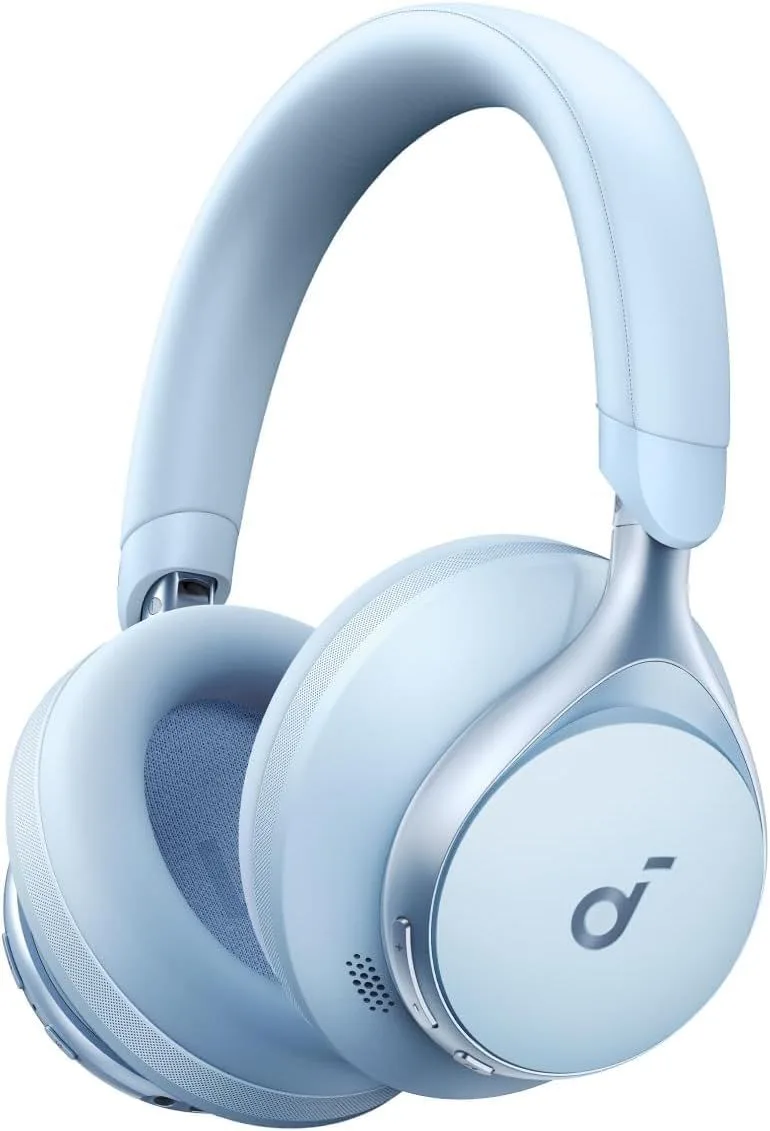
The Anker Soundcore Space One delivers noise cancellation that has no business existing at its price point. RTINGS measurements confirm it blocks 70-80% of ambient noise across the frequencies that matter most — HVAC hum, airplane drone, office chatter. That puts it within striking distance of headphones costing two to three times more. Anker claims 98% noise reduction, which overstates reality, but the actual performance still leads the sub-$100 category by a measurable margin. SoundGuys called it "the best noise cancellation under $100, and it is not close."
And that matters. LDAC support is the headline feature that separates this from every competitor at the price. At up to 990kbps, LDAC transmits roughly four times the audio data of standard AAC — and the 40mm drivers are good enough to resolve the difference on well-mastered tracks. Jazz piano attacks, acoustic guitar transients, and vocal sibilance all gain clarity over Bluetooth that you do not get from AAC-only competitors. This is a feature that existed exclusively on $200+ headphones until Anker undercut the market. For Android users streaming from lossless sources, the Anker Soundcore Space One is the only option at this price that preserves that investment in source quality.
The 40-hour battery with ANC enabled is another specification that punches above the price tier. That matches or exceeds the rated battery of the Sony XM5 and Bose QC Ultra — headphones that cost three to four times more. Real-world usage at moderate volume typically delivers 35-38 hours, which means weekly charging for most commuters. The Soundcore app provides a 22-band EQ, ANC intensity sliders, and ambient transparency modes that rival companion apps from brands charging premium prices.
Where the Anker Soundcore Space One compromises: ANC processing introduces audible coloration to the audio. When you toggle ANC on, the midrange shifts slightly — vocals sound a touch thinner, bass gets a subtle boost. Sensitive listeners will notice. The plastic construction feels less durable than metal-reinforced alternatives, and there is no IP rating for moisture protection. The ear cushions run shallow — listeners with larger ears may feel the driver housing pressing against their outer ear after 90 minutes. Build quality is adequate, not premium. At this price, Anker invested in the electronics and cut costs on the physical materials.
Multipoint Bluetooth pairing deserves a mention — the Anker Soundcore Space One connects to two devices simultaneously and switches audio between them. Toggling from a laptop video call to phone music requires no manual reconnection. This is a productivity feature that premium headphones have offered for years, and finding it at this price reflects how much Anker packed into this model. The companion app also stores multiple EQ profiles, so you can save one preset for commuting (bass-boosted, ANC high) and another for desk work (balanced, ANC low) and switch between them in two taps.
Read our full Space One review for ANC measurements, LDAC audio testing, and long-term durability notes.
Check Price on Amazon
#2: Anker Soundcore Q30 — The $60 ANC Starter
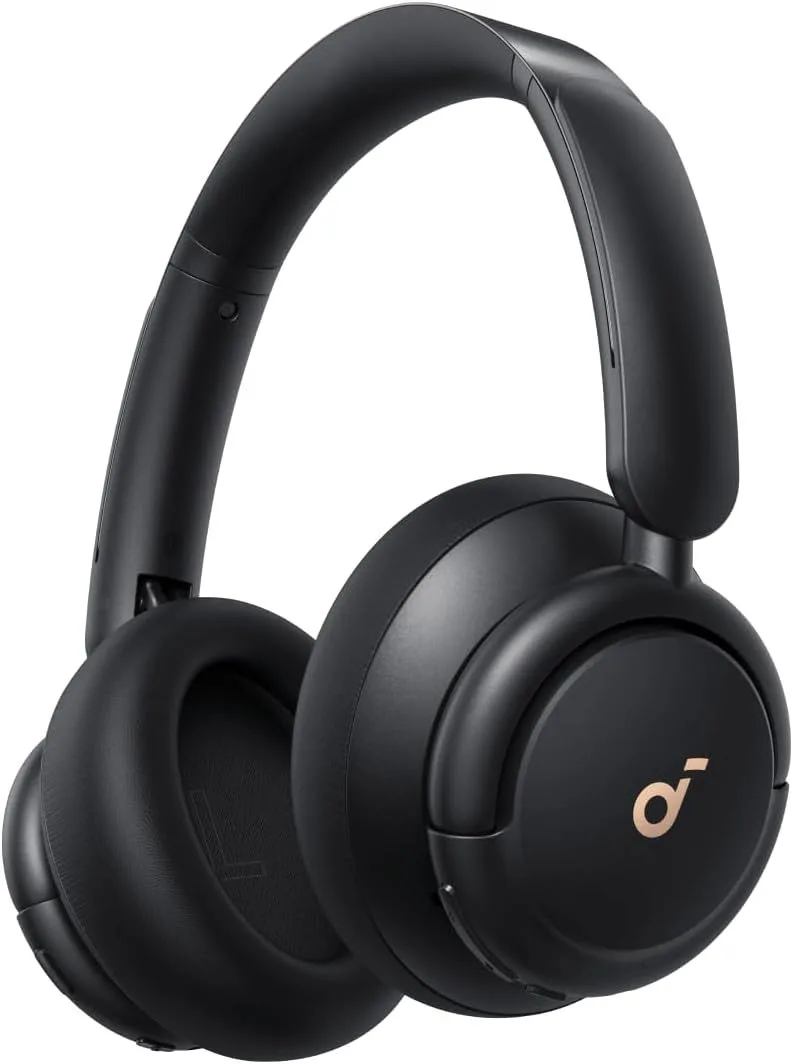
The Anker Soundcore Q30 is the headphone that made affordable ANC mainstream. At roughly $60, it delivers hybrid active noise cancellation with three scene modes — Transport, Outdoor, and Indoor — each tuned to different noise profiles. This is a feature set that cost $150 or more when Sony and Bose controlled the category. RTINGS measurements confirm the Anker Soundcore Q30 cancels a substantial portion of low-frequency noise, putting it in the same conversation as headphones at double the price for commute and office use. With 93,000+ Amazon ratings averaging 4.4 stars, this is one of the most owner-validated headphones in any price category.
Battery life is staggering for the money. Anker rates it at 40 hours with ANC on and 60 hours without. Independent testing by RTINGS measured 46 hours with ANC active at moderate volume — exceeding the rated spec. The 5-minute emergency fast charge delivers 4 hours of playback, which means forgetting to charge the night before a commute is never a real problem. For students and commuters who need reliability above all else, the Anker Soundcore Q30 delivers the kind of battery consistency that removes charging from your daily routine entirely.
Sound quality out of the box leans bass-heavy with recessed mids — a tuning choice that works for hip-hop and electronic music but muddles vocals and acoustic instruments. The Soundcore app's EQ corrects this effectively: boosting 1kHz and 4kHz by a few decibels and pulling the sub-bass down opens up the midrange noticeably. SoundGuys noted that with EQ adjustments, the Anker Soundcore Q30 punches well above its price class for casual listening. Without the app, the stock tuning is a weakness. With the app, it becomes a strength — the flexibility to shape the sound to your preference is a feature that not every budget headphone offers.
But durability is the catch. Multiple long-term owners report creaking and looseness starting around six months of daily use, and outright hinge failure between 12-18 months. The plastic construction shows wear faster than metal-reinforced alternatives. An audible background hiss when ANC is active bothers some listeners, particularly in quiet rooms where ANC has little ambient noise to cancel. The Anker Soundcore Q30 works best in environments where ANC has real noise to fight — on a bus, in a coffee shop, during a flight. In a silent room, the hiss becomes the noise.
Read our full Q30 review for long-term hinge durability data, EQ optimization presets, and ANC measurements across noise environments.
Check Price on Amazon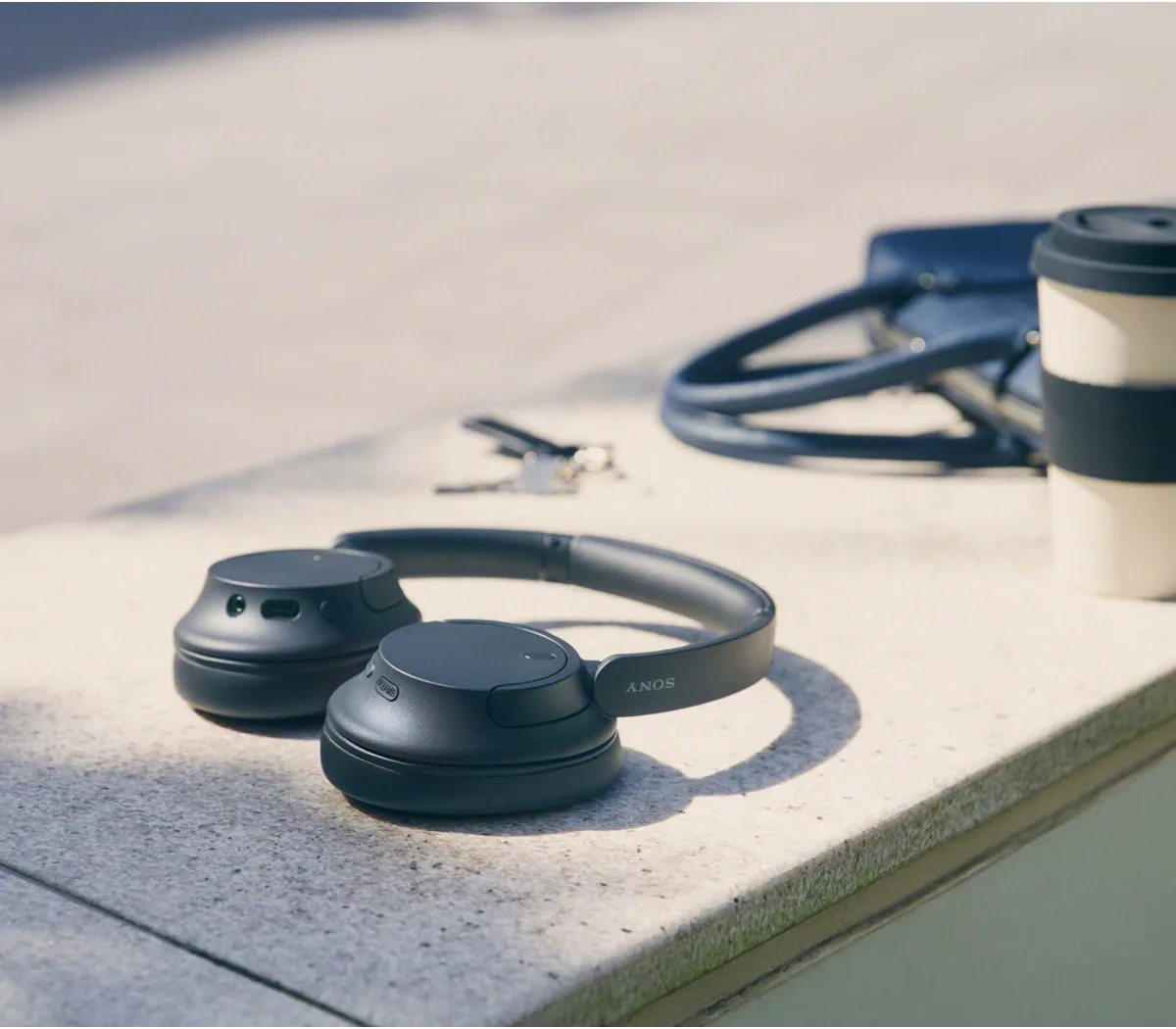
Our #1 pick: The Anker Soundcore Space One pairs LDAC codec support with the strongest ANC under $100.
Check Price on Amazon#3: Sony WH-CH720N — Featherweight ANC for All-Day Wear
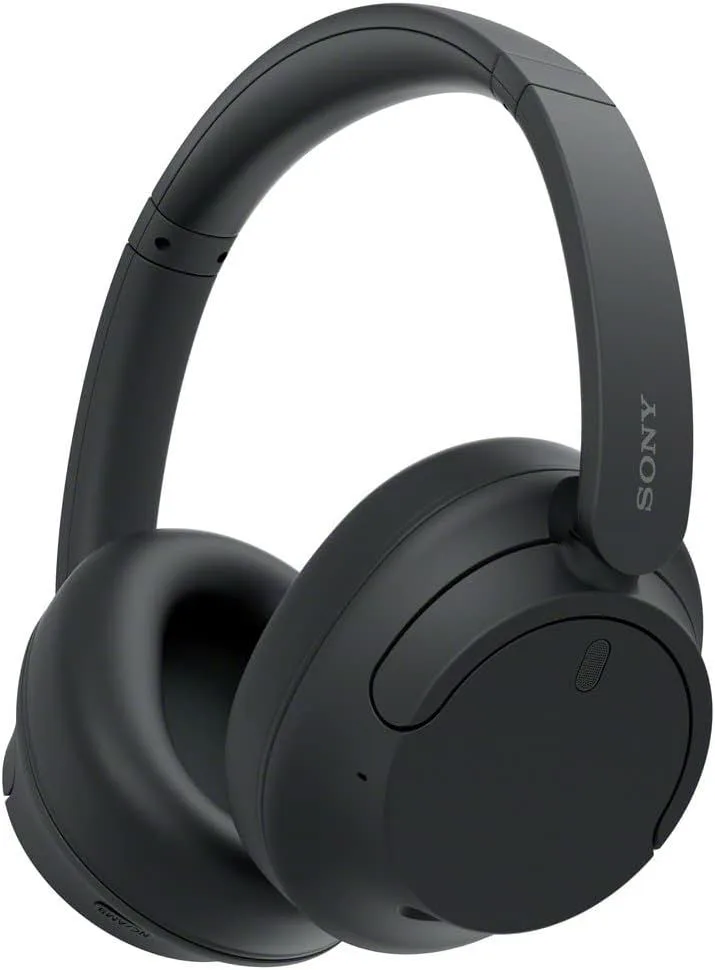
At 192 grams, the Sony WH-CH720N is the lightest over-ear ANC headphone you can buy. That is 60 grams lighter than the Anker Soundcore Space One and 68 grams lighter than the Anker Soundcore Q30 — a difference that compounds over hours of wear. Headphone weight is one of those specifications that barely registers during a 10-minute store demo but defines the experience during a 6-hour workday or a cross-country flight. Sony achieved this weight by using a 30mm driver (smaller than the 40mm units in the other two picks) and ultra-light plastic construction. The result is a headphone that disappears on your head in a way that heavier alternatives never do.
Sony's audio tuning credentials matter here. The Sony WH-CH720N borrows the integrated processor from Sony's premium line, delivering warm bass, defined mids, and clear treble that exceed what most sub-$100 headphones produce. Where the Anker Soundcore Q30 needs EQ adjustment to sound balanced, the Sony WH-CH720N sounds right out of the box. Multiple reviewers from What Hi-Fi and Tom's Guide noted that Sony's house sound — warm but detailed — translates well to this entry-level model. The Sony Headphones Connect app adds EQ customization if you want to fine-tune, but the stock tuning is already well-balanced for general listening across genres.
ANC performance is where the Sony WH-CH720N makes its most visible compromise. Sony's dual noise sensor system with AI processing provides about 20dB of attenuation — enough to reduce office background noise and light commuter environments, but noticeably weaker than the hybrid systems in the Anker Soundcore Space One and Anker Soundcore Q30. On a loud subway or in an aircraft cabin, you will hear more ambient noise bleed through. The ANC here is supplementary, not immersive — it takes the edge off rather than creating isolation. If ANC depth is the primary buying criterion, the Anker Soundcore Space One at #1 is the better choice.
The physical downsides: no carry case included (a notable omission for a Sony product at this price), and the lightweight plastic construction feels fragile in hand despite being functional. The headband and hinges flex more than you want when adjusting fit. Several long-term owners describe the build as "disposable" — adequate for careful use but unlikely to survive being tossed in a bag without a case. Battery life exceeds the 35-hour spec according to independent testing, typically lasting 40+ hours with ANC on at moderate volume. That partially compensates for the ANC weakness — you can leave noise cancellation on permanently without worrying about running out of power.
One underappreciated advantage of the Sony WH-CH720N: multipoint Bluetooth pairing with automatic device switching between phone and laptop. Sony's implementation is among the most reliable in the industry, regardless of price tier. The Headphones Connect app also exposes Sony's DSEE (Digital Sound Enhancement Engine) upscaling, which reconstructs high-frequency detail lost in compressed audio streams. For Spotify users on the standard tier (128-160kbps), DSEE makes an audible difference in cymbal shimmer and vocal breathiness. This is Sony flagship technology filtering down to entry-level hardware — a pattern that benefits buyers willing to accept compromises in build and ANC depth.
Read our detailed CH720N review for weight comparison data, ANC measurements against premium Sony models, and comfort testing across head sizes.
Check Price on AmazonHow We Chose
Every headphone on this page was evaluated against five weighted criteria tailored to the affordable price bracket: ANC effectiveness per dollar spent (30%), sound quality relative to price (25%), comfort for sessions exceeding two hours (20%), build quality and documented durability (15%), and battery life and charging speed (10%). We weighted ANC per dollar highest because buyers in this price range are specifically seeking noise cancellation — that is the feature that separates these from passive headphones at the same price.
Data sources include measured ANC performance from RTINGS, expert reviews from SoundGuys, What Hi-Fi, Tom's Guide, and CNET, plus real owner data from 121,000+ combined Amazon ratings across all three products. We paid particular attention to reviews posted after 6 months of ownership, where durability issues surface. The Anker Soundcore Q30's 93,000+ ratings provide an unusually deep owner dataset — statistically, this is one of the most reviewed headphones on Amazon, giving us a high-confidence picture of long-term satisfaction and failure patterns.
Rankings reflect the current market as of early 2026. These products compete in a fast-moving price tier where new models and price drops can shift the calculus quickly. When prices change or new competitors enter the sub-$100 ANC category, we update this page. We do not accept payment, free products, or early access in exchange for placement — every recommendation is based on publicly available data that any buyer can verify.
One deliberate scope note: we limited this list to full-size headphones with noise cancellation. Earbuds with ANC at similar prices occupy a different product category with different comfort, sound, and isolation characteristics. We also excluded headphones above $120, which compete in the mid-range tier where the value equation shifts. This roundup answers a specific question: what is the best ANC headphone under $100?
Buying Guide: What to Look For
ANC Quality Tiers: What You Get at Each Price
Noise cancellation performance follows a roughly logarithmic curve — the first $60 buys 70% of the capability, and the remaining 30% costs $200 more. At the sub-$100 tier, expect hybrid ANC systems with 2-6 microphones that cancel 15-25dB of ambient noise. That is enough to reduce office chatter, HVAC hum, and moderate commute noise to a comfortable level. Premium headphones from Sony and Bose cancel 30-40dB across a wider frequency range — a noticeable improvement in loud environments like aircraft cabins and subway platforms. The question is whether that extra cancellation is worth three to four times the price for your specific environment — our budget ANC value breakdown answers with real measurement data.

LDAC vs AAC: Does the Codec Matter?
LDAC transmits up to 990kbps over Bluetooth. AAC maxes out around 256kbps. The difference is measurable and, on capable hardware, audible — particularly in the high-frequency detail of cymbals, acoustic strings, and vocal harmonics. If you stream lossless audio from Tidal, Apple Music, or Amazon Music HD on an Android device, LDAC preserves more of that source quality wirelessly. iPhone users cannot use LDAC (iOS does not support it), making this a non-factor. Among the three picks on this page, only the Anker Soundcore Space One supports LDAC. The Anker Soundcore Q30 and Sony WH-CH720N are limited to AAC and SBC, which is the standard for this price range.
Battery Life at This Price: What to Expect
All three headphones on this page deliver 35-46 hours of real-world battery with ANC on — a range that matches or exceeds many premium headphones. The Anker Soundcore Q30 leads at 46 hours measured by RTINGS, followed by the Anker Soundcore Space One at 35-38 hours in practice, and the Sony WH-CH720N at 40+ hours. At these durations, you are charging once a week with daily use. Fast charging varies: the Anker Soundcore Q30's 5-minute emergency charge for 4 hours of playback is the most practical quick-charge implementation in this group. Battery degradation over time follows standard lithium-ion curves — expect 80% of original capacity after roughly 500 full cycles (about two years of daily use).
Comfort: Weight Distribution and Ear Cup Fit
Weight is the single most predictive specification for all-day comfort on over-ear headphones. The Sony WH-CH720N at 192g is 25-28% lighter than its competitors here, and the difference is impossible to ignore after two hours. Lighter headphones reduce pressure on the top of the head, decrease neck fatigue during long sessions, and cause fewer headband hotspots. However, weight alone does not determine comfort — ear cup depth, padding density, and clamping force all contribute. The Anker Soundcore Q30's deeper cushions accommodate larger ears better than the Sony WH-CH720N's shallower pads, despite being heavier. If you wear glasses, test the seal — arms from glasses frames break the passive seal on all three, reducing both isolation and ANC effectiveness.
Build Quality: Realistic Expectations Under $100
Headphones in this price range use plastic construction with limited metal reinforcement. That is a deliberate manufacturing decision — the savings fund better electronics. Expect visible wear (scuffs, glossy spots on matte finishes) within 3-6 months of daily use. Hinge mechanisms are the most common failure point, particularly on folding designs. The Anker Soundcore Q30 has the most documented hinge complaints. The Sony WH-CH720N's lighter weight puts less mechanical stress on its hinges but the thinner plastic flexes more during adjustment. A hard-shell carry case ($10-15 separately) extends the usable life of any headphone in this category by protecting the hinges during transport. None of these three include a case in the box.
App Ecosystem: Why It Matters at This Price
Both Anker models use the Soundcore app, while the Sony WH-CH720N uses Sony's Headphones Connect. These companion apps are not optional accessories — they unlock features that change the ownership experience. The Soundcore app provides a 22-band parametric EQ (compared to the typical 5-band on budget competitors), ANC intensity sliders with custom presets, firmware updates that have historically improved ANC performance post-purchase, and community-shared EQ profiles tuned by other owners for specific genres. Sony's app offers DSEE upscaling, adaptive sound control that adjusts ANC based on activity detection, and a 5-band EQ with presets. At this price tier, the app is where the ongoing value lives — a well-maintained app with regular updates extends the useful life of the hardware.
Who Should Pick Which Model
If noise cancellation depth is your top priority and you want the strongest ANC available under $100, the Anker Soundcore Space One at #1 is the answer. It cancels more noise than either competitor here, and LDAC codec support future-proofs it for high-resolution wireless audio. If budget is tight and you need capable ANC at the lowest possible price, the Anker Soundcore Q30 at #2 delivers hybrid ANC at $60 with a 46-hour battery — a value that is difficult to beat in any product category. If you wear headphones for 4+ hours daily and weight matters more than maximum noise cancellation, the Sony WH-CH720N at #3 is the only pick. Its 192g weight is a category of its own. Students pulling long library sessions should also read our study headphone recommendations for picks tested against campus noise.
One scenario where none of these three is the right answer: if you need a headphone primarily for phone calls. Call quality on sub-$100 headphones lags behind earbuds and premium wireless headphones. The microphone-to-mouth distance on full-size designs means more ambient noise reaches the mic, and the processing power in this tier is not strong enough to fully compensate. For call-heavy use, consider earbuds with shorter stems or a dedicated headset. Another scenario to consider: if you already own a pair of passive headphones with good sound quality and primarily listen in quiet environments, ANC may not justify the cost. Active noise cancellation delivers its biggest quality-of-life improvement in noisy environments — commutes, flights, open offices, shared living spaces. In a quiet home office, the passive isolation from any well-sealed headphone provides most of the silence you need, and the audio quality of a $100 passive headphone often exceeds a $100 ANC headphone because none of the engineering budget goes to microphones and processing circuitry.
Noise-Cancelling Headphone Questions Answered
Can affordable ANC headphones actually block airplane noise?
Yes, but with limits. The Anker Soundcore Space One cancels 70-80% of low-frequency drone — enough to make a cabin noticeably quieter, though not silent. The Anker Soundcore Q30 performs similarly in the low-frequency range where engine hum lives. Neither matches premium ANC from Sony or Bose at 3x the price, but both reduce fatigue on long flights. For frequent flyers who want near-total silence, premium models remain the better investment.
How long do affordable noise-cancelling headphones last before breaking?
Expect 18-30 months of daily use from headphones in this price range. The most common failure point is the hinge mechanism — plastic hinges on folding designs weaken with repeated use. The Sony WH-CH720N mitigates this with lighter weight (192g puts less stress on the hinge), while the Anker Soundcore Q30 has documented hinge concerns starting around month six. Ear pads compress faster on budget models (9-12 months vs 12-18 on premium). Replacement pads cost around ten dollars and extend usable life by another year.
Is LDAC worth paying extra for on wireless headphones?
LDAC transmits up to 990kbps over Bluetooth — roughly 4x the bitrate of standard AAC. The difference is audible on complex music (orchestral, jazz, dense electronic) through good drivers. On podcasts, pop, and casual listening, most people cannot tell the difference. The Anker Soundcore Space One is the only headphone in this price range with LDAC. If you stream from Tidal, Apple Music Lossless, or Amazon Music HD on an Android phone, LDAC preserves more of that quality wirelessly. iPhone users get no benefit — iOS does not support LDAC.
Do inexpensive ANC headphones have good call quality?
Call quality is the biggest weakness of headphones under the mid-range price tier. The Sony WH-CH720N performs best of these three picks thanks to Sony's AI noise reduction processing on the microphone feed, but it still falls behind premium headphones in windy or loud environments. The Anker Soundcore Space One is adequate indoors but struggles outdoors. The Anker Soundcore Q30 is functional for quiet rooms but not recommended as a primary calling headset. If calls are a top priority, budget earbuds with shorter mic-to-mouth distance outperform all three.
What is the difference between hybrid ANC and standard ANC?
Standard ANC uses external microphones to sample ambient noise and generate an inverse sound wave. Hybrid ANC adds internal microphones inside the ear cup that measure what you actually hear after the passive seal, then applies a second correction. The result is more effective cancellation across a wider frequency range. All three picks on this page use hybrid ANC — a feature that was exclusive to premium headphones until 2023. The Anker Soundcore Q30 at its current price point is the most affordable hybrid ANC headphone from a major brand.
Track Budget ANC Picks
We'll let you know when our picks for this category change.
Only when something changes. Unsubscribe anytime.
Our Top Pick
The Anker Soundcore Space One is our #1 recommendation — budget-conscious buyers who want maximum anc performance per dollar — the best noise cancellation at $99.
Check Price: Anker Soundcore Space One