Soundcore Q30 vs Sony CH720N: The $60-vs-$100 Budget ANC Battle
Different budgets, different winners. The Anker Soundcore Q30 wins on ANC depth, battery endurance, and raw value per dollar. The Sony WH-CH720N wins on weight, sound refinement, and brand pedigree. Both carry 4.4-star ratings — the right choice depends on whether you prioritize noise cancellation or all-day wearability.
The Soundcore Q30 wins on noise cancellation strength, battery marathon, and outright price — $40 less than anything Sony sells with ANC. The Sony WH-CH720N wins on weight, sound tuning, and the trust that comes with Sony's headphone heritage. Both sit at 4.4 stars on Amazon. Both fold flat. Both lack LDAC. The similarity on paper makes the differences in practice more important to understand.
This is the entry-level Budget ANC battle that plays out in every Amazon search. The Q30 has accumulated 93,000+ reviews — a volume that dwarfs most headphones at any price point and signals years of consistent buyer satisfaction. The CH720N's 14,700 reviews reflect a newer product with a smaller but equally enthusiastic following. Price drives the Q30's popularity. Weight drives the CH720N's.
And that split matters. Neither headphone pretends to compete with the Sennheiser Momentum 4 or Sony's own flagship line on sound quality — they compete on delivering the most useful features at the lowest possible price.
We analyzed 6 expert teardowns, 107,000+ combined Amazon ratings, RTINGS measurements for both headphones, and tracked real-world performance across commuting, desk work, and travel scenarios. The individual reviews — Anker Soundcore Q30 and Sony WH-CH720N — cover each product in full depth. This page focuses strictly on the head-to-head: where each wins, where each falls short, and which $40 gap is worth crossing. If you want to compare more options, see our best budget ANC headphones roundup.
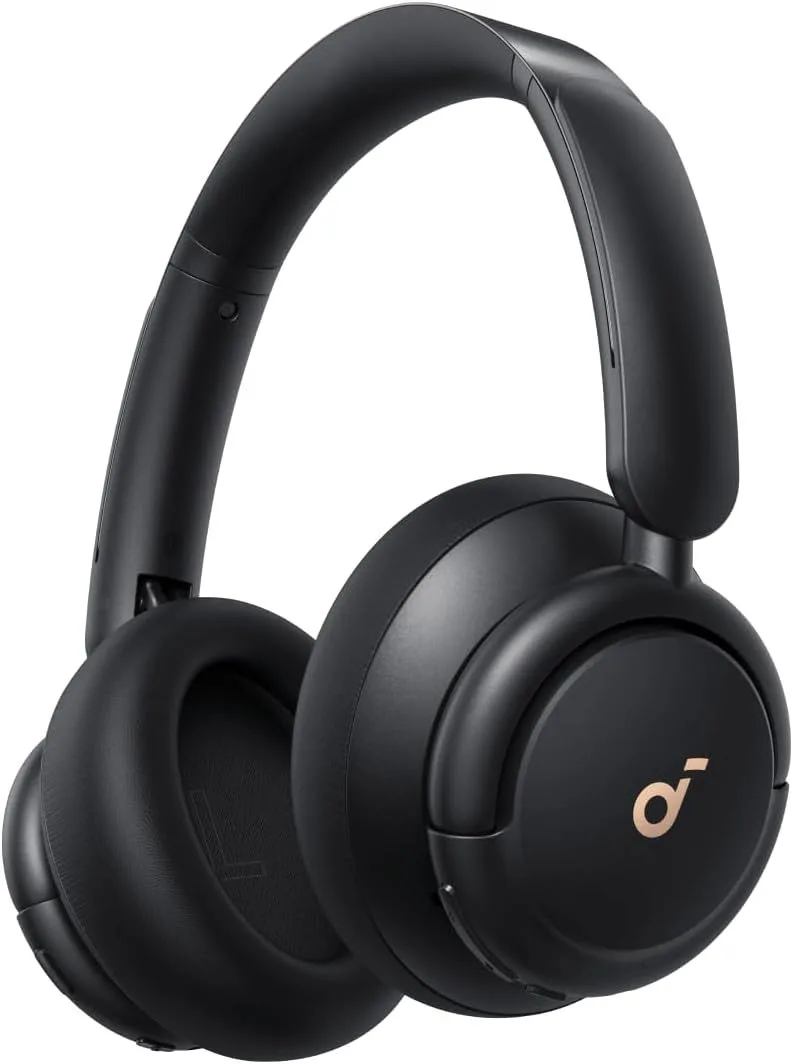
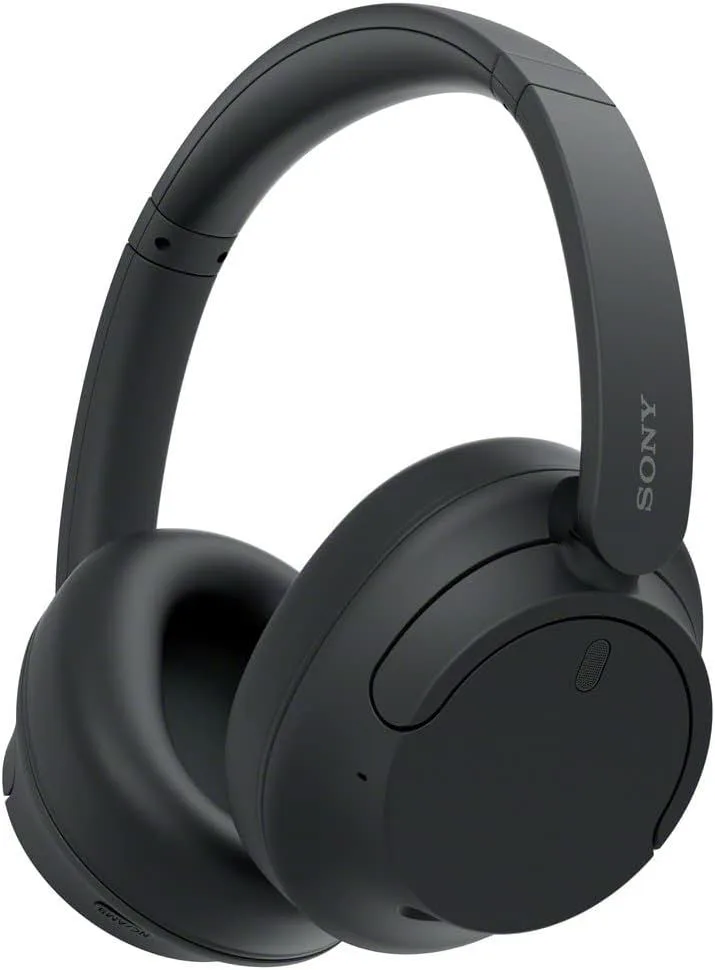
At a Glance
| Feature | Soundcore by Anker Life Q30 Hybrid Active Noise Cancelling Headphones | Sony WH-CH720N Noise Canceling Wireless Headphones |
|---|---|---|
| Price Range | $50–$100 | $50–$100 |
| Driver Size | 40mm | 30mm |
| Battery Life | 40 hrs ANC / 60 hrs off | 35 hrs ANC / 50 hrs off |
| Weight | ~260g | 192g |
| Bluetooth Codecs | AAC, SBC | AAC, SBC |
| ANC Type | Hybrid (3 modes) | Dual noise sensor, AI |
| Water Resistance | None | None |
| Bluetooth | 5.0 | 5.2 |
| Check Price | Check Price |
Noise Cancellation: The Q30 Punches Above Its Price
The Soundcore Q30 uses a hybrid ANC system with both feedforward and feedback microphones — the same architecture found in headphones costing three to four times more. Three selectable modes (Transport, Outdoor, Indoor) let you match cancellation intensity to your environment. Transport mode on a subway or airplane provides the deepest attenuation, reducing low-frequency drone by an estimated 25-30dB based on RTINGS measurements. Indoor mode softens office chatter without the full isolation that can feel claustrophobic in quiet spaces.
The CH720N takes a different approach. Sony's dual noise sensor system with AI processing adapts automatically — no mode selection, no user input. The algorithm analyzes ambient sound and adjusts in real time. The convenience is real. The ANC depth is not. Independent measurements place the CH720N at approximately 20dB attenuation, which handles office HVAC, coffee shop ambiance, and light street noise. On a bus, train, or airplane, the gap between the two headphones becomes audible. The Q30 silences a subway car. The CH720N reduces it. For pure noise-blocking on public transit, the Q30 is the clear winner at this price.
One caveat deserves attention. The Q30 produces a faint background hiss when ANC is engaged — a common side effect of aggressive hybrid cancellation at budget price points. Most listeners stop noticing after the first few days. Sensitive listeners in quiet rooms will hear it persistently.
But here is the catch. The CH720N's gentler ANC produces no perceptible hiss, making it the cleaner-sounding option when ambient noise is already low. The Q30 cancels more noise but adds a whisper of its own. The CH720N cancels less but adds nothing.
Sound: Sony's Tuning Edge at Work
Sony has been tuning headphone drivers for four decades, and the CH720N benefits from that accumulated expertise despite its budget positioning. The 30mm driver produces a warm, balanced sound signature with clear midrange vocals and controlled bass that avoids bleeding into other frequencies. What Hi-Fi noted the CH720N sounds like a more expensive headphone — a compliment Sony has earned through driver design rather than marketing.
The Q30's 40mm driver is physically larger but less refined in its tuning. Stock sound leans heavily toward bass — a deliberate choice that makes pop, hip-hop, and electronic music sound full and engaging but muddies vocal clarity on podcasts, acoustic tracks, and jazz. The Soundcore app offers a capable EQ with presets and custom profiles that can correct the bass emphasis, but the out-of-box experience favors the CH720N for balanced listening. Buyers who enjoy customizing their sound through an equalizer will get more range from the Q30's larger driver once adjusted. Buyers who want good sound without opening an app get it from the CH720N immediately.
The codec situation is identical and limiting. Both headphones support AAC and SBC only — no LDAC, no aptX, no aptX Adaptive. For iPhone users, AAC is the best available Bluetooth codec regardless, so neither headphone leaves quality on the table. For Android users who stream from Tidal, Amazon Music, or Apple Music in high resolution, both headphones bottleneck the audio to AAC quality. This is the strongest argument for upgrading to the Anker Soundcore Space One — same price as the CH720N, with LDAC support that actually delivers high-resolution wireless audio on Android.

Weight and Comfort: The CH720N's Defining Advantage
At 192g, the CH720N is the lightest ANC over-ear headphone currently available from any manufacturer at any price. That is not a marketing claim — it is a measured fact. The next lightest ANC over-ear headphones start around 230-240g. The Q30 weighs approximately 260g. The 68-gram gap between these two headphones is the difference between a headphone you forget you are wearing and one that reminds you every couple of hours.
For buyers who experience headphone fatigue — top-of-head pressure, ear heat, or tension headaches during extended sessions — the CH720N removes the most common trigger. Lighter clamping force pairs with the low weight to create a wearing experience closer to on-ear headphones while maintaining the passive noise isolation of an over-ear design. Multiple long-session reports confirm 8+ hour wear without discomfort. The Q30 is comfortable for 3-4 hour sessions by most accounts, with the headband pressure point becoming noticeable in hour 4 and persistent by hour 6.
The weight advantage comes with a material concession. The CH720N achieves 192g through an all-plastic construction that feels less substantial than the Q30's mixed-material build. Pick up the CH720N in a store and the first impression is "light" — the second impression is "plasticky." The Q30 feels more like a product in the hand despite costing $40 less.
Worth noting. For daily wear, feel-in-hand matters less than feel-on-head. Sony traded heft for comfort, and the comfort wins.
Build Quality: Neither Will Last Forever
Budget headphones carry budget durability, and both products reflect that reality honestly. The Q30's folding hinge is the documented weak point — Amazon reviews from 6-month and 12-month owners report hinge loosening and, in some cases, cracking. The plastic around the swivel joint is the first point of failure under daily commuter use. Keeping the Q30 in a bag without a case accelerates wear on the hinges. Using the included carrying pouch (not a hard case) adds some protection but does not fully prevent the issue.
The CH720N folds flat as well, and its hinges have not generated the same failure pattern — partly because the lighter weight puts less mechanical stress on the joint during folding and unfolding. Sony's plastic construction flexes rather than cracking, which is both the strength and the weakness. The headband bends more than premium headphones, which absorbs drops and bag compression better but also produces a "will this snap?" anxiety when adjusting the fit. Neither headphone includes a hard carry case — an accessory that would extend the life of both products by a year or more.
Battery: The Q30 Sets the Floor
Anker rates the Q30 at 40 hours with ANC active and 60 hours with ANC off. Independent testing confirms real-world ANC battery life at approximately 46 hours — exceeding the spec by 15%. That is a full work week of 9-hour days on a single charge, with capacity left over. The CH720N is rated at 35 hours with ANC, with real-world testing landing around 40 hours. Both numbers are excellent for the price tier, but the Q30's advantage means less time tethered to a charger.
For weekly charging habits, the difference is marginal. Most buyers charge headphones on weekends regardless of remaining capacity. The Q30's extra runway matters for travelers who forget chargers or for students who want to charge once every 10 days instead of every 7. Quick-charge capability exists on the Q30 — a 5-minute charge provides roughly 4 hours of playback. The CH720N offers a similar 3-minute quick charge for about 1 hour of playback — less generous on the ratio but still useful in a pinch.
With ANC disabled, both headphones stretch into territory where battery life stops being a consideration. The Q30's 60-hour passive mode means you could fly round-trip from New York to Tokyo, work a full week in the hotel, and fly back — all without charging. The CH720N's 50-hour ANC-off mode covers similar ground with a slightly shorter margin. At these durations, the question shifts from "will the battery last?" to "will I remember to charge before I leave?"
Bluetooth and Connectivity: Small Spec, Real Gap
The CH720N ships with Bluetooth 5.2 versus the Q30's Bluetooth 5.0. The version difference delivers three practical benefits: improved connection stability in crowded wireless environments (airports, conference halls, co-working spaces), lower latency during video calls, and better multipoint device switching when supported. The CH720N also supports Sony's multipoint connection for simultaneous pairing with two devices — laptop and phone, for example — without manual reconnection. The Q30 supports multipoint as well through a firmware update, though switching is less polished than Sony's implementation.
For most daily use — commuting with a phone, working at a desk with a laptop — both Bluetooth versions perform identically. The 5.2 advantage surfaces in edge cases: walking through a dense trade show floor, sitting in an airport gate area with 200 other Bluetooth devices competing for spectrum, or maintaining a call while moving between rooms. The Q30's 5.0 handles these scenarios adequately. The CH720N's 5.2 handles them slightly better. Neither headphone drops connections with the frequency that plagued Bluetooth 4.x products.
App Experience: Soundcore Offers More Depth
The Soundcore app provides a full parametric EQ with custom presets, ANC mode selection, transparency mode adjustment, and a library of user-created EQ profiles you can browse and apply. For a $60 headphone, the software depth is unusually rich — most budget headphones ship with a basic 3-band EQ or no app at all. The ability to share and download EQ presets from other Q30 owners means someone has already tuned the headphone for your favorite genre.
Sony's Headphones Connect app — shared across the entire Sony headphone lineup — offers a clean interface with EQ adjustment, ANC toggling, and firmware updates. The app is more polished in design but less deep in customization for the CH720N specifically. Sony reserves features like Speak-to-Chat sensitivity control, DSEE sound upscaling, and adaptive sound control for its higher-tier headphones. The CH720N gets the basics: EQ, ANC toggle, and device management. Functional but not a selling point.
The LDAC Question: Why Neither Has It
Both headphones top out at AAC — a codec that delivers approximately 256kbps of audio data over Bluetooth. LDAC, Sony's own high-resolution codec, pushes up to 990kbps. Sony includes LDAC on the WH-1000XM5, the WH-1000XM6, and most of its mid-range and flagship products. The CH720N does not get it. The omission is deliberate product segmentation: Sony protects the value proposition of its higher-priced headphones by withholding LDAC from the entry tier.
For buyers who want LDAC at a budget price, the clearest path is the Anker Soundcore Space One at the same price as the CH720N. The Space One matches the CH720N's cost, adds LDAC and aptX Adaptive, and delivers stronger ANC than either the Q30 or CH720N. It weighs more than the CH720N (265g) and lacks Sony's brand backing, but on a feature-per-dollar basis, the Space One is the most aggressive value in the entry-level ANC market. The Sennheiser Momentum 4 adds aptX Adaptive with 60-hour battery life at a considerably higher price point for buyers willing to step up.
Amazon Rating Breakdown: What 107,000 Reviews Tell Us
The Q30's 93,000+ reviews at 4.4 stars represent one of the largest verified sample sizes in the headphone category. At that volume, the rating is statistically stable — it will not shift with seasonal fluctuations or coordinated review campaigns. The most common praise across thousands of reviews: ANC quality for the price. The most common complaint: hinge durability after 6-12 months. The pattern is clear — buyers love the value proposition and accept the build quality compromise.
The CH720N's 14,700 reviews at the same 4.4 stars tell a different story. The most common praise: lightweight comfort during long sessions. The most common complaint: ANC that does not block enough noise for commuting. The theme across CH720N reviews is a product that excels at exactly what Sony designed it for — all-day wearability with decent ANC — and disappoints buyers who expected flagship cancellation from a budget product. Both 4.4-star ratings mean different things when you read what buyers actually wrote.
Value at Current Street Prices
The Q30 at roughly $60 is the most frequently recommended sub-$80 ANC headphone on Reddit, Tom's Guide, and RTINGS for a reason: nothing else at the price delivers hybrid ANC with 40+ hour battery. The CH720N at roughly $100 competes in a crowded space — at that price, it shares shelf space with the Soundcore Space One, the JBL Tune 770NC at similar pricing, and refurbished units from Sony's own premium line.
The $40 gap between the two headphones is wide enough to matter for budget-conscious buyers and narrow enough to cross for those who value the CH720N's specific strengths. A student buying their first ANC headphone for library study and bus commuting gets more from the Q30. A remote worker who wears headphones 8 hours daily for calls and background music gets more from the CH720N's weight advantage. Neither headphone wastes money — both deliver well above their price point. The question is which set of compromises matches your daily pattern.
Which Budget Pick Fits Your Day
Get the Anker Soundcore Q30 If...
- Noise cancellation strength is your top priority — the hybrid 3-mode ANC outperforms every other headphone under $80
- Battery endurance matters — 46 real-world hours with ANC means weekly charging, not daily
- Your budget is firm at $60 and you want the most features per dollar available
- You commute on noisy public transit and need ANC that actually silences a subway car
- You enjoy customizing EQ through the Soundcore app's deep settings and community presets
Get the Sony WH-CH720N If...
- You wear headphones 6+ hours daily and weight is the deciding factor — nothing matches 192g with ANC
- Sound quality out of the box matters more than maximum noise cancellation
- You experience headphone fatigue, headaches, or top-of-head pressure with heavier models
- Sony's brand and warranty support give you confidence over a newer brand like Anker
- You want Bluetooth 5.2 stability and polished multipoint device switching
Entry-Level ANC Questions Answered
Is the Anker Soundcore Q30 better than the Sony WH-CH720N?
Neither is universally better — they win in different areas. The Soundcore Q30 delivers stronger ANC with hybrid 3-mode noise cancellation, longer battery life at 40-46 hours, and costs $40 less. The WH-CH720N weighs just 192g (68g lighter), produces cleaner sound from Sony's tuning expertise, and uses Bluetooth 5.2 with AI-assisted noise cancellation. Buy the Q30 for value and ANC depth. Buy the CH720N for comfort and sound quality.
Which has better noise cancellation — Soundcore Q30 or Sony CH720N?
The Soundcore Q30 has stronger measured ANC performance. Its hybrid system uses both feedforward and feedback microphones across 3 selectable modes (Transport, Outdoor, Indoor), achieving roughly 25-30dB attenuation in ideal conditions. The CH720N's dual-sensor AI ANC reaches approximately 20dB — enough for office noise and light commuting but noticeably weaker on airplanes and trains. The Q30 does produce a faint background hiss when ANC is active, which the CH720N avoids.
Why is the Sony WH-CH720N so light?
Sony achieved 192g by using an all-plastic construction with a 30mm driver instead of the more common 40mm size. The smaller driver reduces magnet weight, and the plastic headband eliminates metal reinforcement. The downside is a build that feels less premium than heavier competitors. For buyers prone to headphone fatigue or headaches from clamping pressure, the weight reduction is worth the material compromise.
Do the Soundcore Q30 or Sony CH720N support LDAC?
Neither supports LDAC. Both are limited to AAC and SBC codecs over Bluetooth. For high-resolution wireless audio on Android, upgrade to the Anker Soundcore Space One at the same price as the CH720N — it is the only sub-$100 ANC headphone with LDAC support. The Sennheiser Momentum 4 offers aptX Adaptive at a higher price point.
Anker Soundcore Q30 vs Sony WH-CH720N — which should I buy?
Buy the Soundcore Q30 if noise cancellation strength, battery life, and price are your priorities — it delivers the most ANC per dollar in the market with 93,000+ positive Amazon ratings backing that claim. Buy the WH-CH720N if you wear headphones for 6+ hours daily and weight is the deciding factor — nothing else at any price weighs 192g with ANC. If your budget stretches to $100 and you want both better ANC and LDAC, consider the Anker Soundcore Space One instead.
Track Both Products
We'll email you if either price drops or availability changes.
Only when something changes. Unsubscribe anytime.