AirPods Max vs Sony WH-1000XM5: Premium Build or Practical Value?
This is an ecosystem decision, not a sound quality decision. The Apple AirPods Max wins for iPhone and Mac users who value build quality and Spatial Audio. The Sony WH-1000XM5 wins for Android users, platform-agnostic listeners, and anyone who prioritizes battery life and value.
This comparison is not about which headphone sounds better — they are closer in audio quality than the $172 price gap suggests. It is about which headphone fits your life. The Apple AirPods Max review is a premium-material, Apple-ecosystem headphone that rewards iPhone, iPad, and Mac users with features no competitor can match: automatic device switching, Spatial Audio with dynamic head tracking, and Find My integration. The Sony WH-1000XM5 review is a platform-agnostic headphone that works equally well on Android, Windows, iOS, and macOS — with LDAC high-resolution wireless audio, a 10-band parametric EQ, and 10 extra hours of battery per charge.
The AirPods Max is the 2024 USB-C refresh — same H1 chip, same drivers, same design as the 2020 original, now with a USB-C port replacing Lightning. Apple did not upgrade the processor. That means the AirPods Max still lacks features available on the newer AirPods Max 2: Adaptive Audio, Conversation Awareness, and Personalized Spatial Audio all require the H2 chip. The XM5, meanwhile, is Sony's previous-generation flagship — superseded by the WH-1000XM6 but still sold at a reduced price that makes it one of the strongest values in premium ANC headphones.
We analyzed 11 expert reviews, 35,000+ combined Amazon ratings, and cross-referenced build durability data, codec measurements, and ecosystem feature matrices. The individual reviews — Apple AirPods Max review and Sony WH-1000XM5 review — cover each product in depth. This comparison focuses on the head-to-head: where each wins, where each loses, and which daily routine each headphone is designed for. If you want to consider the full field, our best over-ear ANC headphones roundup includes both alongside newer competitors.
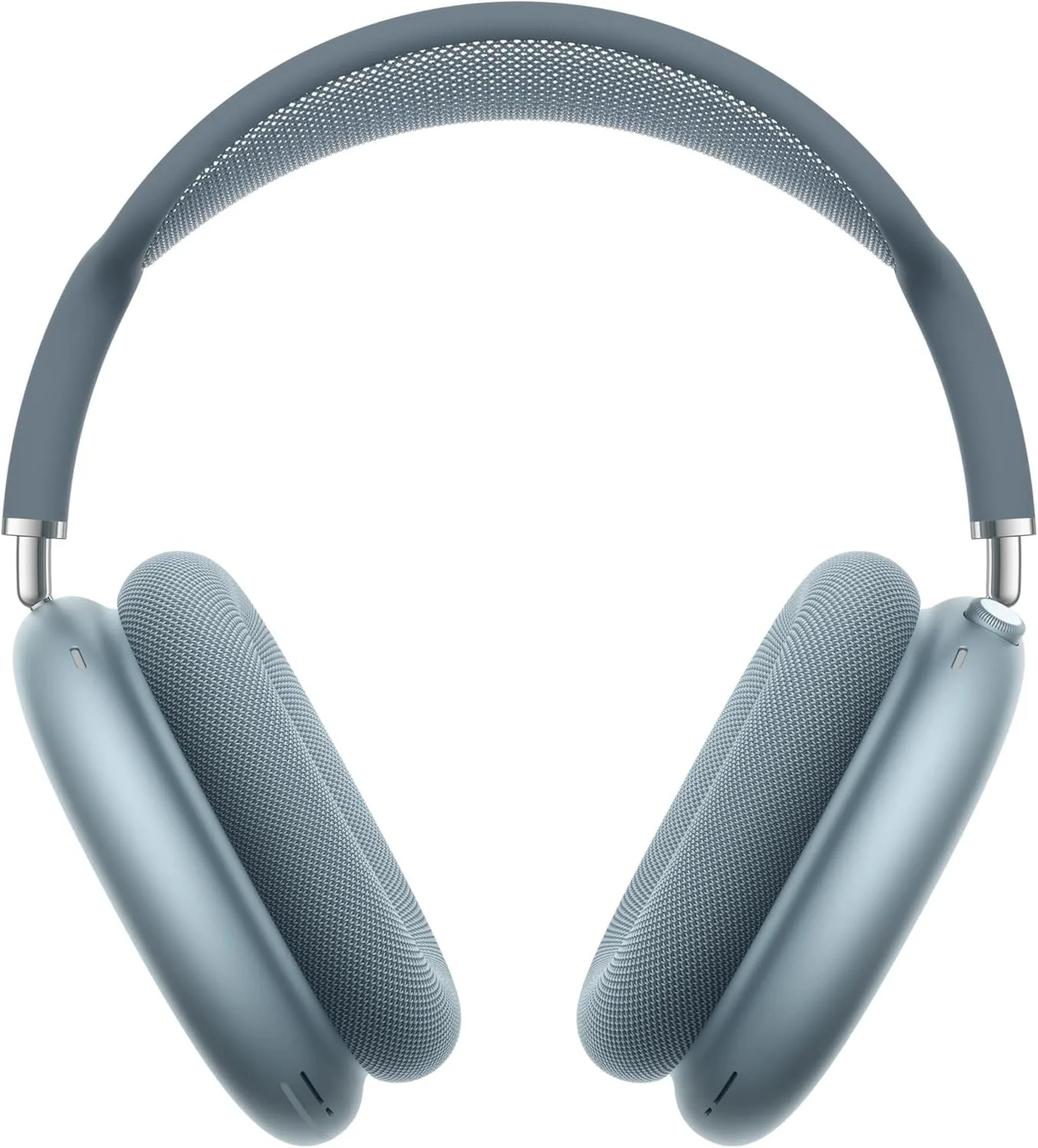
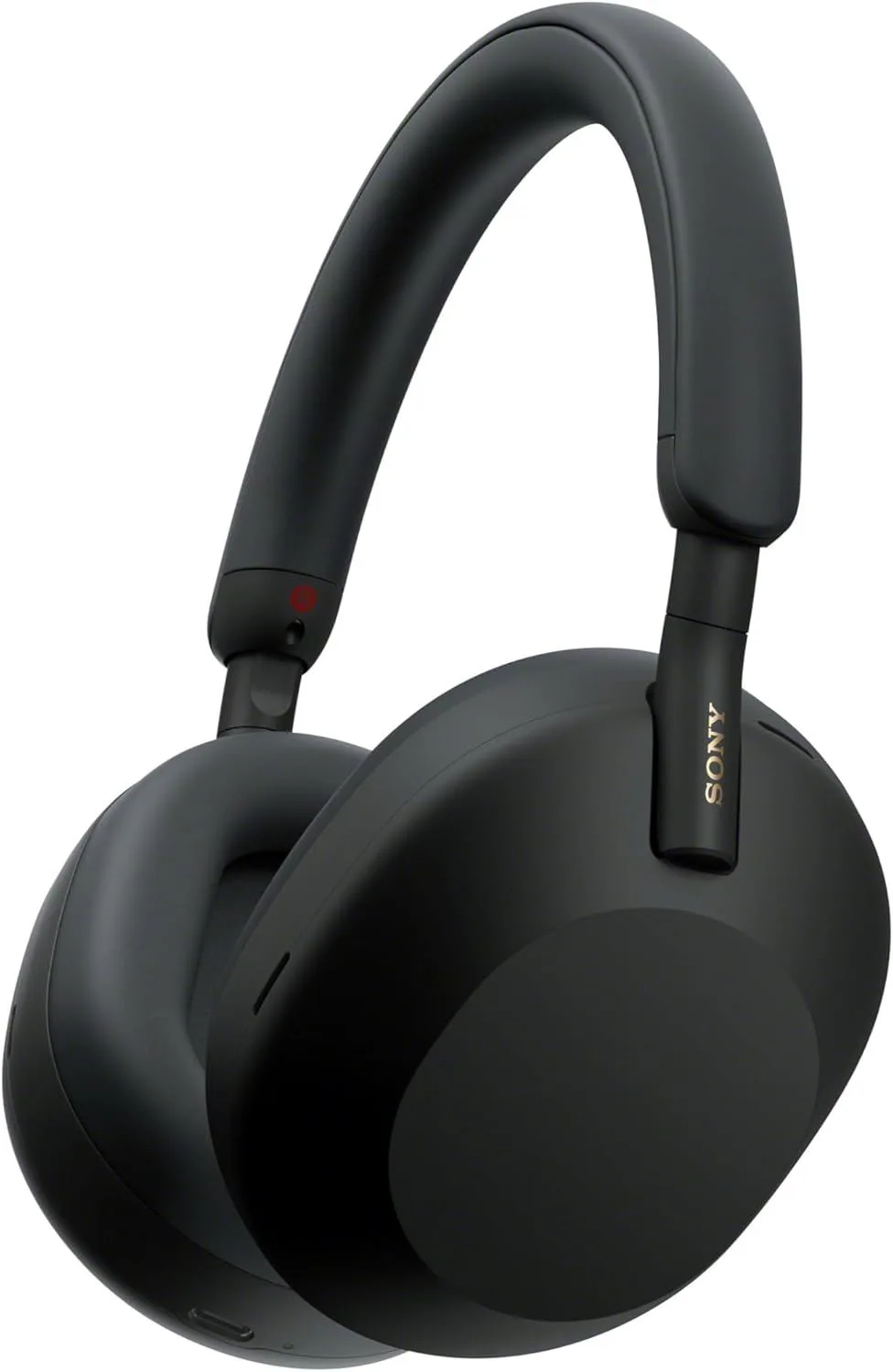
At a Glance
| Feature | Apple AirPods Max Wireless Over-Ear Headphones | Sony WH-1000XM5 Wireless Industry Leading Noise Canceling Headphones |
|---|---|---|
| Price Range | $250–$500 | $250–$500 |
| Driver Size | 40mm Apple dynamic | 30mm dynamic |
| Battery Life | 20 hrs (ANC on) | 30 hrs (ANC on) |
| Weight | 392g | 250g (8.8 oz) |
| Bluetooth Codecs | AAC only (Bluetooth) | LDAC, AAC, SBC |
| ANC Type | H1 chip, 8+ mics | Dual-processor, 8 mics |
| Water Resistance | None | None |
| Bluetooth | 5.0 | 5.2 |
| Check Price | Check Price |
Build and Materials: The $172 Question
Pick up both headphones and the price gap makes immediate sense. The AirPods Max feels like a piece of machined hardware — the ear cups are solid aluminum, the headband frame is stainless steel, and the Digital Crown (borrowed from Apple Watch) controls volume with a precision that plastic scroll wheels cannot replicate. At 392g, it is the heaviest mainstream ANC headphone on the market. That weight comes from materials that do not creak, do not flex, and do not fail at stress points.
The WH-1000XM5 chose the opposite path. At 250g — 142g lighter than the AirPods Max — it uses engineered plastic throughout. The result is a headphone that disappears on your head during long sessions. But the material choice carries a documented cost: repair aggregation data shows a 47% hinge failure rate on the XM5, concentrated at the swivel joint where the ear cup meets the headband. Sony addressed this in the XM6 with aluminum reinforcement, but the XM5's plastic hinge remains its most criticized component.
The AirPods Max has zero widespread hinge failure patterns documented across any repair database. The aluminum-and-steel construction distributes mechanical stress differently than plastic — instead of a single failure point, force is absorbed across the entire frame. For buyers who keep headphones 3-5 years, this durability difference compounds. The XM5 may need a hinge repair or replacement within that window; the AirPods Max almost certainly will not.
ANC Performance: Apple's Edge in the Lows
Both headphones use 8 microphones for active noise cancellation — identical microphone counts but different processing architectures. The AirPods Max feeds its microphone array through Apple's H1 chip, which processes audio with lower computational latency than the XM5's integrated processor. The practical result: the AirPods Max cancels low-frequency noise (airplane engines, HVAC systems, train rumble) with a slight but perceptible advantage. On a cross-country flight, the difference between "nearly silent" and "actually silent" is the gap these two headphones occupy.
Mid-frequency cancellation — office chatter, keyboard clatter, restaurant background noise — is closer to tied. The XM5's Auto NC Optimizer, triggered through the Headphones Connect app, calibrates the cancellation algorithm to your ear canal shape and the current barometric pressure. When properly calibrated, the XM5 matches the AirPods Max in these frequencies. The catch: most XM5 owners never run the optimizer. Out of the box, without calibration, the AirPods Max delivers better ANC because its processing does not depend on user intervention.
Transparency mode tells a different story. The AirPods Max Transparency mode is widely regarded as the most natural-sounding pass-through in the industry — voices sound like voices, not like voices played through a speaker. The XM5's Ambient Sound mode is functional but carries a slightly electronic quality, particularly on sharp consonant sounds. For users who toggle between ANC and transparency frequently — walking through an airport, ordering coffee mid-commute — the AirPods Max transition is faster and more natural.
Sound Signature: Warm Authority vs Analytical Detail
The AirPods Max produces a warm, slightly bass-forward sound signature that Apple has tuned for broad appeal. Vocals sit front and center. Bass is present and controlled without bloating into the mids. The 40mm custom driver delivers a soundstage that feels wider than the XM5's — instruments occupy distinct positions rather than layering on top of each other. For pop, R&B, hip-hop, and vocal-forward genres, the AirPods Max is the best out-of-box tuning in the premium ANC category.
The WH-1000XM5's 30mm driver produces a more neutral-to-analytical sound. The default tuning is less immediately impressive than the AirPods Max — it does not have the same "wow factor" on first listen. But Sony compensates with the Headphones Connect app's 10-band parametric EQ, which lets you sculpt the frequency response to your exact preference. Want more bass? Dial it in. Want flatter reference-style tuning? Available. The AirPods Max offers no EQ controls on Apple devices — you get Apple's tuning or nothing. (A 3-band system EQ exists in iOS Settings, but it is crude compared to Sony's per-frequency control.)
Codec support creates a measurable gap for Android users. The XM5 supports LDAC — Sony's high-resolution wireless codec that transmits up to 990kbps of audio data versus AAC's roughly 250kbps. On well-mastered tracks from Tidal or Amazon Music HD, the LDAC advantage is audible: cymbal decay has more shimmer, spatial cues are more precise, and quiet passages retain detail that AAC compresses away. The AirPods Max is limited to AAC over Bluetooth on every platform. For iPhone users this is a non-issue — Apple optimizes AAC extensively, and the difference from LDAC is marginal. For Android users, the XM5's LDAC support delivers measurably better wireless audio quality.
Spatial Audio: Apple's Killer Feature (With Asterisks)
The AirPods Max with an Apple device delivers the best Spatial Audio implementation in consumer headphones. Period. Dynamic head tracking pins the soundstage to your device — turn your head while watching a movie on iPad, and the dialogue stays anchored to the screen. Dolby Atmos tracks on Apple Music gain a three-dimensional quality that flat stereo cannot approach. For Apple ecosystem users who watch movies, TV, and spatial music regularly, this feature alone can justify the price premium.
The asterisks are important. Spatial Audio requires an Apple device — it does not function on Android or Windows. Head tracking requires compatible content — not all music or video is mixed for spatial playback. And the current AirPods Max runs the H1 chip, which means it lacks Personalized Spatial Audio (an H2 feature that maps your ear geometry using the TrueDepth camera for a custom spatial profile). The AirPods Max 2 adds Personalized Spatial Audio, making it the definitive choice for spatial listening — but at a higher price.
The XM5's spatial audio capabilities are limited to Sony's 360 Reality Audio format, which has a smaller content library than Dolby Atmos. The effect is present but less dramatic than Apple's implementation. Most XM5 owners use the headphone in standard stereo mode and do not engage with spatial features regularly. If spatial audio is not a priority for you, this category is irrelevant to your decision.
Battery: Sony's Clear Win — The Biggest Difference Between These Two
The WH-1000XM5 delivers 30 hours of playback with ANC active. The AirPods Max delivers 20 hours. That is a 10-hour gap — the largest single-spec difference between these two headphones. For daily commuters with a 1-hour round trip, the XM5 lasts 6 work weeks between charges versus the AirPods Max's 4 weeks. For travelers, the XM5 handles a round-trip transcontinental flight (10-12 hours) with battery to spare; the AirPods Max cuts it closer.
Quick charging partially closes the gap. The AirPods Max charges via USB-C (the 2024 refresh finally dropped Lightning) and gains approximately 1.5 hours of playback from a 5-minute charge. The XM5's 3-minute quick charge provides 3 hours of playback — faster recovery for a lower time investment. Both support charging while listening, though ANC quality on both headphones dips slightly during simultaneous charge-and-listen sessions.
The AirPods Max has no off switch. Apple designed it to enter a low-power mode when placed in the Smart Case or left stationary, but the standby drain is measurably worse than competitors with a physical power button. Owners who do not use the Smart Case consistently report waking up to a headphone with 10-15% less battery than when they set it down. The XM5 has a power slider. Off means off. This is a small annoyance that compounds over months of ownership.
The Companion App Gap
Sony's Headphones Connect app is one of the deepest companion apps in the headphone industry. It offers: 10-band parametric EQ with individual frequency adjustment, LDAC bitrate selection (330/660/990kbps — lower bitrates improve connection stability), Speak-to-Chat sensitivity tuning, Auto NC Optimizer with barometric calibration, per-device audio profiles, custom ANC intensity on a continuous slider (not just preset modes), ambient sound pass-through with adjustable level, and Quick Attention gesture configuration.
The AirPods Max has no companion app. Controls live in iOS Settings under Bluetooth — a sparse menu offering ANC/Transparency/Off toggle, Spatial Audio on/off, and a crude 3-band system EQ. Apple's philosophy is that the headphone should sound right without user intervention. For most listeners, it does. But for the subset of buyers who want to shape their audio experience — tweak the bass, adjust ANC aggressiveness for different environments, fine-tune microphone sensitivity — the AirPods Max offers nothing. The XM5 offers everything.
This gap matters most for power users who own premium headphones specifically because they care about audio quality. If you are spending $450 on headphones and want to adjust a 10-band EQ, the AirPods Max does not allow it. If you are spending $278 and want that same control, the XM5 hands you every dial. For the listener who puts headphones on and presses play without thinking about settings, both approaches deliver excellent results — but the AirPods Max is better at this "set and forget" use case because its default tuning is more polished than the XM5's defaults.
Ecosystem Lock-In: The Real Deciding Factor
The AirPods Max on an iPhone is a different product than the AirPods Max on a Samsung Galaxy. On Apple devices, it gains: automatic switching between iPhone, iPad, Mac, and Apple TV (whichever is playing audio); "Hey Siri" voice activation; Find My network tracking (crowd-sourced location even when out of Bluetooth range); Announce Messages (Siri reads incoming texts aloud); Audio Sharing (two AirPods Max on one device). On Android, every one of these features disappears. The AirPods Max on Android is a heavy Bluetooth headphone with good sound, good ANC, and no app — selling for $172 more than a Sony that offers LDAC, full app control, and the same platform-agnostic feature set.
The WH-1000XM5 works identically on iOS and Android. Multipoint connection lets it pair to two devices simultaneously — phone and laptop, for instance — switching audio automatically based on which device is active. The Headphones Connect app is available on both platforms with identical feature sets. LDAC works on Android (iOS defaults to AAC regardless of headphone codec support). Google Fast Pair on Android provides one-tap pairing. Swift Pair does the same on Windows. The XM5 does not care which devices you own. The AirPods Max cares deeply.
For households split between Apple and non-Apple devices, the XM5 is the pragmatic choice. For someone deep in the Apple ecosystem — iPhone, Mac, iPad, Apple Watch, Apple TV — the AirPods Max integrations are worth the premium. The ecosystem features are not gimmicks; automatic device switching alone saves dozens of manual Bluetooth reconnections per week. But those features only exist within Apple's walled garden.
Weight, Comfort, and Session Length
At 392g, the AirPods Max is the heaviest mainstream ANC headphone you can buy. The mesh headband canopy distributes weight well — better than a traditional padded headband — but physics is physics. After 2-3 hours, the neck muscles register the load. The aluminum ear cups do not flex or adjust to head shape the way plastic cups do; they hold their position rigidly, which can create pressure points on larger or unusually shaped heads.
The XM5 at 250g sits in the middle of the ANC weight spectrum. Its plastic construction flexes slightly under clamping force, conforming to head shapes rather than fighting them. The synthetic leather ear pads are softer and deeper than the AirPods Max mesh pads — though the mesh breathes better in warm environments. For sessions under 90 minutes, both headphones are comfortable. For 3-hour sessions and beyond, the 142g weight difference tilts the experience toward the XM5. For 6-8 hour workdays, the XM5 is the only viable choice of the two.
Portability is another dimension of the weight discussion. The AirPods Max does not fold. It ships with a Smart Case that covers the ear cups but leaves the headband exposed — a design universally criticized since launch. The XM5 also does not fold (Sony restored folding in the XM6), but its included case fully encloses the headphone. Both are bulky for travel compared to folding designs like the XM6, but the XM5's lighter weight and full-enclosure case make it the more travel-friendly option.
Call Quality: A Draw With Caveats
Both headphones use 8 microphones, and both deliver above-average call quality for the ANC category. The XM5's beamforming array isolates voice from background noise with particular effectiveness in indoor environments — offices, coffee shops, and home workspaces. The AirPods Max performs comparably indoors and has a slight edge in wind handling outdoors, where Apple's computational wind noise reduction is more aggressive.
The practical difference is in the ecosystem integration. On iPhone, the AirPods Max handles calls, FaceTime, and Siri interactions without any configuration — the microphone routing is automatic and the noise reduction is always active. On the XM5, call quality is consistent across platforms but requires the Headphones Connect app for optimal microphone settings. For users who take 10+ calls per day on an iPhone, the AirPods Max's zero-configuration call handling reduces friction. For users on Android or Windows, the XM5 delivers equivalent call quality with full cross-platform support.
Long-Term Value and Resale
The AirPods Max holds resale value better than almost any headphone on the market. Apple products retain 60-70% of their value after 2 years — the aluminum construction ages well, and demand in the used market stays strong because Apple continues supporting older hardware with firmware updates. The XM5, following typical Sony depreciation, retains approximately 40-50% after 2 years, accelerated by the XM6's release pushing used XM5 prices down.
Maintenance costs favor the AirPods Max over a 3-year ownership window. The mesh ear cushions (magnetically attached) are replaceable and show less wear than the XM5's synthetic leather pads, which crack and peel after 12-18 months of daily use in humid climates. Third-party replacement pads for the XM5 cost less than official Apple cushion replacements, but the cycle is faster — expect to replace XM5 pads at least once during a 3-year ownership period, while AirPods Max cushions may last the full term.
The elephant in the room: the AirPods Max 2 has been announced, and its H2 chip brings features the current AirPods Max will never receive via software update. Buying the current AirPods Max today means buying a headphone whose processor is already superseded. The XM5 faces the same dynamic with the XM6 already on the market, but the XM5's lower price softens the sting — paying roughly $280 for a superseded product feels different than paying $450 for one.
The Ecosystem Test
Get the Apple AirPods Max If...
- You own an iPhone, Mac, and iPad — the ecosystem integration features (automatic switching, Spatial Audio with head tracking, Find My) justify the premium and cannot be replicated on any Sony headphone
- Build quality is a non-negotiable priority — the aluminum and stainless steel construction has zero documented hinge failures, while the XM5's plastic hinge carries a 47% failure rate
- You want the most natural Transparency mode available — the AirPods Max pass-through sounds less processed than any competitor
- You keep headphones for 3-5 years and value resale — Apple products hold 60-70% of their value versus 40-50% for Sony
- You listen in sessions under 2-3 hours — the weight is manageable for commutes, workouts, and focused work blocks

Get the Sony WH-1000XM5 If...
- You use Android, Windows, or a mix of platforms — the XM5 delivers identical features on every operating system, while the AirPods Max loses most of its differentiators outside Apple's ecosystem
- Battery life matters — 30 hours versus 20 hours is a 50% advantage that compounds across weeks of commuting and travel
- You want deep audio customization — Sony's 10-band parametric EQ and LDAC codec support give you control the AirPods Max does not offer
- Comfort during extended sessions is critical — 142g lighter, with pads that conform to your head shape rather than clamping rigidly
- Value drives your decision — the XM5 at roughly $170 less delivers 90% of the AirPods Max's audio and ANC performance
What Buyers Ask Most
Are AirPods Max worth the extra $172 over the Sony WH-1000XM5?
That depends entirely on your device ecosystem. If you own an iPhone, iPad, and Mac, the AirPods Max delivers automatic device switching, Spatial Audio with head tracking, and Find My integration that the XM5 cannot replicate. If you use Android or split between platforms, the XM5 offers better codec support (LDAC), a deeper companion app with 10-band EQ, and 10 additional hours of battery life. The premium materials on the AirPods Max — aluminum ear cups, stainless steel headband — justify part of the price gap through durability, but the XM5 at roughly $170 less delivers 90% of the sound quality.
Which has better noise cancellation — AirPods Max or Sony WH-1000XM5?
The AirPods Max has a slight edge in ANC performance, particularly in low-frequency cancellation (airplane engines, train rumble). Both use 8 microphones for active noise cancellation, but Apple's H1 chip processes the audio signal with lower latency. The difference is audible but not dramatic — perhaps a 10-15% improvement in perceived noise reduction. The XM5 compensates with Sony's Headphones Connect app, which allows manual ANC tuning and an Auto NC Optimizer that calibrates to your ear shape and environment.
Can I use AirPods Max with an Android phone?
Yes, but the experience is limited. Over Bluetooth, the AirPods Max connects to Android using AAC or SBC codecs — no LDAC, no aptX. You lose Spatial Audio, automatic device switching, head tracking, Find My, and the ability to customize controls. There is no Apple companion app for Android. The AirPods Max on Android functions as a basic Bluetooth headphone with good sound and ANC but none of the ecosystem features that justify its price. The Sony WH-1000XM5 with LDAC on Android delivers higher-resolution wireless audio and full app control.
Why is the AirPods Max so heavy compared to the WH-1000XM5?
The AirPods Max weighs 392g versus the XM5's 250g — a 142g difference caused by material choices. Apple uses machined aluminum for the ear cups and stainless steel for the headband frame. Sony uses engineered plastic throughout. The Apple approach produces a headphone with zero documented hinge failures and a premium tactile feel, but the weight is noticeable during sessions longer than 2-3 hours. The XM5 is lighter and more comfortable for extended wear, though its plastic construction has a documented 47% hinge failure rate based on repair data.
Should I wait for the AirPods Max 2 instead of buying the current AirPods Max?
If you can wait, yes. The AirPods Max 2 upgrades from the H1 to H2 chip, adding Adaptive Audio (blends ANC and transparency automatically), Conversation Awareness, Personalized Spatial Audio, and USB-C with lossless audio support. The current AirPods Max (2024 USB-C refresh) still runs the original H1 chip from 2020 — the same processor in a new port. If you need headphones now and are committed to Apple's ecosystem, the current model is still excellent. But the H2 upgrade addresses every major criticism of the original.
Track Both Products
We'll email you if either price drops or availability changes.
Only when something changes. Unsubscribe anytime.