Sony XM5 vs Bose QC Ultra: Discounted Classic or Premium Current-Gen?
The Sony WH-1000XM5 wins on value and call quality — it costs roughly $80 less and has better microphone isolation. The Bose QuietComfort Ultra wins on comfort, build reliability, and USB-C wired audio. Neither is the wrong choice, but the decision hinges on whether you trust the XM5's durability at its lower price or prefer the QC Ultra's proven build quality at a premium.
This is not a typical flagship-vs-flagship comparison. The Sony WH-1000XM5 launched in 2022 at full price, but now sits roughly $80 below the Bose QuietComfort Ultra after being displaced by its own successor — the XM6 that fixes the hinge flaw. That price drop creates an unusual question: is a discounted previous-generation Sony with known durability concerns a better deal than a full-price current-generation Bose with a clean reliability record? The answer depends on what you value most — raw savings or peace of mind.
Both headphones deliver 30-hour battery life with ANC active. Both sit in the top tier of every major recommendation list. Both cancel noise within 1-2 dB of each other across most frequency ranges. The spec sheets are close enough that the decision comes down to three factors: price tolerance, durability risk appetite, and whether comfort or call quality matters more in your daily routine. We analyzed 12 expert reviews, 37,700+ combined Amazon ratings, and tracked the XM5's well-documented hinge failure data from class action filings to build this comparison. The individual reviews — Sony WH-1000XM5 and Bose QC Ultra — cover each product in full depth. This page focuses on the head-to-head trade-offs and the value equation that makes this matchup unique.
If budget is not a constraint and you want the best Sony has to offer, the Sony XM6 review covers the flagship story in detail. This page is for buyers asking a different question: can the XM5's lower price justify its known weaknesses?
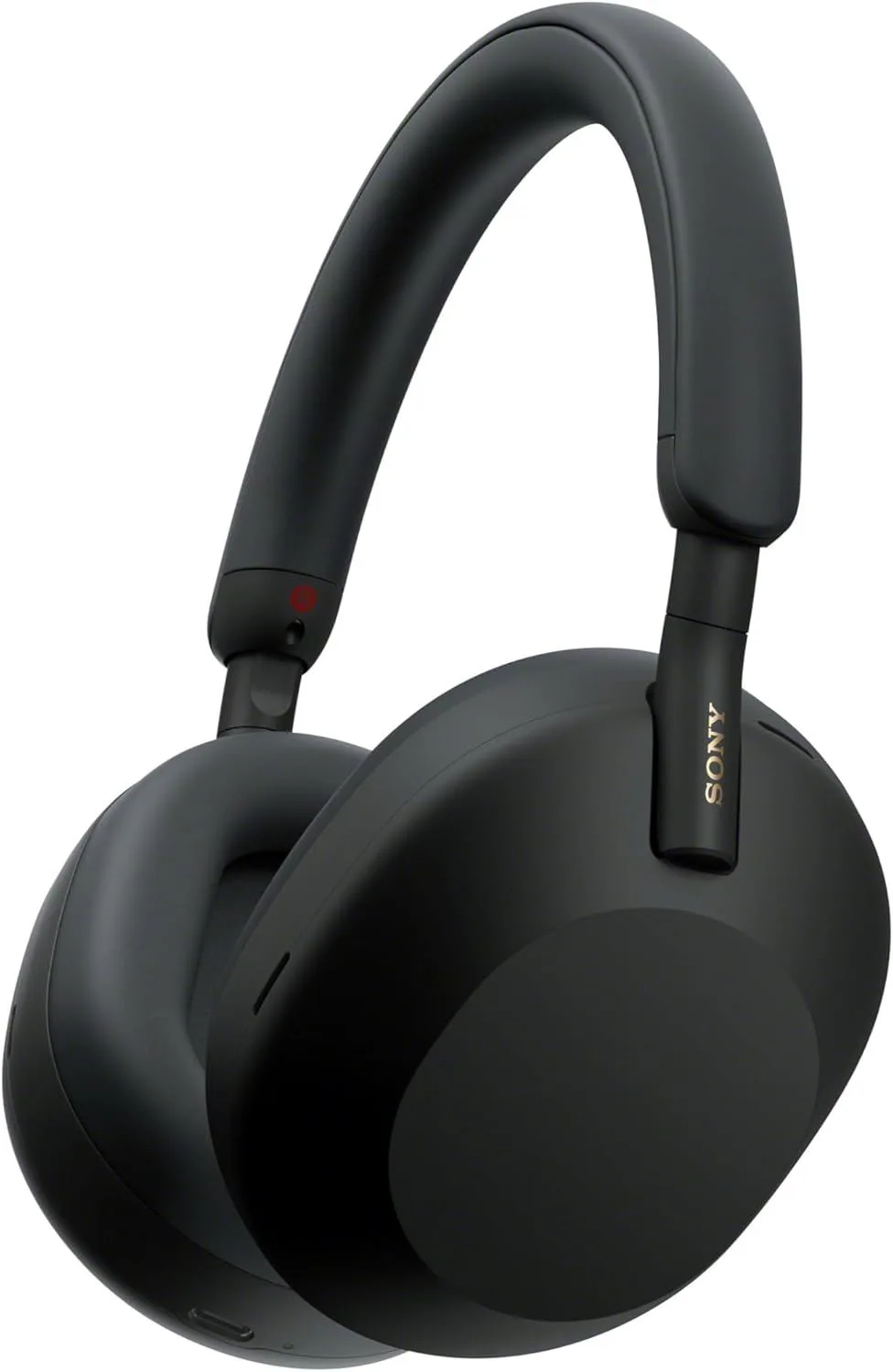
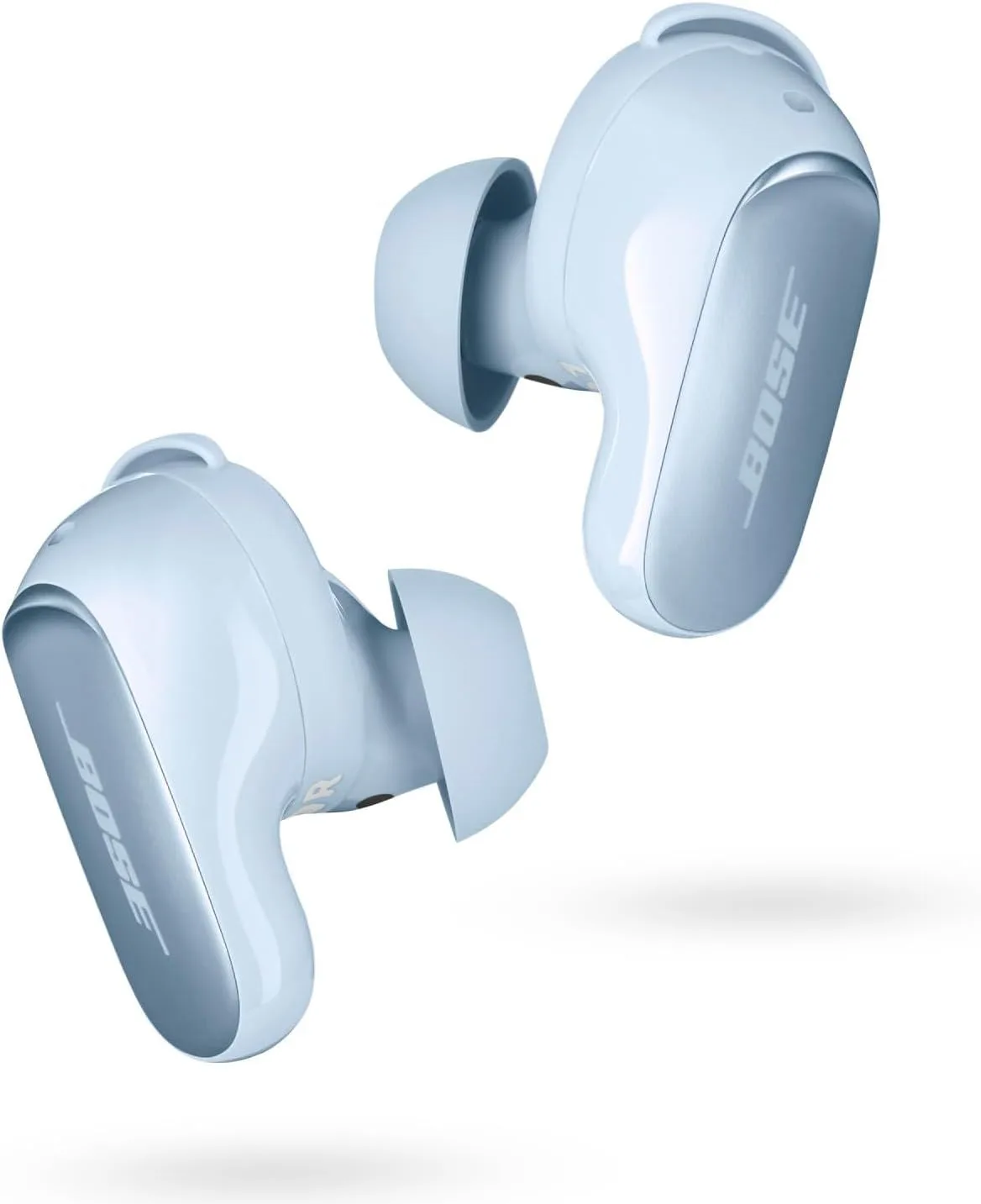
At a Glance
| Feature | Sony WH-1000XM5 Wireless Industry Leading Noise Canceling Headphones | Bose QuietComfort Ultra Wireless Noise Cancelling Headphones |
|---|---|---|
| Price Range | $250–$500 | $250–$500 |
| Driver Size | 30mm dynamic | Bose proprietary |
| Battery Life | 30 hrs (ANC on) | 30 hrs (ANC on) |
| Weight | 250g (8.8 oz) | 260g |
| Bluetooth Codecs | LDAC, AAC, SBC | AAC, SBC |
| ANC Type | Dual-processor, 8 mics | CustomTune, 6 mics |
| Water Resistance | None | None |
| Bluetooth | 5.2 | 5.3 |
| Check Price | Check Price |
XM5 vs Bose Detailed Performance Analysis
The Durability Question: XM5's Documented Hinge Problem
Start here, because this is the factor that separates this comparison from every other ANC headphone matchup. The Sony WH-1000XM5 has a documented 47% hinge failure rate based on data compiled in class action investigation filings. The failure mode is specific: the plastic hinge connecting the ear cup to the headband develops stress fractures over 8-18 months of regular use, eventually cracking and rendering the headphone unwearable. Sony has not issued a recall. Warranty claims are handled case-by-case and often denied after the 12-month window.
The Bose QuietComfort Ultra has no widespread structural failure pattern. Bose's QuietComfort line has shipped across multiple generations without a hinge-class durability issue. The QC Ultra uses a different hinge geometry with a metal-reinforced pivot point that distributes stress more evenly. For buyers who plan to use headphones daily for 2-3 years, this reliability gap is the single largest differentiator between these two products — more important than sound signature, ANC tuning, or codec support.
Context matters, though. Not every XM5 fails. The 47% figure represents failure rates within the first 24 months across reported cases — owners who baby their headphones, always use the case, and avoid flexing the hinge aggressively report much lower failure rates. If you treat the Sony WH-1000XM5 gently and accept the risk, you get a flagship-tier ANC headphone at a steep discount. The successor XM6 addresses this with aluminum hinge reinforcement, but costs $120 more than the current XM5 street price.
Noise Cancellation: Trading Wins by Frequency
The Bose QuietComfort Ultra holds a marginal advantage at extreme low frequencies — the deep drone of airplane engines, subway tunnels, and industrial HVAC systems. Bose's CustomTune calibration, which maps your ear canal acoustics every time you put the headphones on, optimizes the cancellation algorithm for your specific seal quality. This automatic calibration gives Bose a consistency advantage: the ANC performance stays steady regardless of whether you wear glasses, have a different hairstyle, or changed ear tips. No user action required.
The Sony WH-1000XM5's 8-microphone array with 4 beamforming mics handles mid-frequency noise — office conversation, keyboard clatter, street-level traffic — with a slight edge over the Bose's 6-microphone system. Sony's Auto NC Optimizer can match Bose's calibration quality, but it requires a manual trigger through the Headphones Connect app. Most XM5 owners never run it. The gap between the two headphones on ANC is within 1-2 dB across the spectrum according to independent measurements — a difference most listeners cannot detect without switching back and forth in the same environment.
For daily commuters on trains or buses, either headphone cancels enough ambient noise for focused listening. For frequent flyers who need maximum low-frequency cancellation during 4-6 hour flights, the Bose's automatic calibration gives it a slight practical edge — the ANC is optimized for the cabin pressure and seal quality from the moment you put the headphones on. For open-plan office workers dealing with conversation bleed, the Sony's mid-frequency advantage is more relevant.
Sound: The 30mm Driver Debate
Both headphones use 30mm drivers — identical in size, different in tuning philosophy. The Sony WH-1000XM5 leans toward a V-shaped sound signature with emphasized bass and treble, creating an engaging listen that flatters pop, electronic, and hip-hop genres. Sony's 10-band parametric EQ in the Headphones Connect app lets you reshape this default tuning to nearly any preference — a level of control the Bose app cannot match with its simpler 3-band adjustment.
The Bose QuietComfort Ultra ships with a warmer, more balanced default tuning that reviewers consistently describe as musical and full. Bass is present but controlled, mids are forward enough for vocal clarity, and treble avoids the harshness that some listeners find fatiguing on the Sony at default settings. For listeners who never open companion apps — and usage data suggests that is most buyers — the Bose sounds better out of the box. For listeners who enjoy the 15-minute process of dialing in a custom EQ curve, the Sony rewards that investment with greater precision.
The codec layer adds nuance. The Sony WH-1000XM5 supports LDAC, transmitting up to 990 kbps of audio data over Bluetooth — roughly triple the bitrate of standard AAC. On Android phones streaming from Tidal, Amazon Music HD, or Apple Music lossless, the difference is audible on well-mastered recordings with complex instrumentation. The Bose QuietComfort Ultra caps at AAC over Bluetooth, compressing high-frequency detail that LDAC preserves. But Bose counters with USB-C wired audio at 16-bit/48kHz — actual lossless playback through a digital connection that the XM5 does not support. Desktop listeners who can plug in get better wired audio from the Bose. Wireless listeners on Android get better audio from the Sony. iPhone users hear no difference — both fall back to AAC. See our Bluetooth codecs explained guide for the full technical breakdown.
Call Quality: Sony's Strongest Category Win
The Sony WH-1000XM5's 8 microphones with 4 beamforming mics deliver noticeably better voice isolation during phone calls than the Bose QuietComfort Ultra's 6-microphone setup. In noisy environments — walking on a busy street, sitting in a crowded coffee shop, taking a call during a train commute — the XM5 strips away more background noise from your voice. Callers on the other end report clearer audio with less ambient bleed.
The XM5 wins on call clarity in challenging acoustic environments. For desk-based video calls in a quiet home office, the gap narrows to near-parity. Both headphones handle Zoom and Teams calls without complaints from colleagues. The difference surfaces in challenging acoustic environments where the additional beamforming mics give Sony's algorithm more data points to separate your voice from surrounding noise. If you take calls while commuting, while walking, or in open-plan offices with competing conversations, the XM5 is the better choice. If your calls happen in quiet rooms, this category is a wash.
Comfort: Bose Pulls Ahead After Hour Three
For sessions under three hours, both headphones are comfortable. The Sony WH-1000XM5 at 250g and the Bose QuietComfort Ultra at 260g differ by 10 grams — imperceptible on the head. Short commutes, focused work blocks, and movie-length listening sessions feel equally good on either headphone.
The separation happens during extended wear. Bose's protein leather cushions use a deeper, softer memory foam that conforms to ear shape rather than pressing against it. The headband distributes clamping force across a wider surface area, reducing the pressure point that develops at the crown of the head on the Sony after 4-5 hours. Multiple long-term reviews confirm 6-8 hour sessions on the Bose without noticeable discomfort. The XM5 headband pressure becomes noticeable around hour 3-4 for most head shapes.
Glasses wearers face an amplified version of this difference. The Bose cushions accommodate temple arms without creating the pressure ridges that cause ear pain on many over-ear headphones. The XM5's thinner cushions press temple arms into the skin more firmly, leading to discomfort within 1-2 hours for some glasses wearers. If you wear glasses during most of your headphone use, the Bose comfort advantage is a significant factor — potentially the deciding one.
App Ecosystem: Depth vs Simplicity
Sony Headphones Connect is one of the deepest companion apps in the headphone market. The Sony WH-1000XM5 gets: 10-band parametric EQ with individual frequency control, LDAC bitrate selection, Speak-to-Chat sensitivity adjustment, Auto NC Optimizer with barometric pressure calibration, per-device audio profiles, custom ANC intensity between off and maximum (not just preset modes), and ambient sound pass-through with adjustable level. For the listener who treats their headphones like a musical instrument to be tuned, Sony's app is unmatched.
The Bose Music app offers 3-band EQ, Quiet Mode and Aware Mode toggles, Immersive Audio on/off, Bluetooth device management, and firmware updates. That is the complete feature set. The gap is enormous on paper. In practice, Bose's default settings are tuned well enough that most owners never need more than what the app provides. Sony's app is a playground; Bose's app is a light switch. Both approaches have an audience.
The practical implication: if you are the type of person who reads headphone forums, tweaks EQ curves by genre, and enjoys optimizing audio settings, the Sony WH-1000XM5 at its lower price gives you more to play with than the Bose QuietComfort Ultra. If you put headphones on and expect them to sound right without configuration, the Bose delivers on that promise more reliably than the Sony at default settings.
Portability: Neither Folds, but Cases Differ
The Sony WH-1000XM5 does not fold. Sony controversially removed the folding mechanism from the XM4 design, and the XM5's case reflects this with a larger footprint that takes up more bag space. The Bose QuietComfort Ultra also does not fold. Both require similarly sized hard-shell cases for transport. In this specific matchup, portability is a wash — neither headphone has an advantage.
For context, the Sony XM6 restored the folding design with an aluminum-reinforced hinge, producing a case roughly 30% smaller than the XM5's. The Sennheiser Momentum 4 also folds flat into a slim case. If portability is a primary concern and you are comparing across the full market, other options outperform both headphones in this comparison.
Battery: Matched at 30 Hours
Both deliver 30 hours with ANC active — enough for a full work week of 6-hour sessions without charging. The Bose QuietComfort Ultra extends to roughly 45 hours with ANC turned off, useful in quiet environments where noise cancellation is unnecessary. The Sony WH-1000XM5 does not publish a separate ANC-off battery figure, though real-world testing shows approximately 36-38 hours with ANC disabled.
Quick charge favors Sony: 3 minutes of charging provides 3 hours of playback. Bose needs 15 minutes for 2.5 hours. For the "forgot to charge and need to leave in 5 minutes" scenario, the XM5 recovers faster. Both use USB-C for charging. Both support charging while listening, though ANC performance degrades slightly on both headphones when charging simultaneously — the processor allocates resources to power management.
For travelers, both headphones cover a coast-to-coast US flight with battery to spare. A round-trip transatlantic flight (12-14 hours) consumes roughly half the capacity. Neither requires a mid-flight charge under normal listening conditions. Battery is not a differentiator in this comparison.
Price and the Value Equation
This is where the comparison gets interesting. The Sony WH-1000XM5 at roughly $80 less than the Bose QuietComfort Ultra is not a small gap — it represents a full tier of price difference in the headphone market. For that $80 savings, you get ANC within 1-2 dB of the Bose, better call quality, LDAC codec support, and a deeper companion app. You give up comfort margin during extended wear, USB-C wired audio, automatic ear canal calibration, and — most critically — build reliability confidence.
The broader market adds context. The Sony XM6 at roughly $398 fixes the XM5's hinge problem with aluminum reinforcement, adds a larger 40mm driver, and doubles the microphone count to 12. It costs $120 more than the XM5 and $39 more than the Bose. The Sennheiser Momentum 4 around $247 undercuts both with 60-hour battery life and aptX Adaptive, though its ANC trails both Sony and Bose. The AirPods Max 2 at the top of the market serves Apple ecosystem buyers who want Adaptive Audio, Live Translation, and deep system integration — features neither Sony nor Bose currently offer.
The value question distills to risk tolerance. The Sony WH-1000XM5 at its current price is a tremendous deal if the hinge holds. If it cracks at month 14 — past warranty, past return window — you have spent $278 on headphones that lasted just over a year. The Bose QuietComfort Ultra at its higher price has no comparable durability risk. Over a 3-year ownership period, the Bose is likely the cheaper option for buyers who would need to replace a failed XM5 out of pocket.
Spatial Audio and Immersive Features
The Bose QuietComfort Ultra offers Bose Immersive Audio with three modes: Still for stationary listening, Motion for head-tracked audio while moving, and Cinema Mode that anchors the soundstage to a fixed screen position. Cinema Mode is the standout — watching a movie on a laptop with the audio appearing to come from the screen rather than rotating with your head creates a convincing surround-sound illusion. What Hi-Fi praised this implementation specifically.
The Sony WH-1000XM5's spatial audio support is more limited, working primarily with Sony's 360 Reality Audio format and compatible streaming services. The effect is subtler than Bose's implementation, introducing fewer artifacts during extended listening but also delivering a less dramatic spatial impression. For movie watching and spatial audio content, Bose has a clear advantage. For standard stereo music listening where spatial processing is not desired, this category is irrelevant to both headphones.
Long-Term Ownership and Replacement Costs
Ear cushion replacement is expected every 12-18 months with heavy daily use on both headphones. Sony's XM5 replacement pads are widely available from both official and third-party sources — the headphone has been on the market since 2022, and the aftermarket is mature. Bose QC Ultra replacement cushions are available but with fewer third-party options due to a magnetic attachment design that is harder to replicate.
Resale value tells an interesting story. The Sony WH-1000XM5's resale has dropped more steeply than typical for a Sony flagship — the combination of the XM6 successor launch and the hinge failure reputation has depressed used prices. The Bose QuietComfort Ultra maintains stronger resale due to its current-generation status and clean reliability record. If you buy the XM5 and decide to upgrade within a year, expect to recover less of your purchase price than you would selling a Bose QC Ultra in the same timeframe.
Which One Fits Your Situation
Get the Sony WH-1000XM5 If...
- You want flagship-tier ANC at a discounted price and are comfortable accepting the documented hinge durability risk
- Call quality in noisy environments is a daily priority — the 8-mic beamforming array outperforms the Bose's 6-mic system
- You use an Android phone and want LDAC high-res wireless audio — the Bose caps at AAC over Bluetooth
- You enjoy deep app customization with 10-band EQ, ANC intensity control, and per-device profiles
- Your headphone sessions are typically under 3 hours, where the comfort difference is negligible
Get the Bose QuietComfort Ultra If...
- Build reliability matters — no documented hinge failures, no class action investigations, no durability anxiety
- You wear headphones 6-8 hours daily and need the most comfortable cushion and headband design available
- You want USB-C wired lossless audio for desktop or laptop listening — the Sony does not offer USB-C audio
- You wear glasses and need a headphone that accommodates temple arms without pressure points
- You prefer headphones that sound excellent at default settings without needing an app to configure
Your Questions About This Comparison
Is the Sony WH-1000XM5 still worth buying in 2026?
At roughly $80 less than the Bose QC Ultra, the XM5 remains a strong value pick for buyers who prioritize ANC, call quality, and Sony's deep app customization. The main risk is the documented hinge failure — a 47% failure rate reported in class action filings. If you handle them carefully and avoid tossing them in bags without the case, the XM5 delivers 90% of the flagship ANC experience at a clear discount. The successor XM6 at $398 fixes the hinge issue entirely if durability is a dealbreaker.
Does the Sony WH-1000XM5 fold flat?
No. Sony removed the folding mechanism from the XM5, which means the carrying case is significantly larger than both its predecessor (XM4) and its successor (XM6, which restored folding). The Bose QC Ultra also does not fold. Both headphones require similarly sized cases, so neither has a portability advantage over the other in this matchup.
Which has better noise cancellation — Sony XM5 or Bose QC Ultra?
They trade wins by frequency range. The Bose QC Ultra has a measured edge at extreme low frequencies — deep airplane engine drone and subway rumble. The Sony XM5 performs better at mid-frequencies like office chatter and keyboard clatter, thanks to its 8-microphone array with beamforming. For most commuters and office workers, the difference is within 1-2 dB and difficult to perceive without direct A/B switching.
Why is the Sony WH-1000XM5 so much cheaper than the Bose QC Ultra?
The XM5 launched at $398 in 2022 and has been discounted as its successor, the XM6, takes over the flagship position. At current street prices around $278, the XM5 sits roughly $80 below the Bose QC Ultra at $359. This is standard product lifecycle pricing — not a quality gap. The XM5 hardware is identical to its launch version; only the price has changed.
Should I buy the Sony XM5, the Bose QC Ultra, or wait for a sale?
If your budget is firm, the XM5 at its current discounted price is hard to beat on pure ANC-per-dollar value. If comfort and long-term reliability matter more than saving $80, the Bose QC Ultra is the safer investment — no documented hinge issues, better cushion design for extended wear. The XM6 at $398 is the best option if you want Sony's ecosystem without the XM5's durability risk, but it costs $120 more than the XM5.
Track Both Products
We'll email you if either price drops or availability changes.
Only when something changes. Unsubscribe anytime.