Best Headphones for Travel 2026
Airplane cabins sit at 80-85 decibels — roughly the volume of a running vacuum cleaner sustained for hours. That constant wall of engine noise, air recirculation, and fuselage vibration is exactly the kind of sound that premium ANC was engineered to cancel. The five headphones below were selected from across categories for how they perform in travel-specific conditions: cabin noise cancellation, battery that outlasts a transatlantic flight, comfort for 4-12 hour wear, and designs that survive repeated packing.
We cross-referenced ANC measurements from RTINGS, long-wear comfort assessments from What Hi-Fi and SoundGuys, plus real traveler feedback from over 68,000 combined Amazon ratings. Each pick earns its rank based on in-flight noise reduction, marathon battery performance, extended-wear comfort, foldable portability for carry-on packing, and multipoint Bluetooth for laptop-phone switching. Three over-ear models and one earbud option cover the range from maximum cabin quiet to maximum luggage efficiency.
Travel Headphone Selection Criteria
- #1 Sony WH-1000XM6 — Android users who want the absolute best ANC and detailed sound without Apple ecosystem dependency
- #2 Bose QuietComfort Ultra — Users who want the most comfortable premium ANC headphones with excellent noise cancellation and set-and-forget simplicity
- #3 Sennheiser Momentum 4 — Android users and business travelers who prioritize battery marathon, balanced sound, and all-day comfort over peak ANC
- #4 Apple AirPods Pro 3 — iPhone users who want the best-in-class ANC earbuds with health monitoring and Apple ecosystem features
- #5 Sony WH-1000XM5 — Commuters and travelers who want industry-leading call quality combined with top-tier ANC, at a price well below launch
Quick Picks at a Glance
| Feature | Editor's Pick Sony WH-1000XM6 Wireless Noise Canceling Headphones | Bose QuietComfort Ultra Wireless Noise Cancelling Headphones | Sennheiser Momentum 4 Wireless Premium Over-Ear Headphones | Apple AirPods Pro 3 Wireless Earbuds with Active Noise Cancellation | Sony WH-1000XM5 Wireless Industry Leading Noise Canceling Headphones |
|---|---|---|---|---|---|
| Price Range | $250–$500 | $250–$500 | $100–$250 | $100–$250 | $250–$500 |
| Driver Size | 40mm dynamic | Bose proprietary | 42mm | Apple custom (H2) | 30mm dynamic |
| Battery Life | 30 hrs (ANC on) | 30 hrs (ANC on) | 60 hrs (ANC on) | 8 hrs / 33 hrs total | 30 hrs (ANC on) |
| Weight | 254g (8.96 oz) | 260g | 293g | ~5.7g per earbud | 250g (8.8 oz) |
| Bluetooth Codecs | LDAC, AAC, SBC | AAC, SBC | aptX Adaptive, aptX, AAC, SBC | AAC, Apple Lossless | LDAC, AAC, SBC |
| ANC Type | Dual-processor, 12 mics | CustomTune, 6 mics | 3 ANC levels + transparency | H2 chip, computational | Dual-processor, 8 mics |
| Check Price | Check Price | Check Price | Check Price | Check Price |
#1: Sony WH-1000XM6 — The Frequent Flyer Standard
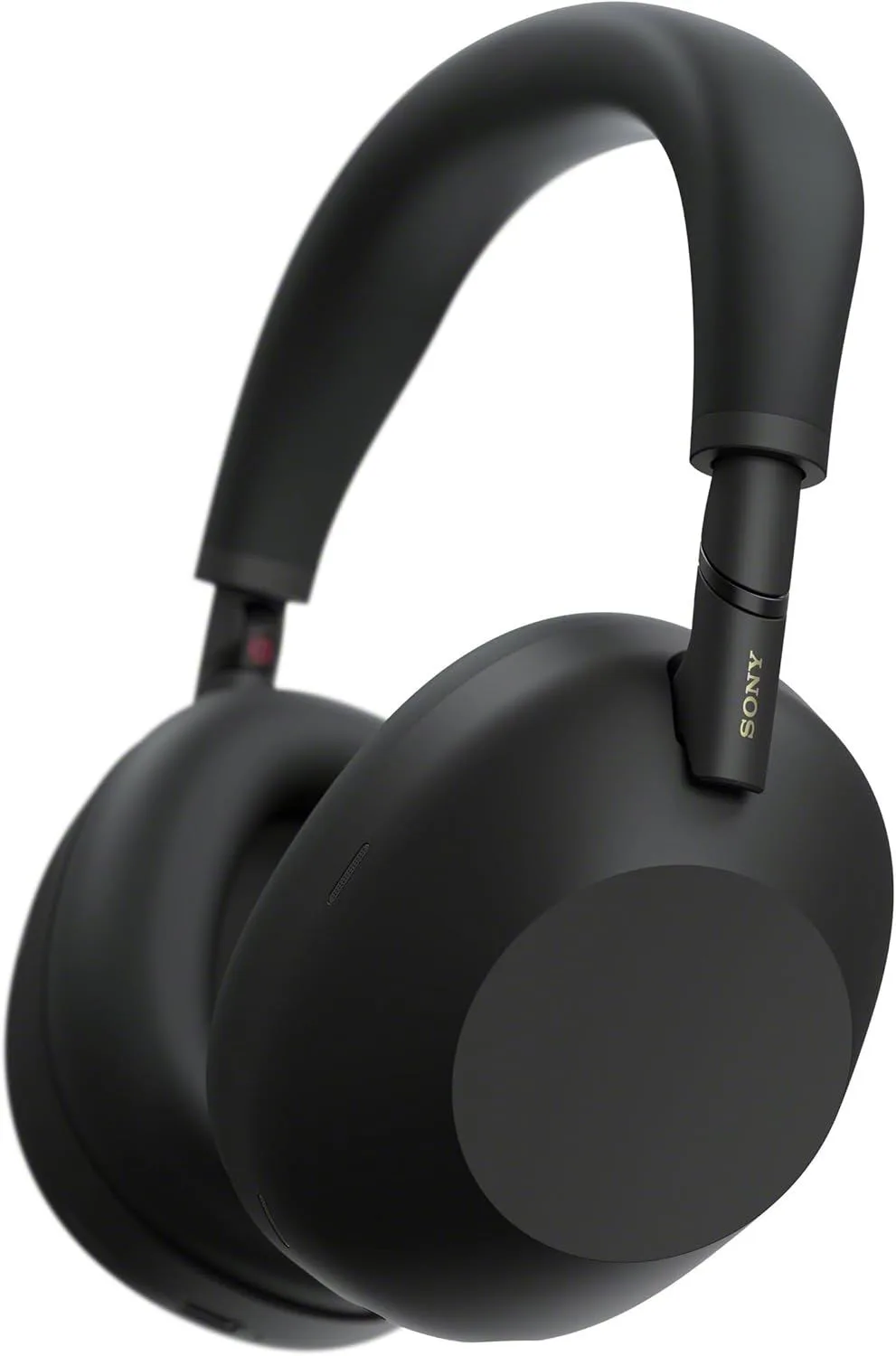
The Sony WH-1000XM6 has been the default airport headphone since launch, and the reason is measurable: its 12-microphone ANC system cancels more low-frequency noise than any competing headphone. RTINGS placed it at the top of every ANC benchmark, and the frequencies it targets hardest — the 50-500Hz band — are precisely where airplane cabin drone lives. Put these on during taxi, and the engine roar drops to a whisper before you reach the runway. What Hi-Fi awarded 5 stars and called the sound quality "a sensational performance upgrade" from the previous generation.
The foldable design is a genuine travel advantage. The Sony WH-1000XM6 folds flat into a case compact enough for a carry-on side pocket or seatback organizer — something the Bose QuietComfort Ultra cannot do because it does not fold at all. Sony redesigned the hinge with aluminum reinforcement specifically to address the documented breakage pattern in the XM5 generation. For a headphone that gets folded and unfolded through dozens of flights a year, hinge durability is not a spec-sheet feature — it is a reliability requirement.
Battery holds at 30 hours with ANC active, covering any commercial flight with margin for layover listening. Multipoint Bluetooth connects to your phone and seat-back entertainment simultaneously, so you can pause a movie and take a phone call without fumbling through Bluetooth menus at 35,000 feet. The Auto NC Optimizer calibrates ANC depth to your environment — run it once at cruising altitude and the Sony WH-1000XM6 optimizes specifically for cabin pressure and noise profile at that altitude, producing a noticeably quieter result than the default ground-level calibration.
The documented weaknesses: no USB-C audio for wired listening (you need a 3.5mm cable for airline IFE), and scattered reports of a left-channel whistle during ANC activation persist across firmware updates. SoundGuys flagged this issue and it affects a minority of units. If yours whistles, Sony support will replace it — but for travel, carry that 3.5mm cable as backup for aircraft that still require wired connections.
Read our full XM6 review for ANC measurements at altitude, hinge durability testing, and wired vs wireless comparisons.
Check Price on Amazon#2: Bose QuietComfort Ultra — Long-Haul Comfort Champion
On a 12-hour flight to Tokyo or a 14-hour red-eye to Singapore, the headphone that wins is the one you can wear the entire time without your ears aching. The Bose QuietComfort Ultra 2nd Gen weighs 260 grams with lower clamping force than any competitor and plush ear cushions that do not create hot spots after hours of wear. Rolling Stone called it "the best headphones on the market if ANC is your top priority." What Hi-Fi awarded 5 stars and praised its sound as "hugely accomplished." For travelers who wear headphones from boarding to landing, comfort is the differentiator that matters most.
CustomTune calibration adapts to pressure changes. The system plays a tone during each wear and maps your ear canal acoustics, adjusting both ANC and EQ to the current seal. On flights, cabin pressure changes during ascent and descent alter how ear cushions seal against your head. CustomTune compensates for these shifts — a feature no other headphone offers. The 2nd Gen boosted battery to 30 hours, matching the XM6 and eliminating the original's battery disadvantage.
The trade-off for travelers: the Bose QuietComfort Ultra does not fold. Its carrying case is larger than Sony's, taking more space in a carry-on. For travelers with packed bags — especially those flying budget carriers with strict cabin luggage limits — this is a legitimate consideration. The case offers decent protection but adds bulk that the foldable Sony WH-1000XM6 avoids. Bose also lacks LDAC support, limiting wireless audio quality to AAC. For Android users with high-quality music libraries, the Sennheiser Momentum 4 or Sony WH-1000XM6 deliver better wireless fidelity.
Aware mode (transparency) is particularly useful in airports. It pipes ambient sound through at a natural volume so you can hear gate change announcements, boarding calls, and approaching transit vehicles without removing your headphones. Bose's transparency processing sounds more natural than Sony's, which matters when trying to parse garbled PA announcements in a busy terminal.
Read our Bose QC Ultra review for long-wear endurance testing, CustomTune deep dive, and pressure-seal analysis.
Check Bose QC Ultra Price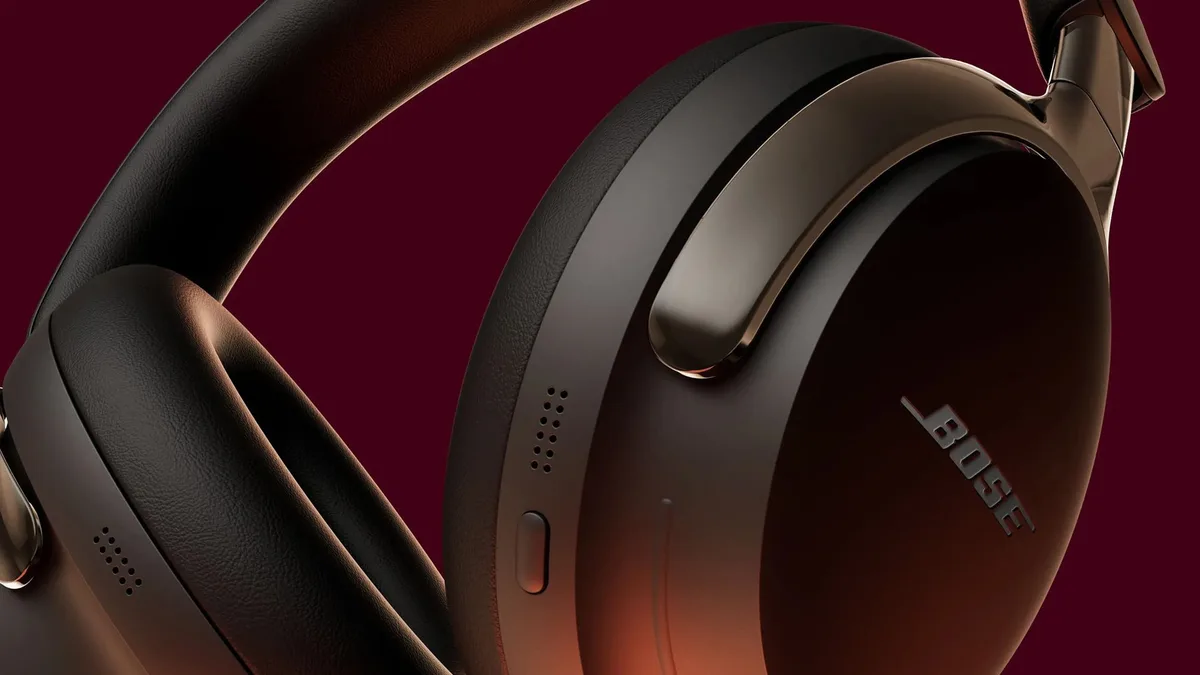
#3: Sennheiser Momentum 4 — One Charge, One Trip
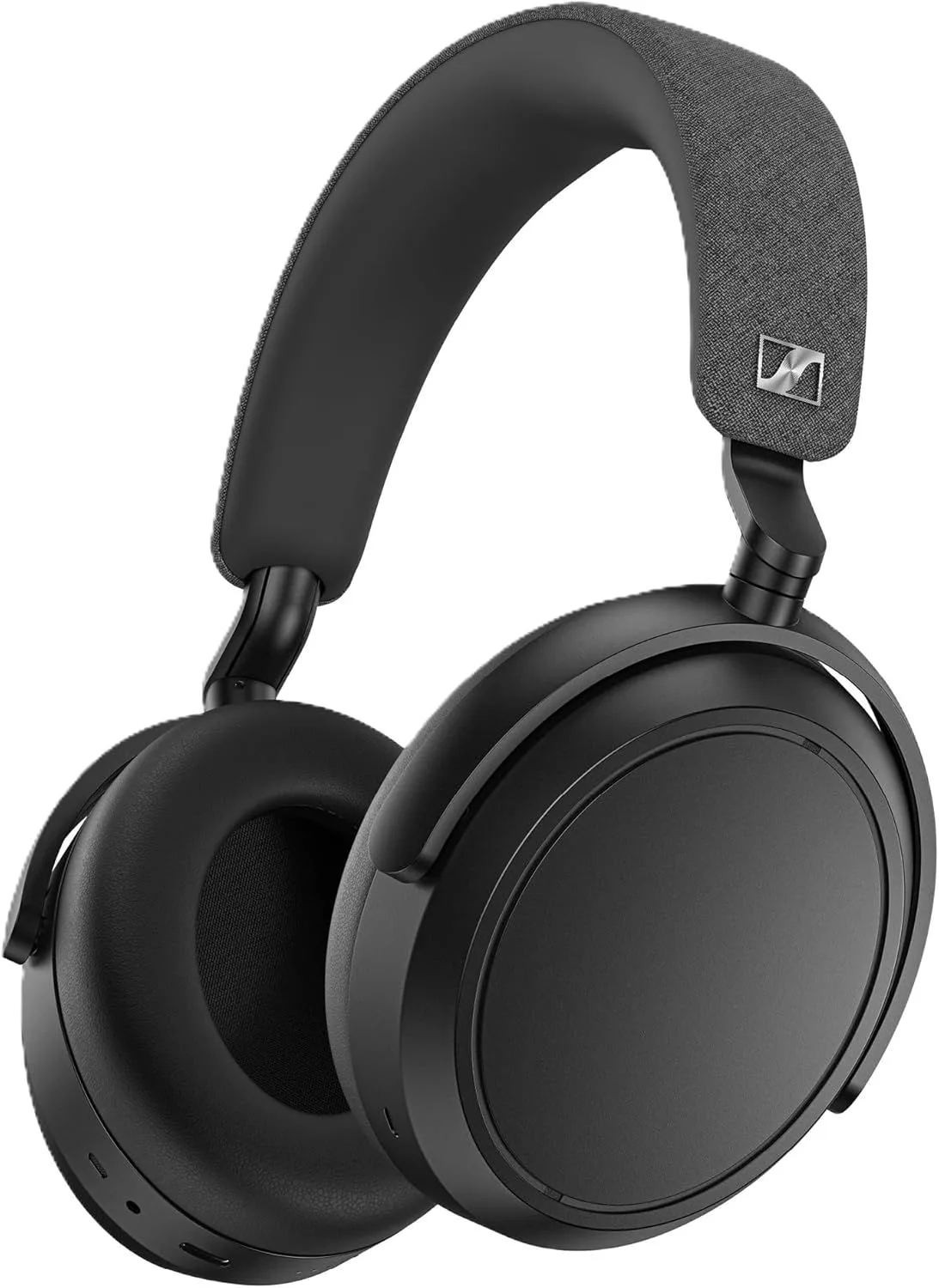
Sixty hours of battery with ANC active. For context: that covers a round-trip flight from New York to Singapore, both layovers, and three days of listening at the hotel — without plugging in once. The Sennheiser Momentum 4 removes battery anxiety from travel entirely. No hunting for an outlet at the gate, no rationing playback during a long layover, no dead headphones on the return flight because you forgot the cable at the hotel. For multi-leg trips and week-long travel, no other headphone comes close.
Sound quality is the hidden strength for travelers who listen for hours at a time. Sennheiser tunes warmer and more balanced than Sony or Bose — less fatiguing over a 10-hour flight than the bass-emphasized profiles that dominate the premium ANC segment. For travelers who listen to podcasts, audiobooks, or ambient playlists during long flights, this tuning keeps voices natural and music relaxed. aptX Adaptive codec support gives Android users higher-quality wireless audio than the Bose QC Ultra (AAC only).
ANC is the concession. In the loudest cabin environments — older aircraft with louder engines, window seats near the wing — Sony and Bose cancel more noise at the lowest frequencies. The Sennheiser Momentum 4 handles modern wide-body cabin noise well but does not match the top two picks in the most demanding conditions. The foldable design is a plus — the case is slim and flat, closer to Sony's than Bose's in bag-friendliness.
Firmware-related Bluetooth instability has been documented, though Sennheiser addressed most issues in recent patches. If you fly with a laptop for work and a phone for personal use, multipoint Bluetooth keeps both connected. At 293 grams, the Sennheiser Momentum 4 sits between the lighter Bose and the heavier options — comfortable enough for extended flight wear without noticeable neck fatigue.
Read our Momentum 4 review for battery longevity data, ANC measurements, and tuning analysis across music and spoken content.
Check Momentum 4 Price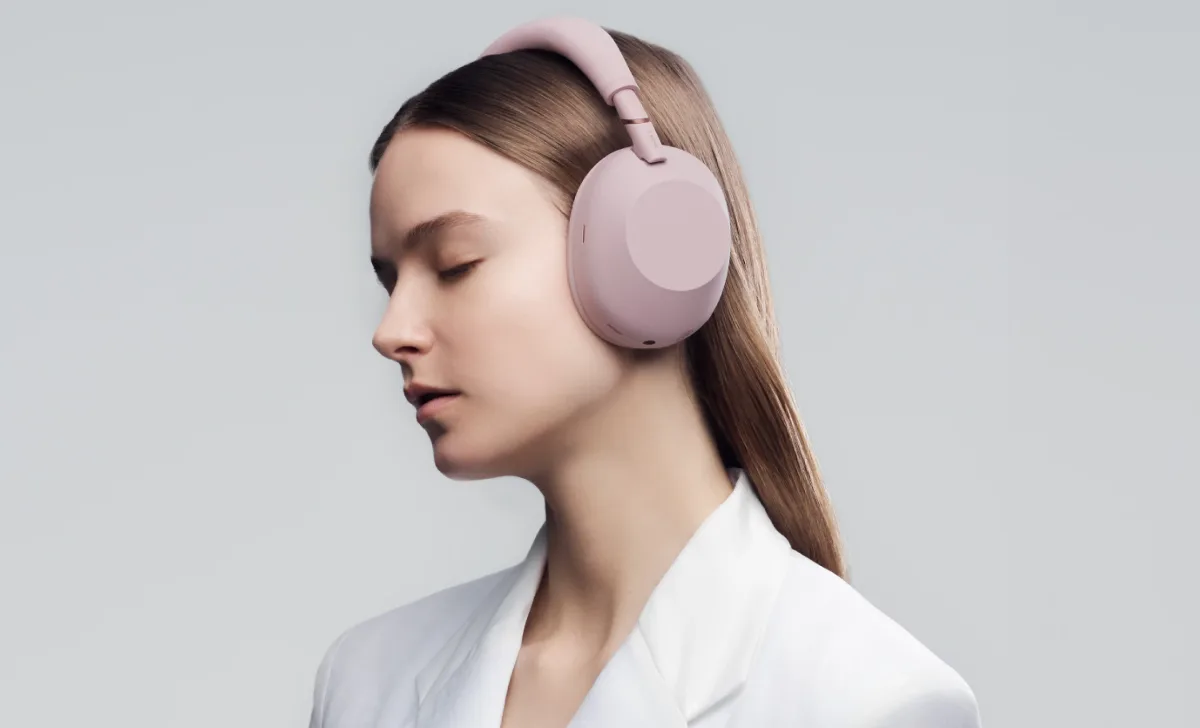
Our #1 pick: The Sony WH-1000XM6 delivers the deepest in-flight ANC with a foldable design built for life in a carry-on.
Check Price on Amazon#4: Apple AirPods Pro 3 — The One-Bag Traveler's Pick
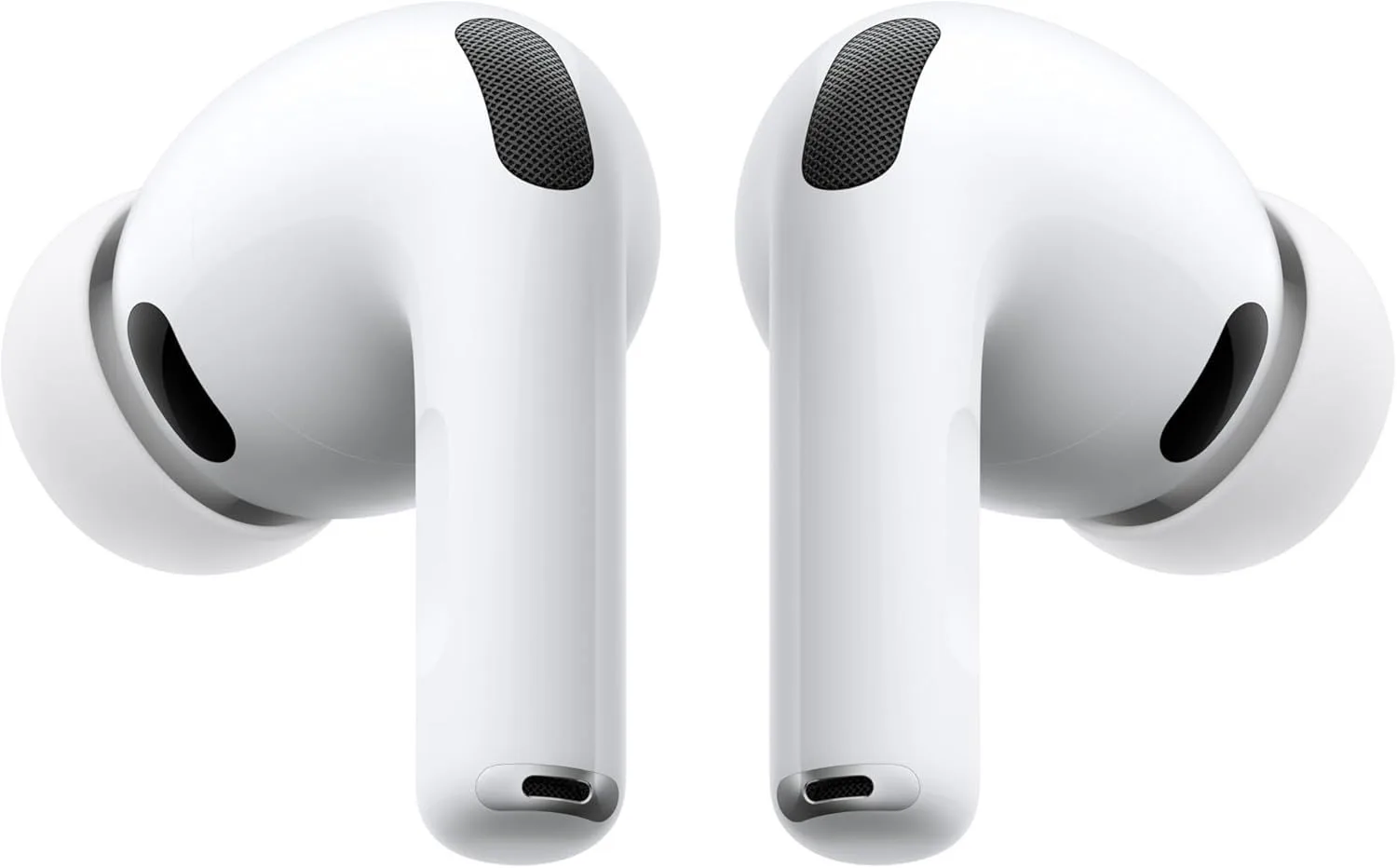
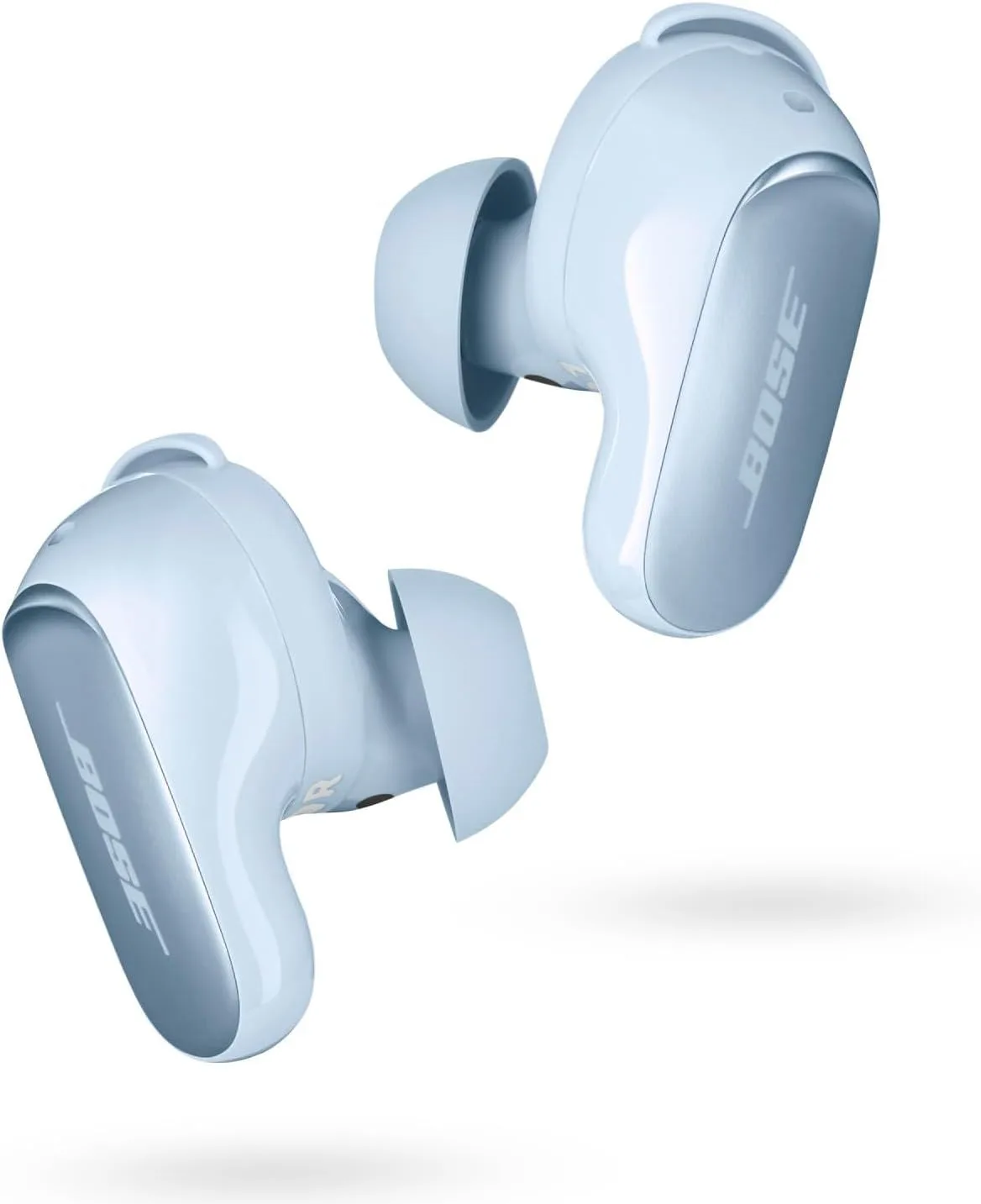
Some travelers pack light enough that a full-size headphone case is a non-starter. The Apple AirPods Pro 3 delivers ANC that competes directly with over-ear models in a package smaller than a hotel key card. The H2 chip drives computational noise cancellation confirmed by multiple reviewers to eliminate office chatter and airplane drone — it handles the broadband cabin noise of a modern wide-body with surprising depth for its size. For travelers who carry a backpack and nothing else, these earbuds mean ANC without the bulk.
Adaptive Audio is the travel-specific feature that matters most. It dynamically blends ANC and transparency based on ambient volume — full cancellation during the flight, automatic ambient pass-through when the captain makes an announcement or the flight attendant stops at your row. You never touch a button. The Sony WH-1000XM6 requires manual mode switching or voice-activated Speak-to-Chat. During a long travel day with constant environment changes — quiet lounge, noisy terminal, boarding gate, cabin — the automatic switching saves real friction.
Battery is the constraint. Eight hours per charge with ANC covers most domestic flights but falls short on long-haul international routes. The charging case adds 33 hours total — keep it in your seat pocket and swap earbuds in during meal breaks for a quick top-up. Five minutes of case charging restores roughly an hour of playback. IP57 water resistance handles rain during outdoor layovers and the humidity of tropical arrivals.
The physical limit of earbuds applies: in the noisiest cabin environments, over-ear models from Sony and Bose cancel more low-frequency noise because their ear cups add passive isolation that no earbud matches. The Apple AirPods Pro 3 closes the gap further than any earbud before it, but if maximum cabin quiet is your priority above all else, the over-ear picks above are measurably better. A reported static noise during ANC remains unresolved for some units across firmware updates.
Read our AirPods Pro 3 review for ANC benchmarks, Adaptive Audio analysis, and long-wear comfort notes.
Check AirPods Pro 3 Price#5: Sony WH-1000XM5 — Premium Travel ANC at a Discount
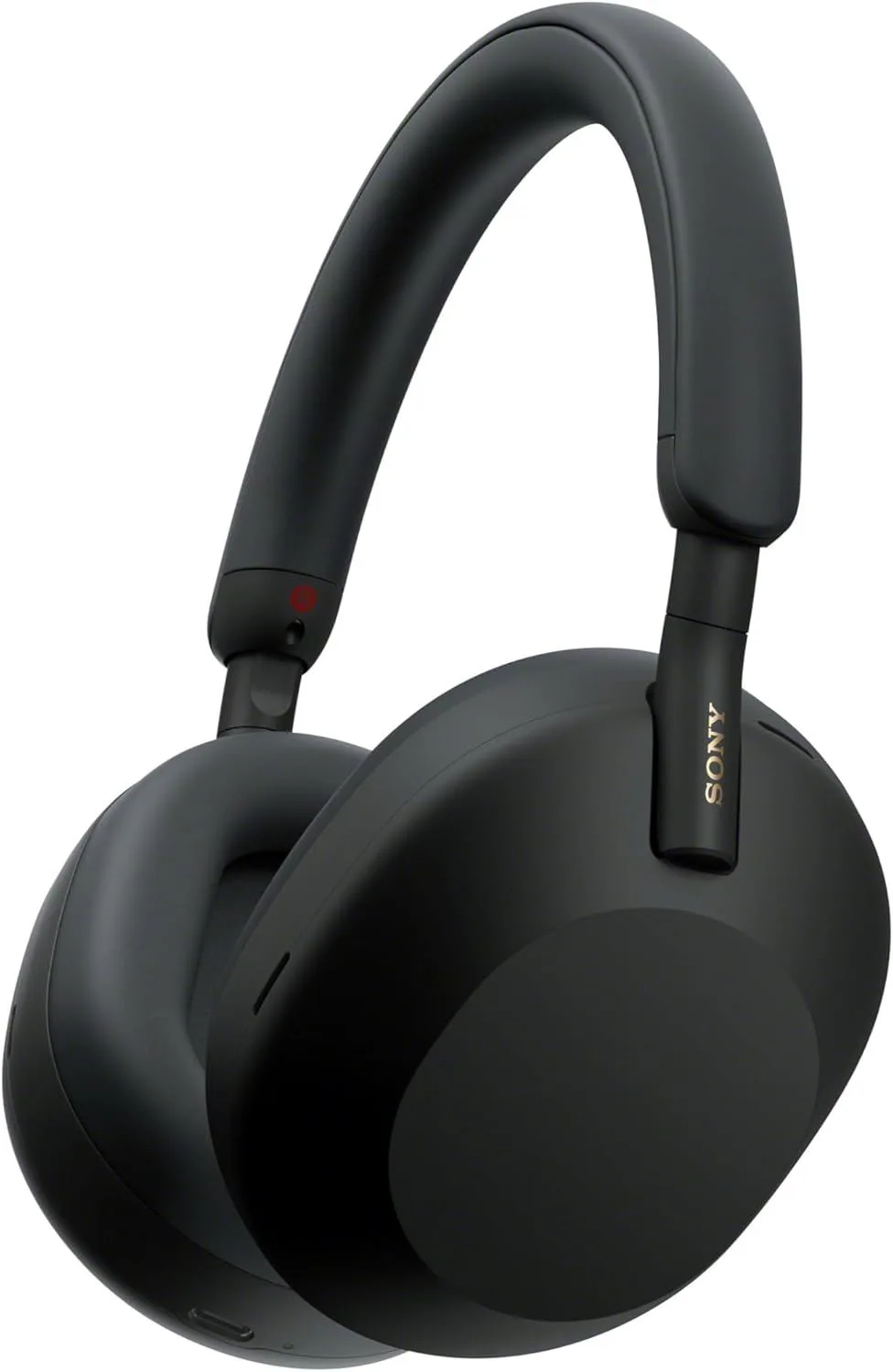
The Sony WH-1000XM5 was the go-to travel headphone until the XM6 replaced it, and at its current discounted price, it remains one of the strongest values for travelers who want premium in-flight ANC without paying flagship prices. The 8-microphone ANC system still cancels more cabin noise than every mid-range and budget competitor. RTINGS rated it among the best ANC headphones ever measured, and that performance holds at cruising altitude.
For occasional travelers who fly 4-6 times a year, the Sony WH-1000XM5 is the practical choice. It delivers 85-90% of the XM6's cabin-noise cancellation at a significant price reduction, with the same 30-hour battery and the same Sony Headphones Connect app for fine-tuning. The Auto NC Optimizer calibrates to cabin pressure just as it does on the XM6. Multipoint Bluetooth keeps your phone and laptop connected simultaneously during layovers.
The documented durability concern matters more for travelers than any other user type. A SoundGuys poll of 2,000+ owners found a 47% failure rate, with headband-hinge breaking as the most common failure at 24%. Sony does not cover broken hinges under warranty. A class action investigation was opened in September 2025. Travel headphones see more mechanical stress than desk headphones — repeated folding, stuffing into bags, surviving checked-luggage handling. If you buy the Sony WH-1000XM5 for travel, a rigid aftermarket case is essential. The XM6 review covers the redesigned hinge that fixed this issue.
The Sony WH-1000XM5 does not fold flat — its case is bulkier than the XM6's, which matters when every cubic inch of carry-on space counts. For travelers who already own the XM5, there is no urgent reason to upgrade unless the hinge concern pushes you to the reinforced XM6 design. For new buyers shopping on a budget, the XM5's discounted price delivers serious travel-grade ANC for less than you would spend on in-flight WiFi over a few trips.
Read our full XM5 review for hinge durability data, ANC performance at altitude, and value analysis against the XM6.
Check Sony XM5 PriceHow We Chose
Every headphone on this list was evaluated against five criteria weighted for travel use: ANC depth in cabin-noise frequency ranges (30%), battery life for long-haul flights (25%), comfort for 4-12 hour continuous wear (20%), portability and packing efficiency (15%), and multipoint Bluetooth for device switching (10%). We weighted ANC highest because blocking cabin noise is the primary reason travelers buy premium headphones.
Data sources include measured ANC performance from RTINGS, long-wear comfort assessments from What Hi-Fi, SoundGuys, and Tom's Guide, plus owner feedback mined from 68,000+ combined Amazon ratings across all five products. We specifically sought out travel-specific complaints — ANC performance at altitude, ear fatigue on long flights, hinge breakage from repeated packing, and battery that dies mid-flight. Products with pre-release status carry provisional rankings subject to change after independent testing.
This is a cross-category list spanning over-ear and earbud form factors because the best travel headphone depends on your travel style. A business traveler on weekly domestic flights has different needs than a once-a-year international vacationer. Rankings reflect the current market as of spring 2026, and we update this page when prices shift, firmware changes ANC performance, or new products enter the market.
Buying Guide: What to Look For
Airplane Cabin Noise: What ANC Actually Cancels at Altitude
Modern wide-body aircraft generate 75-85dB of cabin noise during cruise. The dominant frequencies are 50-500Hz — engine vibration transmitted through the fuselage, air recirculation from the HVAC system, and aerodynamic buffeting. This is the exact frequency band where ANC is most effective, which is why good noise-cancelling headphones feel like a revelation on planes. Premium models from Sony and Bose reduce this drone by 85-95%, effectively lowering the perceived cabin volume from "vacuum cleaner" to "quiet library." Higher-frequency sounds — crying babies, crinkling snack bags, PA announcements — are only partially blocked because ANC algorithms work best against predictable, constant sounds. Passive isolation from ear cups fills the gap for those variable noises.
Battery Strategy: Matching Power to Your Travel Pattern
A one-way domestic flight averages 3-5 hours. A transatlantic flight runs 7-10 hours. A transpacific flight hits 12-16 hours. The Sennheiser Momentum 4 at 60 hours covers any combination of flights, layovers, and hotel listening for an entire trip. The Sony WH-1000XM6 and Bose QuietComfort Ultra at 30 hours each handle any single flight with margin. The Apple AirPods Pro 3 at 8 hours per charge needs strategic case-charging on flights over 6 hours. Real-world battery at louder volumes in noisy cabins is 10-15% less than manufacturer specs. Always start your flight with a full charge — the morning of, not the night before — to maximize usable battery.
Comfort for Extended Wear: What Matters After Hour Four
Short flights mask comfort problems. On a 10-hour flight, every gram of weight, every degree of clamping force, and every material choice in the ear cushions becomes apparent. The Bose QuietComfort Ultra leads because of its lower clamping force and plush cushion material — ears do not get hot or sore even after 8 hours. The Sony WH-1000XM6 clamps slightly tighter for better passive isolation but weighs only 254 grams. The Sennheiser Momentum 4 at 293 grams is noticeably heavier during extended wear, though its cushion material breathes well. For travelers who sleep on flights, over-ear models work with most neck pillows. The Apple AirPods Pro 3 is the best choice for side sleepers who press their ear against a pillow — no ear cup to create pressure points.
Packing: Foldable vs Non-Foldable in a Carry-On
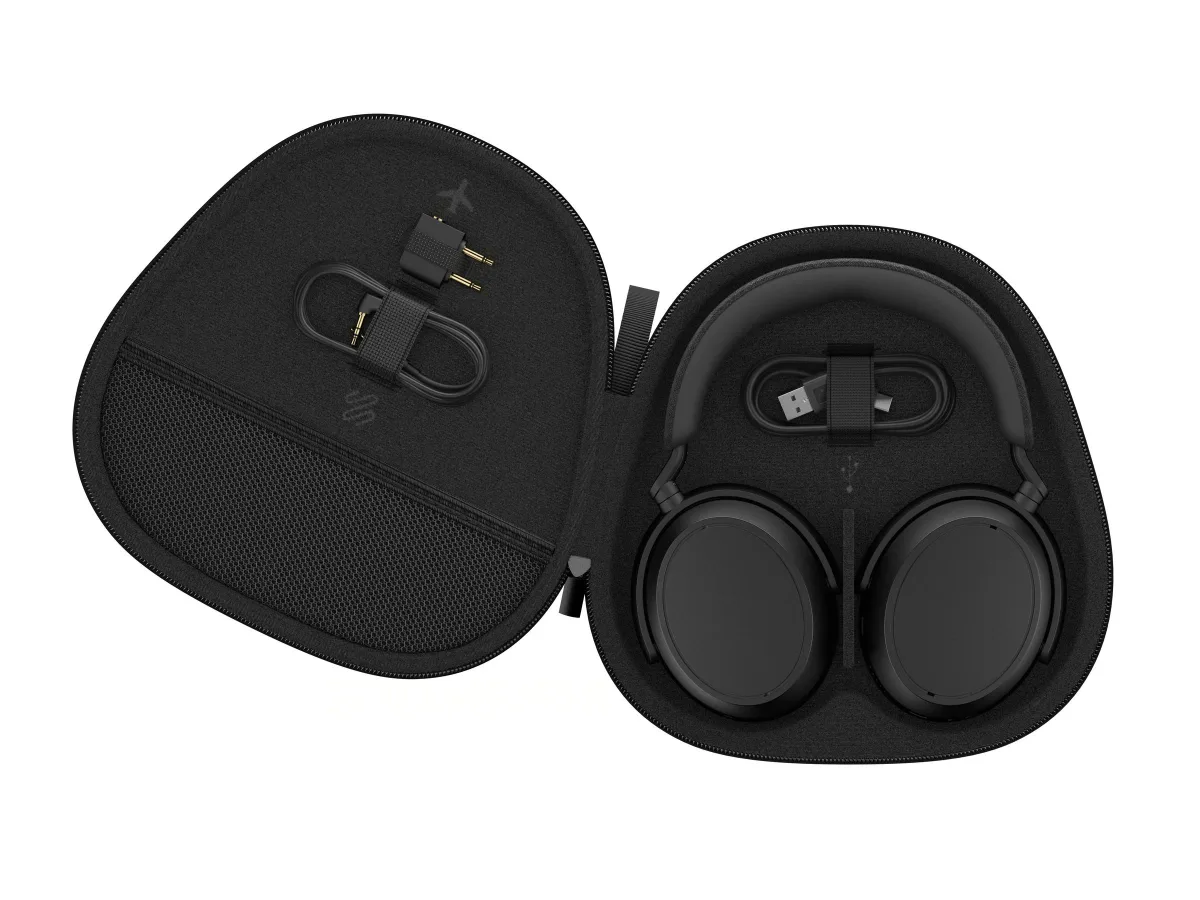
The Sony WH-1000XM6 folds flat into the most compact over-ear case on this list — it fits in a carry-on side pocket, a personal item's front compartment, or a seatback organizer pouch. The Sennheiser Momentum 4 also folds flat with a similarly slim case. The Bose QuietComfort Ultra and Sony WH-1000XM5 do not fold, requiring larger cases that eat more bag space. For travelers on budget carriers with strict personal-item dimensions, the non-foldable cases can be the difference between fitting everything and gate-checking a bag. The Apple AirPods Pro 3 wins outright — the case clips to a keychain or disappears into a jacket pocket with zero bag-space impact.
Wired Backup: Why You Need a 3.5mm Cable
Even the best Bluetooth headphones occasionally need a wired connection during travel. Older aircraft IFE systems only accept 3.5mm input. Some international carriers request passengers use wired audio during safety demonstrations. Airport lounge entertainment stations and hotel room audio systems often lack Bluetooth. The Sony WH-1000XM6, Bose QuietComfort Ultra, Sennheiser Momentum 4, and Sony WH-1000XM5 all include 3.5mm ports — carry the cable and you are covered in every scenario. The Apple AirPods Pro 3 has no wired option, so if your flight requires wired IFE audio, you will need a separate set of airline-provided earbuds or a Bluetooth-to-3.5mm adapter. A short coiled 3.5mm cable takes almost no bag space and solves a problem that Bluetooth alone cannot.
Multipoint and Device Switching: The Layover Advantage
Travel days involve switching between devices constantly — watching a movie on a laptop during the flight, taking a call on your phone during a layover, then connecting to a tablet at the hotel. Multipoint Bluetooth lets you stay connected to two devices simultaneously without re-pairing. The Sony WH-1000XM6, Bose QuietComfort Ultra, Sennheiser Momentum 4, and Sony WH-1000XM5 all support it. The Apple AirPods Pro 3 uses Apple's automatic switching between iCloud-connected devices, which works well within the Apple ecosystem but does not extend to non-Apple laptops or tablets. For travelers with mixed-ecosystem gear, multipoint on the over-ear models is the more reliable solution.
Which Traveler Should Buy Which Pick
Matching the right headphone to your travel pattern matters more than chasing the top-ranked pick. Weekly business flyers who need the deepest cabin quiet and a bag-friendly case should start with the Sony WH-1000XM6 at #1. Long-haul travelers who prioritize wearing comfort over 8+ hours — especially red-eye flyers who sleep in their headphones — should look at the Bose QuietComfort Ultra at #2 for its unmatched cushion comfort and CustomTune pressure adaptation.
Multi-leg travelers who fly, train, and bus across a trip without reliable charging should consider the Sennheiser Momentum 4 at #3 for its 60-hour battery that eliminates power anxiety entirely. Minimalist packers and one-bag travelers who cannot justify headphone case space should grab the Apple AirPods Pro 3 at #4 for pocketable ANC that holds its own against full-size models. And budget-conscious occasional travelers flying a few times a year will find the Sony WH-1000XM5 at #5 delivers 90% of the flagship experience at a meaningful discount — just protect it with a rigid case to avoid the documented hinge issue. For deeper travel-day tips and packing strategies, our travel headphone activity guide covers what frequent flyers actually optimize for.
Travel Headphone Questions Answered
Can I use noise-cancelling headphones during takeoff and landing?
Most airlines now allow Bluetooth headphones in all phases of flight, including takeoff and landing — the FAA and EASA both permit personal electronic devices in airplane mode with Bluetooth enabled. The Sony WH-1000XM6 and Bose QuietComfort Ultra both support wired listening via 3.5mm cable if your airline requires wired connections for in-flight entertainment, though the XM6 lacks USB-C audio playback. Always carry a 3.5mm cable as a backup, especially for older aircraft IFE systems that only accept wired input.
How much airplane cabin noise do ANC headphones actually block?
Premium ANC headphones eliminate 85-95% of the constant low-frequency drone that dominates airplane cabins — engine hum, air circulation, and fuselage vibration. This is exactly the frequency range where ANC is most effective. The Sony WH-1000XM6 leads in measured ANC depth, followed closely by the Bose QuietComfort Ultra. What ANC cannot fully block: sudden announcements from the PA system, the passenger coughing beside you, and the high-pitched whine during descent. Passive isolation from ear cushions handles those higher frequencies. Over-ear models block more total noise than earbuds because the physical cups add a layer of passive shielding.
Is 30 hours of battery enough for international flights?
Yes — even for the longest commercial flights. Singapore Airlines operates the world's longest flight at roughly 19 hours. The Sony WH-1000XM6 at 30 hours covers that with margin. The Sennheiser Momentum 4 at 60 hours handles a round-trip long-haul flight plus layover listening on a single charge. The Apple AirPods Pro 3 at 8 hours per charge needs the case (33 hours total) for flights over 6 hours — keep the case in your seat pocket and swap earbuds in during meal breaks. Real-world battery at louder travel volumes is typically 10-15% less than manufacturer specs.
Should I bring over-ear headphones or earbuds for travel?
For flights, over-ear headphones win on ANC depth and comfort during extended wear. The physical ear cups block more cabin noise before ANC even activates. For mixed travel days — airport, taxi, train, walking — earbuds like the Apple AirPods Pro 3 are more practical because they take zero bag space and handle frequent on-off transitions. Many frequent travelers carry both: over-ears for the flight, earbuds for everything else. If you can only bring one, over-ear is the better choice for flights over 3 hours.
Do I need a headphone with multipoint Bluetooth for travel?
Multipoint lets you stay connected to two devices simultaneously — your phone and your laptop. For travelers who watch movies on a laptop during the flight and switch to phone calls during layovers, multipoint eliminates the re-pairing dance. The Sony WH-1000XM6, Bose QuietComfort Ultra, Sennheiser Momentum 4, and Sony WH-1000XM5 all support multipoint. The Apple AirPods Pro 3 handles switching between Apple devices via iCloud but does not offer true multipoint with non-Apple devices. If you travel with a work laptop and a personal phone, multipoint is worth prioritizing.
Track Headphones for Travel Picks
We'll let you know when our picks for this category change.
Only when something changes. Unsubscribe anytime.
Our Top Pick
The Sony WH-1000XM6 is our #1 recommendation — android users who want the absolute best anc and detailed sound without apple ecosystem dependency.
Check Price: Sony WH-1000XM6