AirPods Pro 3 vs Sony WF-1000XM5: Ecosystem Lock-In Decides This One
Neither wins for everyone — but the split is clean. The Apple AirPods Pro 3 wins on ANC, battery, water resistance, health features, price, and Amazon ratings. The Sony WF-1000XM5 wins on codec support and EQ customization. Your phone decides the rest.
Premium Earbud Head-to-Head Analysis
This is the premium earbud showdown that sells out comment sections. The Apple AirPods Pro 3 leads on most measurable specs — better ANC, longer battery, higher water resistance, health monitoring, and a lower price. The Sony WF-1000XM5 wins where Apple refuses to compete: LDAC and aptX high-res Bluetooth codecs, granular EQ controls, and full feature parity on Android. On paper, the Pro 3 wins five categories to the XM5's two. In practice, your phone makes the decision for you.
The numbers tell a clear story. At $199 vs $248, Apple undercuts Sony by $50 while delivering 33 hours of total battery to Sony's 24, IP57 water and dust protection to Sony's IPX4, and a 4.4-star Amazon average across 6,900 reviews against Sony's 3.8 stars from 5,700. The XM5 counters with LDAC wireless audio at 24-bit/96kHz — a codec Apple has never supported over Bluetooth — plus aptX, a 10-band parametric EQ in the Sony Headphones Connect app, and multiplatform feature parity that the AirPods cannot match outside the Apple ecosystem.
Both have documented problems. The Pro 3 has an unresolved static noise bug during ANC that persists after two firmware updates — search "AirPods Pro 3 static" and the results speak for themselves. The XM5 has persistent call quality complaints tied to its bone conductor microphone, glossy plastic that scratches within weeks, and connectivity drops noted across hundreds of Amazon reviews. Neither is perfect. The question is which set of trade-offs aligns with your daily use. Read the individual reviews — Apple AirPods Pro 3 full review and Sony WF-1000XM5 full review — for deep dives on each. This comparison focuses on the head-to-head. See our best ANC earbuds roundup if you want to widen the search beyond these two.
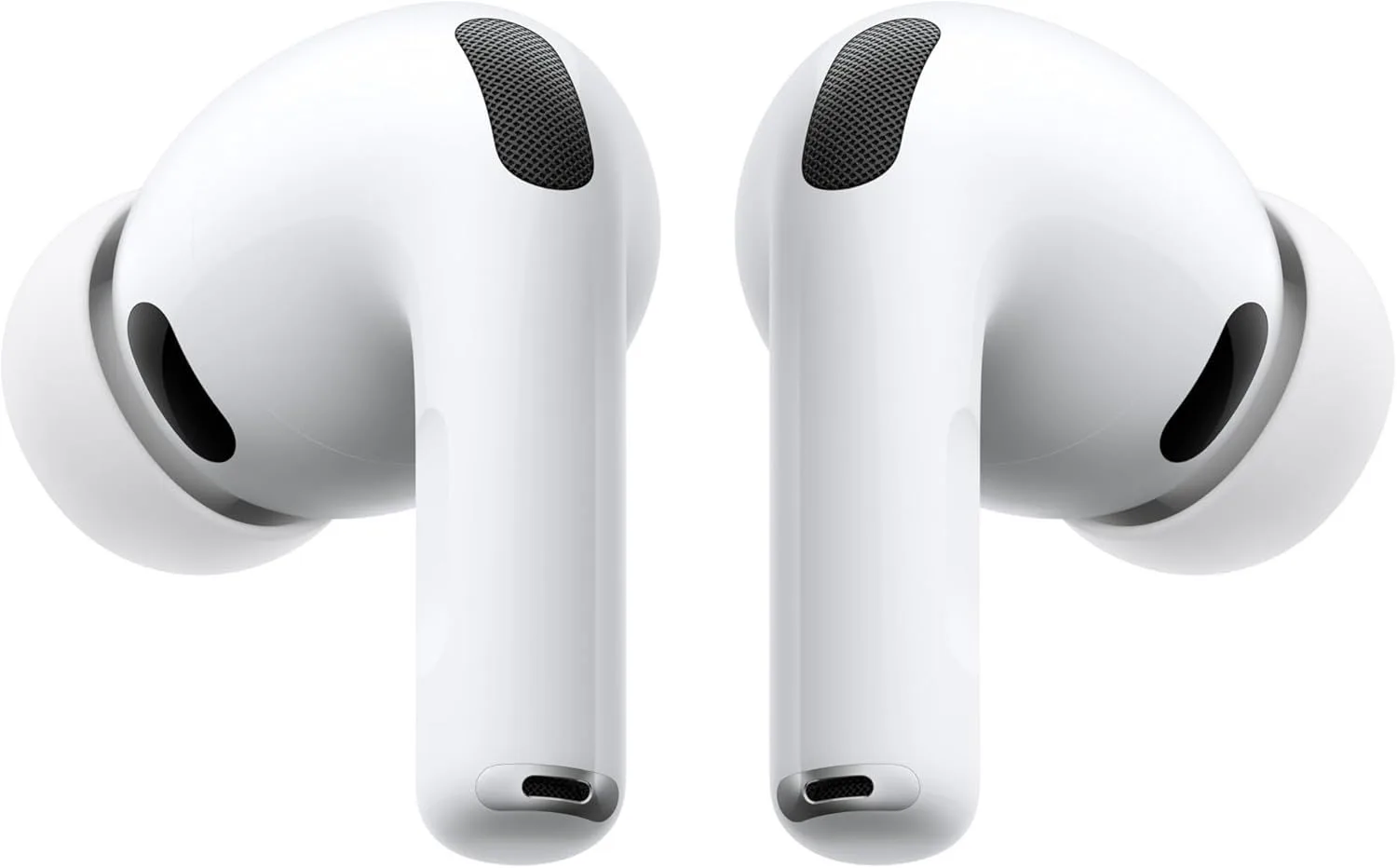
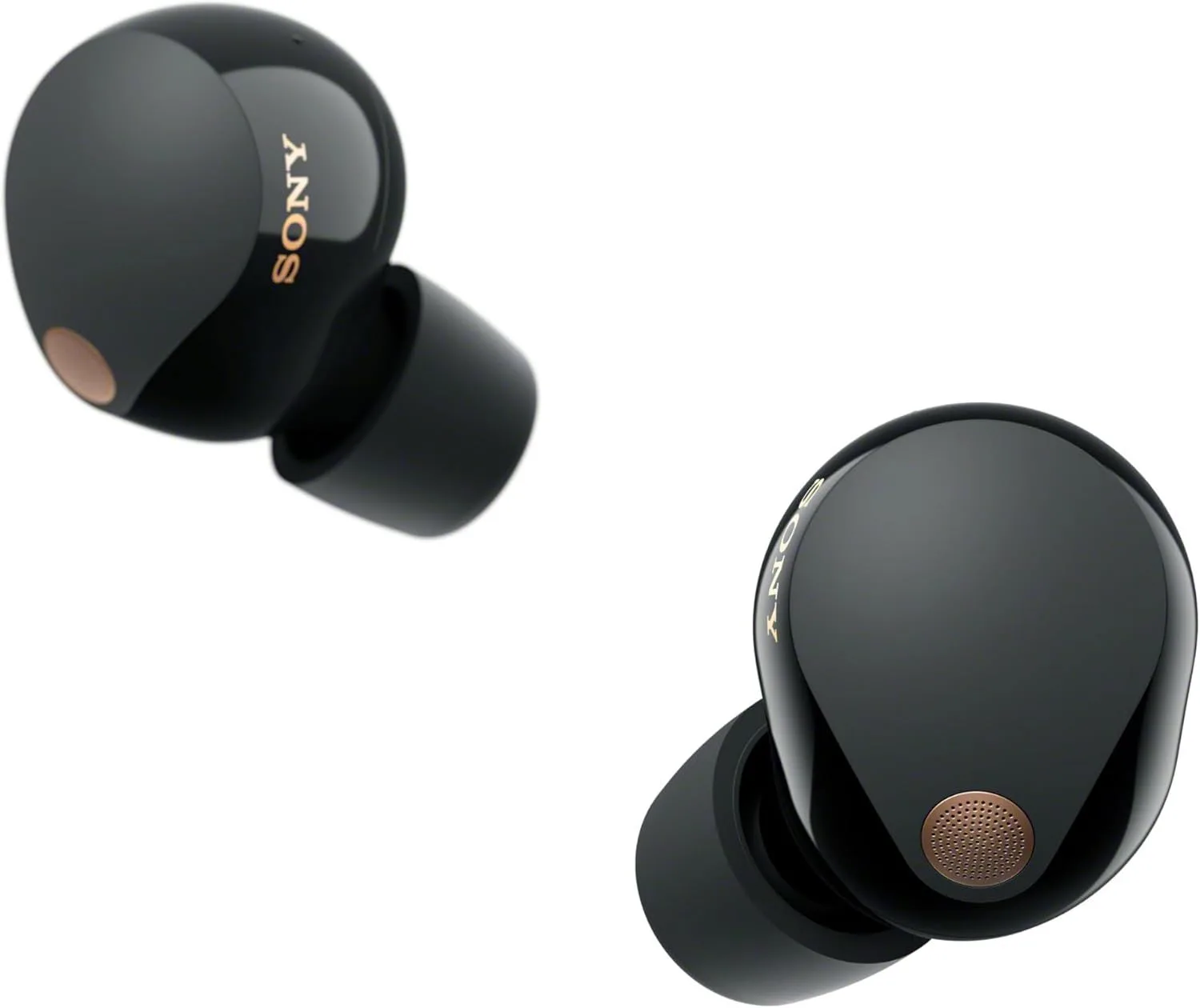
At a Glance
| Feature | Apple AirPods Pro 3 Wireless Earbuds with Active Noise Cancellation | Sony WF-1000XM5 Industry Leading Noise Canceling Truly Wireless Earbuds |
|---|---|---|
| Price Range | $100–$250 | $100–$250 |
| Driver Size | Apple custom (H2) | 8.4mm |
| Battery Life | 8 hrs / 33 hrs total | 8 hrs / 24 hrs total |
| Weight | ~5.7g per earbud | ~5.9g per earbud |
| Bluetooth Codecs | AAC, Apple Lossless | LDAC, aptX, AAC, SBC |
| ANC Type | H2 chip, computational | QN2e processor, 8 mics |
| Water Resistance | IP57 | IPX4 |
| Bluetooth | 5.3 | 5.3 |
| Check Price | Check Price |
Noise Cancellation: Apple's Clearest Win
The Apple AirPods Pro 3's H2 chip delivers the best ANC in the earbud category — a claim that multiple measurement sites and reviewers have independently confirmed since launch. The computational audio processing cancels more noise across a wider frequency band than the XM5's QN2e processor, with the gap most audible on low-frequency airplane drone and mid-frequency office chatter. The improvement over the AirPods Pro 2 was already substantial. Against the XM5, the Pro 3 extends that lead.
The Sony WF-1000XM5's ANC is good — better than the Bose QC Ultra Earbuds we reviewed and most of the sub-$200 earbud field. But "good" is not "best." The XM5 uses an 8-microphone array with the QN2e noise cancellation processor, which was class-leading when it launched in 2023. The Pro 3 moved the bar. In side-by-side testing scenarios reported across review sites, the Pro 3 reduces more ambient noise with fewer audible artifacts — the faint hiss that some ANC systems introduce as a byproduct of cancellation.
The static noise bug complicates this category for the Pro 3. A subset of units produce an intermittent static or crackling sound during ANC operation. Apple has acknowledged the issue and released two firmware updates that reduced but did not eliminate it. If you receive a unit without the bug, the Pro 3 ANC is unmatched. If you hit the bug, you are dealing with Apple support and potential replacements. The XM5 has no equivalent ANC defect — its noise cancellation works consistently, just at a lower ceiling.
Sound Quality and Codec Support: The Ecosystem Split
Sound quality on both earbuds is excellent — but the path to that quality differs by platform. The Apple AirPods Pro 3 uses Apple's custom driver with the H2 chip handling audio processing, delivering a balanced, slightly warm sound signature that pairs well with pop, hip-hop, and podcasts. Apple tunes for broad appeal. The Sony WF-1000XM5's 8.4mm dynamic driver produces a wider soundstage with more detail in the high frequencies — a tuning that rewards jazz, classical, and acoustic recordings where instrument separation matters.
The codec gap is the real story. The XM5 supports LDAC (24-bit/96kHz), aptX, AAC, and SBC. On an Android phone streaming lossless audio from Tidal or Amazon Music HD, LDAC delivers an audible improvement over AAC — more high-frequency detail, better dynamic range, and less compression artifacts on well-mastered tracks. The Pro 3 is locked to AAC over Bluetooth. Apple compensates with proprietary processing on Apple devices, and the result sounds excellent on an iPhone — but the Pro 3 cannot match LDAC fidelity when streaming lossless content on Android. Read our Bluetooth codecs breakdown for the technical details behind these differences.
On iPhone, this category is a wash. Both earbuds use AAC, and Apple's tight hardware-software integration gives the Pro 3 a tuning advantage on its home platform. On Android, the XM5 wins — LDAC is a genuine upgrade for listeners who pay for lossless streaming and have the ears to hear the difference. For podcast and Spotify listeners on either platform, the codec advantage is functionally invisible.

EQ and App Customization: Sony's Only Software Win
The Apple AirPods Pro 3 has no user-accessible EQ controls. None. At $199, Apple ships a premium earbud that does not let you adjust bass, midrange, or treble. The rationale — that Apple's default tuning is correct and user adjustment would degrade it — is philosophically defensible but practically frustrating for anyone who wants more bass on a commute or less treble during late-night listening. Adaptive Audio adjusts ANC transparency automatically, which is practically useful, but it is not an EQ.
The Sony WF-1000XM5's Headphones Connect app offers a 10-band parametric EQ, LDAC bitrate selection, ANC level fine-tuning, Speak-to-Chat sensitivity, and custom sound profiles. For listeners who enjoy dialing in a specific sound signature — boosting sub-bass for electronic music, cutting 2kHz harshness on cheap recordings, or building presets for different genres — Sony's app is the strongest in the earbud category. The Samsung Galaxy Buds3 Pro comes close with Samsung's app, but Sony's parametric EQ is more granular.
The irony: most buyers never open companion apps. Sony's own usage data from previous XM generations suggests fewer than 30% of owners customize EQ settings beyond the default. For the 70% who put earbuds in and press play, this category is irrelevant. For the 30% who care, the XM5's customization depth is unmatched by anything Apple makes.
Battery Life: A 9-Hour Gap That Matters
Per-charge runtime with ANC active is nearly identical: 8 hours for the Pro 3, 8 hours for the XM5. The gap opens with the charging case. The Pro 3 case adds 25 hours of additional charge for 33 total. The XM5 case adds 16 for 24 total. That 9-hour difference translates to roughly one extra full day of use before reaching for a cable.
For daily commuters averaging 2-3 hours of earbud use per day, the Pro 3 case lasts roughly 11 days between charges. The XM5 case lasts about 8 days. Not a dramatic difference in practice — both survive a work week without anxiety. The gap matters more for travelers. A 10-hour international flight with noise cancellation running consumes slightly more than one full charge. The Pro 3 case has enough reserve for the return flight without charging. The XM5 case needs a top-up at the hotel.
Quick charge performance tilts toward Apple as well. Five minutes on the Pro 3 delivers roughly an hour of playback — enough to get through an unexpected call or workout when you forgot to charge overnight. Sony's quick charge provides 60 minutes from a 3-minute charge, which is competitive but requires the full USB-C connection where the Pro 3 works with MagSafe and Qi wireless charging too.
Water and Dust Resistance: IP57 vs IPX4
The Apple AirPods Pro 3's IP57 rating means full dust protection (6 = dust-tight is the max, 5 is the second tier) and submersion in 1 meter of water for 30 minutes. The Sony WF-1000XM5's IPX4 means splash resistance only — sweat and light rain, not submersion and not dust. The "X" in IPX4 means dust resistance was not tested.
In daily use, this gap is smaller than the specs suggest. Neither earbud is designed for swimming. Both survive sweaty workouts and rain. The Pro 3's advantage appears in edge cases: dropping an earbud in a sink, getting caught in a downpour while running, or using earbuds in dusty environments like construction sites or hiking in arid conditions. The XM5 survives gym use and light rain. It does not survive a toilet drop.
For gym-focused buyers, the Pro 3 is the safer choice. For desk-and-commute use where the earbuds rarely encounter moisture, the IPX4 vs IP57 difference will never matter. The Bose QC Ultra Earbuds also carries IPX4 — splash resistance is the industry standard that Apple exceeded.
Health Features: Apple's Exclusive Territory
The Pro 3 includes optical heart rate sensors that track pulse during workouts and throughout the day, feeding data to Apple Health. The clinical hearing test generates an audiogram and adjusts sound output to compensate for hearing loss — an FDA-cleared hearing aid function that costs nothing beyond the earbud price. Hearing protection monitors ambient volume levels and warns when exposure reaches potentially damaging thresholds.
The XM5 has none of this. No heart rate monitoring, no hearing test, no audiogram-based sound adjustment, no FDA clearance for any health function. Sony has not indicated plans to add health features to the XM line. These features are Apple-only and require an iPhone — they do not work on Android even with the Pro 3 hardware.
For buyers who use their earbuds during exercise and want consolidated health tracking without wearing a separate device, the Pro 3 is the only premium earbud option. The heart rate accuracy trails a dedicated Apple Watch or chest strap, but it is sufficient for zone-based training and resting heart rate trends. For buyers who do not care about health tracking, this category is irrelevant to the purchase decision.
Call Quality: Both Have Problems
The Pro 3 delivers clean, clear calls in most environments — Apple's beamforming microphones and H2 processing isolate your voice from background noise effectively indoors, outdoors, and on public transit. Wind handling is adequate. Call quality is not a category where the Pro 3 dominates (their over-ear headphones are better), but it is reliable.
The XM5's call quality is its most documented weakness. Sony's bone conductor microphone — which vibrates against your ear canal to capture your voice — underperforms in noisy environments. Callers report muffled audio, background noise bleed, and dropped words when the XM5 user is in a loud cafe, on a busy street, or near wind. The 3.8-star Amazon average reflects this: call quality complaints appear in a disproportionate number of 1-2 star reviews. Sony has improved the issue through firmware but has not resolved it.
If phone calls and video meetings represent a major portion of your earbud use, the Pro 3 is the safer choice. If you primarily listen to music and podcasts with occasional calls from quiet environments, the XM5 handles that scenario without issue.
Build Quality and Comfort
Both earbuds weigh within 0.2g of each other — 5.7g for the Pro 3, 5.9g for the XM5. The weight difference is unmeasurable by your ear. Comfort differences come from ear tip design and nozzle shape. The Pro 3 ships with four silicone tip sizes (XS/S/M/L) and uses a slightly revised stem geometry that Apple changed from the Pro 2. Most ears find a good seal. Some users who fit the Pro 2 perfectly report the Pro 3 sits differently — not worse for everyone, but different enough to notice.
The XM5 ships with both foam and silicone tips — the foam tips provide a superior seal and passive noise isolation for ear canals that silicone tips do not grip well. Sony's 25% size reduction from the XM4 made the XM5 one of the smallest premium earbuds, and the smaller footprint reduces ear fatigue during long sessions. The glossy plastic finish, though, is the XM5's aesthetic weakness. It scratches easily, shows fingerprints immediately, and looks less premium than the $248 price implies. The Pro 3's matte finish hides wear better.
Charging cases differ in practical ways. The Pro 3 case supports MagSafe, Qi wireless charging, USB-C, and Apple Watch charger — four charging methods. The XM5 case supports USB-C only. The Pro 3 case also includes a built-in speaker for Find My tracking. The XM5 case is smaller and lighter but lacks any tracking functionality without a third-party tile.
Multipoint and Device Switching
The XM5 supports multipoint Bluetooth connection — simultaneous pairing with two devices, with audio automatically routing to whichever device is active. Switch from laptop to phone by pressing play on the phone; the XM5 handles the transition. This works on any Bluetooth device regardless of brand.
The Pro 3 does not support standard multipoint. Apple's automatic switching works between Apple devices signed into the same iCloud account — iPhone, iPad, Mac, Apple TV — and it works well within that ecosystem. Moving audio from an iPhone to a MacBook is nearly instantaneous. But switching to a Windows laptop, Android tablet, or non-Apple TV requires manual re-pairing through Bluetooth settings. For mixed-ecosystem users, this is a genuine daily friction point.
If you work on a Windows laptop and carry an Android phone, the XM5's multipoint is the clear winner. If your desk has a MacBook and your pocket has an iPhone, Apple's automatic switching is smoother than Sony's multipoint. The Samsung Galaxy Buds3 Pro multipoint and switching similarly to the XM5 and adds Samsung-specific auto-switching for Galaxy devices.
Price and Value at Current Street Prices
The Apple AirPods Pro 3 at $199 is $50 less than the Sony WF-1000XM5 at $248. The Pro 3 costs less while delivering better ANC, longer battery, higher water resistance, health features, and a higher Amazon rating. The XM5 costs more while delivering LDAC codec support, EQ customization, and multipoint Bluetooth. The value equation favors Apple unless LDAC is a specific requirement.
The competitive field puts both under pressure. The Bose QC Ultra Earbuds at $179 undercuts both with strong ANC and CustomTune personalization, though its 6-hour battery is the shortest in the category. The Samsung Galaxy Buds3 Pro at $240 sits between them with Samsung's SSC codec delivering 24-bit/96kHz on Galaxy phones — a LDAC alternative for Samsung users. The XM5 launched at $299 and has dropped to $248; further discounts during sales events narrow the gap with the Pro 3 and may shift the value calculation.
Amazon Ratings: A Gap Worth Examining
The Pro 3 holds 4.4 stars across 6,900 reviews. The XM5 holds 3.8 stars across 5,700 reviews. A 0.6-star gap at these review volumes is real — not a sampling fluke. The distribution tells the story: the XM5 has a higher percentage of 1-star and 2-star reviews than the Pro 3, concentrated around call quality, connectivity, and build quality complaints.
The Pro 3's negative reviews cluster around two issues: the static noise bug (a hardware/firmware defect Apple has not fully resolved) and ear tip fit changes from the Pro 2. Both are legitimate complaints. The XM5's negative reviews spread across more categories — call quality, Bluetooth drops, earbud-to-case charging failures, touch control sensitivity, and plastic quality. The broader complaint surface suggests more systemic issues rather than a single identifiable bug.
Ratings are not destiny. A 3.8-star product can be the right choice for the right buyer, but the biggest difference between these two is owner satisfaction consistency. But the gap suggests that the average XM5 owner is less satisfied than the average Pro 3 owner, and the complaint patterns align with the specific weaknesses identified in expert reviews.
Which Earbud Matches Your Phone?
Get the Apple AirPods Pro 3 If...
- You use an iPhone — the ecosystem integration, Adaptive Audio, health features, and Find My tracking only work with Apple devices
- ANC performance is your top priority — the Pro 3 is the measured leader in the earbud category
- You exercise with earbuds and need IP57 water and dust protection that survives more than sweat
- Heart rate monitoring or hearing aid functionality would replace a separate device in your routine
- Battery anxiety matters — 33 total hours means roughly 11 days between case charges at 3 hours daily

Get the Sony WF-1000XM5 If...
- You use an Android phone and want LDAC high-res wireless audio — the Pro 3 caps at AAC on every platform
- EQ customization is part of your listening routine — Sony's 10-band parametric EQ has no Apple equivalent
- You need multipoint Bluetooth for a mixed-device workflow — laptop and phone from different brands, paired simultaneously
- Foam ear tips are the only option that seals your ear canal — the Pro 3 ships silicone only
- You specifically want aptX codec support for low-latency audio during mobile play on compatible devices
AirPods Pro 3 vs XM5 Questions Answered
Are AirPods Pro 3 better than Sony WF-1000XM5?
For iPhone users, the AirPods Pro 3 are the stronger buy. They cost $50 less, deliver better ANC, last 9 hours longer per charge cycle (33 vs 24 total), include health monitoring features Sony lacks, and carry a higher Amazon rating (4.4 vs 3.8 stars). The XM5 wins only for Android users who specifically need LDAC or aptX high-res Bluetooth codecs and deeper EQ customization. On raw specs, Apple wins most categories.
Do AirPods Pro 3 work with Android phones?
Yes, but with reduced functionality. AirPods Pro 3 connect to Android via Bluetooth and deliver basic playback and ANC. You lose Adaptive Audio, Conversation Awareness, heart rate tracking, hearing aid mode, spatial audio head tracking, automatic device switching, and Find My integration. The XM5 is the better choice for Android because it delivers LDAC high-res audio and full app customization regardless of phone platform.
Which has better noise cancellation — AirPods Pro 3 or Sony WF-1000XM5?
The AirPods Pro 3. Multiple reviewers and measurement sites rank the Pro 3 as the best ANC in the earbud category. The H2 chip with computational audio processing cancels more noise across a wider frequency range than the Sony QN2e processor. The gap is most noticeable on airplane cabin noise and open-office chatter. The XM5 ANC is good — but the Pro 3 is measurably better.
Why does the Sony WF-1000XM5 have lower Amazon ratings than AirPods Pro 3?
The XM5 sits at 3.8 stars across 5,700 reviews compared to the Pro 3 at 4.4 stars across 6,900 reviews. The most common complaints in 1-2 star XM5 reviews cite call quality problems in noisy environments (the bone conductor microphone underperforms), Bluetooth connectivity drops, and the glossy plastic build feeling cheap at the $248 price point. The Pro 3 negative reviews focus primarily on the static noise bug and changed ear tip geometry.
Is LDAC on the Sony WF-1000XM5 worth the extra $50 over AirPods Pro 3?
Only if you use an Android phone with a lossless streaming service like Tidal, Amazon Music HD, or Apple Music. LDAC transmits 24-bit/96kHz audio wirelessly — a genuine quality improvement over AAC on well-mastered recordings played through a high-bitrate source. If you stream Spotify (which caps at 320kbps AAC), use an iPhone (which does not support LDAC), or primarily listen to podcasts, the codec advantage disappears entirely. Most buyers are better served by the Pro 3.
Track Both Products
We'll email you if either price drops or availability changes.
Only when something changes. Unsubscribe anytime.