AirPods Max 2 First Look
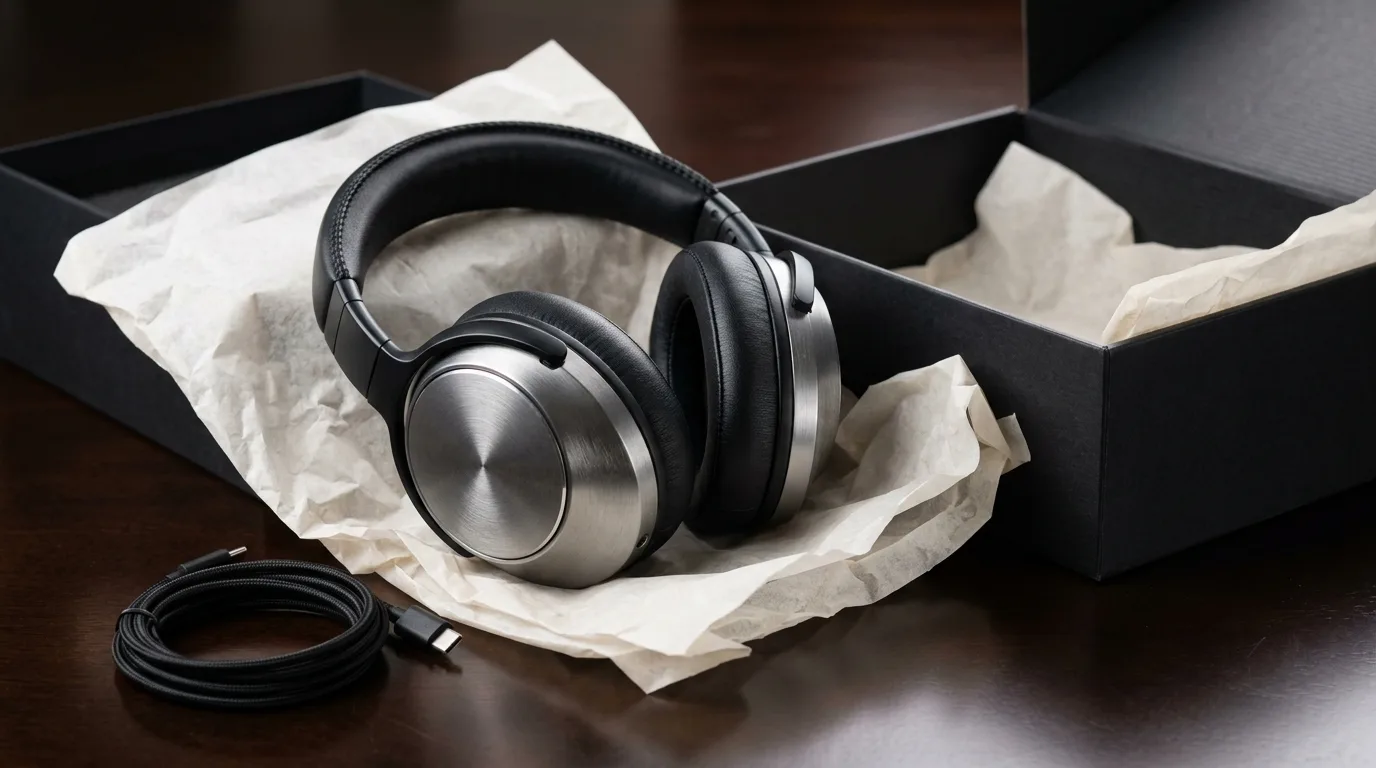
Apple announced the Apple AirPods Max 2 on March 16, 2026 — the first meaningful hardware revision to its flagship over-ear headphones since the original debuted in December 2020. From the outside, the headphone looks identical: same aluminum ear cups, same stainless steel headband frame, same mesh canopy, same approximate weight of 385 grams. The changes are entirely inside. The H2 chip replaces the aging H1, porting every computational audio feature from the AirPods Pro 3 earbuds into the over-ear form factor. That means Adaptive Audio, Conversation Awareness, Live Translation, and ANC that Apple claims is 1.5 times more effective than the original.
This page covers what Apple announced, what those announcements mean in practice, and — just as important — the list of questions that cannot be answered until independent reviewers get units in hand. We cross-referenced Apple's press materials against published teardowns of the H2 chip platform, RTINGS measurement archives for the original Apple AirPods Max, and spec-sheet comparisons with the Sony WH-1000XM6 and Bose QuietComfort Ultra. The AirPods Max 2 ships in April 2026 and pre-orders open March 25.
AirPods Max 2 Announcement Analysis
What Changed from the Original
The upgrade list is short on physical changes and long on silicon-driven improvements. Apple kept the external design, weight, and driver size identical while replacing the brain of the headphone entirely. The H2 chip is not an incremental revision — it represents a generational leap from the H1 that shipped in the original Apple AirPods Max back in 2020.
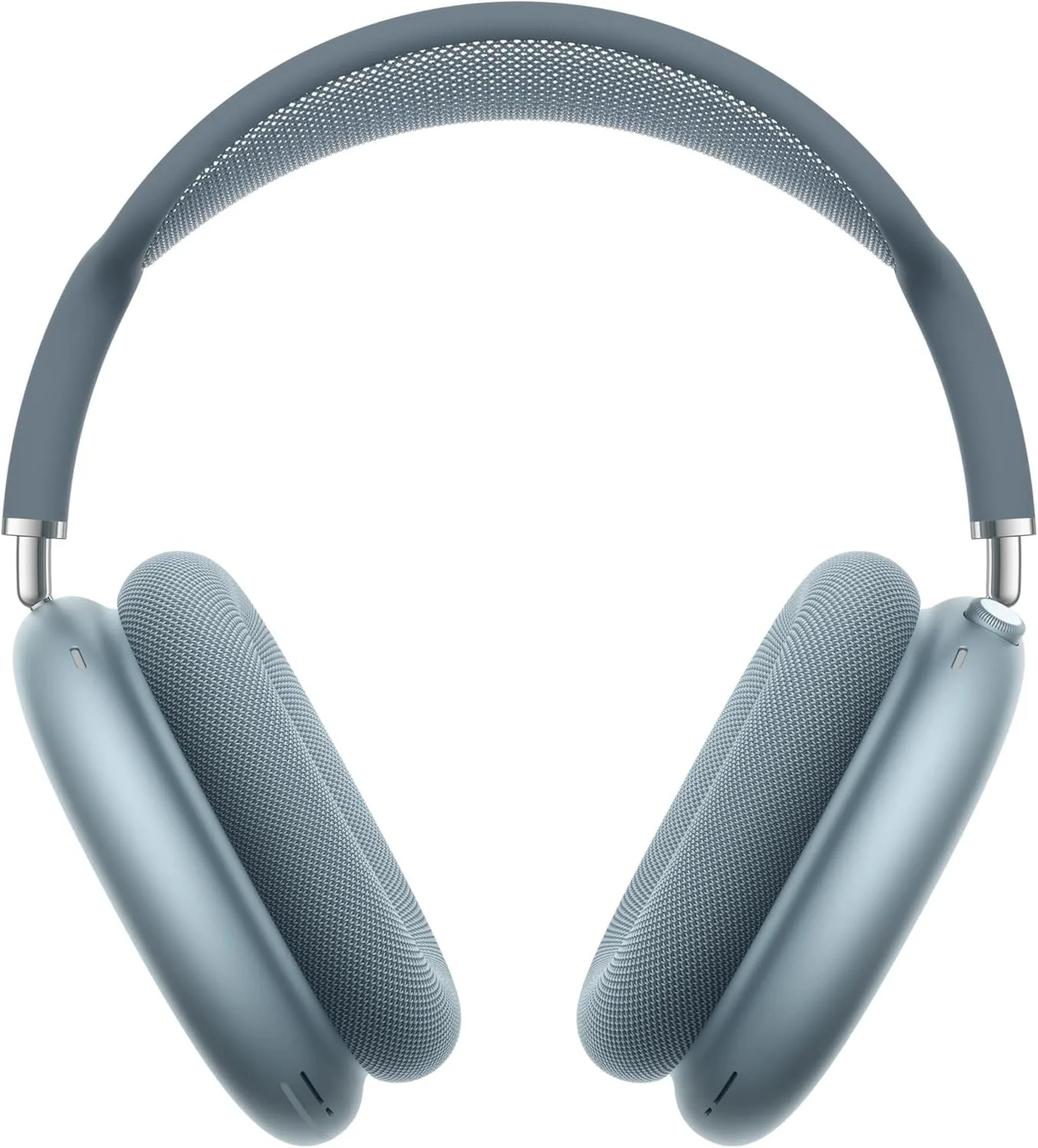
The most visible change is the port. USB-C replaces Lightning, eliminating the connector that became the original's most dated element after Apple transitioned its entire product line to USB-C in 2024. New color options — Midnight, Starlight, Purple, Orange, and Blue — replace the original palette. The magnetic ear cushions remain interchangeable, the Digital Crown still controls volume, and the noise control button still toggles between ANC and Transparency modes. If you set the original and the new model side by side without turning them over to check the port, you would struggle to tell them apart.
Under the ear cups, the story diverges. The H2 chip brings Bluetooth 5.3 (up from 5.0), a new high dynamic range amplifier, and the entire Adaptive Audio stack that Apple developed for the AirPods Pro line. Personalized Spatial Audio with head tracking maps your ear geometry using the iPhone's TrueDepth camera and adjusts the sound field accordingly. Voice Isolation improves call clarity by separating your voice from ambient noise using machine learning models that run locally on the chip. And Apple Intelligence integration enables Live Translation — real-time language conversion during face-to-face conversations.
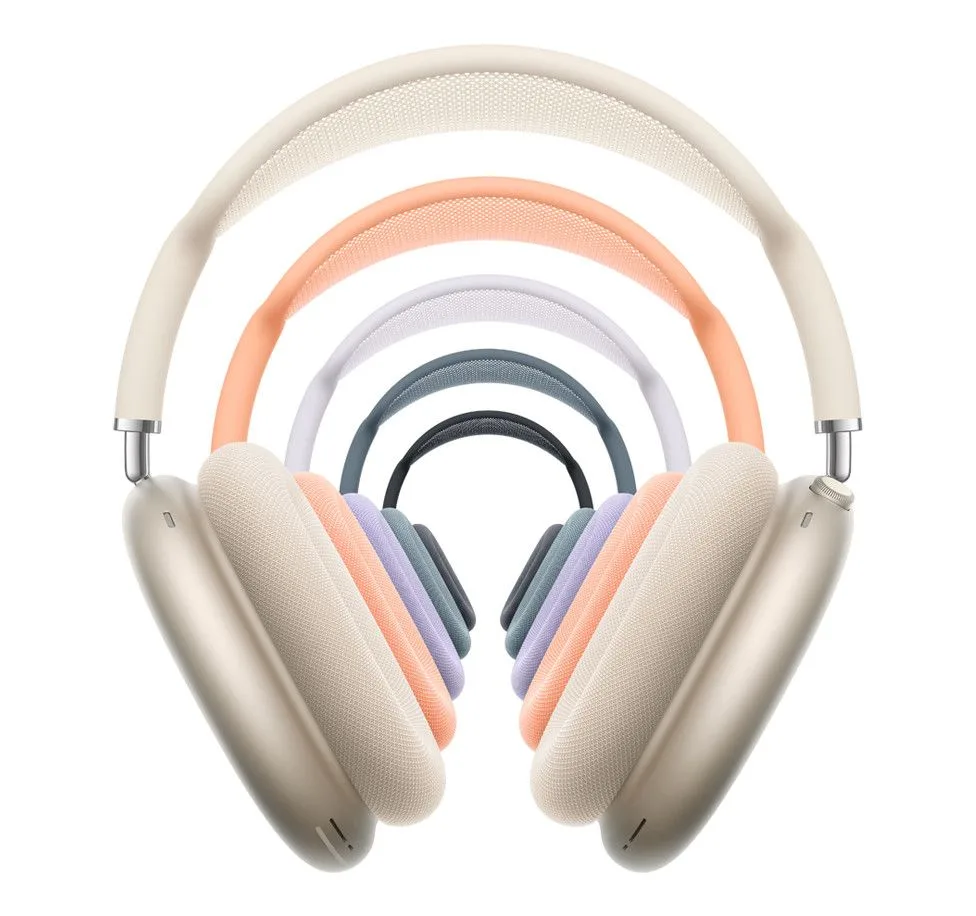
What did not change: the 40mm custom driver, the 20-hour stated battery life, the lack of any IP rating for water or dust resistance, the weight, and the Smart Case design that many owners criticized for leaving the headband exposed. Apple apparently decided the physical headphone was already right and focused entirely on what the silicon could improve.
H2 Chip and Noise Cancellation Gains
The H2 is the same chip powering the AirPods Pro 3, where it demonstrated ANC improvements that independent reviewers measured as a generational leap over the prior H1-equipped model. Apple states the AirPods Max 2 delivers noise cancellation 1.5 times more effective than the original — a specific ratio that invites verification once units reach testing labs.
The H2 processes audio signals from the microphone array at a dramatically higher rate than the H1. In the AirPods Pro 3, this translated to cancellation that adapted to changing noise conditions within milliseconds rather than the perceptible delay the H1 exhibited. The over-ear form factor presents different acoustic challenges — larger internal volume, different seal geometry, a wider driver diaphragm — so the improvement ratio may not map directly from the earbud experience. But the underlying processing capability is established.
The original Apple AirPods Max was a capable ANC headphone at launch, placing behind the best Sony and Bose offerings by a measurable but modest margin in most frequency bands. RTINGS data showed the original Max cancelling approximately 25 dB in the 100-500 Hz range where airplane engines and train rumble concentrate. If Apple's 1.5x claim is accurate and roughly linear, that would push the Max 2 toward 37-38 dB of attenuation — competitive with or exceeding the current leaders. The qualifier "if" carries the entire weight of that sentence. Until RTINGS, SoundGuys, or equivalent independent labs publish frequency-range measurements, the number is a marketing claim, not a verified spec. Our Max 2 versus XM6 comparison tracks this question closely.
The chip also enables a feature Apple calls Adaptive Transparency 2.0 — a refined version of the mode that lets environmental sound through while still reducing sudden loud sounds (construction noise, emergency sirens, horn blasts) before they reach the eardrum. The original Max had basic Transparency mode that passed all external audio through the microphones. The H2 version applies real-time dynamic compression, shielding your hearing from volume spikes that exceed 85 dB while preserving normal conversation and ambient awareness at natural levels.
Adaptive Audio and Conversation Awareness
Adaptive Audio is the feature most likely to change daily use patterns for commuters and office workers who currently toggle between ANC and Transparency modes a dozen times per day. Rather than forcing a binary choice, Adaptive Audio treats cancellation as a continuous dial that the H2 adjusts in real time.
The system reads the ambient noise environment hundreds of times per second and sets the ANC-to-transparency blend accordingly. Walk through a quiet corridor and cancellation sits at moderate levels, preserving situational awareness without drowning you in outside sound. Push through a crowded terminal and the chip ramps cancellation to its maximum depth, blocking the crowd noise that would otherwise force you to raise your music volume. Step onto a quiet train car and cancellation eases back. The transitions are meant to be imperceptible — no click, no audio dip, no notification. The headphone simply tracks your world and adjusts.
Conversation Awareness builds on this by detecting the physical act of speaking. When the microphones register your voice (not someone else speaking nearby), the system automatically lowers music volume, activates transparency for incoming speech, and slows media playback cadence. You respond to a colleague's question without touching a single control. When you stop talking, the system waits a brief moment, then fades music back to its previous volume and restores ANC depth. In the AirPods Pro 3, this feature proved reliable in quiet environments and somewhat inconsistent in noisy ones — the microphones occasionally misidentified environmental noise as speech. Whether the over-ear microphone placement improves detection accuracy is an open question.
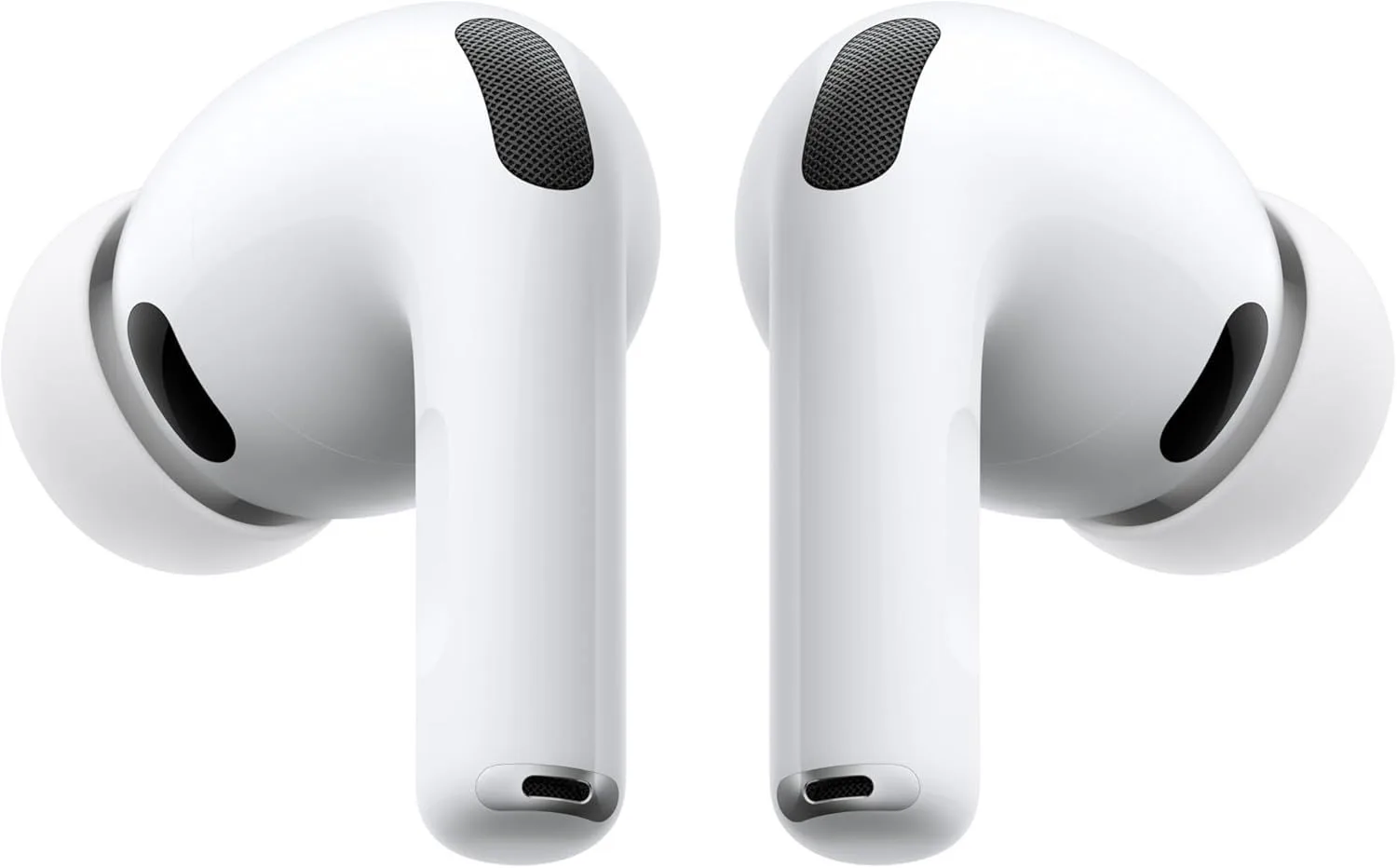
Neither Adaptive Audio nor Conversation Awareness has an equivalent on any competing headphone. The Sony WH-1000XM6 offers Speak-to-Chat, which pauses playback entirely when you talk — a blunt instrument compared to Apple's graduated approach. The Bose QuietComfort Ultra has Aware Mode with ActiveSense, which blends noise cancellation with environmental pass-through, but it does not adjust automatically based on ambient conditions. Apple's advantage here is real, though it depends entirely on owning an iPhone. On Android, Adaptive Audio does not activate, and the Apple AirPods Max 2 behaves like a conventional ANC headphone with manual mode switching.
Connectivity and Audio Format Support
USB-C and the Lossless Audio Question
Lightning is gone. The USB-C port on the Apple AirPods Max 2 eliminates the most common complaint about the original model and brings the headphone into alignment with every other Apple product. Charging uses the same cable as your MacBook, iPad, and iPhone 15 or later. The practical benefit extends beyond cable consolidation: USB-C supports digital audio output, meaning a wired connection to an Apple device can carry lossless audio without the analog conversion that a 3.5mm cable requires.
Over Bluetooth, the audio story has not changed. The Apple AirPods Max 2 transmits wirelessly using AAC at up to 256 kilobits per second — the same codec and the same ceiling as every other Apple audio product. Apple has not adopted LDAC, aptX, or any high-bitrate wireless codec. For iPhone users, this is irrelevant because iOS does not support those codecs regardless of headphone capability. For the small number of buyers who pair Apple headphones with Android devices, the AAC limitation means wireless audio quality sits below what the Sony WH-1000XM6 achieves with LDAC at 990 kilobits per second. Our flagship noise-cancelling roundup compares codec support across all current models.
Where lossless matters is the wired path. Connect the Apple AirPods Max 2 to a Mac or iPhone via USB-C, open Apple Music with Lossless enabled, and the audio bypasses Bluetooth compression entirely. The digital signal travels through the cable at full resolution — 24-bit/48kHz for standard Lossless, or 24-bit/96kHz for Hi-Res Lossless — and the headphone's internal DAC converts it to analog at the driver. This is the highest-fidelity listening path the headphone supports, and it requires sitting tethered to a device. For the majority of daily use, Bluetooth AAC remains the connection method, and the audio quality ceiling remains identical to the original Apple AirPods Max.
Personalized Spatial Audio with head tracking is the H2 chip feature that most directly affects how music sounds — even over the wireless AAC connection. The system uses the iPhone's TrueDepth camera to photograph your ear geometry, then builds a spatial profile that adjusts how the driver renders stereo and Dolby Atmos content based on your specific ear shape. Head tracking anchors audio to a fixed point in space: turn your head during a movie and the dialogue stays centered on the screen rather than rotating with your head. The original Apple AirPods Max supported basic Spatial Audio, but not the personalized ear-mapped version that the H2 enables. Whether the personalized profile produces an audible improvement over the generic spatial processing is subjective and listener-dependent, but Apple's internal testing with the AirPods Pro 3 suggested a measurable localization accuracy gain.
What We Still Do Not Know
The gap between Apple's announcement and independent verification is wide enough to drive a list of unresolved questions that will determine whether the Apple AirPods Max 2 earns its position at the top of the price range or falls short of the silicon's promise.
Battery life improvements: The original Apple AirPods Max rated 20 hours with ANC active. Apple lists the same 20-hour figure for the Max 2. The H2 chip is demonstrably more power-efficient than the H1 — the AirPods Pro 3 improved battery life over the Pro 2 while adding more computational features. The most likely explanation is that Apple allocated the efficiency gains to powering Adaptive Audio, Live Translation, and more aggressive ANC processing rather than extending playback time. Real-world battery tests may reveal numbers above or below the 20-hour spec depending on feature usage patterns.
Driver changes: Apple states the Apple AirPods Max 2 uses a 40mm custom driver and references a "high dynamic range amplifier" — but has not clarified whether the driver itself is new or identical to the original. A new amplifier feeding the same driver would produce modest improvements in dynamics and headroom. A new driver entirely would be a bigger story. The distinction matters for anyone expecting a sound quality leap rather than a processing refinement.
Smart Case redesign: Apple's press images show what appears to be the same Smart Case design that was the single most criticized element of the original product. The case puts the headphones into an ultra-low-power state but leaves the headband and canopy exposed. Multiple first-generation owners reported damaged mesh canopies from unprotected storage. If Apple retained the same case design for a headphone at this price tier, that is a missed opportunity. If the case is subtly redesigned, Apple did not call attention to it in the announcement.
Exact ANC measurements: Apple's "1.5x" claim is a ratio without an anchor point. 1.5 times what measurement, at what frequency, using what methodology? Different test protocols produce different numbers. Until an independent lab measures the Apple AirPods Max 2 using the same methodology applied to the Sony WH-1000XM6 and Bose QuietComfort Ultra, the comparison is apples-to-marketing-materials. We will publish updated findings once RTINGS or equivalent labs release their data.
Comfort at 385 grams: The weight is unchanged, and the headband design is unchanged. The original Apple AirPods Max drew consistent comfort criticism during sessions exceeding two hours. The mesh canopy distributes force better than traditional padded headbands, but 385 grams of metal and glass concentrated on the top of your skull for four or more hours is a physics problem that no headband design fully solves. Whether Apple made any subtle changes to pressure distribution or cushion density is not mentioned in the spec sheet.
How the Max 2 Lines Up Against Competitors
The Apple AirPods Max 2 enters a competitive field where the Sony WH-1000XM6 and Bose QuietComfort Ultra have already established their positions through months of independent testing, user feedback, and iterative firmware updates. Both competitors are shipping products with verified performance. The Max 2 is a set of announcements.
Against the Sony WH-1000XM6: Sony offers 30 hours of battery with ANC (ten more than Apple), weighs 254 grams (131 grams lighter), supports LDAC for high-resolution wireless audio on Android, folds flat for portability, and has independently measured ANC performance within 1-2 dB of the best in the category. The Max 2 counters with Adaptive Audio, Conversation Awareness, Live Translation, and the deepest Apple ecosystem integration available in any headphone. For Android users, this comparison ends at the phone: the Sony wins every measurable category. For iPhone owners, the decision hinges on how much daily value Adaptive Audio and Live Translation deliver. Our full Max 2 vs XM6 comparison breaks this down category by category.
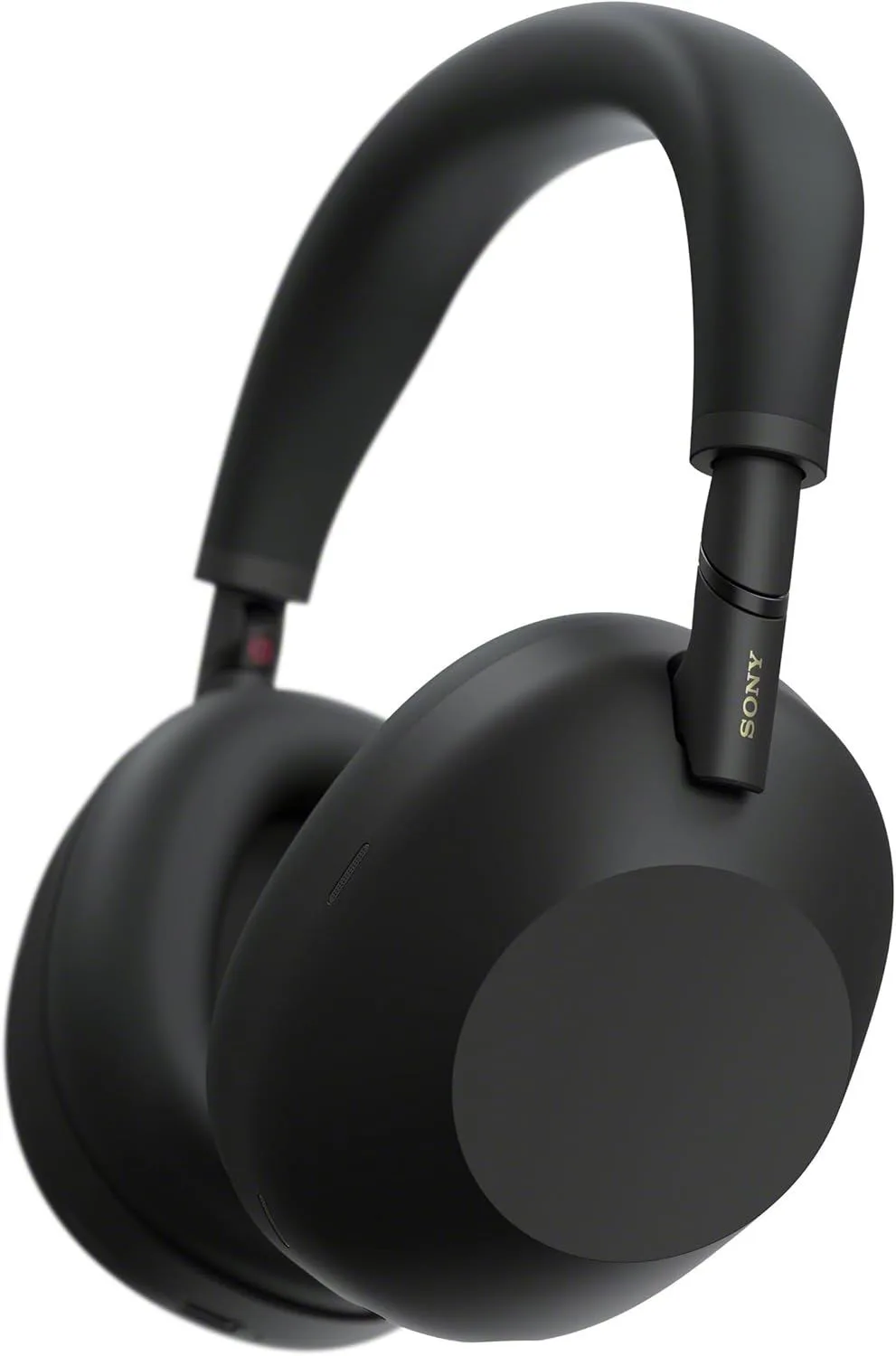
Against the Bose QuietComfort Ultra: Bose is the comfort leader at 260 grams with plush ear cushions that reviewers consistently rank as the best in the over-ear category. Battery life matches Sony at approximately 24 hours with ANC active. Bose's CustomTune calibration maps ear canal geometry for personalized ANC and EQ — a less comprehensive version of what Apple's Personalized Spatial Audio offers, but available without any Apple hardware. The Bose sits well below the Max 2 on price. For buyers who prioritize wearing comfort above all else, the Bose remains our top pick regardless of what the H2 chip enables. Read the Max 2 versus Bose QC Ultra comparison for the detailed breakdown.
The broader pattern: the Apple AirPods Max 2 is not trying to win on battery, weight, portability, or price. Apple is betting that computational audio features — features that require Apple silicon and an Apple device to function — create enough differentiated value to justify the category's highest price and heaviest weight. For the right buyer, that bet may pay off. For the buyer who evaluates headphones primarily on sound, comfort, ANC depth, and value per dollar, the competitors offer more proven performance at lower prices.
Now That You Know
The Apple AirPods Max 2 announcement is heavy on promise and light on independent verification. Here is where to go depending on what you need next:
See how it stacks up spec by spec: Our Max 2 vs Sony XM6 comparison puts the two most-discussed flagships side by side on ANC, battery, weight, codecs, and ecosystem features.
Browse the current top performers: The premium noise-cancelling roundup ranks every flagship by independently measured ANC depth, comfort, battery, and value — so you can see where the Max 2 needs to land to compete.
Understand what makes ANC tick: The noise-cancelling buying guide explains how to evaluate ANC claims, which specs matter at each price tier, and what separates marketing from measurement.

Frequently Asked Questions
What chip does the AirPods Max 2 use?
The AirPods Max 2 runs on Apple's H2 chip — the same processor inside the AirPods Pro 3. The H2 replaces the original Max's H1, enabling Adaptive Audio, Conversation Awareness, Live Translation, and ANC that Apple claims is 1.5x more effective. The chip also brings Bluetooth 5.3 with lower wireless latency and improved power management for computational audio features.
Does the AirPods Max 2 support lossless audio?
Not wirelessly. The AirPods Max 2 transmits audio over Bluetooth using AAC — the same codec as the original. Lossless playback requires a USB-C cable connected to an Apple device running Apple Music with Lossless enabled. Over Bluetooth, AAC caps at 256kbps regardless of the source quality. If high-res wireless matters to you, Sony's LDAC codec on the WH-1000XM6 transmits at up to 990kbps.
Is the AirPods Max 2 lighter than the original?
No. Both models weigh approximately 385 grams. Apple retained the identical aluminum ear cup and stainless steel headband design. The weight remains the highest among premium over-ear headphones — the Sony WH-1000XM6 weighs 254g and the Bose QuietComfort Ultra weighs 260g. The mesh canopy headband distributes the load better than traditional padding, but the total mass on your head is unchanged.
What colors does the AirPods Max 2 come in?
Apple offers five colors: Midnight, Starlight, Purple, Orange, and Blue. These replace the original Max's Silver, Space Gray, Green, Pink, and Sky Blue options. The ear cushions remain magnetically attachable and can be swapped between colors, which means mixing and matching is possible — though Apple sells replacement cushions at a premium.
How does Adaptive Audio differ from standard ANC modes?
Standard ANC offers discrete modes — typically full cancellation, transparency, and off. You switch manually. Adaptive Audio is a continuous spectrum: the H2 chip reads ambient noise hundreds of times per second and adjusts the blend between cancellation and transparency in real time. Walk from a quiet hallway into a busy street, and ANC increases without you pressing anything. Sit at a café table, and voices blend through while background rumble stays suppressed.
Get Picks Delivered
One email per week. Honest reviews, no spam.
Only when something changes. Unsubscribe anytime.