Headphones for Travel: Picks That Survive Long Flights
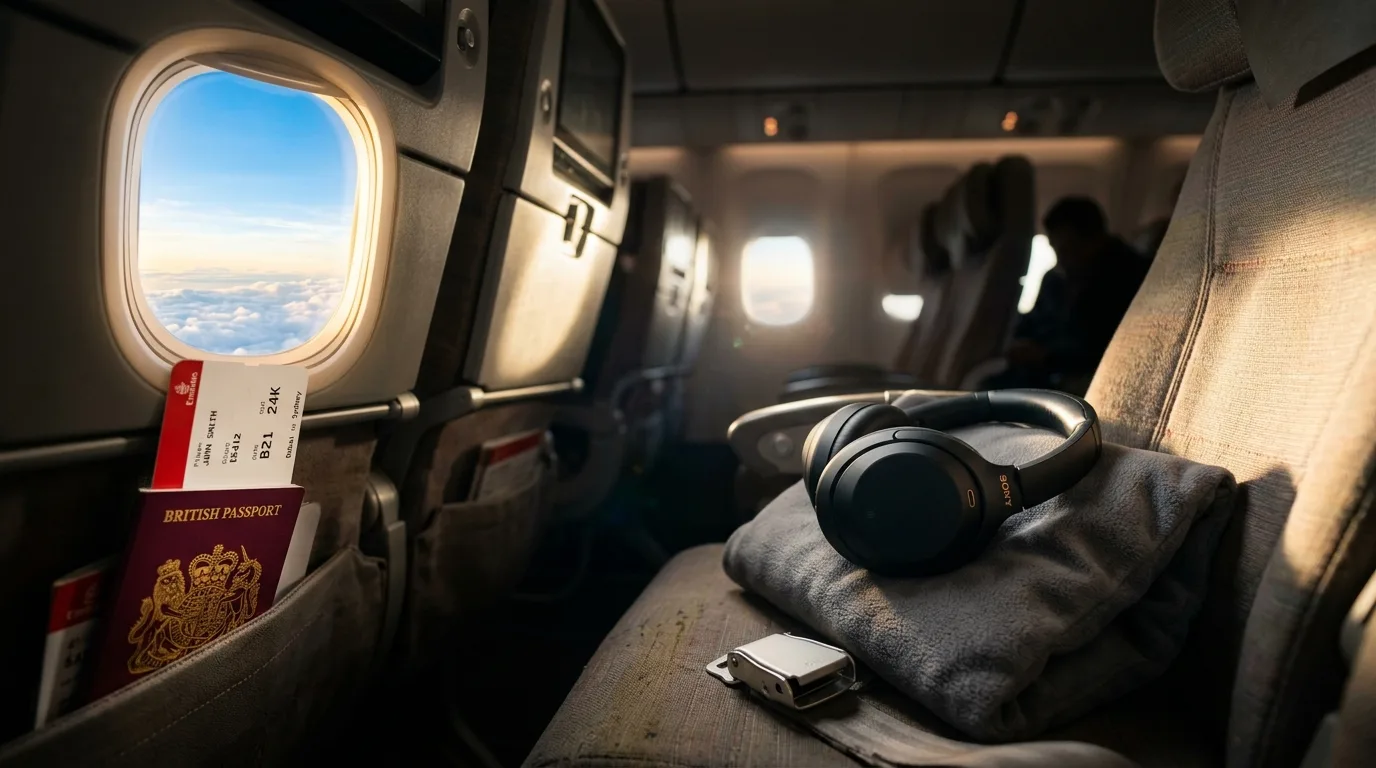
A 14-hour flight to Tokyo. An overnight train across Europe. A three-connection travel day where you left home at 5 AM and won't reach the hotel until midnight. These are the scenarios that separate a headphone good enough for a desk from one built for real travel. The picks on this page were chosen for the specific demands of long-distance movement — deep noise cancellation against engine drone, batteries that outlast any single flight, comfort that holds after hour eight, and a form factor that survives being crammed into an overhead bin.
We cross-referenced ANC measurements from RTINGS, long-wear comfort assessments from SoundGuys and What Hi-Fi, plus owner feedback from 62,000+ combined Amazon ratings to build this list. Each pick earns its spot based on how it performs in transit, not in a quiet listening room. Travel headphones face tests that home headphones never see — cabin pressure, dry recycled air, cramped seat-back clearance, and the relentless low-frequency drone of turbofan engines at cruise altitude.
- Sony WH-1000XM6 — Best overall for travel (ANC + foldable + battery)
- Bose QuietComfort Ultra — Most comfortable for long-haul flights
- Sennheiser Momentum 4 — Longest battery for multi-day trips
- Apple AirPods Pro 3 — Best compact option for carry-on-only travel
- Anker Soundcore Space One — Best budget pick for occasional travelers
Travel Headphone Selection Criteria
Why Travel Demands a Different Kind of Headphone
Travel changes everything. And not just the noise. Travel headphones are a subset of noise-cancelling headphones optimized for sustained use in loud, confined, unpredictable environments where charging access is limited and physical space is tight. The requirements diverge from home or office listening in four measurable ways: ANC frequency targeting, battery endurance, long-wear comfort, and physical packability.
Airplane cabins produce constant broadband noise centered between 80 and 200 Hz — the frequency band where turbofan engines are loudest. This is also the exact range where modern ANC performs best, because the sound is predictable and continuous. A headphone that performs adequately in a quiet office may underwhelm on a plane because office ANC mostly targets mid-frequency HVAC hum (300-600 Hz), while airplane ANC needs to suppress a deeper, louder, more sustained rumble. The gap between "good ANC" and "travel-grade ANC" lives in how aggressively the processor attacks that sub-200 Hz band.
Battery requirements change entirely for travelers. A commuter needs 30 minutes to 90 minutes per session. A long-haul traveler needs 8 to 16 continuous hours — a direct flight from New York to Singapore is 18 hours and 40 minutes.
A dead battery at cruising altitude is unrecoverable.
Running out of battery mid-flight with six hours remaining is the kind of failure that makes travelers swear off a headphone permanently. Quick charge becomes a genuine safety net rather than a marketing spec: three minutes plugged into a seat-back USB port for three hours of playback can rescue a dead battery during a layover.
Comfort standards rise on travel days too. An hour of clamping force that feels fine at a desk becomes a pressure headache at hour four on a red-eye. Ear cushion materials that breathe well in air-conditioned offices trap heat and moisture in the dry, recycled cabin air of a pressurized fuselage. Weight that disappears during a 30-minute podcast session becomes a neck burden across a transatlantic crossing. Travel comfort is desk comfort multiplied by duration and compounded by environmental stress.
Then there is size. Portability is the fourth axis. A headphone you carry every day in a work bag has one set of size constraints.
A headphone competing for space in a carry-on alongside a laptop, toiletries kit, change of clothes, and travel documents has much tighter limits. Foldable designs that compress into smaller cases earn a practical advantage here — not because folding makes them better headphones, but because an overhead bin full of other passengers' bags leaves little room for a bulky headphone case.
What to Evaluate Before You Fly
Four specs matter most. Four specs separate a travel headphone from a general-purpose one: ANC depth in the 80-200 Hz engine-drone band, rated battery life with ANC active, ear cushion material and clamping force for multi-hour sessions, and packed dimensions including the carry case. Sound quality, codec support, and call clarity still matter — but they take a back seat to the four metrics that determine whether a headphone survives a 12-hour travel day or becomes the expensive thing you regret packing.
ANC depth at low frequencies. Check measurements, not marketing. RTINGS publishes frequency-specific ANC curves that show exactly how much noise each headphone cancels at each frequency. A headphone rated at "30 dB cancellation" might deliver that figure at 300 Hz but only 18 dB at 100 Hz — the frequency where airplane engines live. The Sony WH-1000XM6 and Bose QuietComfort Ultra both deliver peak cancellation below 200 Hz, which is exactly why they lead this list.
Battery with ANC continuously active. The rated battery number assumes ANC on, moderate volume, in a quiet environment. In-flight use at higher volume typically costs 10-20% of the rated figure. A 30-hour battery delivers about 24-27 real-world hours on a plane. A 60-hour battery like the Sennheiser Momentum 4 delivers around 48-54 hours — enough for a round-trip international journey without packing a charger cable.
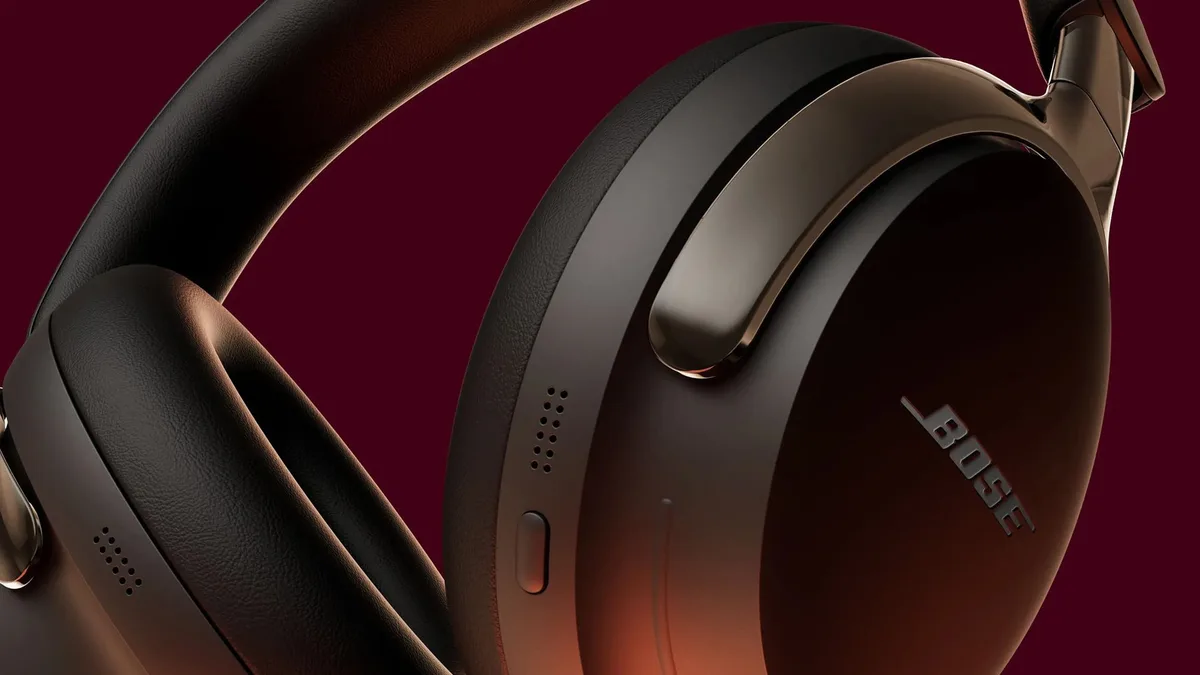
Ear cushion material and clamping pressure. Memory foam cushions with protein leather covering are the most common pairing in travel headphones. Protein leather seals well (improving passive isolation) but traps heat over long sessions. The Bose QuietComfort Ultra uses a softer cushion with lower clamping force than most competitors, which is the primary reason it wins long-haul comfort rankings — less heat, less pressure, less fatigue across hour after hour of continuous wear.
Folded dimensions and case quality. A hardshell case protects headphones from the crushing forces inside overhead bins and under airplane seats. Soft pouches offer minimal protection. The Sony WH-1000XM6 folds into a hardshell case roughly 180mm x 180mm x 70mm — compact enough to slip into most personal item bags alongside a laptop. Non-foldable models like the Bose QuietComfort Ultra need cases that are wider and taller, which can be the difference between fitting in a personal item and having to use carry-on space.
Detailed Product Evaluations
Top Picks for Travelers
1. Sony WH-1000XM6 — The All-Around Travel Standard
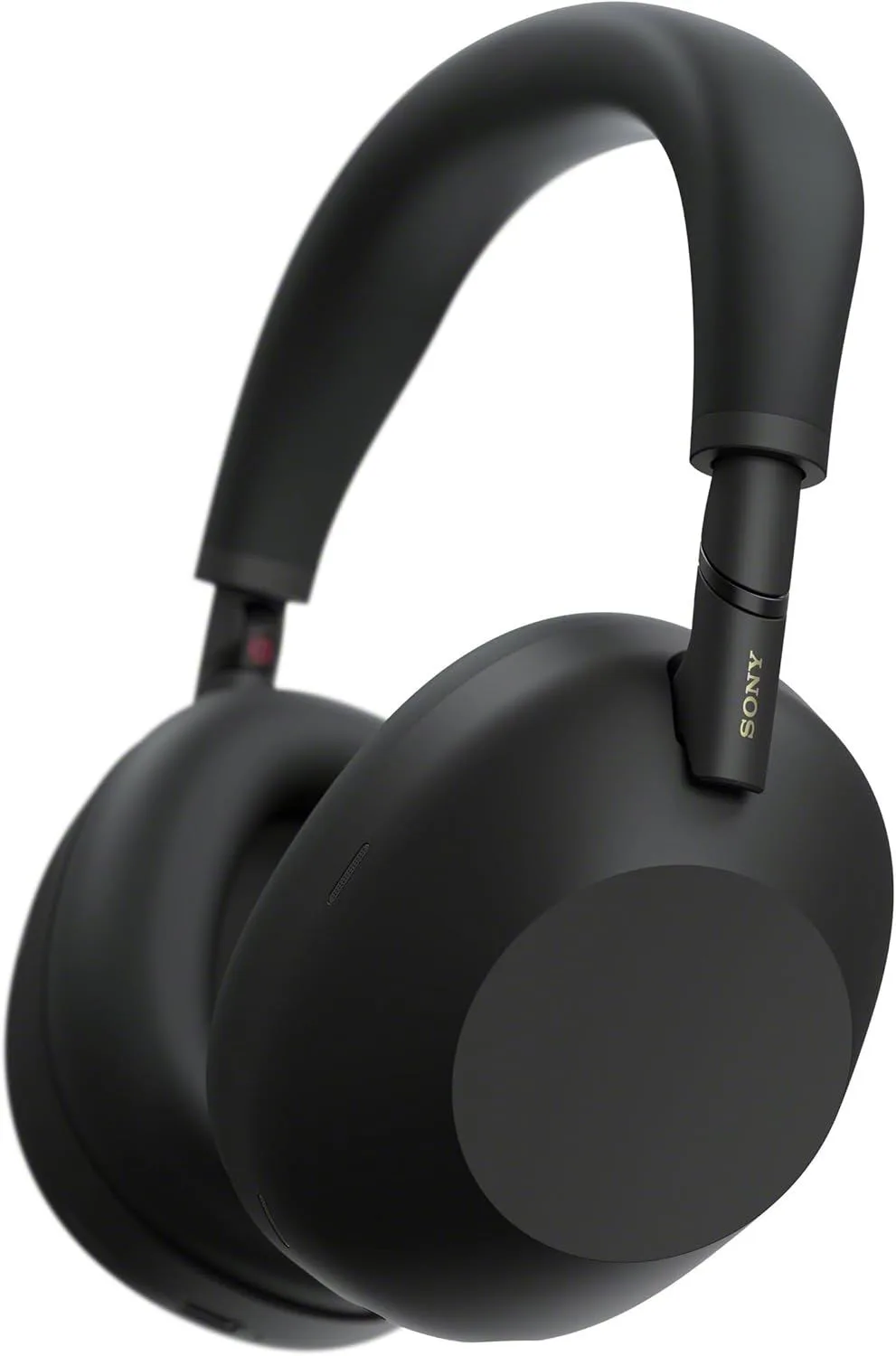
The Sony WH-1000XM6 earns the top spot because it is the only headphone on this list that leads — or ties for the lead — in all four travel-specific categories simultaneously. Its 12-microphone hybrid ANC system delivers the deepest noise cancellation measured by RTINGS, specifically in the sub-200 Hz range where airplane engines and train vibrations concentrate their energy. Thirty hours of rated battery with ANC active translates to roughly 25-27 hours in real flight conditions, comfortably covering any non-stop route on the planet. The foldable design compresses into a hardshell case that fits alongside a 14-inch laptop in a backpack's accessory pocket.
Sony redesigned the hinge mechanism with aluminum reinforcement for this generation after documented failures in the previous model. For travelers who fold and unfold headphones multiple times per travel day — boarding, meal service, landing, layover, re-boarding — hinge durability stops being an abstract concern. The new mechanism feels more solid in hand, though only long-term use will confirm whether the reinforcement fully solves the reliability question. Auto NC Optimizer calibrates cancellation to your specific ear anatomy and the ambient sound environment, and you can retrigger it whenever you board a new aircraft to optimize for that plane's particular noise signature.
Where the Sony WH-1000XM6 falls short for travelers: no USB-C audio passthrough means you need a 3.5mm cable for wired listening (included in the box, but one more cable to pack). The companion app is feature-dense but cluttered — too many settings for a traveler who just wants ANC on and volume set. And the price places it firmly in the premium tier, which stings if you are also budgeting for the trip itself. For a complete analysis, read our full XM6 review.
Check Price on Amazon2. Bose QuietComfort Ultra — Long-Haul Comfort Champion
Red-eye flights and 10-hour train rides expose comfort deficiencies that shorter listening sessions hide. The Bose QuietComfort Ultra 2nd Gen is the headphone you choose when wearing comfort is the top priority and ANC depth is a close second. At 260 grams with the softest ear cushions and the lowest clamping force of any premium model, it is the pair that travelers forget they are wearing somewhere over the mid-Atlantic. Rolling Stone named it the best headphones on the market with ANC as the deciding factor. What Hi-Fi awarded five stars.
CustomTune is particularly useful for travelers because it recalibrates ANC and EQ to your ear shape every time you put the headphones on. Airplane seats force your head into positions that shift ear cup alignment — leaning against a window, resting against a headrest pillow, tilting during sleep. CustomTune compensates for those seal variations automatically. Battery improved to 30 hours in the 2nd Gen (up from 24 in the original), now matching the Sony WH-1000XM6 and eliminating the one spec where the original Bose fell behind for travelers.
The Bose QuietComfort Ultra does not fold. That is the single biggest practical downside for travelers — the carry case is noticeably larger than Sony's folded case, and it takes up more backpack real estate. No LDAC codec support limits wireless audio quality for Android users, though on a noisy airplane the codec difference is inaudible. For travelers who fly more than once a month and choose their headphones primarily for wearing comfort across multi-hour sessions, the Bose QuietComfort Ultra is the pick. Our XM6 vs QC Ultra comparison breaks down the travel-specific differences point by point.
Check Bose QC Ultra Price3. Sennheiser Momentum 4 — The Multi-Day Trip Battery
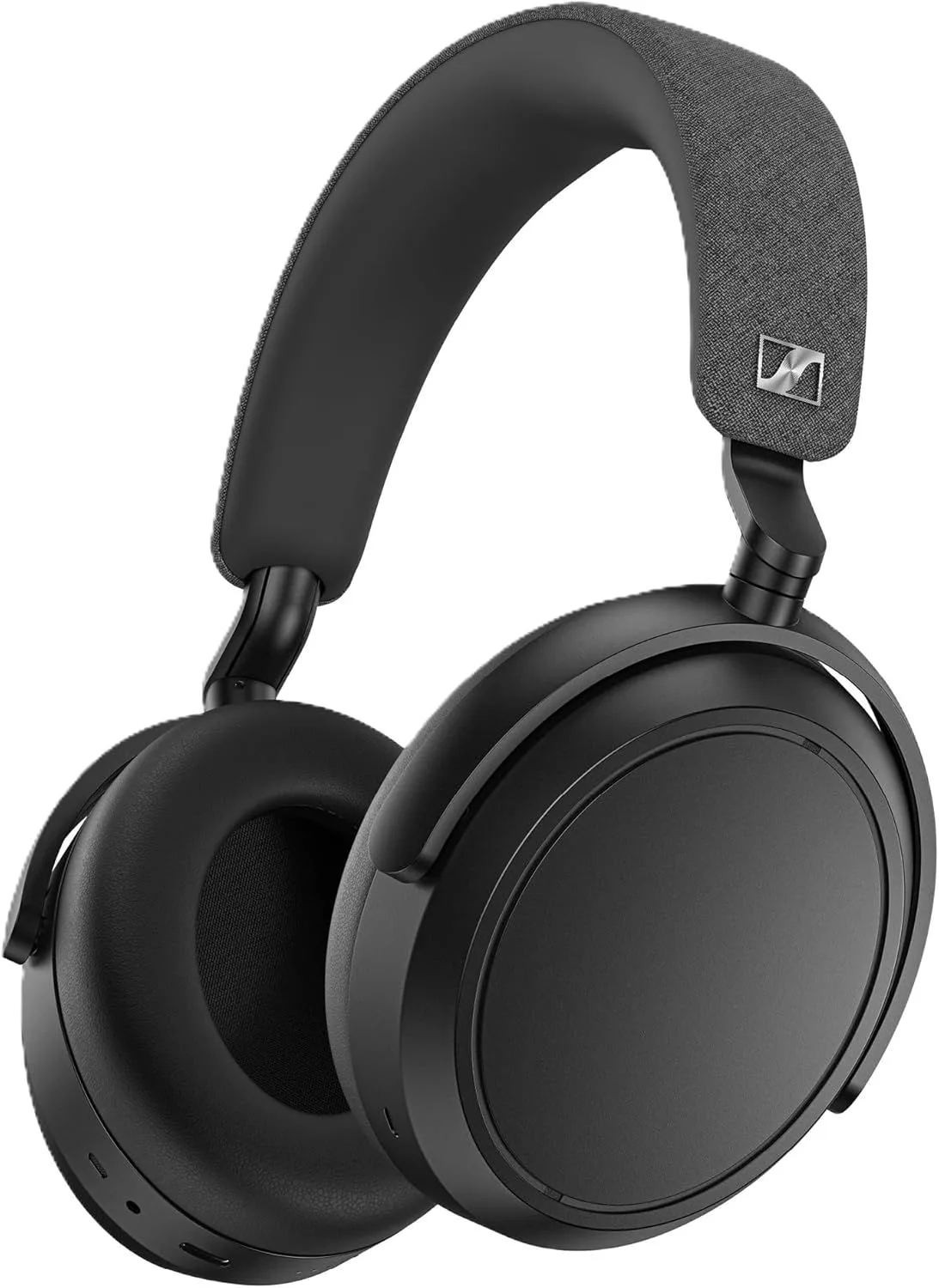
Sixty hours of rated battery with ANC active. Under realistic travel conditions — higher volume, continuous ANC, variable ambient noise — that translates to roughly 48-54 hours. To put that in perspective: a round-trip flight from London to Sydney (roughly 24 hours each way) plus two days of sightseeing with headphones on, all from a single charge. The Sennheiser Momentum 4 is the headphone for travelers who do not want to think about battery at any point during a trip, and who find the act of remembering to charge one more device tedious when juggling phones, laptops, cameras, and power banks.
Sound signature favors travelers who listen to podcasts, audiobooks, and spoken-word content during flights. Sennheiser tunes warmer and flatter than Sony or Bose, with less bass emphasis and more midrange presence. Voices sound natural and clear rather than colored — a preference that becomes more noticeable across hours of continuous listening. aptX Adaptive codec support provides the highest-quality wireless Bluetooth path for Android users, though this matters more for music listening on the ground than for cancelling engine noise at altitude.
ANC depth is the concession. In the loudest travel environments — a turboprop commuter plane, an old rail car with poor sound insulation, a bus on a rough highway — the Sennheiser Momentum 4 cancels less low-frequency noise than the top two picks. The gap is noticeable on the noisiest flights but minimal on modern wide-body aircraft with quieter cabins. Firmware-related Bluetooth drops have been reported after updates, though Sennheiser has patched most issues. The foldable design and slim hardshell case are competitive with the Sony WH-1000XM6 for packability. Our Momentum 4 review covers battery longevity testing across multiple use scenarios.
Check Momentum 4 PriceOur #1 pick for travel: The Sony WH-1000XM6 leads on ANC depth, foldable portability, and battery — the three specs that matter most at 35,000 feet.
Check Price on Amazon
4. Apple AirPods Pro 3 — Carry-On-Only Travel Companion
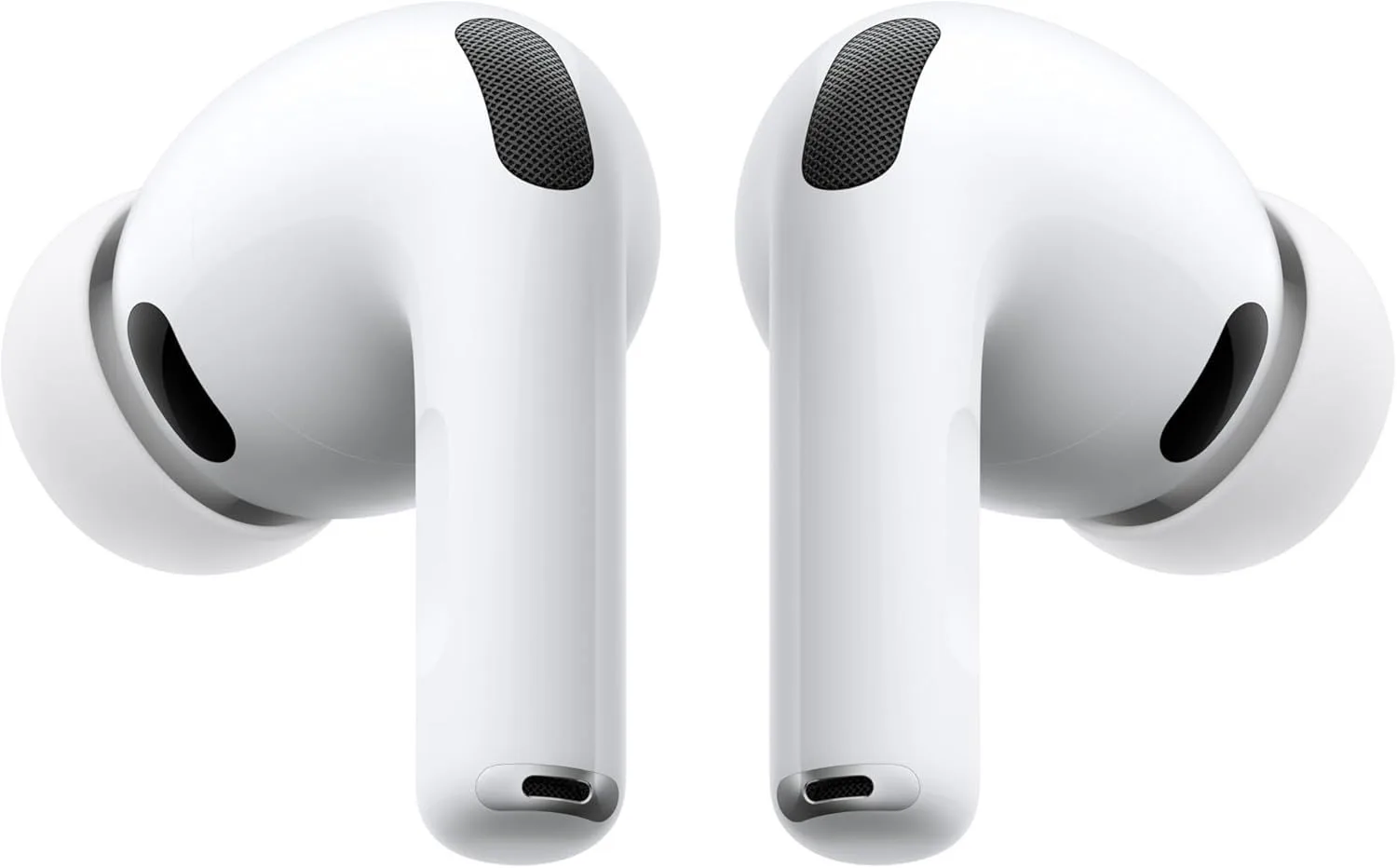
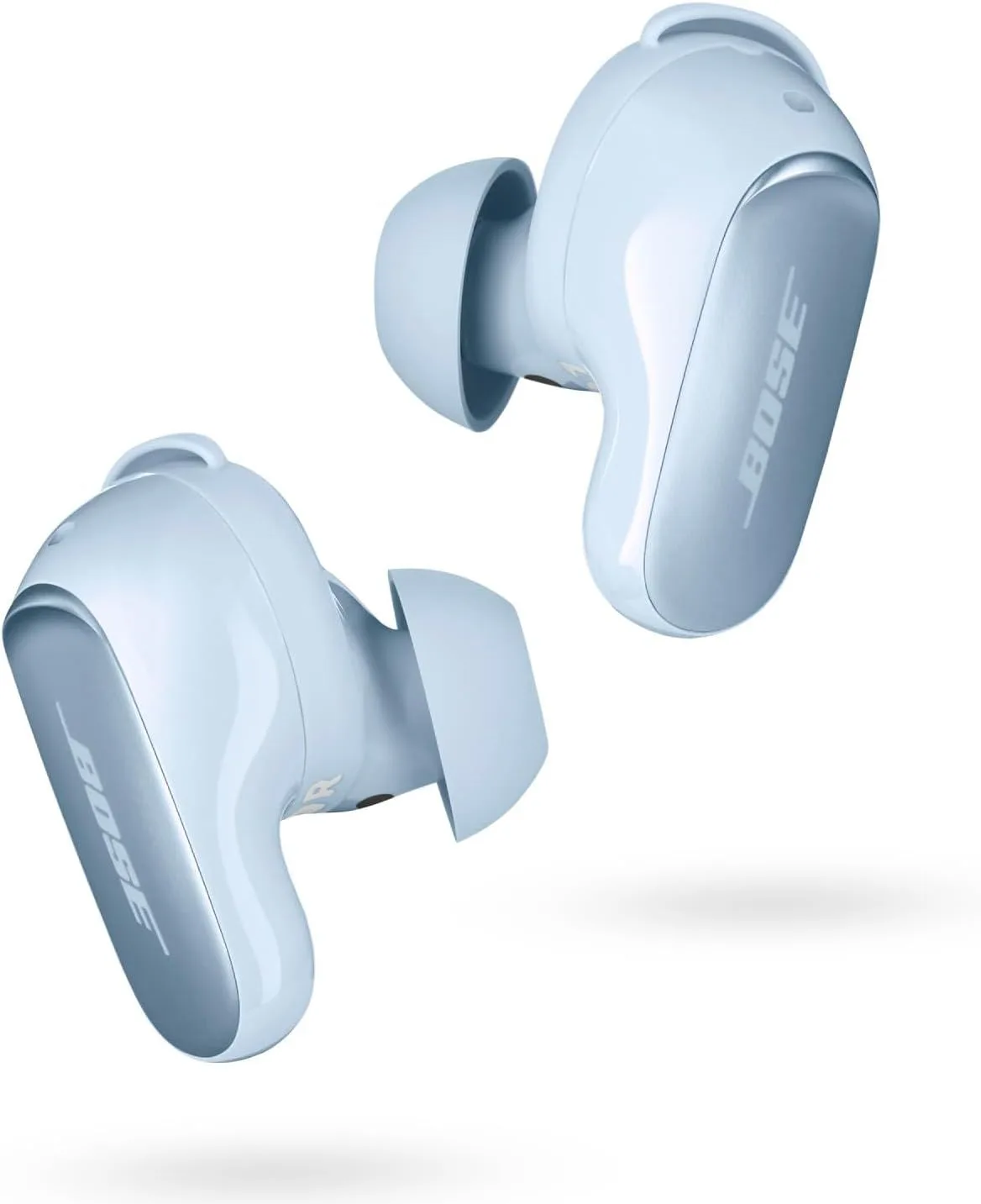
But bulk adds up. Not every traveler wants to pack over-ear headphones. Backpackers, carry-on-only flyers, and weekend trip minimalists need noise cancellation without the bulk. The Apple AirPods Pro 3 delivers ANC depth that approaches over-ear models in a package smaller than a coin purse. The charging case clips to a bag strap or vanishes into a jacket pocket — zero bag space consumed. For travelers who optimize every gram and every cubic inch, earbuds eliminate the largest single accessory in a typical travel kit.
Adaptive Audio handles the constantly shifting noise environments of a travel day automatically. Full ANC on the plane, transparent pass-through when the gate agent makes an announcement, blended mode while walking through a busy terminal. No button presses, no app toggles, no thinking about which mode matches the current moment. Eight hours per charge with ANC active covers most flights, and the case adds roughly 25 additional hours — enough for a full international round trip if you drop the earbuds back in during layovers.
The physics limitation applies: silicone ear tips cannot match the passive isolation of full over-ear cups, so total noise reduction on the loudest flights will be lower than any over-ear model on this list. Ear tip comfort varies across individuals — some travelers find any in-ear fit fatiguing across 6+ hours, while others forget the earbuds are there entirely. If you have never worn earbuds for more than two hours continuously, test before you commit to using them for a transatlantic crossing. Read our full AirPods Pro 3 review for ANC measurements and long-wear comfort notes.
Check AirPods Pro 3 Price5. Anker Soundcore Space One — Budget Travel Pick
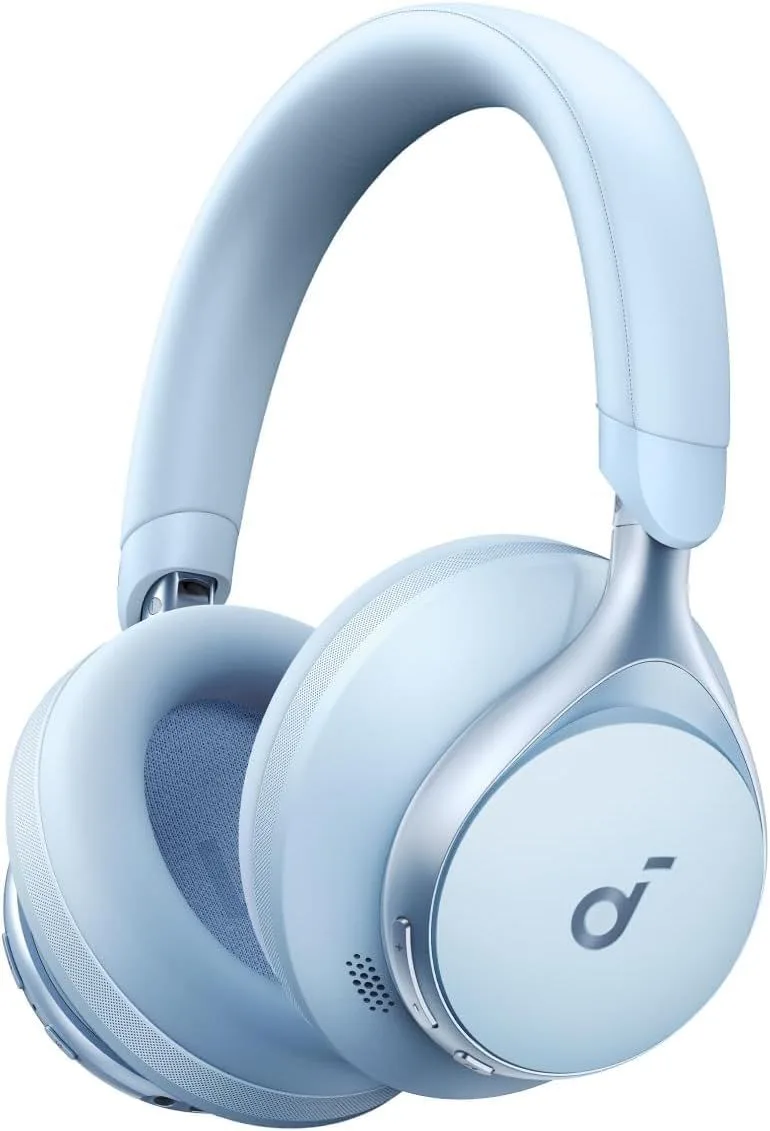
Under a hundred dollars. Hybrid ANC. Forty hours of battery. Foldable. If you fly twice a year for vacation and cannot justify spending three to four times more for incremental ANC improvement, the Anker Soundcore Space One makes the math simple. It covers the three non-negotiable travel requirements — it blocks engine noise, it outlasts any single flight, and it folds into a compact case — at a fraction of the price of every other pick on this list.
ANC depth is measurably behind Sony and Bose in the sub-100 Hz band where jet engines are loudest. On a quiet modern aircraft like a 787 Dreamliner, the gap shrinks because there is less extreme low-frequency noise for the ANC to miss. On a louder narrow-body like a 737 or an A320, you will hear more engine drone leak through. For budget travelers, the practical question is whether 70-80% of flagship cancellation at roughly a quarter of the price is an acceptable trade — for most occasional flyers, it is. LDAC codec support is a bonus for Android users who want higher-quality music streaming during quieter ground travel.
Build quality is the primary trade-off at this price tier. The plastic construction feels lighter and less durable than the metal and premium composites used in models from Sony, Bose, and Sennheiser. Ear cushion material is thinner, which reduces comfort during ultra-long sessions compared to the plush padding on the Bose QuietComfort Ultra. For trips under five hours and travelers on a budget, the Anker Soundcore Space One delivers. For frequent long-haul flyers, spending more on the top three picks pays back in comfort and cancellation across dozens of flights. Our Space One review covers ANC performance and build quality in detail.
Check Price on AmazonTravel-Day Tips From Frequent Flyers
Charge the night before. Headphone batteries lose 1-3% per day on standby. Charging the night before a travel day means you leave the house at full capacity without scrambling for a cable during your morning routine. If your headphones support it, turn them fully off (not just sleep mode) when packing to prevent standby drain during transit to the airport.
Pack the wired cable separately from the case. Airline entertainment requires a 3.5mm connection, and most over-ear headphones include the cable. Pack it in an outer bag pocket so you can connect without pulling the entire headphone case from an overhead bin. Some travelers buy a second cable as a dedicated travel spare — they cost a few dollars and save the hassle of forgetting the original.
Use ANC without music during takeoff and landing. Running ANC with no audio playing is one of the most underused travel strategies.
It drops the ambient noise floor by 20-30 dB, making the cabin feel quieter and less fatiguing without isolating you from safety announcements (which are amplified through the PA system at much higher volume than the noise ANC removes). This is especially helpful on red-eye departures when you want to sleep before the seatbelt sign turns off.
Recalibrate ANC after boarding. Several models — including the Sony WH-1000XM6 (Auto NC Optimizer) and Bose QuietComfort Ultra (CustomTune) — offer calibration features that tune noise cancellation to your current environment. Running this calibration after the cabin door closes and the engines spool up gives the processor a more accurate noise profile to cancel against, compared to a calibration performed in a quiet airport lounge.
Airport noise is mid-frequency; airplane noise is low-frequency. Transparency mode is more useful in terminals (hearing gate announcements, conversations) while full ANC is more useful on the aircraft itself. Rather than keeping ANC on maximum throughout an entire travel day, toggling between modes based on your current environment preserves battery and keeps you aware of your surroundings during the airport portions of the trip.
Our Top Pick for Travel
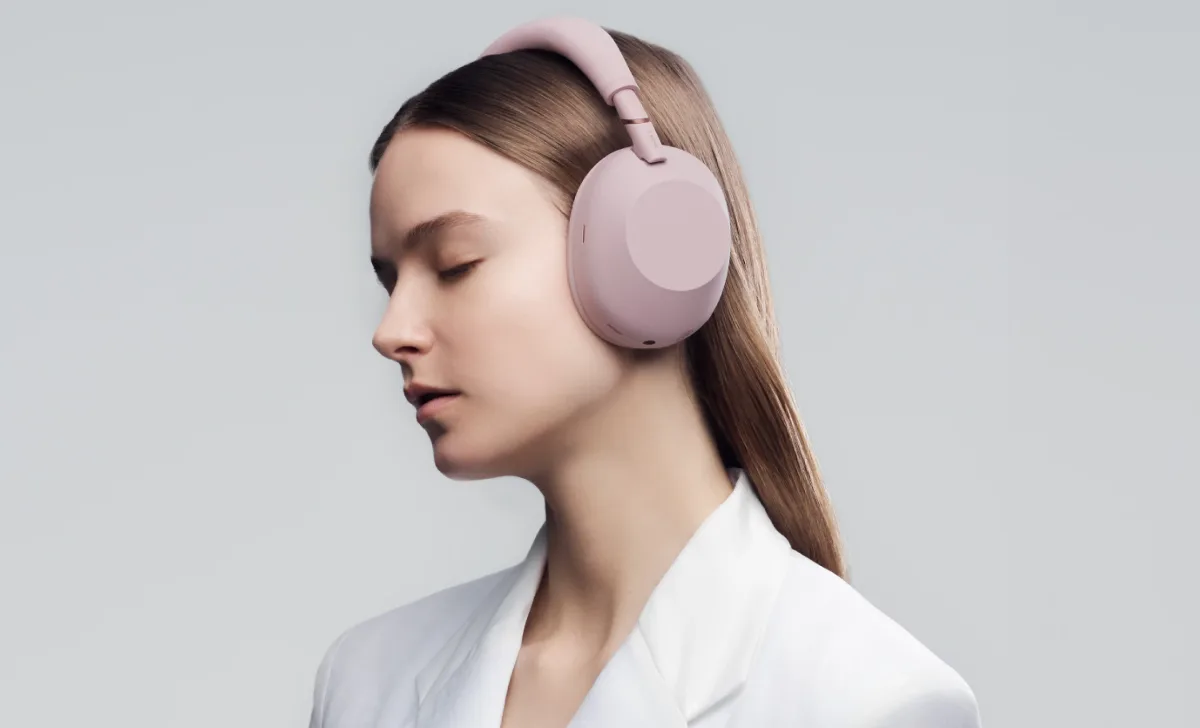
The Sony WH-1000XM6 is our recommendation for most travelers. It leads on the three metrics that matter most in transit — ANC depth in the engine-drone frequency band, battery that exceeds any single flight, and a foldable design that packs efficiently. Read our full review for measurement data, hinge analysis, and ANC calibration guidance.
If long-haul comfort is your deciding factor and you do not mind a larger carry case, the Bose QC Ultra review explains why it wins marathon wearing sessions. Budget travelers should start with the Anker Soundcore Space One — our Space One review covers its ANC-per-dollar value.
Frequently Asked Questions
Do noise-cancelling headphones help with airplane cabin pressure discomfort?
ANC headphones do not change cabin pressure, but they eliminate the constant low-frequency engine drone that amplifies the sensation of pressure in your ears. Many frequent flyers report that removing that drone makes the cabin feel less oppressive, even though actual air pressure stays the same. The Sony WH-1000XM6 and Bose QuietComfort Ultra cancel the deepest range of engine noise — the 80-200 Hz band where jet turbines are loudest. Earbud models with silicone tips also create a mild seal that some travelers find stabilizing during altitude changes.
How long do travel headphone batteries actually last on a long-haul flight?
Manufacturer battery ratings assume moderate volume in a quiet room. In-flight listening at higher volume with ANC running continuously reduces real-world battery by 10-20%. The Sennheiser Momentum 4 at a rated 60 hours delivers roughly 48-54 hours under flight conditions — enough for multiple long-haul flights without charging. The Sony WH-1000XM6 and Bose QuietComfort Ultra at 30 hours each realistically last 24-27 hours in flight, covering any single non-stop route on Earth. Quick charge helps in emergencies: three minutes on the Sony WH-1000XM6 adds roughly three hours of playback.
Are foldable headphones better for travel than non-foldable ones?
Foldable headphones pack into a smaller carry case, which matters when every cubic inch of bag space counts. The Sony WH-1000XM6 folds flat and fits into a case roughly the size of a paperback book. Non-foldable models like the Bose QuietComfort Ultra and Sony WH-1000XM5 need larger, rounder cases that occupy more backpack or personal item space. Folding also protects the ear cups during rough handling in overhead bins and under seats. The downside: foldable designs have a hinge mechanism that adds a potential failure point over years of repeated use.
Can I use wireless headphones for in-flight entertainment systems?
Most wireless headphones cannot connect directly to seat-back screens because airline entertainment systems use wired 3.5mm outputs, not Bluetooth. You have three options: use the included 3.5mm cable (the Sony WH-1000XM6, Bose QuietComfort Ultra, and Sennheiser Momentum 4 all include one), buy a Bluetooth transmitter dongle that plugs into the headphone jack, or switch to your phone or tablet for entertainment. The Apple AirPods Max 2 works wirelessly only via Bluetooth and Lightning/USB-C — no analog cable is included in the box, which limits in-flight options unless you carry an adapter separately.
What should budget travelers look for in a travel headphone?
Prioritize ANC depth and battery life over sound signature refinements. The Anker Soundcore Space One under a hundred dollars delivers hybrid ANC, 40-hour battery, and a foldable design — the three features that matter most on a long travel day. Skip wireless codec concerns (LDAC and aptX matter for audiophile listening, not for blocking engine noise on a plane). A hardshell carry case is worth the extra few dollars — soft pouches do not protect headphones when crammed into overhead bins between hard-sided luggage.
Our Top Recommendation
Based on our research, the Sony WH-1000XM6 is our top pick — android users who want the absolute best anc and detailed sound without apple ecosystem dependency.
Get Our Top 3 Picks
Get our top 3 picks for your budget — one email, then only updates.
Only when something changes. Unsubscribe anytime.