Bluetooth Codecs Explained
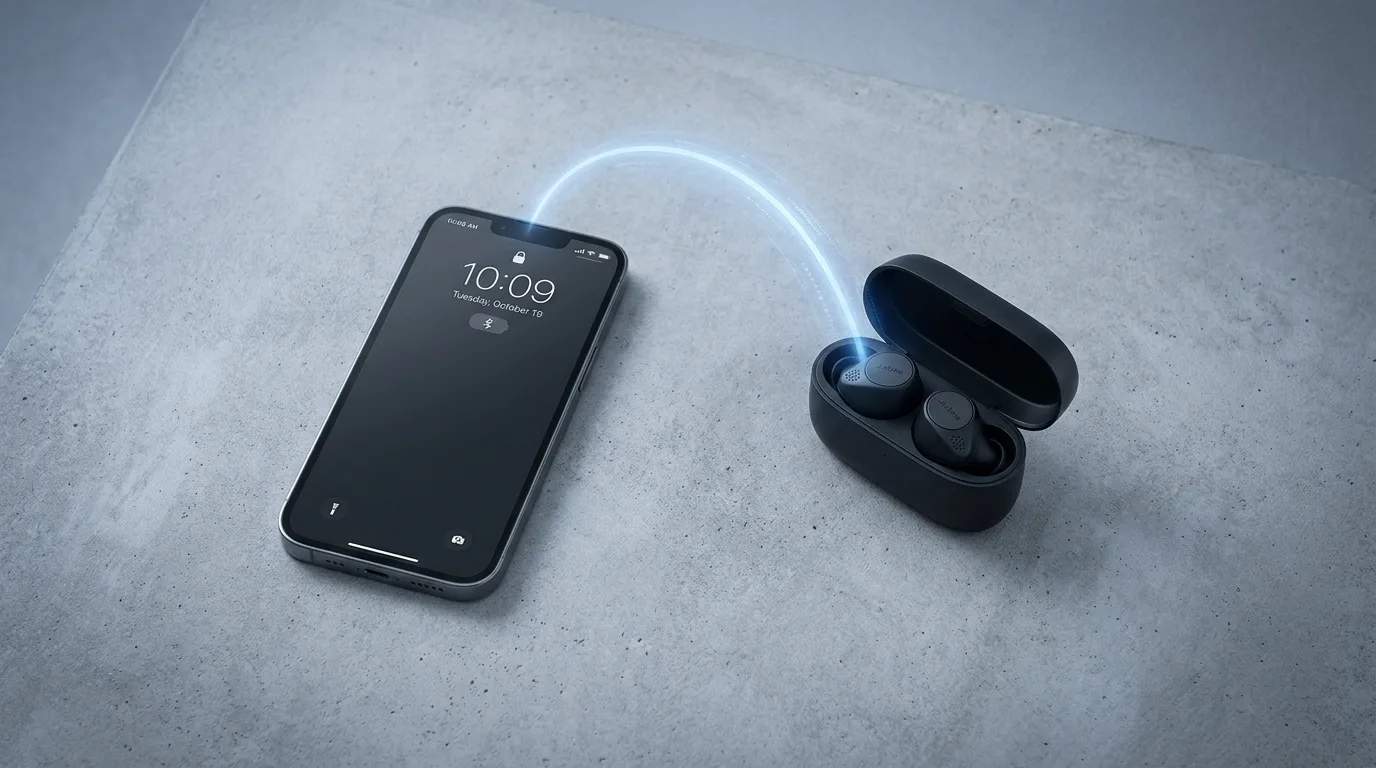
Every wireless headphone compresses audio before sending it from your phone to your ears. The algorithm doing that compression — the Bluetooth codec — determines how much musical detail survives the trip. SBC, AAC, aptX, aptX Adaptive, and LDAC each draw different lines between file size, latency, and fidelity, and which codec your headphones actually use depends on your phone, your operating system, and a handshake negotiation that happens in milliseconds every time you connect.
This page breaks down each codec by bitrate, latency, device compatibility, and audible impact. We referenced the Bluetooth SIG specifications at https://www.bluetooth.com/specifications/, Qualcomm's published aptX documentation, Sony's LDAC white papers, and controlled listening comparisons from SoundGuys and Rtings. The goal is a single reference that tells you what each codec transmits, which phones support it, and whether the difference is something your ears will register or something that exists only on a spec sheet.
Bluetooth Codec Reference Guide
What Bluetooth Codecs Do
A Bluetooth audio codec compresses a digital audio signal on your phone, transmits it wirelessly, and decompresses it inside the headphone. This compression exists because Bluetooth bandwidth is limited — raw CD-quality audio requires 1,411kbps, while a typical Bluetooth link caps around 1,000kbps under ideal conditions and drops lower with Wi-Fi interference or physical obstacles.
The codec choice controls three variables simultaneously. First, bitrate — the amount of data transmitted per second, measured in kilobits. Higher bitrate preserves more audio detail. Second, latency — the delay between the source playing a sound and the headphone reproducing it. Low latency matters for video sync and interactive use. Third, psychoacoustic modeling — the algorithms that decide which audio information to discard. Sophisticated psychoacoustic models remove frequencies the human ear is least likely to detect, preserving perceived quality at lower bitrates. Simple models apply blunter cuts that trained listeners can identify as compression artifacts: smeared cymbals, flattened reverb tails, and reduced stereo separation.
When your phone connects to a headphone, the two devices negotiate the highest-quality codec they both support. If your phone offers LDAC and your headphone supports LDAC, the connection uses LDAC. If one side does not support it, the devices fall back to the next mutually supported codec, descending through aptX, AAC, and finally SBC. This negotiation is invisible — no popup tells you which codec was selected. On Android, you can check and override the selection in Developer Options. On iPhone, no such control exists.
SBC: The Universal Baseline
Sub-Band Coding is the mandatory codec built into the Bluetooth A2DP profile. Every Bluetooth audio device manufactured since 2003 supports SBC. It transmits at up to 345kbps in its joint stereo high-quality configuration, though many implementations default to a lower bitrate around 229kbps for connection stability.
SBC uses a relatively simple compression algorithm that divides audio into frequency sub-bands, applies basic psychoacoustic weighting, and quantizes each band independently. The result is acceptable for speech, podcasts, and casual music listening. On complex musical passages — dense orchestral sections, layered electronic production, or recordings with wide dynamic range — SBC introduces audible artifacts. Cymbal hits develop a grainy, metallic texture. Reverb tails truncate abruptly instead of decaying naturally. Stereo imaging narrows, collapsing the sense of spatial separation between instruments.
SBC's advantage is universality. It works on every phone, every tablet, every laptop, and every Bluetooth speaker regardless of manufacturer or operating system. When troubleshooting connection issues, forcing SBC eliminates codec incompatibility as a variable. For spoken-word content — audiobooks, conference calls, podcasts — SBC at 345kbps is functionally transparent. The compression artifacts that matter exist in the frequency ranges where music lives, not where human speech concentrates.
AAC: Apple's Standard
Advanced Audio Coding transmits at up to 256kbps over Bluetooth. Apple uses AAC as the exclusive high-quality Bluetooth codec on all iPhones, iPads, and Macs. When you pair any headphone with an iPhone — including the Apple AirPods Pro 3, which Apple optimized specifically for AAC — the connection uses AAC regardless of what other codecs the headphone advertises.
AAC employs a more sophisticated psychoacoustic model than SBC. It uses modified discrete cosine transform (MDCT) processing combined with temporal noise shaping to allocate bits where the ear is most sensitive. The result at 256kbps is clean and musical on most content. Trained listeners in ABX tests typically cannot distinguish AAC at 256kbps from the original source when the source itself is a compressed streaming file from Spotify or Apple Music's lossy tier.
The complication is encoder quality. Apple's AAC encoder is well-optimized and produces consistent results across all Apple hardware. Android's AAC implementation varies by device manufacturer. Samsung, Google Pixel, and flagship OnePlus phones use competent encoders. Some mid-range and budget Android phones ship with lower-quality AAC encoders that produce worse results than SBC at a higher bitrate. This inconsistency is why Android audiophiles tend to prefer LDAC or aptX over AAC — not because AAC is inherently inferior, but because AAC quality on Android is unpredictable. Browse our top picks for Apple users to see which models pair best with AAC.
aptX and aptX Adaptive
Qualcomm's aptX codec family requires Qualcomm Bluetooth chipsets in both the source device and the headphone. The original aptX transmits at 384kbps with fixed bitrate and approximately 70ms latency. aptX HD increases the ceiling to 576kbps. aptX Adaptive — the current generation — operates at up to 420kbps with variable bitrate that adjusts in real time based on RF conditions, and includes a low-latency mode that drops to 50-80ms for video and interactive use.
The variable bitrate in aptX Adaptive is its defining feature. When the Bluetooth link is strong — phone in your pocket, no interference — the codec transmits at maximum quality. When you walk away from your phone or enter an area with heavy Wi-Fi congestion, the bitrate drops to maintain a stable connection instead of stuttering or skipping. This adaptation happens continuously and inaudibly, trading slight quality reduction for uninterrupted playback.
The Sennheiser Momentum 4 supports aptX Adaptive and demonstrates its low-latency advantage in video content and mobile play. Audio-visual sync stays tight where LDAC at maximum bitrate introduces a perceptible lip-sync gap. For mixed-use listening — music, video calls, YouTube, interactive apps — aptX Adaptive offers the most balanced codec profile. Our Momentum 4 versus XM5 comparison measures this latency gap in controlled testing.
The compatibility constraint is real. aptX requires Qualcomm chipsets on both ends. iPhones do not support any aptX variant — Apple has never licensed Qualcomm's Bluetooth audio codecs. Samsung Galaxy phones support aptX on most flagship models. Google Pixel phones support aptX. Many other Android phones do, but budget devices sometimes omit it. Check your phone's Bluetooth codec list in Developer Options before buying headphones specifically for aptX support.
High-Resolution Wireless Audio Standards
LDAC: Sony's High-Resolution Codec
LDAC transmits at three selectable quality tiers: 330kbps (connection priority), 660kbps (balanced), and 990kbps (quality priority). At 990kbps, LDAC delivers roughly triple the data of AAC and nearly three times the bitrate of standard aptX. Sony developed the codec and licenses it freely to Android — Google built LDAC into the Android Open Source Project starting with Android 8.0, making it available on any Android phone running Oreo or later.
At 990kbps in quality priority mode, LDAC preserves details that other Bluetooth codecs strip. The attack transient of a snare drum retains its initial sharpness instead of softening. Reverb tails on vocals decay gradually rather than cutting off. High-frequency harmonics on acoustic guitar strings remain present instead of rolling off into a dull haze. These differences are most apparent when the source material is lossless — FLAC files, Tidal HiFi streams, or Apple Music Lossless played on an Android device.
The Sony WH-1000XM6 is Sony's flagship LDAC implementation, with hardware-level optimization for the 990kbps tier. The Anker Soundcore Space One also supports LDAC at all three tiers, making it the most accessible entry point for high-bitrate Bluetooth audio. Our Space One review covers LDAC performance at the budget tier, including how it handles the 990kbps mode with varying signal conditions.
LDAC at 990kbps trades latency for quality. The encoding and decoding process introduces approximately 200ms of delay — acceptable for music listening but noticeable during video playback as a lip-sync gap. Sony's adaptive mode (660kbps) reduces latency while maintaining quality above AAC levels. For pure music listening, LDAC at 990kbps is the best wireless codec available and outperforms every alternative on raw audio fidelity. For mixed media consumption, 660kbps or aptX Adaptive provides a better daily experience.
iPhone users gain nothing from LDAC. Apple does not support it on any device. An LDAC-capable headphone paired with an iPhone falls back to AAC at 256kbps — identical to a headphone that never supported LDAC in the first place. If you own an iPhone and do not plan to switch to Android, LDAC support should not influence your purchase decision.
Which Codec Matches Your Phone
Your phone determines the codec ceiling. No headphone feature can override the source device's codec support. Here is the current compatibility map:
iPhone (all models): AAC and SBC only. Apple does not support LDAC, aptX, or any Qualcomm codec variant. The Apple AirPods Pro 3 is engineered specifically for Apple's AAC encoder, using Apple's H2 chip to optimize the decode path. Other headphones receive the same AAC stream but decode it through their own processing. Read our full AirPods Pro 3 review for details on Apple's codec optimization work.
Samsung Galaxy (S-series, Z-series, A-series flagships): SBC, AAC, aptX, aptX Adaptive, LDAC, and Samsung SSC (Scalable Codec). Samsung phones offer the widest codec support of any manufacturer. SSC is a proprietary codec that requires Samsung Galaxy Buds — it transmits at up to 512kbps with optimizations for Samsung's own earbud hardware. Outside the Samsung earbud ecosystem, SSC is irrelevant.
Google Pixel: SBC, AAC, aptX, LDAC. Pixel phones include Google's own AAC encoder, which is among the better Android AAC implementations. LDAC works at all three quality tiers. aptX Adaptive is available on Pixel 7 and later.
Other Android phones: SBC and AAC are guaranteed. LDAC is available on nearly all phones running Android 8.0 or later. aptX support depends on whether the phone uses a Qualcomm Snapdragon processor with aptX licensing — most flagships and mid-range phones include it, but MediaTek-powered budget phones often do not. Check Developer Options to confirm.
The practical recommendation: if you use an iPhone, buy headphones based on ANC quality, comfort, and build rather than codec support. If you use Android, prioritize LDAC for music quality or aptX Adaptive for mixed media with low latency. If you split time between both platforms, know that your headphones will use AAC on the iPhone side regardless of what they support on Android.
Lossless Over Bluetooth: The Myth
No Bluetooth codec currently transmits lossless audio. LDAC at 990kbps is the closest, but it still applies lossy compression — the encoding discards data that cannot be reconstructed at the receiving end. True lossless audio (CD-quality at 1,411kbps or higher-resolution formats at 2,304kbps+) exceeds what the Bluetooth radio link can carry with current specifications.
Qualcomm's aptX Lossless was announced in 2021 with claims of CD-quality lossless transmission. The implementation uses a mathematically lossless codec when the Bluetooth channel is clean and falls back to lossy compression when interference degrades the link. In practice, sustained lossless transmission requires ideal RF conditions — close proximity, no interference, clear line of sight. Real-world listening environments rarely maintain these conditions, so aptX Lossless spends most of its time in the lossy fallback mode, performing similarly to aptX Adaptive.
The actual path to lossless wireless audio bypasses Bluetooth entirely. The Beats Studio Pro supports lossless audio over USB-C — a wired digital connection that transmits the full uncompressed stream with zero lossy compression. Several Sony and Samsung models also support USB-C audio mode. This wired-digital approach delivers genuine lossless quality but sacrifices the wireless convenience that Bluetooth provides. For critical listening sessions where quality matters above all else, USB-C wired mode paired with a lossless source eliminates the codec variable from the audio chain completely.
Bluetooth 6.0, expected in late 2026 or 2027, may introduce higher bandwidth profiles that make lossless wireless transmission practical. Until then, LDAC 990kbps represents the quality ceiling for wireless listening, and USB-C represents the path for listeners who refuse to accept any lossy compression between their source and their ears.
When Codecs Actually Matter — And When They Do Not
Three conditions must align simultaneously for codec quality differences to be audible. First, a lossless or high-bitrate source — FLAC files, Tidal HiFi, Apple Music Lossless, or at minimum Spotify Premium at 320kbps. If you stream at 128kbps from a free tier, the source is already more compressed than anything the codec adds, and LDAC transmits the same low-quality file as SBC. Second, capable headphones — drivers, tuning, and passive isolation that reproduce the frequency detail the codec preserves. Budget earbuds with poor driver response cannot reproduce the extra detail LDAC carries. Third, a quiet listening environment — background noise masks subtle detail. On a subway platform, the difference between SBC and LDAC is inaudible because environmental noise drowns the frequencies where codec compression artifacts live.
Psychoacoustic research supports this threshold model. Published ABX tests from Harman International and independent audio forums consistently show that most listeners cannot reliably distinguish 256kbps AAC from a lossless source on consumer-grade headphones in typical listening environments. The success rate for correct identification rises above statistical chance only when subjects use reference-grade headphones in acoustically treated rooms with lossless source material — conditions that describe a recording studio, not a commute.
This does not mean codecs are irrelevant. The gap between SBC at 229kbps and LDAC at 990kbps is audible to most listeners on most headphones with most music. The gap between AAC at 256kbps and LDAC at 990kbps is audible primarily to trained ears on capable equipment with high-quality source material. The gap between aptX Adaptive at 420kbps and LDAC at 990kbps is subtle enough that convenience factors — latency, connection stability, battery impact — carry more practical weight than the quality difference.
For the majority of wireless headphone buyers, codec quality ranks below ANC performance, comfort, battery life, and multipoint support in daily impact. For the subset of listeners who stream lossless, own headphones that resolve fine detail, and listen in quiet spaces, LDAC support represents a genuine and repeatable quality improvement. Know which group you belong to before letting codec specs drive a purchase. Our premium noise-cancelling roundup ranks models across all these factors, including codec support.
Now That You Know
Codec knowledge changes how you evaluate headphones — features that looked identical on paper now separate into meaningful tiers based on your phone and listening habits. Ready to apply this?
Match codecs to specific models: Our premium noise-cancelling headphone roundup lists codec support for every pick alongside ANC depth, battery life, and comfort ratings.
Understand the full feature stack: Codecs are one piece of the wireless headphone equation. See how they fit alongside multipoint, ANC, and spatial audio in our wireless headphone features guide for the complete breakdown.
Compare LDAC flagships head to head: The Sony WH-1000XM6 and Bose QC Ultra take different codec approaches. Our XM6 vs Bose QC Ultra comparison tests how that difference sounds in practice.

Frequently Asked Questions
Does Bluetooth codec affect sound quality more than the headphone driver?
The codec sets the maximum quality ceiling for the wireless link — it determines how much audio data reaches the driver. A premium driver receiving a low-bitrate SBC stream cannot reproduce detail that was stripped during compression. In practice, the codec bottleneck matters most at the extremes: SBC at 345kbps audibly compresses complex passages, while LDAC at 990kbps preserves enough detail that the driver becomes the limiting factor. Between AAC at 256kbps and aptX at 384kbps, most listeners cannot reliably identify a difference in blind tests.
Can I change the Bluetooth codec on my phone?
On Android, yes. Open Settings, navigate to Developer Options, and select Bluetooth Audio Codec. You can choose between SBC, AAC, aptX, aptX Adaptive, or LDAC depending on what your phone and headphones both support. On iPhone, no — Apple locks Bluetooth audio to AAC and SBC with no user-accessible codec setting. Samsung Galaxy phones add an additional option: Samsung SSC (Scalable Codec), accessible through the Galaxy Wearable app when paired with Samsung earbuds.
Is LDAC worth it if I only use Spotify?
Spotify streams at up to 320kbps in OGG Vorbis format. LDAC at its highest 990kbps mode can transmit this without additional compression, preserving the full Spotify stream. At LDAC's mid-tier 660kbps setting, the difference from AAC is marginal with Spotify content. Where LDAC makes its strongest case is with lossless sources — Tidal HiFi, Apple Music Lossless on Android, or local FLAC files — where the source bitrate exceeds what AAC or aptX can carry.
Why do my headphones sound different on my iPhone vs Android phone?
iPhones use AAC exclusively for Bluetooth audio. Android phones may negotiate LDAC, aptX Adaptive, aptX, or AAC depending on the headphone and phone capabilities. If your headphones support LDAC and your Android phone does too, the Android connection transmits roughly four times the data of the iPhone AAC connection at maximum settings. The audible gap depends on your source material — streaming compressed audio narrows it, while lossless files widen it.
Do Bluetooth codecs affect video latency?
Yes. SBC introduces 150-250ms of latency. AAC adds 90-150ms. aptX standard delivers around 70ms, and aptX Adaptive drops to 50-80ms with its low-latency mode. LDAC at 990kbps mode prioritizes bitrate over latency, averaging 200ms or more. For video watching, aptX Adaptive offers the best balance of quality and sync. For competitive play where every millisecond counts, wired USB-C or a 2.4GHz wireless dongle bypasses Bluetooth codec latency entirely.
Get Picks Delivered
One email per week. Honest reviews, no spam.
Only when something changes. Unsubscribe anytime.