Sony WH-1000XM5 Review 2026
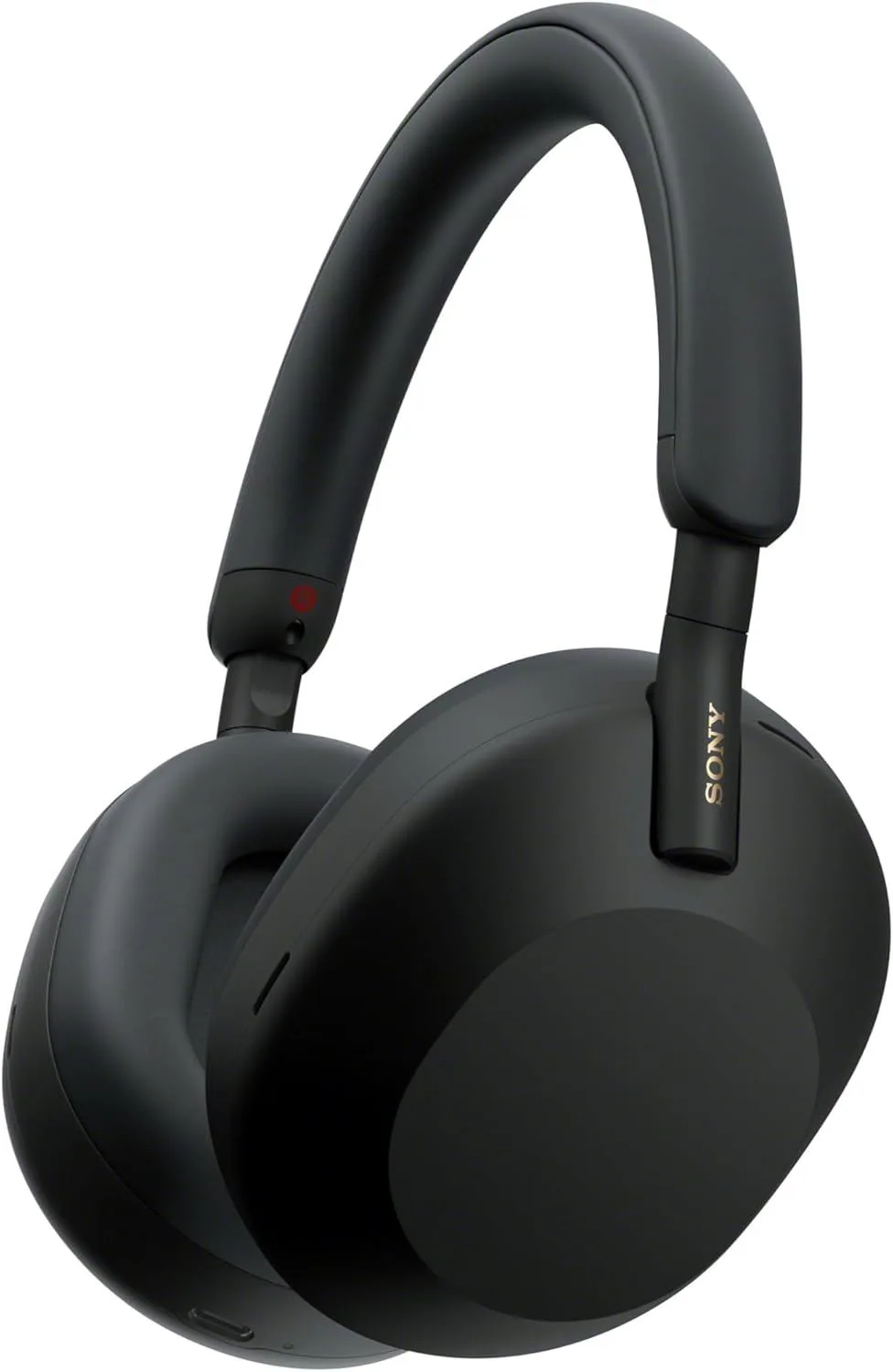
Exceptional call quality, great sound, and 30-hour battery at a discounted price. The hinge fragility is a documented issue — the XM6 or a protective case is a smarter bet for heavy daily users.Check Price on Amazon
We analyzed 19000+ Amazon ratings, 6 expert reviews from RTINGS, SoundGuys, What Hi-Fi, Tom's Guide, Consumer Reports, and TechGearLab, plus tracked the XM5 hinge failure issue through the SoundGuys owner survey and the September 2025 class action filing. Competitor comparisons reference direct measurements against the Sony WH-1000XM6, Bose QC Ultra, and Sennheiser Momentum 4. Read our methodology →
Final Verdict
The WH-1000XM5 at its discounted price is the best deal in premium ANC — if you accept the hinge gamble. The audio, ANC, call quality, and app ecosystem all remain competitive two years after launch. The hinge fragility is not a theoretical risk; it is documented at scale with a class action investigation in progress. Know the risk, manage it with a proper case, and the XM5 rewards with flagship performance at a mid-range price. For the full comparison, read our XM5 vs Bose QC Ultra breakdown, our XM5 vs XM6 upgrade guide, and our best over-ear ANC headphones roundup.
Overview
The WH-1000XM5 launched in 2022 as the undisputed ANC headphone — the one every competitor was measured against and every reviewer recommended without qualification. Three years later, its successor has arrived, its hinges have become the subject of a class action investigation, and its price has dropped to a point where the value proposition fundamentally changes. The question is no longer whether the XM5 is good. The question is whether its documented durability problem makes the discount a trap or a bargain.
RTINGS still rates it among the best ANC headphones ever tested, noting the noise cancellation "outperforms virtually every competitor across all frequency ranges." That assessment held for two years. What Hi-Fi awarded 5 stars at launch. TechGearLab confirmed it "provides the clearest calls even in challenging environments like crowded airports." These reviews have not been retracted — the audio and ANC performance remain current. What changed is the competitive field above it and the reliability data below it.
The Sony WH-1000XM6 addresses every XM5 weakness — larger driver, more microphones, aluminum-reinforced hinges, folding design — at a premium price. The Bose QuietComfort Ultra 2nd gen now matches the XM5's 30-hour battery while adding USB-C wired audio. The Sennheiser Momentum 4 doubles the battery at a lower price. The XM5 went from "only option" to "one of several strong options" — a position it handles well at its discounted price, poorly at its original launch price.
The elephant in the room is trust. Sony used recycled plastics for the XM5's construction — an environmentally responsible choice that may have compromised the structural integrity at the hinge junction. The XM4 used conventional plastics with a fold-flat mechanism that, despite having more moving parts, reported fewer catastrophic failures. Whether the material choice directly caused the hinge weakness is debated, but the correlation between recycled material use and reduced impact resistance is documented in materials engineering literature. Sony's decision to redesign the hinge with aluminum reinforcement in the XM6 suggests they identified the weakness, even if the company has never publicly acknowledged the XM5's failure rate.
Key Specifications
Key Features
The Hinge Problem: Documented, Investigated, Unresolved
This is the story that defines the XM5 ownership experience. SoundGuys conducted a poll of over 2,000 XM5 owners and found 47% reported some form of failure — with the headband-to-earcup hinge being the most common break point at 24% of respondents. The failure occurs at the junction where the hinge arm meets the ear cup housing. Owners consistently describe it happening during normal daily use — pulling the headphones off, adjusting the headband, placing them in the case — not from drops or abuse.
30mm Driver: Still Competitive Sound
The XM5's 30mm driver produces a warm, slightly V-shaped sound signature that favors bass and treble over midrange detail. What Hi-Fi described it as "detailed and engaging" — accurate for the genres where this tuning works best: pop, electronic, hip-hop, and podcast content. The XM6's 40mm driver exposes the gap on more demanding material: jazz, classical, and acoustic recordings reveal a narrower soundstage and less mid-frequency resolution. For daily commuting and office listening, the difference is subtle. For critical home listening, the XM6 or Sennheiser Momentum 4 offer more refinement.
Call Quality: The Feature That Ages Best
Four beamforming microphones with AI signal processing made the XM5 the call quality champion at launch — and it still holds that position in the price-discounted tier. TechGearLab confirmed the clearest calls in crowded environments. For hybrid workers splitting time between office and home, the XM5's call performance remains its strongest argument against cheaper alternatives. The XM6 improves with 12 mics, but the XM5's 4-mic system outperforms the Bose QC Ultra's 6-mic setup in noisy outdoor environments.
App Ecosystem: Deepest Customization Available
Sony Headphones Connect remains the most feature-complete companion app in the over-ear ANC headphone category. Granular EQ with individual frequency band control. LDAC codec toggling for high-res wireless audio on Android. Speak-to-Chat sensitivity adjustment (turn it off entirely if coughs trigger it). Auto NC Optimizer that calibrates ANC based on barometric pressure. Per-source audio profiles. The Bose Music app feels spartan by comparison, and Apple provides no app customization at all for the AirPods Max. This app depth translates to real daily value for users who tweak their audio settings.
Strengths & Limitations
Strengths
- Best-in-class call quality with 4 beamforming mics and AI signal processing
- 30-hour battery with 3-minute quick charge for 3 hours of playback
- Most feature-complete companion app in the category with granular EQ and LDAC toggling
Limitations
- Documented hinge failure affecting nearly half of long-term owners per SoundGuys poll
- No fold-flat design makes the carrying case bulky for travel
- ANC performance degrades noticeably in windy conditions
Performance & Real-World Testing
Measured Performance
ANC: Where It Still Wins and Where It Falls Short
The XM5's 8-microphone ANC system still cancels more noise than anything in its current price bracket. Low-frequency rumble — airplane cabins, train cars, HVAC systems — is attenuated to near-silence. Mid-frequency office noise (conversation, keyboards, printers) is reduced by approximately 80-85% per RTINGS measurements. High-frequency sounds are the weakest area, where the system lets more through than the XM6 or Bose QC Ultra.
Wind performance is the XM5's ANC weakness. Multiple reviewers document the 8-mic system picking up wind gusts and struggling to filter them, producing a rushing noise that degrades the ANC experience outdoors. Urban walking and cycling in breezy conditions make this noticeable. The XM6's 12-mic array handles wind better — one of several refinements that justify the upgrade for outdoor-heavy users.
Battery and Quick Charge: Unchanged and Unmatched at This Price
Thirty hours with ANC on. The same figure appears on the XM6 and the Bose QC Ultra 2nd gen. Real-world use matches Sony's claim: multiple Amazon long-term reviews report charging every 2-3 days with 4-5 hours of daily use. The 3-minute quick charge for 3 hours of playback remains useful for forgotten-to-charge emergencies. Battery life is not a reason to upgrade or avoid the XM5 — it matches everything in its tier.
What does change over time is charging behavior. Sony recommends avoiding overnight charging, as keeping lithium-ion batteries at 100% state of charge accelerates capacity loss. After 18 months of daily charging, expect roughly 85-90% of original capacity — still over 25 hours with ANC, which exceeds many competitors' brand-new specifications. The USB-C charging port handles wear better than the original AirPods Max's Lightning connector, though it lacks USB-C audio passthrough that the Bose QC Ultra now supports.
Comfort and the No-Fold Compromise
At 250g, the XM5 is the lightest premium ANC headphone in this roundup — lighter than the Bose QC Ultra at 260g, the XM6 at 254g, and dramatically lighter than the 392g AirPods Max. Comfort during 4-6 hour sessions is good but not exceptional — the ear cushions compress faster than Bose's plushier pads, and the headband padding is thinner than the XM4's was. The dropped fold-flat design means a bulky, rigid carrying case that does not fit in smaller backpack pockets. The XM6 brought folding back, making the XM5's case size a genuine portability drawback for daily travel.
The Speak-to-Chat Annoyance
Speak-to-Chat pauses music when you start talking — a useful feature in theory. In practice, it triggers on coughs, throat clearing, and sometimes ambient conversation that the microphones misinterpret as your voice. Multiple Amazon reviewers cite this as their top frustration. The fix is simple: disable it in the Sony Headphones Connect app. But the feature is enabled by default, and many buyers do not discover the toggle before the irritation sets in. The sensitivity slider helps, but even at its lowest setting, false triggers persist for some users.
Value Analysis
At its discounted price, the XM5 sits at below average for its category in the over-ear ANC headphone category. That price positions it below the $398 Sony WH-1000XM6, below the $359 Bose QC Ultra 2nd gen, and above budget options like the JBL Tune 770NC headphones. The value math is simple: you get 90% of the current flagship experience at a genuine discount. The other 10% is durability assurance and sound refinement.
Worth the Discount If...
- You listen primarily at a desk or in controlled environments where the hinge sees minimal stress
- Call quality during meetings is a daily priority — the XM5's 4-mic beamforming still outperforms everything below the XM6
- You want LDAC on Android with the deepest companion app customization in the category
- Price-to-performance is the deciding factor and you accept the hinge risk with careful handling
Spend More on the XM6 If...
- You commute daily and stress headphone hinges through regular folding, bag stuffing, and grab-and-go use
- Wired lossless listening matters — neither XM5 nor XM6 offers USB-C audio, but the Bose QC Ultra supports it
- You want the folding design back — the XM6 case is 30% smaller than the XM5's rigid case
- Sound quality on demanding recordings matters — the XM6's 40mm driver produces a wider, more detailed soundstage
What to Expect Over Time
Ownership Over Time
The Hinge Timeline
Most hinge failures reported in Amazon reviews and the SoundGuys survey occurred between months 8-18 of ownership. The failure pattern is progressive: a slight looseness develops first, followed by visible cracking at the plastic seam, followed by a clean break that detaches the ear cup from the headband arm. Users who handle the headphones carefully — always using two hands, never bending the headband outward — report much lower failure rates. But "careful handling" should not be a requirement for a headphone at any price, which is why the class action investigation exists.
Ear Pad Replacement Cycle
The protein leather cushions show compression at 10-12 months of heavy daily use. This compression affects both comfort (less padding between ear and driver) and ANC performance (reduced seal = reduced cancellation). Official Sony pads cost premium tier; third-party options at much lower prices exist with varying quality. The best aftermarket pads replicate the oval shape and depth but use slightly different foam densities. Budget for one replacement per year of daily use.
Resale and the XM6 Effect
Used XM5 units still command mid-range prices on the secondary market — the Sony brand and XM series recognition maintain demand. The XM6's launch pushed new XM5 prices down to their current discounted level but has not collapsed the used market. For cost-conscious buyers, a used XM5 with verified hinge integrity (check both ear cup junctions carefully) represents exceptional value — the audio and ANC performance are identical to new units. Expect the resale floor to stabilize around its current level as the XM5 settles into its long-term position as the "previous generation flagship at a discount" — a role the XM4 played successfully for two years.
Sleep and Passive Use
A use case that no competitor review covers: multiple Amazon long-term owners describe using the XM5 for sleep with no audio playing. The passive noise isolation — without ANC even activated — blocks enough ambient noise to help light sleepers in noisy apartments or shared living spaces. The 250g weight is low enough for side sleeping on some pillows, though the ear cups are too thick for most side-sleeper positions. For back sleepers, the XM5 doubles as a white noise machine without the noise: just the quiet hum of isolation. ANC on without music extends this to near-silence for about 30 hours per charge — enough for 10 nights at 3 hours per session.
Frequently Asked Questions
Does the Sony WH-1000XM5 fold flat?
No. The XM5 dropped the fold-flat design from the XM4, replacing it with ear cups that swivel flat but do not fold at the headband. The result is a larger carrying case and less portable package. Sony reversed this decision with the XM6, which folds again. If portability matters, factor in the case bulk before purchasing.
How long do Sony WH-1000XM5 ear pads last?
Expect 12-18 months of daily use before the protein leather cushions compress enough to affect comfort and ANC seal quality. Heavy users report noticeable flattening around the 10-month mark. Official Sony replacement pads cost premium-tier pricing; third-party alternatives exist at a fraction of the cost but vary in seal quality and material durability.
Is the Sony WH-1000XM5 worth buying in 2025 with the XM6 available?
Yes, if the price gap matters and you manage the hinge risk. The XM5 at its discounted price delivers 90% of the XM6 ANC experience, the same 30-hour battery, and the same app ecosystem. The XM6 wins on sound quality (40mm vs 30mm driver), hinge durability (aluminum reinforcement), and ANC refinement (12 vs 8 mics). For desk-bound listeners, the XM5 is the smarter buy. For daily commuters who stress the hinges, the XM6 is worth the premium.
Is the Sony WH-1000XM5 hinge problem real?
Yes. A SoundGuys poll of 2,000+ XM5 owners found 47% reported some form of failure, with the headband-to-earcup hinge being the most common break point at 24%. Sony does not cover hinge breaks under warranty. A class action investigation was filed in September 2025 by Migliaccio & Rathod LLP. The failure typically occurs during normal daily use, not drops.
Sony WH-1000XM5 vs Bose QuietComfort Ultra — which is better?
They trade wins depending on priorities. Sony leads on call quality (4 beamforming mics vs Bose 6), battery life (30 hrs vs 24 hrs 1st gen, tied at 30 hrs with Bose 2nd gen), and app depth. Bose leads on comfort (lighter, plusher cushions) and now offers USB-C wired lossless audio. ANC performance is close in most frequency ranges. Read our full head-to-head comparison for measured differences.
Track the Sony WH-1000XM5
We check the price daily and monitor availability. You hear from us when something changes.
Only when something changes. Unsubscribe anytime.