Sennheiser Momentum 4 vs Sony XM5: Marathon Runner Meets Sprint Champion
A tie with clear dividing lines. The Sennheiser Momentum 4 wins on battery endurance, balanced sound, and aptX Adaptive codec support. The Sony WH-1000XM5 wins on ANC depth, call quality, and LDAC for non-Qualcomm Android. A $30 price difference is not enough to break the tie — your daily routine does.
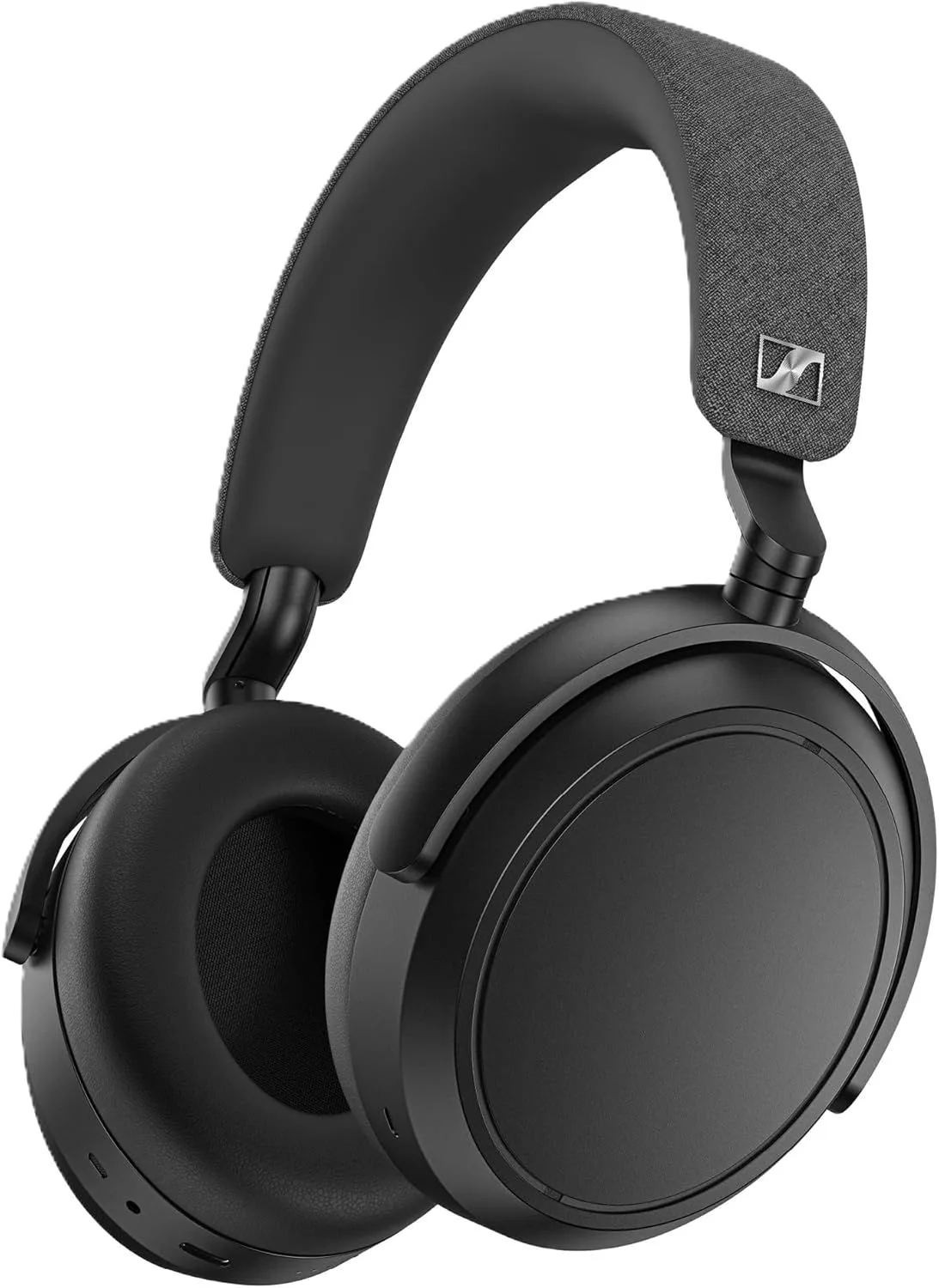
Sennheiser Momentum 4
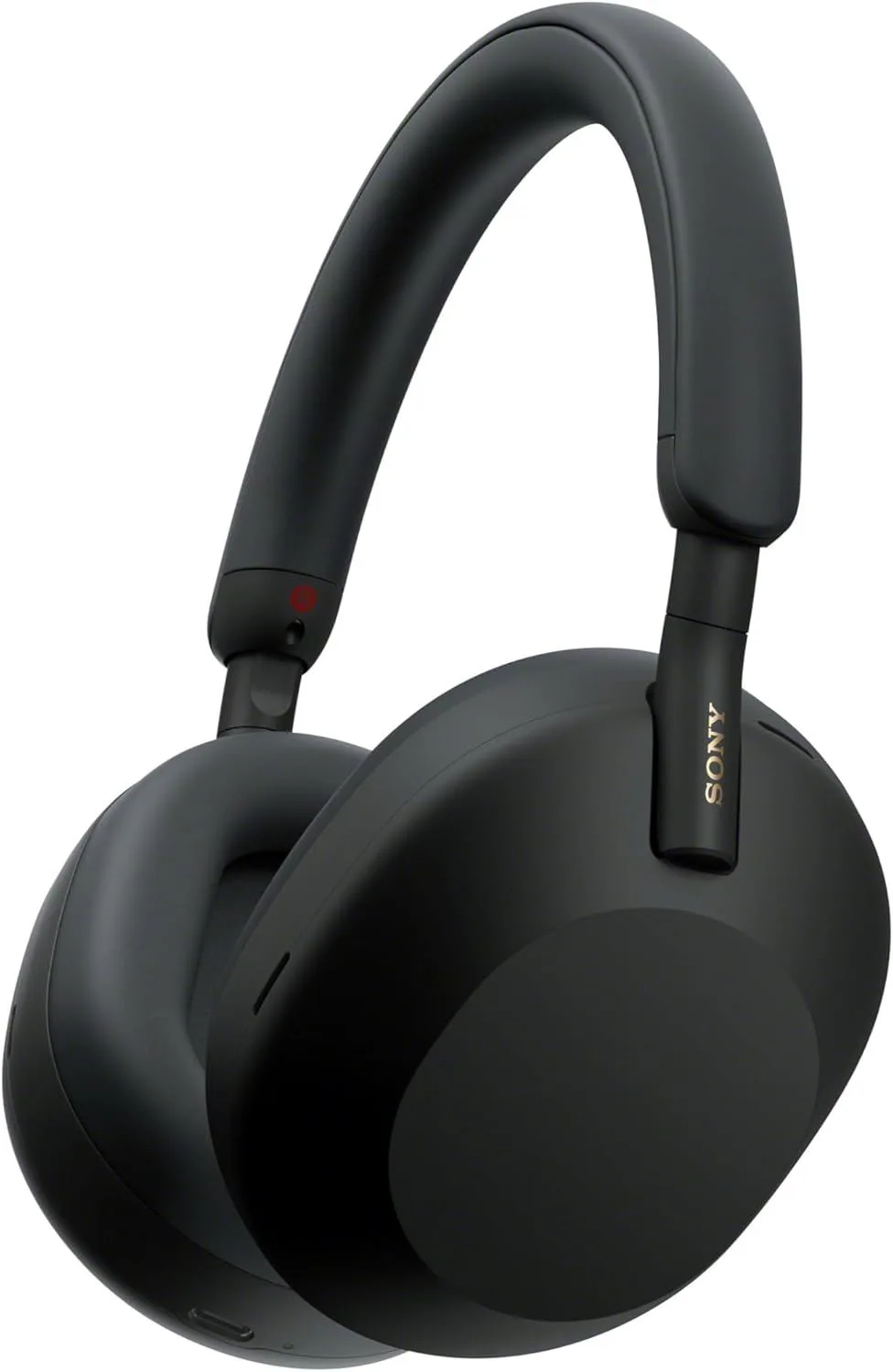
Sony WH-1000XM5
The Sennheiser Momentum 4 wins on battery life and balanced sound; the Sony WH-1000XM5 wins on ANC depth and call quality. Two different philosophies competing for the same buyer. The Sennheiser Momentum 4 is the endurance specialist — 60 hours of battery with ANC active, a balanced sound signature that audiophile reviewers gravitate toward, and aptX Adaptive codec support that Samsung Galaxy and Qualcomm-powered Android phones can actually use. The Sony WH-1000XM5 is the feature-dense all-rounder — deeper noise cancellation, the most customizable companion app in the category, LDAC for high-resolution wireless audio, and call quality that remote workers and sales professionals rely on daily. The price gap is $30. The feature gap is a philosophical canyon.
Both headphones are discounted well below their original launch prices, sitting in the $250-$280 range that makes them direct competitors for budget-conscious buyers who want premium features without flagship pricing. Both have earned strong aggregate ratings — 4.1 stars across 9,600 reviews for the Momentum 4, 4.2 stars across 19,000 reviews for the XM5. And both carry documented reliability baggage: Sennheiser's firmware update history has introduced Bluetooth stability issues that persist for weeks before patches arrive, while the XM5's hinge mechanism has a failure rate that a SoundGuys poll placed at 47% among long-term owners. Neither headphone is perfect. The question is which set of compromises fits your life.
We cross-referenced 6 expert reviews, 28,600+ combined Amazon ratings, and RTINGS measurement data to build this comparison. The individual reviews — Sennheiser Momentum 4 and Sony WH-1000XM5 — cover each product in depth. This page focuses exclusively on the head-to-head: where each wins, where each loses, and what kind of listener each serves best. If you want to see how both stack up against the current generation, read our Sony WH-1000XM6 review or our Bose QC Ultra review.
At a Glance
| Feature | Sennheiser Momentum 4 Wireless Premium Over-Ear Headphones | Sony WH-1000XM5 Wireless Industry Leading Noise Canceling Headphones |
|---|---|---|
| Price Range | $100–$250 | $250–$500 |
| Driver Size | 42mm | 30mm dynamic |
| Battery Life | 60 hrs (ANC on) | 30 hrs (ANC on) |
| Weight | 293g | 250g (8.8 oz) |
| Bluetooth Codecs | aptX Adaptive, aptX, AAC, SBC | LDAC, AAC, SBC |
| ANC Type | 3 ANC levels + transparency | Dual-processor, 8 mics |
| Water Resistance | None | None |
| Bluetooth | 5.2 | 5.2 |
| Check Price | Check Price |
Battery Life: Not Close
The Momentum 4 delivers 60 hours with ANC active. The XM5 delivers 30 hours. That is not a marginal difference — it is a 2x gap that changes how you interact with your headphones. The Momentum 4 can run through an entire work week of 8-hour days without touching a charger. The XM5 needs a mid-week charge under the same usage pattern. For travelers, the Momentum 4 handles a round-trip transatlantic flight (16-20 hours of cabin time) on a single charge with battery to spare. The XM5 needs a top-up during the layover.
Quick charging narrows the gap for daily use. Sony's 3-minute quick charge delivers 3 hours of playback — enough to rescue a dead headphone before a morning commute. Sennheiser's quick charge is less aggressive but the need arises far less often. When your baseline battery lasts four full workdays, emergency charging becomes a rare event rather than a weekly ritual.
The battery advantage has a cost. Sennheiser's ANC processing draws less power because it runs fewer microphones at lower computational intensity — three configurable ANC levels versus Sony's more aggressive 8-microphone cancellation system. The Momentum 4 chose endurance over maximum noise cancellation depth. The answer depends on where you wear your headphones: a quiet office rewards the Momentum 4's approach; a subway platform rewards Sony's.
Noise Cancellation: Sony's Measurable Lead
The XM5's dual-processor, 8-microphone ANC system cancels more ambient noise across the frequency spectrum than the Momentum 4's three-level system. RTINGS measurements confirm the gap: the XM5 attenuates low-frequency noise (airplane engines, HVAC rumble, train vibration) by 3-5 dB more than the Momentum 4 at maximum settings. Mid-frequency cancellation — the office chatter, keyboard clatter, and coffee shop ambient noise band — shows a similar spread. The XM5 makes loud environments noticeably quieter.
The Momentum 4's ANC is not weak — it handles moderate noise environments (home offices, libraries, cafes, quiet commuter trains) without issue. The gap surfaces in the loudest 20% of real-world environments: airplane cabins at cruising altitude, open-plan offices near HVAC returns, subway platforms during rush hour. If your daily noise profile stays below airplane-cabin intensity, the Momentum 4's cancellation is adequate. If you regularly fly or commute on loud public transit, the XM5 earns its advantage.
Sony also offers adaptive ANC through the Headphones Connect app, where the Auto NC Optimizer reads barometric pressure and ear-seal quality to calibrate cancellation per environment. Sennheiser's Smart Control app provides three fixed ANC levels — high, medium, low — without per-environment calibration. The flexibility gap is real: the XM5 can be tuned to your specific ear shape and your specific commuting route. The Momentum 4 gives you three presets and assumes one will work. For most listeners, one of the three does work. For optimization-minded listeners, Sony's granularity is the clear winner. The Bose QC Ultra and Sony XM6 push ANC even further for buyers willing to spend more.
Sound Signature: Balanced Neutrality vs Engaging Warmth
The Momentum 4's 42mm driver produces a sound signature that multiple audiophile publications describe as the most neutral in the ANC headphone category. The tuning is flat by design: vocals sit at the same perceived volume as bass lines and cymbal strikes, instruments maintain separation in complex arrangements, and the frequency response avoids the bass boost that most consumer headphones apply by default. What Hi-Fi, Head-Fi, and SoundGuys have all pointed to the Momentum 4 as the ANC headphone for listeners who care about accuracy over excitement.
The XM5's 30mm driver delivers a different experience. Sony's default tuning leans warm — bass is elevated 2-3 dB above neutral, which adds body to pop, electronic, and hip-hop tracks at the cost of some midrange clarity. The difference is audible on acoustic recordings: a solo piano sounds more present and spatially accurate on the Momentum 4, while the same recording sounds fuller and more enveloping on the XM5. Neither is wrong. They serve different listening preferences and different playlists.
Sony compensates with EQ depth. The Headphones Connect app offers a 10-band parametric equalizer that can reshape the XM5's sound signature to approximate the Momentum 4's neutrality — or push it further into any direction the listener wants. Sennheiser's Smart Control app offers a more limited EQ adjustment. If you are willing to spend 10 minutes with the Sony app, you can close the sound quality gap. If you want correct tonality out of the box without opening an app, the Momentum 4 delivers it at first power-on.
The Android Codec Question: aptX Adaptive vs LDAC
This is the most technical differentiator and the one that matters most to Android users. The Momentum 4 supports aptX Adaptive — Qualcomm's variable-bitrate codec that runs up to 420 kbps and adjusts dynamically based on connection stability. The XM5 supports LDAC — Sony's high-resolution codec that pushes up to 990 kbps at its highest quality setting. On paper, LDAC transmits more data. In practice, the comparison is more nuanced.
aptX Adaptive is available on phones with Qualcomm Snapdragon processors — which includes most Samsung Galaxy flagships, OnePlus, and many mid-range Android phones. LDAC is built into the Android operating system and works on nearly every Android phone regardless of chipset. If you own a Qualcomm-powered phone, the Momentum 4 gives you aptX Adaptive with lower latency (important for video sync) and strong audio quality. If you own a Google Pixel, Samsung Exynos model, or any non-Qualcomm Android phone, the XM5's LDAC delivers higher-bandwidth audio that aptX Adaptive cannot match on your hardware.
For iPhone users, the point dissolves entirely. Apple restricts Bluetooth audio to AAC regardless of what the headphone supports. Both the Momentum 4 and XM5 use AAC with iPhones, and the quality is identical. The codec advantage only applies to Android — and which codec wins depends on your phone's processor. Check your phone's chipset before letting codec support drive your decision. Read our Bluetooth codecs guide for a full breakdown of what these numbers mean in real-world listening.
Call Quality: Sony's Strongest Category Win
The XM5's 8-microphone beamforming array with AI voice processing delivers the best call quality of any headphone under $300. The system isolates your voice from background noise — traffic, wind, keyboard clatter, office chatter — and transmits a clean signal that makes callers think you are in a quiet room. Sales professionals, remote workers who take walking calls, and commuters who call during transit consistently rank the XM5 as their preferred headphone for voice clarity.
The Momentum 4 handles calls capably in quiet environments. Desk-based video conferences on Zoom and Teams sound fine. But move to a busy street, an airport terminal, or a coffee shop with espresso machines running, and the gap becomes audible to the person on the other end. Sennheiser's microphone array lacks the aggressive background noise rejection that Sony's larger mic count and AI processing provide. If calls represent more than 30 minutes of your daily headphone use in variable-noise environments, the XM5 is the stronger pick.
App Ecosystem and Daily Customization
Sony Headphones Connect is the deepest companion app in the consumer headphone market. Ten-band parametric EQ. LDAC bitrate selection between quality and connection stability. Speak-to-Chat sensitivity control with the option to disable entirely. Auto NC Optimizer with barometric calibration. Per-device audio profiles for switching between phone and laptop. Custom ANC intensity on a continuous slider rather than fixed presets. Ambient sound pass-through with adjustable intensity. The app rewards the listener who enjoys fine-tuning — every parameter that can be adjusted is accessible.
Sennheiser Smart Control is functional but shallow by comparison. EQ adjustment with fewer bands. Three ANC presets. Firmware updates. Device management. The app does what it needs to do and little more. For users who never open companion apps — and Amazon reviews suggest that is the majority — neither app's depth matters. For users who enjoy audio customization, the Sony app is in a different class. The Momentum 4 compensates by delivering a better default sound that requires less adjustment, but the ceiling for customization is much lower.
Comfort and Weight for Extended Sessions
The XM5 weighs 250g. The Momentum 4 weighs 293g. That 43-gram difference is perceptible during sessions over 3 hours — not as a dramatic discomfort, but as a gradual awareness of the headphone's presence on your head. The XM5 disappears more easily during long work blocks. The Momentum 4 reminds you it is there by hour four.
Both headphones fold for portability — the Momentum 4 folds flat, the XM5 does not fold at all (a design decision Sony reversed with the XM6). The Momentum 4's folding case is more compact for daily bag carry. The XM5's rigid case is bulkier but protects the non-folding headband from the exact hinge stress that causes its documented failure pattern. Sennheiser's build uses a fabric-and-metal combination that ages well aesthetically but picks up lint and hair. Sony's synthetic leather is easier to clean but shows scuff marks faster.
Ear cushion comfort is close. Both use memory foam with synthetic leather covering. The XM5's cushions are slightly softer at first contact; the Momentum 4's cushions maintain their shape better after 6+ months of daily use. Glasses wearers report no strong preference between the two — both accommodate temple arms without significant pressure, though neither matches the Bose QC Ultra's cushion depth for glasses comfort.
Durability and Reliability: Both Carry Baggage
The XM5's hinge mechanism has a documented failure pattern. A SoundGuys poll found that 47% of long-term owners experienced hinge cracking or failure — a rate high enough that Sony redesigned the mechanism entirely for the WH-1000XM6 with aluminum reinforcement. The failure typically occurs at the 8-14 month mark under daily use, manifesting as a crack at the swivel point where the ear cup meets the headband. Sony has honored some warranty claims, but the experience varies by retailer and region.
The Momentum 4's durability concern is software rather than hardware. Sennheiser's firmware update history includes multiple episodes where updates introduced Bluetooth connectivity issues — dropped connections, pairing failures, audio stuttering — that persisted for weeks before patches arrived. The hardware itself is solid. The headband mechanism has no widespread failure pattern, and the build materials hold up well under daily use. But a firmware update that breaks Bluetooth stability on your only pair of headphones is a reliability failure in practice, even if the physical product is intact.
Both concerns are worth monitoring before purchase. Check recent Amazon reviews filtered to the last 3 months for current firmware stability reports on the Momentum 4. For the XM5, check whether your retailer offers an extended warranty or consider the XM6 at a higher price point if the hinge issue is a dealbreaker.
Price Positioning and Value Arithmetic
The Momentum 4 sits around $247 — the lowest current street price in the premium ANC category. The XM5 sits around $278. The $30 gap buys you deeper ANC, better call quality, LDAC, and the Sony app ecosystem. The $30 only pays off if you actually use those features. A buyer who works from a quiet home office, rarely takes calls on headphones, and owns a Samsung Galaxy phone gets more value from the Momentum 4's aptX Adaptive and 60-hour battery than from the XM5's features that go unused.
The broader market context adds perspective. The Sony WH-1000XM6 at $398 delivers the XM5's feature set with better sound, better ANC, and a fixed hinge — but at $150 more than the Momentum 4. The Bose QC Ultra at $359 offers the best comfort in the category with ANC that matches the XM5 — but at $112 more. Both the Momentum 4 and XM5 represent strong value at their current discounted prices, which is partly why this comparison exists: the biggest difference between them is philosophy, not quality, and they are the two best over-ear ANC headphones under $300.
Multipoint Connection and Switching Behavior
Both headphones support simultaneous connection to two Bluetooth devices — phone and laptop, for example. The XM5 handles device switching more reliably in practice. When a call comes in on your phone while you are listening to music from your laptop, the XM5 transitions to the phone call and returns to the laptop audio with minimal user intervention. The Momentum 4 occasionally requires manual reconnection after switching, particularly after firmware updates that affect Bluetooth stability.
For users who stay connected to a single device throughout the day, multipoint behavior is irrelevant. For users who split time between phone calls and laptop audio — a common pattern for remote workers — the XM5's switching reliability is a practical advantage that surfaces multiple times per day. The Momentum 4's multipoint works, but it requires more patience and occasional manual intervention.
The Right Pick for Your Routine
Get the Sennheiser Momentum 4 If...
- Battery life is your top priority — 60 hours with ANC means charging once a week under heavy daily use
- You own a Qualcomm Snapdragon Android phone and want aptX Adaptive's low-latency, high-quality wireless audio
- You prefer a neutral, balanced sound signature without needing to open an EQ app
- Your daily noise environment is moderate — offices, cafes, quiet commutes — where the ANC gap is smallest
- The XM5's documented hinge failure rate concerns you and you want a physically more durable option
Get the Sony WH-1000XM5 If...
- ANC depth matters most — you fly frequently, commute on loud transit, or work in noisy open-plan offices
- Call quality in variable-noise environments is a daily requirement for work
- You want LDAC support for high-resolution wireless audio on non-Qualcomm Android phones
- You enjoy deep EQ customization and per-environment ANC profiles through a full-featured companion app
- Lighter weight (250g vs 293g) matters for comfort during 4+ hour sessions
Buyer Questions We Hear Most
Is the Sennheiser Momentum 4 better than the Sony WH-1000XM5?
Neither is better across the board. The Momentum 4 wins on battery life (60 hours vs 30), codec flexibility for Samsung/Qualcomm Android phones (aptX Adaptive), and balanced sound tuning preferred by critical listeners. The XM5 wins on ANC depth, call quality (8-mic beamforming), app customization, and LDAC codec support for other Android devices. The $30 price gap is too small to decide on budget alone — your priority determines the winner.
Does the Sennheiser Momentum 4 support LDAC?
No. The Momentum 4 supports aptX Adaptive, aptX, AAC, and SBC — but not LDAC. For Android users with Qualcomm-powered phones, aptX Adaptive delivers comparable quality to LDAC with lower latency. For Android users with non-Qualcomm chipsets (Google Pixel, Samsung Exynos models), LDAC on the XM5 is the higher-quality wireless option. iPhone users get AAC on both headphones.
Which has better noise cancellation — Momentum 4 or XM5?
The Sony WH-1000XM5. Multiple independent measurements confirm the XM5 cancels more noise across low, mid, and high frequencies. The gap is most noticeable on airplanes, trains, and in open-plan offices. The Momentum 4 offers three ANC levels that work well in moderate-noise environments like cafes and home offices, but it concedes to both Sony and Bose in the loudest settings.
Why does the Sennheiser Momentum 4 battery last so much longer?
Two factors: the Momentum 4 uses a larger internal battery cell, and its ANC processing draws less power because it runs fewer microphones at lower computational intensity. The exchange is direct — less aggressive noise cancellation means less battery drain. Sennheiser optimized for endurance over maximum ANC depth, while Sony optimized the opposite way.
Sennheiser Momentum 4 vs Sony WH-1000XM5 — which should I buy?
Buy the Momentum 4 if battery life is your top priority, you use a Qualcomm-powered Android phone that supports aptX Adaptive, or you prefer a neutral sound signature for mixed-genre listening. Buy the XM5 if you need the strongest possible ANC for loud environments, take frequent calls in noisy places, or want deep app-based EQ and ANC customization. Both have documented reliability concerns — check current firmware reviews before purchasing either.
Price Drop Alerts
We'll notify you when prices drop or either product gets updated.
No spam. Unsubscribe anytime.