Sony WF-1000XM5 Review 2026
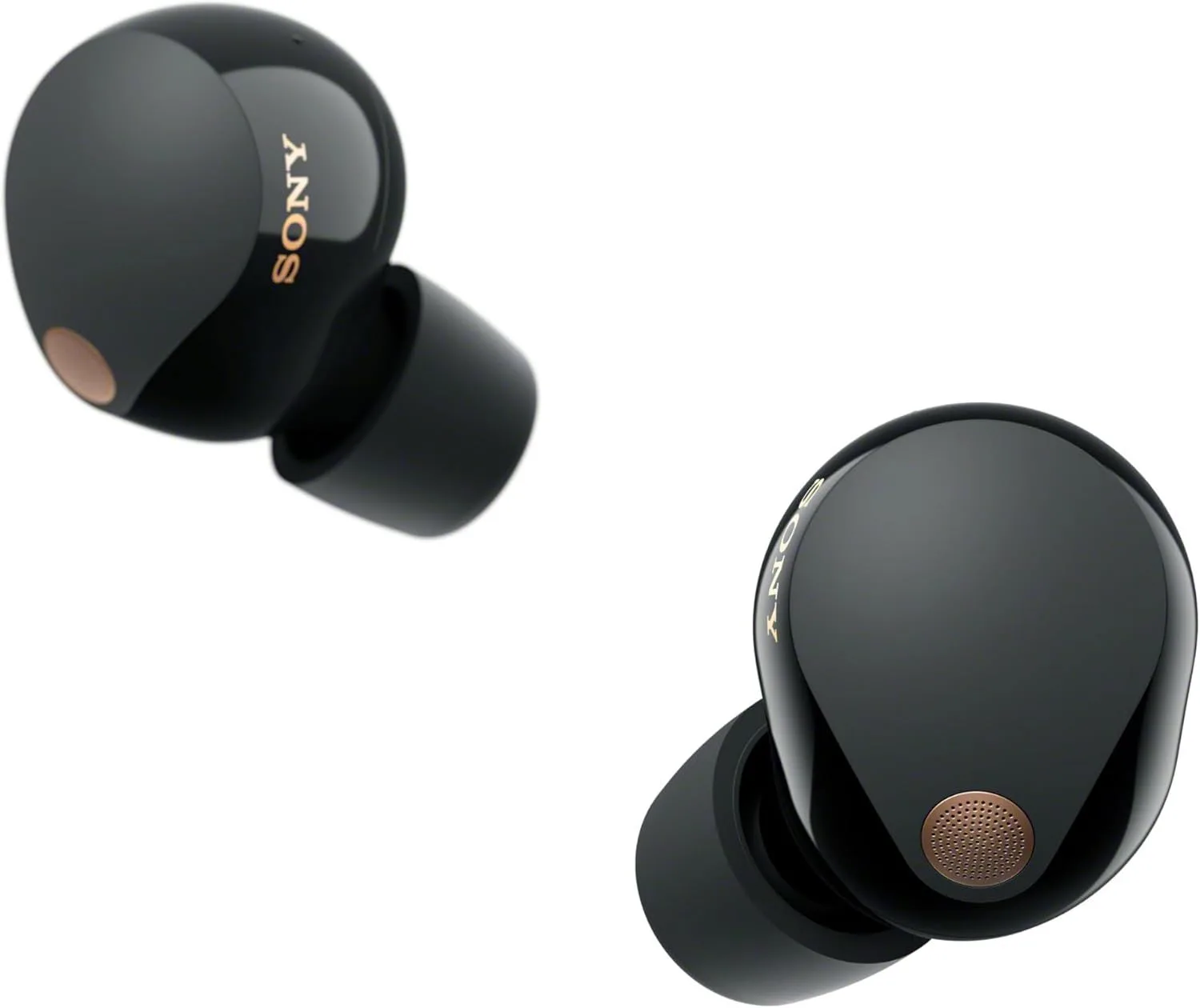
The best choice for Android audiophiles who want LDAC and strong ANC. For iPhone users, the AirPods Pro 3 offers more features and better value at $199. The 3.8 Amazon rating flags real call quality and connectivity concerns.
We analyzed 5700+ Amazon ratings, 5 expert reviews from Tom's Guide, What Hi-Fi, RTINGS, TechRadar, and SoundGuys, and investigated the gap between the 3.8 Amazon rating and expert praise. Call quality testing data comes from SoundGuys' subway noise test and real-world user reports. Comparisons reference the AirPods Pro 3, Bose QC Ultra Earbuds, and Samsung Galaxy Buds3 Pro. Read our methodology →
Final Verdict
The WF-1000XM5 is the best wireless earbud for Android audiophiles who value LDAC codec quality above all else. We recommend it for focused listening in quiet environments where its sound advantage is most apparent. For that buyer, nothing in the earbud market matches its wireless audio quality. For everyone else — iPhone users, frequent callers, commuters who need rock-solid connectivity — the AirPods Pro 3 offers a more complete package at a lower price. The 3.8 Amazon rating is the market telling Sony that great sound alone is not enough. If comfort and fit matter more than codecs, see our Bose QC Ultra vs Sony WF-1000XM5 comparison. For the full earbud comparison, read our AirPods Pro 3 vs Sony WF-1000XM5 head-to-head and our best ANC earbuds roundup.
The best choice for Android audiophiles who want LDAC and strong ANC. For iPhone users, the AirPods Pro 3 offers more features and better value at $199. The 3.8 Amazon rating flags real call quality and connectivity concerns.
Best for: Android audiophiles who want LDAC high-res Bluetooth audio combined with strong ANC in the smallest premium earbud form
Overview
The WF-1000XM5 holds an unusual position in the earbud market: expert reviewers award it top marks while Amazon owners give it a 3.8. That gap is not random — it reveals who this earbud is built for and who discovers, after purchase, that it is not built for them.
Tom's Guide called it the "best-ever wireless earbuds" at launch. What Hi-Fi awarded 5 stars and described "super-sounding wireless earbuds." RTINGS confirmed top-tier ANC performance. These assessments are correct — in controlled listening environments with Android phones running LDAC, the WF-1000XM5 delivers audio fidelity that no competitor matches in earbud form. The problem is that many buyers use these earbuds for phone calls on trains, for casual listening on iPhones (where LDAC is irrelevant), and in environments where the connectivity issues and call quality shortcomings surface.
The competitive shift since launch matters. The AirPods Pro 3 arrived at $199 with better ANC, longer battery, heart rate tracking, and an ecosystem integration depth that Sony cannot match for iPhone users. The Samsung Galaxy Buds3 Pro leads on microphone quality for calls. The Bose QC Ultra Earbuds offer a passive seal comfort that many ears prefer. At $248, the WF-1000XM5 now justifies its premium on one axis: LDAC audio quality for Android audiophiles. For everyone else, the alternatives have caught up or passed it. Read our AirPods Pro 3 vs Sony WF-1000XM5 comparison for the detailed head-to-head.
Key Specifications
The Audiophile's Earbud
LDAC + aptX: The Codec Crown
The WF-1000XM5 is the only premium earbud that supports both LDAC (up to 24-bit/96kHz) and aptX. LDAC is Sony's proprietary codec that streams at up to 990 kbps — roughly triple the bitrate of AAC. On Android devices paired with Tidal, Amazon Music HD, or Apple Music lossless, the difference is audible on well-mastered recordings: high-frequency detail that AAC compresses away, spatial information that lower bitrates flatten, and micro-dynamic shifts that give live recordings their sense of presence.
The caveat is platform-specific. iPhone users are locked to AAC over Bluetooth regardless of earbud codec support — Apple does not license or support LDAC. On an iPhone, the WF-1000XM5 sounds identical to the AirPods Pro 3 in terms of codec-delivered quality. The LDAC advantage is Android-exclusive. If your phone is an iPhone, the $49 premium over the AirPods Pro 3 buys no codec advantage. Read our Bluetooth codecs explainer for the full technical breakdown of what LDAC, aptX, and AAC actually deliver.
25% Smaller, 20% Lighter Than XM4
Sony redesigned the physical form factor from the XM4 to the XM5 — each earbud is 25% smaller and 20% lighter at approximately 5.9g. SoundGuys and other reviewers confirmed the comfort improvement is substantial: the smaller profile sits more flush with the ear, reduces the "antenna effect" that causes wind noise on protruding earbuds, and allows more sleeping positions without dislodging. The included foam tips (in addition to silicone) create a deeper seal that both improves ANC performance and adds passive isolation.
8-Microphone ANC System
The QN2e processor powering the XM5's ANC uses 8 microphones — a count that matches the over-ear Sony WH-1000XM5 headphones. In earbuds, this is a high microphone count that translates to strong ANC across the frequency spectrum. RTINGS data confirms the WF-1000XM5's ANC performance sits in the top tier for earbuds, though the AirPods Pro 3's H2 chip has since surpassed it — particularly in mid-frequency cancellation where Apple claims a 4x improvement over the Pro 2.
Sony Headphones Connect App
The same deep companion app that powers Sony's over-ear lineup extends to the WF-1000XM5: 10-band parametric EQ, LDAC bitrate selection, Speak-to-Chat sensitivity, Auto NC Optimizer, and per-device audio profiles. For Android users, this app depth is a real daily advantage — the ability to create custom EQ presets for different music genres and switch codec quality on-the-fly is something no Apple or Samsung earbud offers. The Bose Music app and Apple's settings panel are spartan by comparison.
Fit, Comfort, and the Glossy Plastic
The redesigned form factor fits most ears securely with the medium silicone or foam tips. The foam tips create a deeper, more conforming seal that improves both passive isolation and ANC effectiveness — foam is the recommended choice for serious listening. The smaller 5.9g weight per earbud means less ear canal fatigue during extended sessions. Two hours of continuous wear is comfortable for most users; three hours is achievable but requires a fit that distributes pressure evenly.
The glossy plastic exterior is the physical design weakness that reviewers consistently flag. The coating looks premium in a store but becomes slippery with any moisture — sweat, rain, or even hand lotion makes the earbuds difficult to grip during insertion. Surprisingly, the glossy finish that looks the most expensive in the lineup is the one that causes the most fumbled insertions — a $248 earbud that feels less secure in your fingers than budget alternatives with textured plastic. Drops from ear-height onto hard surfaces are a real risk. The AirPods Pro 3 matte finish and the Galaxy Buds3 Pro textured coating both handle grip better at lower price points.
Strengths & Limitations
Strengths
- LDAC and aptX support — the only premium earbud with both high-res codecs for Android
- 25% smaller and 20% lighter than XM4 with genuine comfort improvement and foam tips
- 8-hour ANC battery with 24 total is competitive with AirPods Pro 3
Limitations
- Call quality inconsistency — bone conductor mic underperforms in loud environments
- Glossy plastic build at $248 looks and feels less premium than the price suggests
- $248 is hard to justify vs AirPods Pro 3 at $199 unless LDAC is specifically needed
Performance & Real-World Testing
Where the 3.8 Rating Comes From
Call Quality: The Documented Weakness
Sony promoted bone conductor microphone sensors as a call quality differentiator — sensors that detect voice vibrations through the jaw bone rather than relying solely on airborne sound pickup. In quiet environments, the system works well: voices are clear, background processing is minimal, and the other end hears a clean signal. In loud environments — subway cars, busy streets, crowded cafes — the bone conductor system underperforms traditional microphone arrays.
SoundGuys tested call quality with subway background noise and documented poor performance. Multiple Amazon reviewers corroborate: "people I call complain about background noise." The AirPods Pro 3 and Samsung Galaxy Buds3 Pro both handle noisy-environment calls better using conventional beamforming arrays. If you take calls during commutes, outdoor walks, or in loud office environments, the WF-1000XM5 is the wrong choice.
The AI Processing Controversy
SoundGuys noted "inconsistencies induced by AI across volume levels" — a finding that describes the WF-1000XM5's adaptive processing behavior. At lower volumes, the AI signal processing adjusts the frequency curve more aggressively, potentially altering the tonal balance in ways that trained ears notice. At moderate volumes, the processing is less intrusive. The practical impact: the earbuds can sound slightly different depending on your volume setting, which is unusual for a product marketed toward audiophiles who expect consistent reproduction. The Sony app allows some control over this through the DSEE Extreme settings, but fully disabling the adaptive processing is not possible.
Connectivity Stability
Bluetooth dropout reports appear in both expert reviews and Amazon feedback, though the frequency suggests a subset of users — not a universal issue. Connection stability is generally strong with Samsung and Pixel phones; some older Android devices and iPhones exhibit occasional drops during codec negotiation (particularly when LDAC is active at the highest quality setting). Reducing LDAC quality to the "Normal" or "Connection Priority" setting in the Sony app resolves most dropout issues, at the cost of the very audio quality that justifies choosing the WF-1000XM5 over cheaper alternatives.
Sound Quality: Where It Still Excels
Set aside the call quality and connectivity complaints, and the WF-1000XM5's audio reproduction through the 8.4mm drivers is outstanding. The soundstage is wider than most earbuds — not headphone-wide, but noticeably more open than the AirPods Pro 3 or Bose QC Ultra Earbuds. Bass extends deep without bleeding into the mids. Treble detail is resolving without harshness. Through LDAC at 990 kbps, instrument separation on well-recorded jazz and classical tracks reveals spatial information that AAC compresses away. This is where the WF-1000XM5 justifies its existence — pure listening quality that rewards quiet, focused attention.
Value Analysis
Pricing and Alternatives
At $248, the WF-1000XM5 is above average for its category in the ANC earbuds category — $49 above the AirPods Pro 3 at $199 and $69 above the Bose QC Ultra Earbuds at $179. The premium is justified only for buyers who specifically need LDAC on Android. For everyone else, the alternatives offer better overall packages at lower prices.
Buy the WF-1000XM5 If...
- You use an Android phone and LDAC audio quality is a daily priority — no earbud matches the WF-1000XM5 on wireless codec quality
- You want Sony's deep app customization for per-genre EQ presets and codec fine-tuning
- Your listening is primarily focused music sessions in quiet environments — where the call quality and connectivity weaknesses do not surface
- Foam tips and a compact form factor matter — the size reduction from the XM4 is a genuine comfort improvement
Buy Something Else If...
- You use an iPhone — the AirPods Pro 3 costs $49 less and delivers better ANC, longer battery, and full ecosystem integration
- You take calls in noisy environments — the bone conductor mic system underperforms conventional arrays in loud settings
- Connection stability is non-negotiable — LDAC at maximum quality introduces dropout risk on some devices
- Battery life per charge matters — the AirPods Pro 3 matches the 8-hour runtime while adding heart rate tracking and hearing aid features
What to Expect Over Time
Firmware and Support
Sony has released multiple firmware updates for the WF-1000XM5 since its mid-2023 launch — ANC algorithm improvements, Bluetooth stability patches, and LDAC performance refinements. The cadence has slowed in 2025 as the product matures, but active support continues. Expect Sony to maintain updates for another 12-18 months based on the XM4's support timeline (roughly 3 years of active development).
Ear Tip and Battery Lifecycle
Foam tips degrade faster than silicone — expect 3-4 months before the foam loses its memory and the seal weakens. Sony sells replacement foam tips at mid-tier pricing; third-party foam options from Comply and others work with the XM5's nozzle diameter. Silicone tips last 6-12 months. Battery capacity follows standard lithium-ion patterns: 80% of original capacity after approximately 500 charge cycles (roughly 18-24 months of daily use with the case).
The XM6 Earbuds Question
Sony has not announced WF-1000XM6 earbuds, but the over-ear WH-1000XM6 launched in May 2025 — suggesting earbuds could follow in 2025-2026. The current XM5 at $248 may see clearance pricing when the successor arrives. For buyers who can wait, a successor that addresses call quality and connectivity would resolve the two most common complaints. For buyers who need LDAC earbuds now, the XM5 remains the only viable option in the premium category.
Resale and the Android Audiophile Market
The WF-1000XM5 retains decent resale value in the audiophile community — the LDAC support gives it a niche that no other premium earbud fills. Used units sell at roughly 60% of retail on marketplace platforms. The 3.8 Amazon average does depress resale somewhat compared to the 4.4-rated AirPods Pro 3, but informed buyers who specifically want LDAC know what they are purchasing. If you decide the WF-1000XM5 does not fit your needs, the resale recovery is reasonable — you are not locked into a depreciating asset with no secondary market. The foam tips should be replaced before resale; fresh foam tips restore the seal quality that determines both ANC performance and bass response.

What Buyers Ask About the Sony WF-1000XM5
Is Sony WF-1000XM5 worth buying in 2025?
For Android audiophiles who want LDAC, yes — no competitor matches the WF-1000XM5 on wireless audio codec quality in the earbud category. For iPhone users, the AirPods Pro 3 at $199 offers more features, longer battery, and better ecosystem integration at a lower price. The 3.8 Amazon rating reflects real call quality and connectivity concerns that affect daily use for some owners.
Does Sony WF-1000XM5 support LDAC?
Yes. The WF-1000XM5 supports LDAC (up to 24-bit/96kHz), aptX, AAC, and SBC — the widest codec support in the premium earbud category. LDAC delivers audibly higher quality wireless audio on Android devices streaming from services like Tidal, Amazon Music HD, or Apple Music lossless. iPhone users are limited to AAC regardless of earbud codec support.
Is Sony WF-1000XM5 good for calls?
Mixed. In quiet environments, call quality is clear and usable. In loud environments — subway, busy streets, crowded offices — the bone conductor microphone system that Sony promoted as a differentiator underperforms traditional mic arrays. SoundGuys documented poor call performance with subway background noise. If calls in noisy environments are a daily requirement, the AirPods Pro 3 or Samsung Galaxy Buds3 Pro handle voice isolation better.
Sony WF-1000XM5 vs AirPods Pro 3 — which should I buy?
Android users: buy the Sony for LDAC and wider codec support. iPhone users: buy the AirPods Pro 3 for better ANC, 33 hours total battery, heart rate tracking, and deeper ecosystem integration at $49 less. ANC performance now favors the Pro 3. Call quality favors the Pro 3 in noisy environments. Sound quality in a controlled room is close, with Sony having a slight edge on detail through LDAC.
Why does the Sony WF-1000XM5 have a 3.8 Amazon rating?
The 3.8 rating (lower than most competitors) reflects a gap between enthusiast reviewer scores and everyday owner experience. The most common 1-2 star complaints: poor call quality in noisy environments, Bluetooth connectivity dropouts, glossy plastic that feels slippery, and AI-driven volume inconsistencies. Expert reviewers testing in controlled environments rate the sound and ANC highly; real-world users encountering call quality issues and connection problems rate it lower.
Stay Updated on Sony WF-1000XM5
Get alerted if the rating changes or a better alternative launches.
No spam. Unsubscribe anytime.