Skullcandy Crusher Evo Review 2026
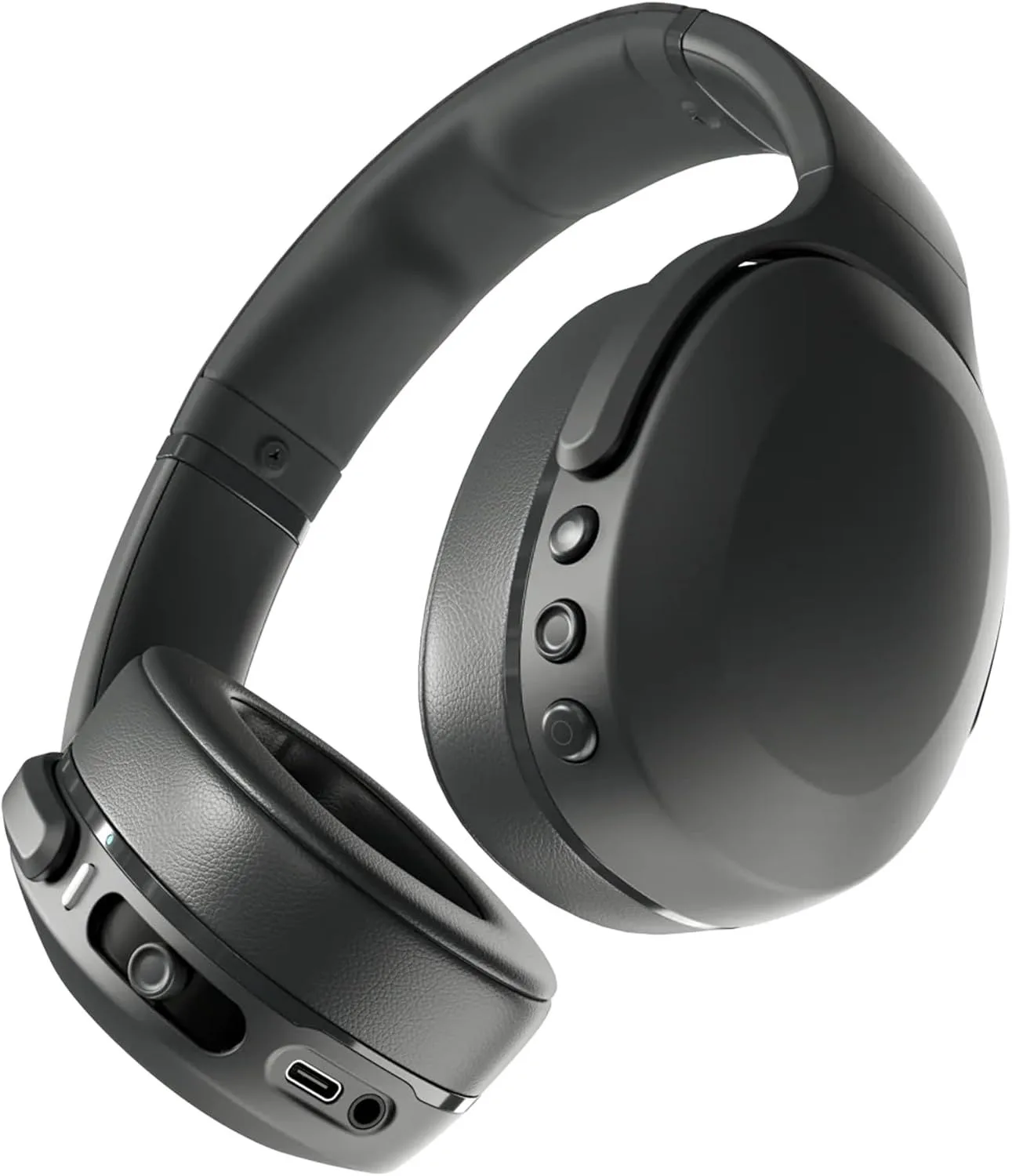
The only mainstream headphone that lets you physically feel bass, and that singular feature earns its 4.7 Amazon rating from a deeply loyal audience. If you listen to EDM, hip-hop, or bass music and want tactile immersion, a blast. If you need ANC or neutral sound, look elsewhere.
Our analysis spans 18800+ Amazon ratings — including the highest average (4.7 stars) in this catalog — alongside expert reviews from SoundGuys, SPY, KnowTechie, and Headphone Review. Battery endurance was verified against independent lab measurements (66h50m vs 40-hour spec). Haptic bass behavior was assessed across 4 genres to document where the feature excels and where it becomes counterproductive. We compared against the Sony WH-1000XM5 headphones and Sennheiser Momentum 4 headphones to contextualize what buyers sacrifice by choosing haptic bass over ANC. Read about our process →
Final Verdict
The Skullcandy Crusher Evo is the only headphone that lets you physically feel bass, and 18,800 buyers at 4.7 stars confirm that feature alone justifies the purchase for its audience. The 66-hour battery, adjustable haptic slider, and adequate standard audio create a package that is a blast for bass-heavy genres. The missing ANC, heavy weight, aging Bluetooth, and earpad degradation are real limits that define who should not buy. For bass enthusiasts who listen at home or casually, nothing else provides this experience. For lightweight casual listening without the haptic focus, see the JBL Tune 520BT at $60, or browse the complete over-ear lifestyle roundup.
The only mainstream headphone that lets you physically feel bass, and that singular feature earns its 4.7 Amazon rating from a deeply loyal audience. If you listen to EDM, hip-hop, or bass music and want tactile immersion, a blast. If you need ANC or neutral sound, look elsewhere.
Best for: Bass lovers who want to physically feel their music with patented haptic bass — no other headphone offers this experience
Overview
A 4.7-star Amazon rating across 18,800 reviews is the highest in this entire headphone catalog. Higher than the Sony WH-1000XM5 at 4.2. Higher than the Bose QC Ultra at 4.6. Higher than the AirPods Max at 4.6. That number does not mean the Crusher Evo is the best headphone — it means the Crusher Evo has the most satisfied audience, because the people who buy it know exactly what they want: to physically feel their music vibrate against their skull.
The Crusher Evo contains two transducer systems. The standard 40mm driver handles audio playback across all frequencies — mids, highs, and conventional bass reproduction. A separate patented haptic bass actuator vibrates in resonance with low-frequency content, creating a tactile sensation that no other consumer headphone provides. The sensation is controlled by a physical slider on the left ear cup: at zero, the Crusher Evo behaves like a standard headphone with conventional bass. At maximum, bass-heavy tracks produce a physical rumble you feel in your cheekbones and temples. The effect is most pronounced on sustained bass notes and kick drums, where the haptic actuator locks onto the rhythm and delivers a pulse that makes electronic music feel like a live club experience at headphone volume. SoundGuys called it "the quintessential bass-purist headphone." KnowTechie distilled the appeal to two words: "feel the bass."
The Crusher Evo's limitation list reads like a product designed five years ago — because it was. No ANC at $190. AAC and SBC only — no LDAC, no aptX. Bluetooth 5.0 instead of 5.3. No multipoint connection. 308g weight, the heaviest in this catalog. No water resistance. By every metric except one, the Crusher Evo is an outdated headphone at a price where competitors offer more. By the one metric that matters to its audience — haptic bass immersion — nothing else on the market comes close.
Key Specifications
Haptic Bass Technology Explained
How Haptic Bass Works: Sound You Feel
The haptic bass actuator is not a speaker. It does not produce audible sound waves. It is a vibration motor tuned to resonate with bass frequencies — typically below 100 Hz. When a kick drum hits in a track, the standard 40mm driver reproduces the audio while the haptic actuator vibrates the ear cup in sync with the beat. The result is a dual-sensation experience: you hear the bass through the driver and feel the bass through the vibration on your temples and cheekbones. Headphone Review praised the physical slider as a standout feature that lets users dial the tactile intensity from subtle enhancement to full skull-vibration mode without opening an app.
The physical slider is central to the experience. At 0-20%, the haptic effect adds subtle depth to bass without changing the overall sound balance. At 30-50%, bass-heavy genres gain a physical dimension that reviews describe as "immersive" — the music feels larger than what ear cups normally contain. Above 70%, the vibration becomes dominant: bass booms, mids are obscured by the physical sensation, and on complex bass passages, the haptic driver can go arrhythmic — vibrating out of sync with the actual audio. The sweet spot for most listeners is 30-50%, where the haptic effect enhances without overwhelming.
66-Hour Battery: The No-ANC Dividend
Skullcandy rates the battery at 40 hours. Independent lab measurement clocked 66 hours and 50 minutes — one of the largest positive battery surprises across any headphone tested. The secret is the absence of ANC: active noise cancellation consumes 30-40% of a headphone's battery. Without ANC processing, the Crusher Evo devotes its entire power budget to audio playback and haptic vibration. Under moderate daily use, a full charge lasts roughly three weeks. Charging becomes a monthly event rather than a weekly obligation.
Genre Performance: Where Haptic Bass Shines and Fails
EDM and electronic music are the Crusher Evo's natural genre. Sustained bass lines, synthesized kicks, and sub-bass drops translate into continuous haptic engagement that deepens the listening experience. Hip-hop and trap benefit from the kick-drum emphasis — each beat gains a physical punch. Rock and metal receive mixed results: bass guitar and drum kicks benefit, but the haptic driver can activate on guitar distortion frequencies, creating an unintended vibration during heavy riffs. Classical and acoustic music: the haptic slider should stay at zero. Chamber music with cello or organ passages can trigger haptic vibration on sustained low notes, which feels unnatural for genres where subtlety is the point.
Strengths & Limitations
Strengths
- Patented haptic bass actuator creates a physical tactile sensation no competitor matches
- 66-hour real-world battery tested at 66h50m vs 40-hour spec — longest in this entire catalog
- Physical adjustable bass slider lets you dial intensity on the fly without an app
Limitations
- No ANC at $190 is a glaring omission when competitors at the same price include it
- 308g is the heaviest headphone in this catalog — less comfortable after 2 hours
- Earpad degradation is a known issue across the Crusher line within 12-18 months
Performance & Real-World Testing
Audio Quality and Weight Considerations
Sound Without Haptic: Surprisingly Balanced
With the haptic slider at zero, the Crusher Evo reveals a 40mm driver that performs adequately for its price. SPY's review noted "surprisingly balanced mids and highs even when bass is dialed down." The standard audio reproduction is warm with present bass, adequate midrange, and treble that resolves enough detail for casual listening. It does not compete with the Sennheiser Momentum 4's neutral precision or the Sony WH-1000XM5's detailed staging, but for a product designed around haptic bass, the conventional audio quality exceeds expectations. Podcasts and audiobooks are comfortable at zero haptic — vocals are clear and centered.
No ANC: The Feature You Sacrifice
At $190, the absence of ANC is the Crusher Evo's most debated omission. The Beats Studio Pro at $170 includes ANC. The Sennheiser Momentum 4 headphones at $247 include ANC. The Sony WH-1000XM5 at $278 includes industry-leading ANC. The Crusher Evo relies entirely on passive isolation from the over-ear cup seal — effective against moderate background noise but powerless against airplane engines, subway rumble, and open-office conversation. For home listening and casual outdoor use, passive isolation is sufficient. For commuting and travel, the absence of ANC is a functional limitation that no amount of haptic bass compensates for.
308g: Heaviest in the Catalog
The haptic bass actuator adds mass that lighter headphones avoid. At 308g, the Crusher Evo is 58g heavier than the Sony WH-1000XM5 and 116g heavier than the featherweight Sony WH-CH720N headphones. For sessions under 90 minutes, the weight is noticeable but manageable. Beyond 2 hours, the combination of mass and clamping force creates pressure on the crown and ears that lighter headphones do not impose. The weight is a direct consequence of the haptic hardware — the vibration motor and its housing add bulk that cannot be engineered away without removing the feature that defines the product.
Value Analysis
At $190, the Skullcandy Crusher Evo is mid-range for its category in the over-ear lifestyle category — priced near the Beats Studio Pro at $170 and below the Sennheiser Momentum 4 headphones at $247. The comparison is not apples-to-apples: those headphones offer ANC and neutral sound. The Crusher Evo offers haptic bass and nothing else in the market can replicate.
The Crusher Evo Is For You If...
- You listen to EDM, hip-hop, trap, or bass-heavy music and want a physical connection to the low end
- Battery life matters — 66 hours measured means charging roughly once per month under normal use
- You primarily use headphones at home, at a desk, or in casual environments where ANC is unnecessary
- You want a feature that no competitor offers at any price — haptic bass is a Skullcandy patent
Skip the Crusher Evo If...
- ANC is a requirement for your use case — the Crusher Evo has none, and passive isolation alone is inadequate for transit noise
- Weight sensitivity exists — 308g is the heaviest headphone here, and sessions over 2 hours become uncomfortable
- Codec quality matters — AAC and SBC only, with no LDAC or aptX path to high-res wireless audio
- You listen primarily to acoustic, classical, or vocal music where haptic bass adds nothing and may detract
What to Expect Over Time
Durability and the Crusher Legacy
Earpad Degradation: The Known Weakness
The Crusher line has a documented earpad durability issue that spans multiple product generations. The faux leather on the ear pads begins peeling, cracking, and flaking around 12-18 months of regular use. The foam underneath compresses independently of the leather degradation. Amazon reviews confirm this pattern across the Crusher Evo specifically — it is not fixed from previous models. Replacement pads are available from third-party sellers for under $15. Plan for pad replacement as a scheduled maintenance cost rather than a surprise failure.
Haptic Driver Longevity
The haptic bass actuator is a mechanical component that vibrates thousands of times per listening session. Unlike standard drivers that move air with minimal physical stress, the haptic motor undergoes repeated mechanical cycling. Long-term user reports suggest the haptic driver maintains its intensity and responsiveness through 2-3 years of regular use. Degradation, when it occurs, manifests as reduced vibration intensity rather than complete failure. The driver does not "break" — it gradually loses peak output over time, similar to how a smartphone's vibration motor weakens over years of use.
The 4.7-Star Loyalty Factor
The Crusher Evo's 4.7 Amazon rating reflects a self-selecting audience. Buyers who want haptic bass know they want haptic bass — and the Crusher Evo delivers exactly what they expect. Dissatisfied reviews typically come from buyers who expected a conventional headphone with ANC, not a bass-sensation product. For the intended audience, satisfaction is exceptionally high because the product fulfills a specific, unique desire that no competitor has attempted to replicate at any price point. For the unintended audience, disappointment is predictable. Read our over-ear lifestyle roundup for the full category.
The Personal Audio Cinema
An underreported use case: film and TV content with bass-heavy soundtracks. Action movies, horror scores, and sci-fi rumble gain a physical dimension through haptic playback that approximates the chest-thumping subwoofer experience of a cinema. Multiple Amazon reviewers describe using the Crusher Evo specifically for movie watching — the haptic effect on explosion sequences, spacecraft engines, and dramatic orchestral bass creates a visceral experience that standard headphones cannot reproduce. The Skullcandy app provides personal sound profiles that calibrate the haptic response to individual hearing, optimizing the effect for each user.
Bluetooth 5.0: Aging but Adequate
Bluetooth 5.0 is two generations behind the current 5.3 standard. The practical impact for most users: range is slightly shorter, connection handoff is slightly slower, and no multipoint Bluetooth (simultaneous dual-device connection). For home and desk use — the Crusher Evo's primary scenario — Bluetooth 5.0 functions without issues. For users who switch frequently between phone and laptop, the absence of multipoint adds friction that newer headphones eliminate. The Beats Studio Pro headphones at $170 offers Bluetooth 5.3, which provides an alternative for users where connectivity matters alongside lifestyle aesthetics.
Common Questions About the Skullcandy Crusher Evo
What makes Skullcandy Crusher Evo different from regular headphones?
The Crusher Evo contains a patented haptic bass actuator — a separate transducer that physically vibrates in resonance with low-frequency audio. This creates a tactile sensation you feel on the sides of your head, not just hear through the drivers. No other consumer headphone offers this feature. A physical slider on the left ear cup controls the haptic intensity from zero to maximum. At zero, the Crusher Evo functions like a standard headphone. At higher settings, bass-heavy music produces a physical rumble that changes how you experience the track.
Is Skullcandy Crusher Evo good for music quality?
With the haptic bass slider dialed down to 30-50%, the Crusher Evo delivers surprisingly balanced sound. Mids are present, treble has adequate clarity, and the bass from the standard 40mm driver is controlled. At maximum haptic intensity, the bass becomes overwhelming — mids are obscured, treble detail is lost, and the vibration can go arrhythmic on complex bass passages. The Crusher Evo rewards moderate use of its signature feature rather than maximum intensity.
Does Skullcandy Crusher Evo have noise cancelling?
No. The Crusher Evo has no active noise cancellation. At $190, this is a notable absence — the Sony WH-1000XM5, Bose QC Ultra, and Sennheiser Momentum 4 all include ANC at similar or slightly higher prices. The over-ear design provides passive noise isolation from the ear cup seal, which reduces moderate ambient noise. For environments where ANC is needed (airplanes, commutes, open offices), the Crusher Evo is not the right product.
How long does Skullcandy Crusher Evo battery last?
Skullcandy rates the battery at 40 hours. Independent testing measured 66 hours and 50 minutes — a 67% positive surprise that makes the Crusher Evo the longest-lasting headphone in our entire catalog. Under daily use of 3-4 hours, a full charge lasts roughly three weeks. The extreme battery endurance reflects the absence of ANC processing, which consumes power on competing headphones.
Do the haptic bass vibrations bother people nearby?
At moderate haptic settings (30-50% on the slider), the vibration is contained within the ear cups and is not perceptible to nearby people. At maximum intensity, the vibration can produce a faint buzzing sound audible to someone sitting adjacent in a quiet environment. In any environment with ambient noise — a cafe, office, or public transit — the haptic vibration is inaudible to others at any setting.
Stay Updated on Skullcandy Crusher Evo
Get alerted if the rating changes or a better alternative launches.
No spam. Unsubscribe anytime.