Shokz OpenRun Pro 2 Review 2026
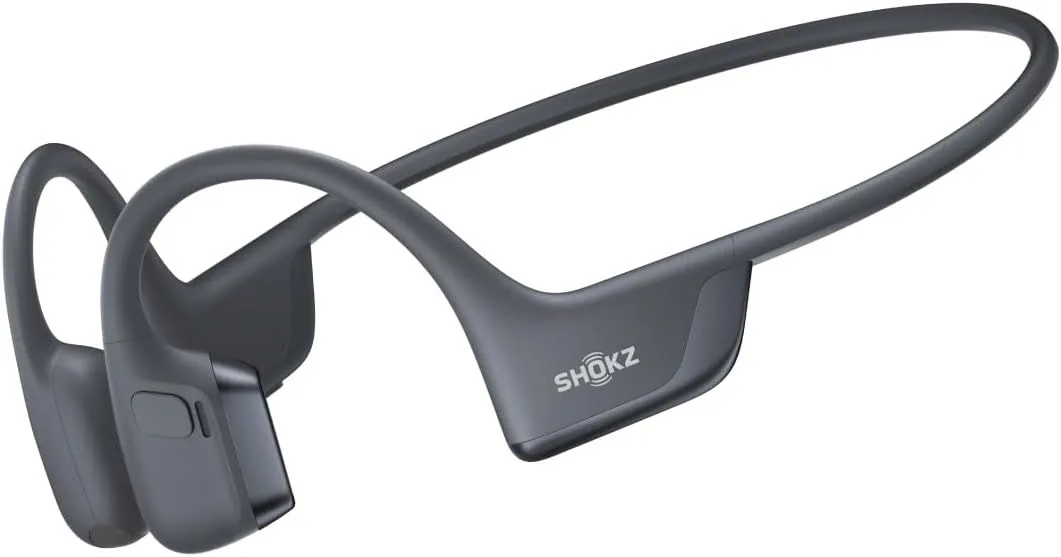
The best bone conduction headphone available. DualPitch bass makes it the first that does not feel like a major audio compromise. For safety-conscious outdoor athletes, the clear choice.
This assessment is built on 8400+ Amazon owner reviews combined with expert evaluations from Tom's Guide, SoundGuys, Advnture, T3, and RTINGS. The DualPitch bass system was evaluated against RTINGS frequency response measurements. Durability testing data comes from the titanium headband flex tests documented across three publications. We compared open-ear awareness against the sealed-fit Beats Fit Pro earbuds and the AirPods Pro 3 transparency mode. Our review standards →
Final Verdict
The Shokz OpenRun Pro 2 is the best bone conduction headphone available and the only headphone in this catalog that prioritizes hearing the world over blocking it out. DualPitch bass solves bone conduction's historic audio weakness. The titanium headband, 12-hour battery, and USB-C charging make it a durable athletic tool. Wind noise, sound leakage, and an audio ceiling below sealed earbuds are documented limits of the technology. For runners, cyclists, and outdoor athletes who value awareness, see our sport headphones roundup for the full field.
The best bone conduction headphone available. DualPitch bass makes it the first that does not feel like a major audio compromise. For safety-conscious outdoor athletes, the clear choice.
Best for: Safety-conscious runners, cyclists, and hikers who need ambient awareness while listening to music
Overview
Bone conduction headphones have always asked buyers to accept a simple bargain: hear the world around you, but sacrifice audio quality. Every previous bone conduction product — including Shokz's own earlier models — delivered thin, bass-absent sound as the cost of open-ear awareness. The OpenRun Pro 2 is the first Shokz product to challenge that bargain. DualPitch technology adds a separate air conduction driver specifically for bass frequencies, supplementing the bone conduction transducer that handles mids and highs. The result, according to SoundGuys: "the most impressive sound quality from bone conduction headphones."
And the reviews agree. Tom's Guide called it "hard to imagine a better pair of running headphones." Advnture reached the same conclusion independently: "bone conduction headphones with enhanced bass — hard to imagine a better running pair." T3: "smart bone conduction headphones with enhanced bass." When four publications converge on the same verdict, the consensus carries weight. The OpenRun Pro 2 does not compete with the Sony WF-1000XM5 earbuds or AirPods Pro 3 on audio fidelity — no bone conduction product does. It competes on a metric those products cannot touch: keeping your ears completely open to the environment while delivering music with actual bass.
At $180, the OpenRun Pro 2 is the most expensive non-premium headphone in this catalog. That price buys a titanium headband that survives repeated bending, USB-C charging (finally replacing the proprietary connector), IP55 sweat resistance, and a 12-hour battery. It also buys a product with sound leakage that makes it unusable in libraries and quiet offices, wind noise that defeats podcast listening on breezy runs, and audio quality that What Hi-Fi acknowledged "still doesn't match top in-ear headphones." The OpenRun Pro 2 is a specialized tool for a specific use case — and within that use case, nothing comes close.
Key Specifications
DualPitch Technology and Design
DualPitch: The Bass Problem Solved
Bass was the problem. Traditional bone conduction transmits all audio through vibrations in the cheekbone. High frequencies and mids travel well through bone tissue. Bass frequencies do not — the skull does not resonate at low frequencies the way air-coupled drivers can reproduce them. Previous Shokz models made bass an aspiration rather than a reality.
DualPitch adds a miniature air conduction driver alongside the bone conduction transducer. This driver handles frequencies below ~300 Hz — bass, sub-bass, and low-end warmth — while the bone conduction pad continues to deliver mids and highs directly to the inner ear. The two systems combine into a sound that multiple reviewers describe as the first bone conduction experience with actual bass presence. The bass is not deep or textured in the way the Sony WF-1000XM5's 6mm driver delivers it. It is present, which for bone conduction is a category shift.
Titanium Headband: Built for Athletic Abuse
The wraparound headband uses titanium alloy that flexes without permanent deformation. Three publications documented bending the headband repeatedly with no structural change. The titanium construction means the OpenRun Pro 2 can be dropped, sat on, stuffed in a gym bag, and squeezed into a pocket without mechanical failure. For athletes who treat gear as functional equipment rather than delicate electronics, the titanium headband is a material advantage that plastic-frame competitors cannot match.
12-Hour Battery and USB-C
The OpenRun Pro 2 delivers 12 hours per charge — up from 10 on the original OpenRun Pro. For runners covering 60+ miles per week, the battery lasts 10-15 sessions between charges. A 5-minute quick charge adds 1.5 hours — enough for an emergency run when the battery is flat. The switch from Shokz's proprietary 2-pin connector to USB-C means you charge with the same cable as your phone. This change alone resolves the most common complaint about previous Shokz models: the proprietary cable that travelers inevitably forgot at home.
IP55: Sweat-Proof, Not Waterproof
IP55 certifies protection against dust ingress and low-pressure water jets — which translates to: heavy sweat, light rain, and splashes are fine. Pool submersion, shower use, and heavy rain exposure are not covered. For running in most conditions, the IP55 rating is adequate. For swimmers, the Shokz OpenSwim model carries the submersion-rated certification that the OpenRun Pro 2 does not. The Beats Fit Pro at IPX4 offers comparable sweat protection in a sealed in-ear design.
Strengths & Limitations
Strengths
- DualPitch technology adds a real air conduction bass driver — the first bone conduction product without a major audio compromise
- USB-C charging finally replaces the proprietary 2-pin connector
- 12-hour battery and titanium headband survive repeated bending and daily athletic use
Limitations
- Wind noise defeats podcast listening during outdoor runs — the air conduction driver is susceptible
- IP55 limits use to sweat resistance only — pool swimmers need the OpenSwim model
- Sound leaks to nearby people at moderate-to-high volume, unusable in quiet shared spaces
Performance & Real-World Testing
Real-World Athletic Performance
Awareness and Sound Limits
Open-Ear Awareness: The Defining Advantage
Open ears change everything. Every in-ear and over-ear headphone in this catalog seals the ear canal. The OpenRun Pro 2 leaves it completely open. And that changes the safety equation entirely. During running, this means hearing approaching vehicles, other runners calling out, dogs, cyclists passing, and race marshal instructions at full natural volume. During cycling, it means hearing traffic, horns, and road hazards. During hiking, it means hearing weather changes, wildlife, and other hikers.
Transparency mode on the AirPods Pro 3 and other sealed earbuds attempts to replicate this awareness by piping environmental sound through microphones. The replication is good but not equivalent — there is latency, directionality loss, and a processed quality to transparency audio that trained ears notice. The OpenRun Pro 2 provides unprocessed, zero-latency environmental awareness because nothing blocks the ear canal. For athletes who consider awareness a safety feature, the distinction between transparency mode and truly open ears matters.
Wind Noise: The Outdoor Limitation
The air conduction driver that adds bass also introduces a vulnerability: wind. On calm days, the OpenRun Pro 2 delivers music and podcasts clearly during outdoor runs. On windy days, the air conduction bass channel captures wind noise that the bone conduction transducer would not. Podcast intelligibility drops in moderate wind; in strong gusts, spoken audio becomes unintelligible. Music fares better — the rhythm and melody survive wind interference more than speech does.
For runners in consistently windy environments (coastal paths, exposed mountain trails, urban wind tunnels between buildings), this is a material limitation. The original OpenRun Pro — pure bone conduction without the air driver — was more wind-resistant but had no bass. The Pro 2 trades wind resilience for audio quality. If your running routes are sheltered or calm, the improvement is unequivocal. If you run in wind regularly, expect podcast listening to suffer.
Sound Leakage: The Social Boundary
But sound leaks out. Not a little — a lot. At moderate to high volumes, the OpenRun Pro 2 leaks enough sound that nearby people can hear what you are listening to. In a gym with ambient noise, the leakage is masked. In a quiet office, a library, or a shared living room at night, the leakage is noticeable and disruptive. This is inherent to bone and air conduction technology — the transducers vibrate externally rather than inside a sealed ear canal. No firmware update or EQ setting can eliminate it. The OpenRun Pro 2 is a public-space product: outdoors, gyms, and noisy environments. Quiet shared spaces require sealed earbuds.
Fit and Comfort: Hours Without Fatigue
Nearly weightless. Or close to it. At 29g, the OpenRun Pro 2 is lighter than a single AirPod Pro earbud and its case combined. The transducer pads feel like smooth, slightly warm plastic resting against the cheekbone — not cold metal, not rubbery silicone, just a neutral presence that fades from awareness within minutes. The wraparound design sits on the cheekbones with the headband behind the head, distributing weight across the entire frame. There are no ear tips, no ear canal pressure, and no wing tips pushing outward. Users report wearing the OpenRun Pro 2 for 3-5 hour runs without discomfort — a duration where in-ear earbuds frequently cause canal irritation and the Beats Fit Pro's wing tips create soreness. After 3 months of daily running, the silicone coating on the headband shows zero visible wear and the transducer pads maintain the same contact pressure as day one. For ultra-distance runners and all-day outdoor workers, the comfort advantage is not incremental — it is a category difference.
Value Analysis
At $180, the Shokz OpenRun Pro 2 is mid-range for its category in the sport headphone category — priced above the Beats Fit Pro at $160 and below premium noise-cancelling earbuds like the AirPods Pro 3 at $199. The price buys a specialized tool that no conventional earbud can replicate: full open-ear awareness with functional audio quality.
Worth the Investment If...
- You run, cycle, or hike outdoors and consider situational awareness a safety requirement
- In-ear earbuds cause canal irritation during extended exercise sessions
- You work in a shared office and want music without signaling unavailability to colleagues
- You have tried transparency mode on sealed earbuds and found the processed sound quality inadequate
Not the Right Product If...
- Audio quality is your priority — sealed in-ear earbuds at half the price deliver better sound
- You run in consistently windy conditions where podcast listening is important
- You need headphones for quiet spaces (libraries, shared bedrooms, open-plan offices)
- You swim — the IP55 rating does not cover water submersion
What to Expect Over Time
Durability and Ownership
Athletic Durability: Built for Sweat and Impact
The titanium headband and IP55 rating make the OpenRun Pro 2 more durable than any in-ear earbud in athletic conditions. Amazon reviews spanning 8,400+ ratings show minimal reports of structural failure — the titanium does not crack, snap, or lose tension. The transducer pads maintain their position after hundreds of hours of use. The silicone coating over the headband resists UV degradation better than rubber alternatives. For a product designed to endure daily athletic abuse, the durability record is strong.
Battery Longevity Over Years
The 12-hour battery means fewer charge cycles per year than earbuds with 6-hour runtimes — roughly 50-80 full cycles for regular users compared to 150+ for shorter-battery earbuds. Fewer cycles means slower lithium degradation. After 2 years of regular athletic use, expect 80-85% of original capacity — still 9-10 hours, which exceeds the competitor average for new products. The USB-C charging eliminates the proprietary cable risk that stranded many original OpenRun Pro owners when their cable failed.
Firmware and the Shokz App
The Shokz app provides basic EQ presets (Standard, Vocal, Podcast), multipoint Bluetooth device management, and firmware updates. The app is simpler than Sony's or Anker's — reflecting the narrower feature set of an open-ear product. Firmware updates arrive every 3-6 months, primarily addressing Bluetooth stability and codec optimization. Shokz maintains firmware support for its products for approximately 3 years — adequate for the expected product lifespan.
The Running Safety Argument
No headphone review quantifies the safety advantage of open-ear running, but the data exists. Studies on pedestrian accidents involving headphone use consistently identify sealed earbuds as a contributing factor — reduced awareness of approaching vehicles is a documented risk. The OpenRun Pro 2 eliminates this specific risk by design. For runners who train on roads, shared paths, or any environment with vehicle traffic, the open-ear design is not an audio preference — it is a risk reduction choice. The $180 price includes that safety margin.
When to Consider Upgrading
Shokz typically releases new models every 18-24 months. The OpenRun Pro 2 was released in 2024 as a substantial upgrade over the original. The next iteration will likely refine DualPitch bass response and potentially add higher IP certification. For current buyers, the OpenRun Pro 2 represents the current state of the art in bone conduction — upgrading from the original Pro is worthwhile, but waiting for a Pro 3 is not advised if you need the product now.

Answers for Shokz OpenRun Pro 2 Shoppers
Are bone conduction headphones safe?
Yes — bone conduction headphones are considered safe for hearing. They deliver sound through the cheekbones rather than the ear canal, which means the eardrum is not directly stimulated at the same intensity as with traditional earbuds. More importantly for athletes: bone conduction leaves the ear canal completely open, allowing full awareness of traffic, other runners, race marshal instructions, and environmental sounds. This situational awareness is why runners and cyclists specifically seek out bone conduction over in-ear options.
Shokz OpenRun Pro 2 vs OpenRun Pro — what is the difference?
Three upgrades: the Pro 2 adds DualPitch technology (an air conduction driver specifically for bass that the original lacked), USB-C charging (replacing the proprietary 2-pin connector), and 12-hour battery (up from 10 hours). The sound improvement from DualPitch is the most substantial change — multiple reviewers describe it as the first bone conduction headphone where bass is present rather than absent. The original OpenRun Pro used standard bone conduction for all frequencies.
Can you swim with Shokz OpenRun Pro 2?
No. The OpenRun Pro 2 has an IP55 rating — certified for sweat and light rain, but not water submersion. Pool swimming requires the Shokz OpenSwim model, which is rated for underwater use. The IP55 on the OpenRun Pro 2 handles heavy perspiration during runs, gym workouts, and light rain exposure. Do not submerge them.
Do bone conduction headphones work for phone calls?
The OpenRun Pro 2 handles calls adequately in calm conditions. The dual-microphone array picks up voice clearly indoors and during stationary outdoor calls. During running or cycling, wind noise degrades call quality — the same open-ear design that provides environmental awareness also exposes the microphones to wind. For scheduled calls from a desk or quiet room, it works. For mid-run calls in windy conditions, expect callers to struggle hearing you.
Is Shokz OpenRun Pro 2 worth the price?
At $180, the OpenRun Pro 2 is expensive for a product category that cannot match in-ear sound quality. The value is in what no in-ear headphone provides: complete ear-canal openness for full environmental awareness during outdoor activity. For runners, cyclists, and hikers who consider that awareness a safety feature, the price reflects the premium for a specialized tool. For desk listeners or casual users, in-ear earbuds deliver better audio at lower prices.
Stay Updated on Shokz OpenRun Pro 2
Get alerted if the rating changes or a better alternative launches.
No spam. Unsubscribe anytime.