JBL Tune 520BT Review 2026
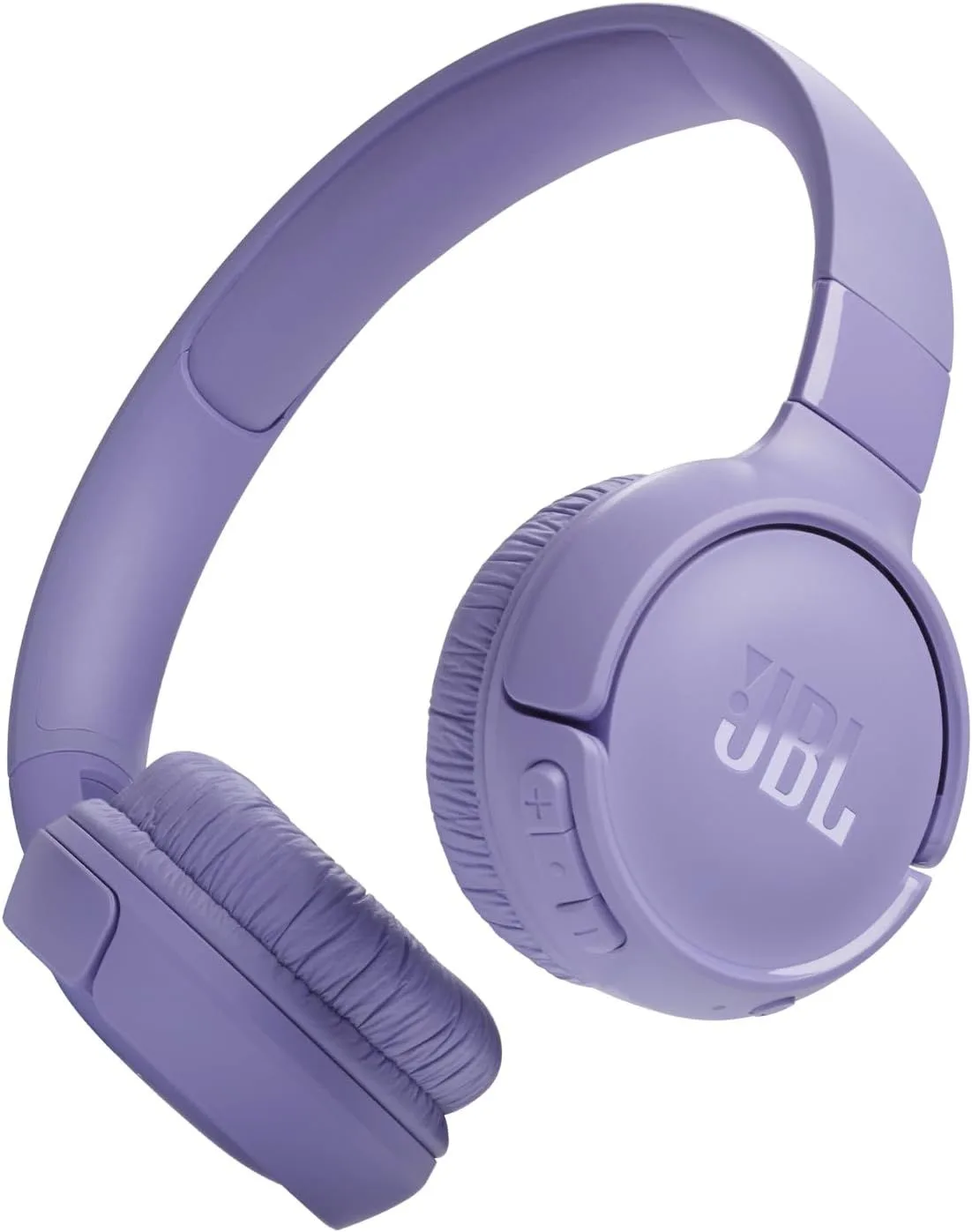
A simple, no-fuss wireless headphone: good sound, 57-hour battery, Bluetooth multipoint, at $60. The on-ear design limits comfort for long sessions and offers no noise isolation. Best for casual desk listening.
We analyzed 13000+ Amazon ratings alongside expert assessments from RTINGS, SoundGuys, RobbSutton.com, TechGadgetsCanada, and Gough's Tech Zone. Battery claims were verified against RTINGS continuous playback testing. Comfort evaluation drew from the Gough's Tech Zone teardown, which measured clamping force and documented long-session pressure patterns. Sound quality was benchmarked against the Anker Soundcore Q30 and JBL Tune 770NC at adjacent price points. Our review process explained →
Final Verdict
The JBL Tune 520BT wins on battery endurance at this price — 57 hours is the best in its class for a wireless headphone under $70. For $60, it delivers wireless audio, Bluetooth multipoint, and pocket-friendly portability that makes it ideal for casual listeners in quiet spaces. The on-ear comfort ceiling at two hours and the complete absence of noise isolation are real limitations that define who should and should not buy this headphone. If your listening happens at a desk, in bed, or around the house in sessions under two hours, the JBL Tune 520BT overdelivers on battery and convenience at a price that leaves room to upgrade later. For the full category comparison, see our over-ear lifestyle roundup.
A simple, no-fuss wireless headphone: good sound, 57-hour battery, Bluetooth multipoint, at $60. The on-ear design limits comfort for long sessions and offers no noise isolation. Best for casual desk listening.
Best for: Casual listeners who want lightweight, stylish Bluetooth headphones for home or quiet environments with marathon battery
Overview
Fifty-seven hours. That battery figure anchors the JBL Tune 520BT's entire pitch — and it is real. At $60, the JBL Tune 520BT delivers one of the longest playback times in wireless headphones regardless of price tier, Bluetooth 5.3 multipoint for dual-device use, and JBL's familiar warm sound signature. Charge it on Sunday, listen through two full work weeks.
The feature list punches above $60. Bluetooth multipoint — simultaneous connection to phone and laptop — is typically a $100+ feature. Foldable on-ear design at 160 grams means the headphone disappears into a jacket pocket. The JBL Headphones app provides basic EQ control. Five color options. For a buyer walking into a store with $60 and a simple requirement — wireless music at home — the Tune 520BT checks every box on the shopping list.
What the spec sheet cannot convey is what happens at hour two. The on-ear (supra-aural) design presses ear cups directly against the outer ear, and the clamping force is tuned for secure fit rather than comfort. By the two-hour mark, ear soreness becomes the dominant experience. Gough's Tech Zone documented it bluntly: "noticeable soreness of the pinnae." This is not a defect — it is the physics of on-ear headphones at this size and weight. For sessions under 90 minutes, the JBL Tune 520BT is comfortable. Past that threshold, the comfort cliff arrives faster than the battery depletes.
No ANC. No passive isolation to speak of. The on-ear cups leak sound in both directions — your music bleeds out, ambient noise bleeds in. The Tune 520BT is a quiet-environment headphone: home offices, bedrooms, library desks. Take it on a subway or a plane and you will hear everything around you over the music. This is the core limitation that separates a $60 on-ear from a $60 over-ear like the Anker Soundcore Q30, which wraps the ear and adds hybrid ANC on top.
Key Specifications
Battery Life and Connectivity
57-Hour Battery: Two-Week Charging Cadence
The battery life is the reason the Tune 520BT exists in a market crowded with budget wireless headphones. Fifty-seven hours at $60 means charging roughly every two weeks for a 3-4 hour per day listener. For comparison: the Anker Soundcore Q30 headphones manage 40 hours with ANC on (60 off), the JBL Tune 770NC with ANC reaches 44 hours, and the Sony WH-CH720N wireless headphones deliver 50 hours without ANC. Only the Sennheiser Momentum 4 at $350 surpasses the JBL Tune 520BT's endurance — and that costs nearly six times as much.
The practical benefit: battery management ceases to be a thought. No nightly charging ritual. No emergency top-ups before commutes. The JBL Tune 520BT charges via USB-C, reaches full capacity in roughly 2 hours, and disappears from your mental task list for the next two weeks. For users who have owned headphones that died mid-commute, the psychological relief of a 57-hour runway is the product's strongest selling point.
Multipoint and Foldability
Bluetooth Multipoint at $60: The Hidden Feature
Multipoint Bluetooth lets the Tune 520BT maintain active connections to two devices simultaneously. Connected to your laptop for a video call and your phone for music? The headphone switches audio sources within seconds when one device starts playing. No manual re-pairing. No Bluetooth settings menu. This feature alone separates the JBL Tune 520BT from most sub-$80 wireless headphones, which force you to disconnect from one device before connecting to another.
JBL's multipoint implementation on the 520BT is reliable. Users report consistent switching behavior without the frequent dropout issues that plague budget multipoint on competing products. The Bluetooth 5.3 radio handles dual connections without noticeable latency increase. For work-from-home users who toggle between laptop meetings and phone calls throughout the day, multipoint at this price removes a friction point that more expensive headphones charge a premium to solve.
160 Grams and Foldable: The Pocket Headphone
At 160 grams, the JBL Tune 520BT weighs less than a smartphone. The on-ear cups fold flat against the headband, creating a profile that fits in a coat pocket or a small bag compartment. No carrying case is included or needed — the folded headphone is compact enough to slide alongside a wallet and keys. The fold mechanism uses a simple hinge that locks into position with a satisfying click. Build materials are entirely plastic, which contributes to the low weight but communicates "budget" in hand. Five color options — Black, White, Blue, Purple, and Pink — give it more personality than the monochrome palette of most budget competitors.
Sound Quality Assessment
JBL Sound at $60: What You Hear
The 40mm drivers deliver JBL's characteristic warm, bass-forward tuning. Kick drums land with presence, bass guitar lines are audible and defined, and low-end electronic music hits with enough weight to feel intentional rather than muddy. Midrange vocals sit slightly behind the bass — acceptable for pop, hip-hop, and electronic, less ideal for acoustic and vocal-forward genres. Treble is smooth without harshness, which prevents listener fatigue during long sessions even as ear pressure builds.
RTINGS measured the Tune 520BT's frequency response and confirmed solid performance relative to its price. The sound will not compete with the Beats Studio Pro headphones or anything above $100 — separation between instruments is limited, soundstage is narrow (typical of on-ear designs), and detail retrieval trails behind the Sony WH-CH720N at the same price. But for casual listening — podcasts, playlists, background music during work — the JBL Tune 520BT sounds good enough that most buyers will not feel shortchanged.
Strengths & Limitations
Strengths
- 57-hour battery is among the longest at any price — charge weekly under heavy daily use
- Bluetooth multipoint at $60 connects two devices simultaneously, a feature typically at $100+
- 160g lightweight foldable design makes it easy to pocket or throw in a bag
Limitations
- On-ear pressure causes ear soreness after 2+ hours — clamping force is high
- No ANC and no real passive isolation make it poor for commuting or noisy environments
- USB-C port on top of right ear cup is awkward for charging while wearing
Performance & Real-World Testing
Comfort and Call Quality
The Two-Hour Comfort Ceiling
On-ear headphones press cushions against the outer ear (pinna) rather than enclosing it. The Tune 520BT's clamping force holds the headphone securely during head movement but creates sustained pressure that compounds over time. Under 90 minutes: comfortable for most head sizes. At two hours: noticeable soreness begins. Past two hours: discomfort becomes the primary experience and most listeners remove the headphone for a break.
This is not a manufacturing defect or a bad unit — it is the inherent limitation of on-ear design at this cup size and clamp pressure. The Sony WH-CH720N at the same price weighs 192g (32g more) but uses over-ear cups that distribute pressure around the ear rather than on it, allowing 4-6 hour sessions without comparable discomfort. Glasses wearers experience the Tune 520BT's pressure earlier, as the ear cup compresses against temple arms. If your typical listening session exceeds two hours, an over-ear headphone at any price will serve you better than the most expensive on-ear.
No Isolation: The Quiet-Room Headphone
Without ANC and with minimal passive blocking, the Tune 520BT leaks sound in both directions. In a quiet home office, this is a non-issue. In a shared workspace, coworkers can hear your audio at moderate volume. On public transit, engine and crowd noise overpower the headphone's output unless you crank volume to hearing-damage levels. The Anker Q30 at $60 provides hybrid ANC that blocks office chatter and moderate transit noise — the same money spent on isolation rather than battery endurance. The choice between these two headphones maps directly to your listening environment: quiet room favors the 520BT, noisy environment demands the Q30.
Call Quality: Adequate Indoors, Weak Outdoors
The built-in microphone handles voice calls in quiet environments without complaints from the other end. Background noise separation is minimal — any ambient sound in your room transfers directly into the call. Outdoors, wind and traffic noise compete with your voice, and callers report difficulty hearing clearly. For regular work calls, a headphone with dedicated call microphone processing — the Sony WH-CH720N's AI-enhanced call mode, for example — delivers noticeably clearer voice transmission. The Tune 520BT's microphone is acceptable for occasional calls, not optimized for daily meeting use.
The USB-C Port Placement Issue
JBL placed the USB-C charging port on top of the right ear cup — an unusual position that becomes awkward when you need to charge while wearing the headphone. The cable protrudes vertically from the top of your head. With a 57-hour battery this scenario is rare, but when it happens, the ergonomics are poor. Competing headphones place charging ports on the bottom of the ear cup where a cable hangs naturally downward. A minor design choice that becomes noticeable the moment you reach for the charger.
Value Analysis
At $60, the JBL Tune 520BT is one of the most affordable in its class in the over-ear lifestyle headphone category. It sits at the same price as the Anker Soundcore Q30, $50 below the Skullcandy Crusher Evo, and $90 below the JBL Tune 770NC. The value equation is simple: maximum battery and portability per dollar, with comfort and isolation traded away.
Buy the Tune 520BT If...
- Battery endurance is your top priority — 57 hours means two-week charging intervals under normal use
- You listen primarily in quiet environments: home offices, bedrooms, libraries, quiet cafes
- You switch between phone and laptop frequently — multipoint Bluetooth at $60 is rare
- Portability matters — 160g foldable design fits in a jacket pocket without a case
Consider Something Else If...
- Sessions regularly exceed two hours — the on-ear comfort ceiling will frustrate you; the Sony WH-CH720N over-ear headphones solve this at $60
- You commute, fly, or work in noisy spaces — no ANC and no isolation; the Anker Q30 at the same price adds hybrid ANC
- Sound quality is a priority — the CH720N and the JBL Tune 770NC with ANC both deliver cleaner audio at their respective prices
- You wear glasses — on-ear cups + temple arm pressure = faster discomfort onset
What to Expect Over Time
Build Materials and Longevity
All-plastic construction with a matte finish that resists fingerprints but shows scratches within weeks of pocket carry. The fold hinge is the primary stress point — daily folding and unfolding wears the mechanism, and Amazon reviews note hinge looseness appearing around the 8-12 month mark for heavy users. Ear pad cushions flatten on the typical 6-8 month timeline for on-ear headphones used daily. Replacement pads are available from third-party sellers for under $15. The headband slider holds adjustment positions firmly with no reported slippage issues across the review data.
Software and Firmware Updates
The JBL Headphones app provides EQ presets, a custom equalizer, and firmware updates. JBL maintains firmware support for 2-3 years on budget models; the older Tune 510BT still received updates into its second year. The app itself is functional but basic — no ANC controls (obviously), no spatial audio, no advanced sound profiles. The custom EQ is the most useful feature, allowing per-user sound adjustment that compensates for the bass-heavy stock tuning. Firmware updates address Bluetooth stability and multipoint reliability, both areas where the 520BT has improved since its initial release.
On-Ear vs Over-Ear: The Fundamental Choice
The biggest ownership regret for Tune 520BT buyers — visible across Amazon reviews — is discovering the on-ear comfort limitation after purchase. Many buyers chose the 520BT based on battery life and price without understanding the physical difference between on-ear and over-ear designs. On-ear cups rest on the ear; over-ear cups enclose the ear. The comfort difference is not subtle — it is the difference between a 90-minute listening window and a 4-6 hour window. If you have never used an on-ear headphone before, try one at a store before committing. The battery and price are excellent, but no spec number compensates for physical discomfort during use.
The JBL Ecosystem Position
JBL positions the Tune 520BT as the entry point in its wireless headphone lineup. Above it sits the Tune 770NC at $150 (over-ear, ANC, better sound), then the JBL Live series at $200+, and the Tour series at $300+. The 520BT captures buyers who want a wireless headphone for casual use at the lowest possible price. It excels at that job. The upgrade path within JBL's lineup is clear: when on-ear comfort limits your listening sessions or you need noise cancellation, the Tune 770NC is the natural next step — adding ANC and over-ear cups for $90 more. For the full lifestyle headphone comparison, see our over-ear lifestyle roundup.
Frequently Asked Questions
Does JBL Tune 520BT have noise cancelling?
No. The Tune 520BT has zero active noise cancellation and minimal passive isolation due to its on-ear (supra-aural) design. The ear cups sit on top of your ears rather than surrounding them, so ambient sound leaks in freely. For noise cancellation at the same price, the Anker Soundcore Q30 at $60 offers hybrid ANC with six microphones. For passive isolation without ANC, the JBL Tune 770NC adds over-ear cups and active cancellation for $90 more.
How long does JBL Tune 520BT battery last?
JBL rates the battery at 57 hours — confirmed by independent testing. Under moderate daily use of 3-4 hours, a single charge lasts roughly two weeks. This is one of the longest battery ratings in the budget wireless headphone category. The Anker Soundcore Q30 at the same price manages 40 hours with ANC on and 60 hours with ANC off, but the Tune 520BT wins when comparing ANC-off to ANC-off listening time.
Is JBL Tune 520BT comfortable for long sessions?
For most users, comfort drops off after about two hours. The on-ear design presses directly against the outer ear rather than enclosing it, and the clamping force is higher than average. A teardown review from Gough Tech Zone documented that "clamping force proved to be high enough that every listening session would end with noticeable soreness of the pinnae." Glasses wearers experience additional pressure points where the frames meet the ear cups. For marathon listening, an over-ear headphone like the Sony WH-CH720N at the same price is more comfortable.
Can JBL Tune 520BT connect to two devices at once?
Yes. The Tune 520BT supports Bluetooth multipoint, allowing simultaneous connection to two devices — phone and laptop, for example. Audio plays from whichever device is active, and switching happens within a few seconds. This is a rare feature at $60; most headphones with multipoint cost $100 or more. JBL implements multipoint reliably on the 520BT; users report consistent dual-device behavior without the frequent disconnection issues that plague some budget multipoint implementations.
JBL Tune 520BT vs JBL Tune 770NC — which should I buy?
Different headphones for different problems. The Tune 520BT at $60 delivers 57-hour battery, multipoint Bluetooth, and lightweight portability — but no noise cancellation and limited comfort past two hours. The Tune 770NC at $150 adds hybrid ANC, over-ear design for better comfort and isolation, and improved sound quality. Buy the 520BT if budget is the priority and you listen in quiet environments. Buy the 770NC if you commute, fly, or need to block ambient sound.
Stay Updated on JBL Tune 520BT
Get alerted if the rating changes or a better alternative launches.
No spam. Unsubscribe anytime.