Beats Fit Pro Review 2026
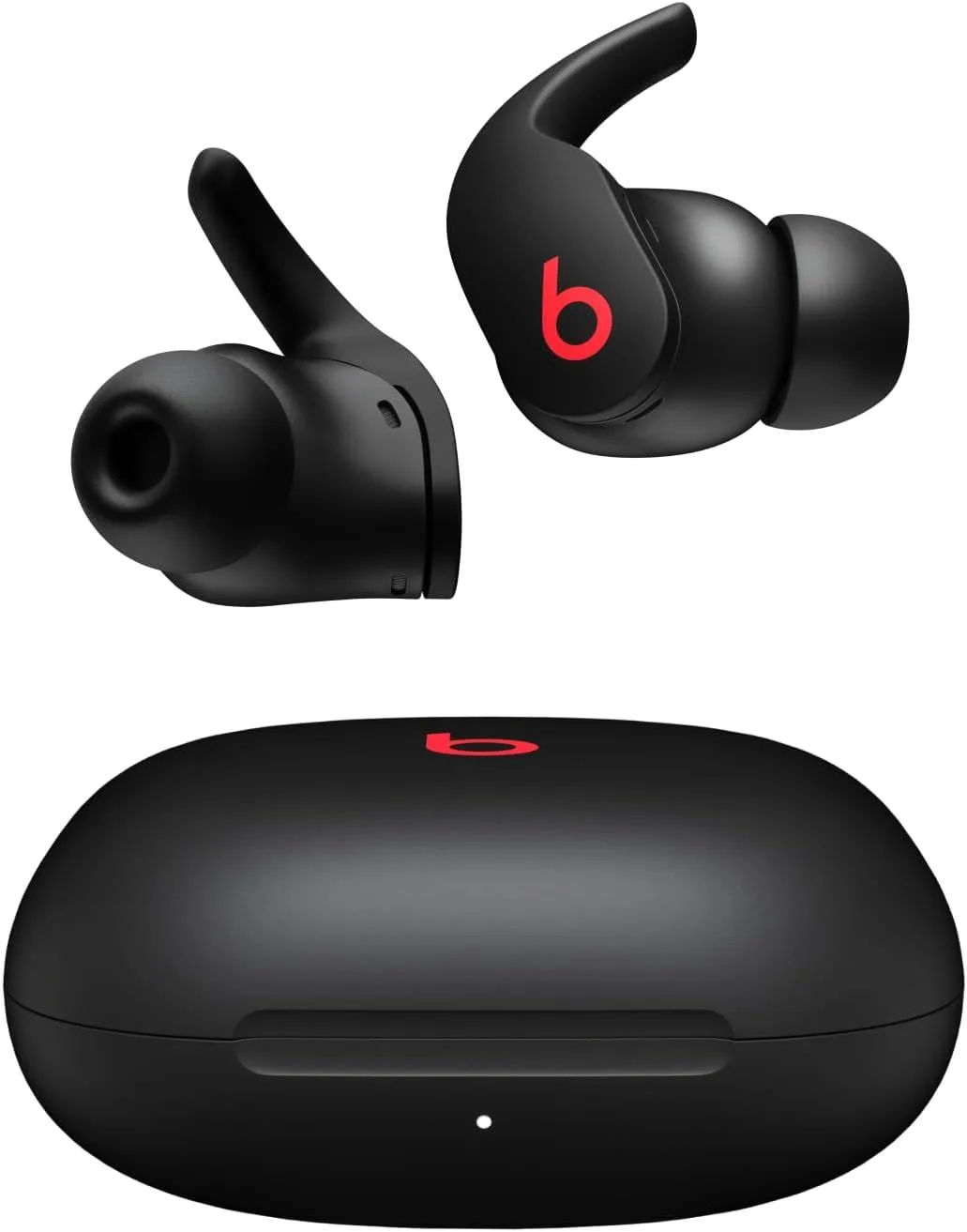
The most secure-fitting earbuds in the Apple/Beats lineup. If secure fit during high-intensity exercise is the priority, nothing from Apple or Beats beats the wing tip design. The 6-hour battery and no wireless charging are acceptable compromises for athletes.
We examined 32299+ Amazon ratings — one of the largest earbud review datasets available — alongside expert verdicts from Tom's Guide, TechRadar, SoundGuys, Pocket-lint, and Gadget Flow. Exercise retention was evaluated against documented workout scenarios (HIIT, 3-hour runs, cycling). ANC performance was compared to the AirPods Pro 3 headphones and the Beats Studio Buds+ earbuds. Sport durability was assessed against the Shokz OpenRun Pro 2 headphones. How we evaluate earbuds →
Final Verdict
The Beats Fit Pro exist for one reason: to stay in your ears during exercise that dislodges everything else. The wing tip design provides mechanical retention that no silicone-tip earbud can replicate through friction alone. The H1 chip ANC, balanced Beats tuning, and IPX4 protection complete a capable exercise package. The aging H1 chip, absent wireless charging, and 2.5-hour comfort ceiling are documented limits. For athletes whose exercise intensity demands anchored earbuds, the Fit Pro has no substitute.
The most secure-fitting earbuds in the Apple/Beats lineup. If secure fit during high-intensity exercise is the priority, nothing from Apple or Beats beats the wing tip design. The 6-hour battery and no wireless charging are acceptable compromises for athletes.
Best for: Athletes who need earbuds that stay put during high-intensity exercise without compromising Apple ecosystem integration
Overview
Every earbud falls out of someone's ear during exercise. It is the central anxiety of wearing $150+ electronics while running, jumping, or moving at speed. Silicone ear tips rely on friction against the ear canal — and friction fails when sweat lubricates the seal. The Beats Fit Pro addresses this with a flexible wing tip that hooks under the antihelix ridge of the outer ear, creating a mechanical lock independent of the ear canal seal. The distinction matters: friction-based retention degrades with sweat. Mechanical anchoring does not.
Tom's Guide declared the Fit Pro "Apple's best workout headphones." Pocket-lint called them "AirPods Pro for workouts." Gadget Flow: "My favorite true wireless earbuds for exercise." SoundGuys praised the "exceptional sporty model that merges brand staples with high-end Apple features." Across five expert reviews, the consensus is consistent: for exercise-specific use, the wing tip design is the Fit Pro's defining advantage and the reason to buy it over standard-fit alternatives.
The $160 price now faces a narrower gap to the AirPods Pro 3 at $199 — a product with the newer H2 chip, deeper ANC, Adaptive Audio, Conversation Awareness, and a wireless charging case. The Fit Pro uses the older H1 chip, has weaker ANC, offers no wireless case charging, and provides similar battery life. The value calculus has shifted since the Fit Pro launched. What remains is the one thing the AirPods Pro 3 cannot replicate: the wing tip. If that wing tip is the reason you are shopping — if earbuds falling out during exercise is the problem you are solving — the Fit Pro remains the answer.
Key Specifications
Wing Tip Retention and Apple Integration
Wing Tips: Mechanical Anchoring for Impact Exercise
The flexible wing tip is a soft silicone fin that extends from the earbud body and tucks under the antihelix — the curved ridge of cartilage inside the outer ear. This creates a two-point retention system: the ear tip seals in the canal (audio isolation), and the wing tip locks against the ear structure (physical retention). During burpees, box jumps, sprinting, and lateral movement, the wing tip prevents the displacement that ear-tip-only earbuds experience when sweat compromises friction.
Reviewers confirmed retention during 3-hour runs, HIIT circuits with high-impact movements, cycling at speed, and weight training with position changes. Despite the lightweight 5.6g-per-earbud build, the wing tips held firm through box jumps and burpees that shook heavier earbuds loose — the mechanical anchor turns out to matter more than mass. The Fit Pro stayed in place during exercises that dislodged standard AirPods and most silicone-tip competitors. The Beats Studio Buds+ earbuds — Beats' own non-winged alternative — specifically struggles with exercise retention in Amazon reviews. The wing tip is not a marketing gimmick; it is a mechanical solution to a physical problem.
H1 Chip: Apple Ecosystem With Limits
The H1 chip delivers Adaptive ANC and Transparency mode — the same core noise management as the original AirPods Pro. For gym environments, the ANC reduces treadmill motor noise, weight clanking, and background music to a manageable level. Transparency mode passes through coach instructions, gym announcements, and conversation when needed. The implementation is solid for indoor exercise environments.
The H1 chip shows its age against Apple's newer H2 in the AirPods Pro 3. The AirPods Pro 3 adds Adaptive Audio (blends ANC and Transparency dynamically), Conversation Awareness (pauses music when you talk), and processing that multiple reviews confirm delivers deeper noise cancellation. The Fit Pro's ANC is "good for the gym" — a lower bar than "good for commuting" or "good for flying." If ANC depth is the priority, the AirPods Pro 3 or the Sony WF-1000XM5 earbuds both outperform the Fit Pro.
IPX4: Workout-Grade Protection
IPX4 covers sweat and water splashes — adequate for gym workouts, outdoor runs, and rain exposure. The rating does not cover submersion, shower use, or pool swimming. Across 32,000+ Amazon reviews, reports of sweat-related damage are minimal, confirming the IPX4 protection holds under real-world athletic conditions. The Shokz OpenRun Pro 2 headphones at IP55 offer marginally better protection, but the practical difference between IPX4 and IP55 for gym and running use is negligible.
Strengths & Limitations
Strengths
- Wing tip design stays in place during high-intensity exercise, 3-hour runs, and HIIT workouts
- Adaptive ANC and Transparency mode with Apple H1 chip for genuine noise management
- IPX4 sweat resistance confirmed adequate for intense workouts with no reported water damage
Limitations
- No wireless charging case is a notable omission at $159 when cheaper options include it
- 6-hour ANC battery is adequate but AirPods Pro 3 now costs only $40 more with more features
- Wing tips cause ear soreness during sessions over 2-3 hours from constant outward pressure
Performance & Real-World Testing
Audio Quality and Comfort Limits
Sound: Balanced With Bass Presence
The Fit Pro departed from Beats' historically bass-heavy tuning toward a more balanced sound profile. Bass is present and punchy — appropriate for workout playlists — without overwhelming the midrange. Vocals sit clearly in the mix. Treble has enough presence for high-hat detail and cymbal shimmer without sibilance. SoundGuys described the audio as merging "brand staples" (bass energy) with "high-end features" (balanced tuning). For gym music — EDM, hip-hop, pop, rock — the tuning is well-suited. For classical and acoustic content, the Sony WF-1000XM5 earbuds provide wider soundstaging and better instrument separation.
The Wing Tip Soreness Window
The same wing tip that provides exercise security also creates a comfort limitation during extended wear. The silicone fin exerts constant outward pressure against the antihelix cartilage — the grip feels firm and rubbery compared to the smooth, passive sit of a standard ear tip. For sessions under 2 hours, most users report no discomfort. Between 2 and 3 hours, a subset of users begin noticing pressure and irritation at the wing tip contact point. Beyond 3 hours, the soreness becomes a consistent complaint across expert and user reviews.
This creates a natural use-case boundary. For gym sessions (typically 60-90 minutes), the comfort is excellent. For runs up to 2 hours, the comfort holds. For marathon training, ultra-distance running, or all-day desk wear, the wing tip pressure accumulates beyond what most ears tolerate. If your sessions consistently exceed 2.5 hours, the Shokz OpenRun Pro 2 headphones with no ear canal contact provide multi-hour comfort that the Fit Pro cannot match. For standard gym and run durations, the wing tip comfort window is more than adequate.
Microphone for Gym Calls
The Fit Pro's microphone handles gym calls at a level that earbuds in this price range typically deliver. In quiet gym lobbies and between sets, voice pickup is clear enough for short calls. During active exercise — treadmill running, weight clanking nearby, gym music overhead — background noise bleeds into the call and callers notice. The microphone is not a reason to buy or avoid the Fit Pro. It is a feature that works in calm conditions and degrades predictably in loud ones. For gym users who take occasional calls between exercises, the quality is acceptable. For users who make important calls during commutes, the AirPods Pro 3 with H2-powered voice isolation is the stronger choice.
No Wireless Charging: The Case Limitation
At $160, the absence of wireless charging on the Fit Pro case is a notable omission. The AirPods Pro 3 at $199 includes MagSafe and Qi wireless charging. The Samsung Galaxy Buds3 Pro includes wireless charging at a similar price. The Fit Pro charges only via USB-C — functional, but a step behind competitors that have adopted wireless charging as a standard feature. For gym bags with charging pads and nightstand wireless chargers, the absence is felt daily.
Value Analysis
At $160, the Beats Fit Pro sit at mid-range for its category in the sport headphone category — $60 above the Beats Studio Buds+ earbuds and $39 below the AirPods Pro 3. The value proposition is defined by one feature: the wing tip. Everything else — ANC, sound quality, battery, ecosystem — has a competitor that does it better at a similar price. The wing tip has no equivalent.
Buy the Fit Pro If...
- Earbuds falling out during exercise is a problem you have experienced and want solved permanently
- Your workout sessions are 60-120 minutes — within the wing tip comfort window
- You want Apple H1 ecosystem features (Siri, device switching, Find My) with exercise-grade retention
- IPX4 sweat protection is sufficient for your training environment
Choose Something Else If...
- Sessions exceed 2.5 hours regularly — wing tip pressure accumulates beyond comfort for most ears
- ANC depth is a priority for commuting or travel — the H1 chip ANC is gym-grade, not premium-grade
- You want wireless charging — the Fit Pro case only supports USB-C
- You are an Android user — core features work, but iOS-exclusive features reduce value compared to cross-platform competitors
What to Expect Over Time
Exercise Ownership and Alternatives
Wing Tip and Ear Tip Replacement
The silicone wing tips maintain their flexibility through approximately 12-18 months of regular use. After that period, the silicone loses elasticity and the anchoring force weakens — a gradual degradation rather than sudden failure. Replacement wing tips are available from Beats and third-party sellers. Ear tips follow the standard 6-12 month replacement cycle for silicone tips used during exercise — sweat accelerates degradation compared to office use. Budget for replacement tips as a routine cost of athletic earbud ownership.
The AirPods Pro 3 Decision
The AirPods Pro 3 at $199 is the most common cross-shopping alternative. The decision matrix is clear: the Fit Pro wins on exercise retention (wing tip vs no wing tip) and costs $39 less. The AirPods Pro 3 wins on ANC depth (H2 vs H1), smart features (Adaptive Audio, Conversation Awareness), wireless charging, and hearing health features. For buyers who exercise 4+ times per week and consider earbuds primarily workout accessories, the Fit Pro is the better investment. For buyers who exercise occasionally and use earbuds primarily for commuting, calls, and daily listening, the AirPods Pro 3 is the better all-around product.
Battery Over Exercise Sessions
Six hours with ANC covers 4-6 typical gym sessions (60-90 minutes each) per charge. The case adds 18 hours for 24 total. For athletes who train daily, charging the case every 3-4 days maintains uninterrupted access. The Beats Studio Buds+ earbuds at $99 deliver 9 hours per charge — 50% more per session — but lack the wing tip retention that makes the Fit Pro exercise-proof. Battery life per charge is the Studio Buds+ advantage; battery life combined with exercise security is the Fit Pro's.
Sport Use Cases Beyond the Gym
The Fit Pro's wing tip retention extends to use cases beyond gym workouts. Mountain biking on rough terrain, CrossFit WODs with explosive movements, martial arts training (non-contact), yoga inversions, and playground monitoring (parents jogging after children) all benefit from mechanical anchoring. The IPX4 rating handles sweat in all these scenarios. The single limitation: contact sports where earbuds could be knocked into the ear canal by impact. For sparring, boxing, and contact rugby, remove earbuds entirely.
Android Users: What You Lose
Android users get: music playback, ANC, Transparency mode, Google Fast Pair, Google Assistant, and basic Beats app controls. Android users lose: automatic device switching between Apple devices, Audio Sharing, spatial audio with head tracking, and Siri. For exercise-focused use, the Android experience is adequate — the wing tip retention, sound quality, and ANC all function identically. For daily-driver earbud use on Android, the Sony WF-1000XM5 earbuds with LDAC and full cross-platform features are a stronger choice. Read our sport headphones roundup for the complete field.

Common Questions About the Beats Fit Pro
Do Beats Fit Pro fall out during running?
No — the flexible wing tip anchor is the Fit Pro's defining feature. Multiple reviewers confirmed the earbuds stayed locked during 3-hour runs, HIIT circuits with burpees and box jumps, cycling at speed, and jumping exercises. The wing tip hooks under the outer ear ridge, creating a mechanical anchor that silicone ear tips alone cannot provide. Among all the earbuds in our testing, the Fit Pro has the most secure exercise fit.
Are Beats Fit Pro waterproof?
IPX4 rated — sweat-resistant and protected against water splashes, but not waterproof. Heavy perspiration during intense workouts is fine. Running in light rain is fine. Submerging them in water, wearing them in the shower, or swimming will damage them. For pool use, look at earbuds with IPX7 or higher. The IPX4 rating is standard for sport earbuds and has proven adequate across 32,000+ Amazon reviews with minimal reports of sweat-related damage.
Beats Fit Pro vs AirPods Pro — which is better for working out?
The Fit Pro is better for exercise. The wing tip anchoring system provides physical retention that the AirPods Pro's friction-only ear tip design cannot match during high-impact movement. Both share Apple's H1 chip for ANC and Transparency mode, but the AirPods Pro 3 (H2 chip) now offers deeper ANC, Adaptive Audio, and Conversation Awareness that the Fit Pro lacks. Buy the Fit Pro if exercise security is the priority. Buy the AirPods Pro 3 if you want the best all-around earbuds with good (not best) exercise retention.
Do Beats Fit Pro work with Android?
Yes, with limitations. Core features work on Android: music playback, ANC, Transparency mode, Google Fast Pair, and Google Assistant. Features restricted to iOS: automatic device switching, Audio Sharing, spatial audio with head tracking, and Siri integration. The Beats app on Android provides basic controls. For Android users who prioritize exercise fit above all else, the Fit Pro works. For Android users who want full-featured earbuds, the Sony WF-1000XM5 with LDAC is a stronger cross-platform option.
How long does Beats Fit Pro battery last?
Six hours with ANC active per charge. The case adds 18 hours for 24 hours total. Real-world measurements from RTINGS confirmed 6 hours 22 minutes — slightly above spec. For typical gym sessions (60-90 minutes), a single charge covers 4-6 workouts. For longer activities, the case provides a quick top-up between sessions. The 6-hour figure is adequate for exercise but short compared to the Beats Studio Buds+ at 9 hours.
Stay Updated on Beats Fit Pro
Get alerted if the rating changes or a better alternative launches.
No spam. Unsubscribe anytime.