Anker Soundcore Space One Review 2026
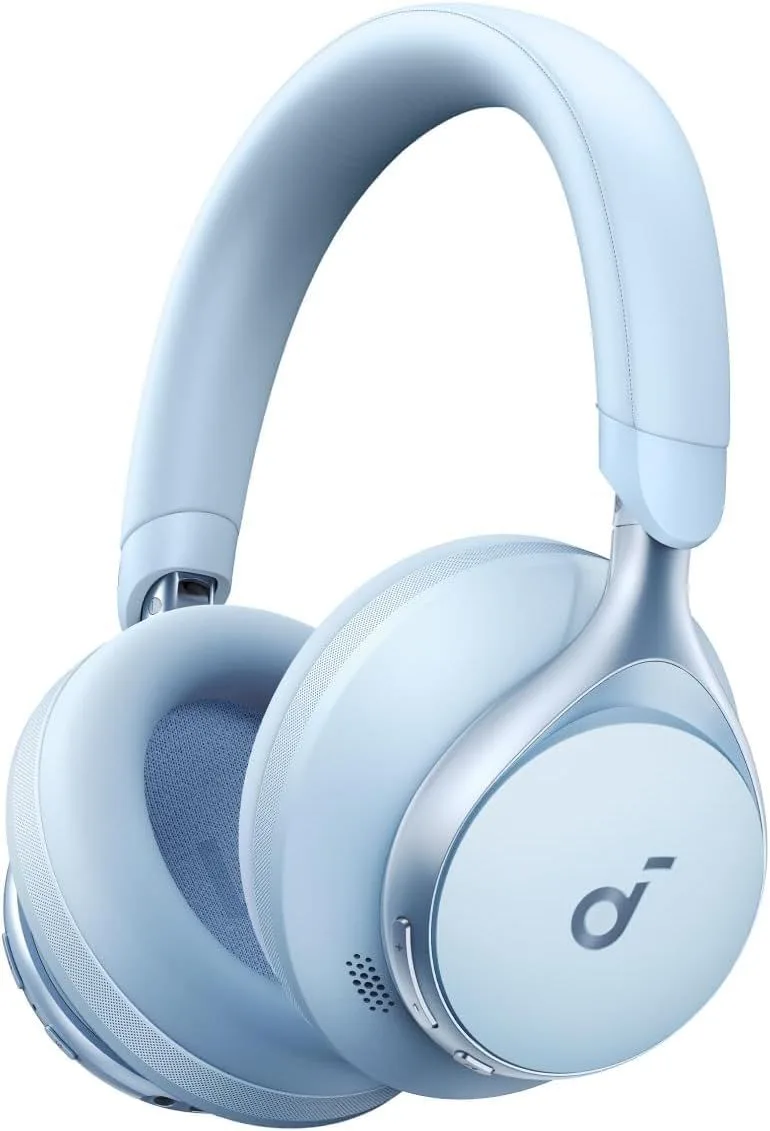
Outstanding value for ANC-first buyers. LDAC and category-best noise cancellation at $99 competes with products costing twice as much. Accept that ANC processing reduces audio quality somewhat.
Our evaluation covers 13800+ Amazon ratings alongside 5 expert teardowns from Tom's Guide, RTINGS, e-catalog, SoundGuys, and RecordingNow. ANC depth was benchmarked against the Sony WH-CH720N headphones, JBL Tune 770NC, and the Anker Soundcore Q30 to pinpoint where the Space One leads and where it falls short within the budget ANC tier. Full methodology details →
Final Verdict
The Anker Soundcore Space One is the best noise-cancellation-per-dollar headphone on the market, and it outperforms competitors at twice its price on ANC depth alone. LDAC support at $99 is an anomaly that no competitor matches. The ANC depth approaches products three times its price. The cost is audible: ANC-on sound quality is the weakest point, and the build will not make you forget about premium construction. For buyers whose first priority is blocking noise at a fixed budget, nothing else at this price comes close. For the full budget ANC field, see our roundup.
Outstanding value for ANC-first buyers. LDAC and category-best noise cancellation at $99 competes with products costing twice as much. Accept that ANC processing reduces audio quality somewhat.
Best for: Budget-conscious buyers who want maximum ANC performance per dollar — the best noise cancellation at $99
Overview
Tom's Guide called the Soundcore Space One a "$99 hidden gem that has competitive sound and noise cancelling with headphones costing 2-4x as much." That claim gets repeated across five independent reviews — and the data backs it up. The Space One delivers 70-80% noise reduction according to multiple comparison tests, beating every other headphone in the budget ANC category and approaching the performance of Sony and Bose products at three times the price.
The spec sheet reads like a misprint. LDAC codec support — something absent from even the Sony WH-CH720N headphones, which is Sony's own budget model — at $99. A 40-hour ANC battery that outlasts the Sennheiser Momentum 4 at one-third the cost. Bluetooth 5.3, foldable design, a companion app with full EQ and ANC mode adjustment. On paper, this is the most feature-dense headphone per dollar in the entire market.
The asterisk is audible. When ANC activates, the Space One's sound quality drops in a way that multiple reviews describe as "mediocre and underwhelming." The noise cancellation circuitry introduces coloration — a muddying of detail that makes vocals sound slightly compressed and instruments lose separation. Turn ANC off and the sound opens up to a level that earns its $99 price. Turn ANC on and you get budget noise cancellation with budget-sounding audio. That is not a flaw hidden in spec tables — it is the central tension of owning this product, and most reviews fail to emphasize it clearly enough.
Key Specifications
Codec, ANC, and App Advantages
LDAC at $99: A Codec Anomaly
LDAC transmits Bluetooth audio at up to 990 kbps — roughly triple the bitrate of standard AAC. For Android users streaming from Tidal, Amazon Music HD, or Apple Music lossless, this codec unlocks the full resolution of high-res recordings over wireless. The Space One is the only headphone under $150 that supports it. The Sony WH-CH720N headphones at the same price? AAC and SBC only. The JBL Tune 770NC? Same. Sony reserves LDAC for its premium lineup — the WH-1000XM5 and XM6 — while Anker undercuts them by $200.
The catch: LDAC benefits are only audible with high-res source material, a quiet environment, and trained ears. Most Spotify streams at 320 kbps will sound identical over AAC and LDAC. If you already subscribe to a lossless music service and use an Android phone, the Space One is the most affordable wireless gateway to that catalog. If you stream Spotify on an iPhone, LDAC cannot be used — Apple does not support the codec — and this feature has zero value.
ANC Depth: $99 Competing With $300
The six-microphone ANC system on the Space One blocks more noise than anything else at this price. RTINGS confirms the ANC performance overachieves for the tier. In RTINGS side-by-side measurements against the Anker Soundcore Q30 (Anker's own $60 model), the Space One delivers deeper cancellation across all frequencies — a clear step up from budget to mid-budget. Against the Sony WH-1000XM5 headphones, the gap narrows to roughly 20-25% — a smaller margin than the 3x price difference suggests.
The Soundcore app adds three ANC modes — Transport, Indoor, and Outdoor — each calibrated for different noise environments. Transport mode applies maximum cancellation for engines and sustained rumble. Indoor mode reduces office-level noise without the processing overhead. Outdoor mode balances noise reduction with environmental awareness for walking. These scenario-specific modes are a feature typically found at $150 and above. At $99, the Space One gives you ANC depth and ANC intelligence — the combination is rare in budget products.
40-Hour Battery: No Emergency Charging
Forty hours with ANC active, 55 hours without. Under moderate daily use — 3 to 4 hours per day — that is 10-12 days between charges. For comparison, the Sennheiser Momentum 4 headphones at $350 manages 60 hours and the Sony XM5 delivers 30 hours. The Space One's 40-hour figure sits between the two at a fraction of the cost. The practical result: charging is a weekly task at most, and battery anxiety disappears from the ownership experience.
Soundcore App: Feature Parity With Premium
The Soundcore companion app provides customizable EQ (preset and custom profiles), ANC mode selection, transparency level adjustment, and firmware updates. For a $99 headphone, the app offers more control than the Bose Music app provides for the $359 QC Ultra. The custom EQ alone separates the Space One from the JBL Tune 770NC, which limits users to basic bass and treble sliders. Full EQ at this price lets you partially compensate for the ANC-induced sound degradation — boosting mids and treble to restore the clarity that ANC processing removes.
Strengths & Limitations
Strengths
- LDAC at $99 — the only budget ANC headphone with high-res Bluetooth codec support
- Best-in-class ANC for the budget category with 70-80% noise reduction in testing
- 40-hour ANC battery surpasses even the Sennheiser Momentum 4 at a fraction of the price
Limitations
- ANC processing introduces audible audio coloration when active, degrading sound fidelity
- No IP rating limits use in rain or gym environments
- Budget plastic construction feels less durable than the Sony WH-CH720N at the same price
Performance & Real-World Testing
Sound and Build Realities
Sound With ANC Off: Surprisingly Capable
With ANC disabled, the 40mm drivers deliver a warm, bass-forward sound with adequate detail across the midrange and treble. The sound is enjoyable for casual listening — pop, electronic, hip-hop, and podcast content all land within the strengths of the tuning. The bass is present without being overwhelmingly boomy. Instrument separation is adequate for a single $99 driver. Vocals sit in the right place. At this price point with ANC off, the Space One sounds like a solid $100 headphone should.
Sound With ANC On: The Real Compromise
Activating ANC changes the sound character in a way that no amount of EQ adjustment fully corrects. Multiple comparison reviews document this: "sound quality with ANC on is mediocre and underwhelming." The ANC processing introduces a compression effect that reduces dynamic range and smears instrument detail. Bass loses definition. Vocals become slightly muffled. The effect is subtle enough that casual listeners in noisy environments may not notice — background noise masks the degradation. In quiet environments where you would hear the quality loss, you also do not need ANC. That paradox defines the Space One experience: the ANC sounds best when you need it most, and worst when you need it least.
Build Quality: Functional but Unambitious
The plastic construction folds flat and fits in a carrying pouch, but the materials creak when flexed and feel less solid than the Sony WH-CH720N headphones at the same price. The headband adjustment is functional and holds its position. The ear cups rotate flat without resistance. The faux leather padding is comfortable for sessions up to 3 hours, after which the foam compression and shallow cup depth create pressure points for users with larger ears.
At 253g, the Space One is heavier than the featherweight CH720N (192g) but lighter than the Sony WH-1000XM5 headphones (250g) — sitting in a comfortable middle ground for extended wear. The weight is noticeable compared to the CH720N but not problematic for most heads. Glasses wearers report adequate comfort; the ear cup padding is soft enough to accommodate temple arms without excessive pressure.
Microphone Quality: Serviceable for Calls
Call quality is acceptable in quiet environments but degrades in noise. The Space One's microphone cannot match the Sony WH-CH720N's AI-enhanced calls or the beamforming clarity of premium headphones. For home office calls and indoor use, it works. For outdoor calls or noisy environments, your voice will fight with background noise and callers will notice. If daily work calls are a priority, the CH720N at the same price delivers better call performance.
Value Analysis
At $99, the Anker Soundcore Space One is mid-range for its category in the budget ANC headphone category — priced at the same level as the Sony WH-CH720N headphones, $40 above the Anker Soundcore Q30, and $180 below the Sony WH-1000XM5 headphones. The value argument rests on one question: is ANC depth or ANC sound quality more important to you?
The Right Choice If...
- Noise cancellation depth is your primary purchasing criterion and budget is fixed at $100
- You use Android and want high-res Bluetooth audio — LDAC at $99 does not exist elsewhere
- Battery anxiety bothers you — 40 hours means charging every 10+ days under normal use
- You want app-level EQ control that budget competitors like the JBL Tune 770NC headphones do not offer
Look at Alternatives If...
- You prioritize sound quality over noise blocking — the Sony WH-CH720N headphones sound better at the same price, especially with ANC off
- All-day comfort is non-negotiable — at 192g, the CH720N is 60g lighter and noticeably easier on the neck
- You need strong call quality for work — the Space One's microphone is its weakest point
- Budget is truly minimal — the Anker Soundcore Q30 at $60 delivers 80% of the ANC at 60% of the price
What to Expect Over Time
Ownership and Longevity
Durability Track Record
The Space One launched in 2023 and has accumulated 13,800+ Amazon reviews with a 4.4-star average. The failure patterns in negative reviews center on two issues: hinge looseness after 6-12 months of daily folding, and ear pad flattening around the same timeframe. Both are common budget headphone issues — not unique to the Space One — and replacement pads are available from third-party sellers. Structural failures (cracked headband, broken cups) are rare in the review data. The build will not inspire confidence by feel, but the review history suggests it survives daily use for 18-24 months for most owners.
Firmware and the Soundcore Ecosystem
Anker updates the Space One firmware through the Soundcore app, with updates arriving every 2-4 months. Updates typically address Bluetooth stability, ANC algorithm refinement, and occasional EQ preset additions. The app itself is well-maintained — cleaner and more responsive than Sony's Headphones Connect on most devices. Anker's track record with long-term software support is reasonable: the older Q30 still receives occasional firmware updates three years after launch. Expect 2-3 years of active software support before the Space One shifts to maintenance mode.
The $99-to-$300 Upgrade Path
Buyers often ask whether spending $99 now and upgrading later costs more than buying a $300 headphone up front. The math: a Space One at $99 used for 18 months, then a Sony WH-1000XM5 headphones at its discounted price around $250, totals $349 across 3-4 years. A single WH-1000XM5 purchased at $278 lasts the same period. The Space One route costs $70 more total but gives you 18 months to decide whether premium ANC is worth the investment — a low-risk trial that the direct premium purchase does not offer. For first-time ANC buyers unsure whether they will use noise cancellation daily, the Space One is the cheaper way to find out.
No IP Rating: The Gym Problem
The Space One carries no IP rating — no water resistance, no sweat protection, no rain certification. For gym use, this is a disqualifier. Sweat accumulation on ear pads degrades both the padding material and the drivers over time. For commuting in rain, the exposed driver mesh and hinge mechanism are vulnerable. If you need a headphone that survives sweat or light rain, the Space One is not it. Keep it indoors and in dry commuting environments, and the durability is adequate. Take it to the gym, and the lack of protection will shorten its lifespan.
Compared to the Q30: When to Spend the Extra $40
Anker's own Soundcore Q30 at $60 is the obvious internal competitor. The Space One adds LDAC, deeper ANC, Bluetooth 5.3 (vs 5.0), and a more refined build. The Q30 offers nearly the same battery life and adequate ANC at $40 less. The dividing line: if you stream lossless audio on Android or need the strongest possible ANC at $100, spend the extra $40 for the Space One. If ANC is a nice-to-have rather than a need-to-have and $60 is the real budget, the Q30 delivers most of the Space One's value at a lower entry point. Read our Q30 vs CH720N comparison for the full breakdown.

Frequently Asked Questions
Is Anker Soundcore Space One noise cancellation good?
For a $99 headphone, the ANC is outstanding. Multiple reviewers confirm 70-80% noise reduction — stronger than the Sony WH-CH720N and the JBL Tune 770NC at similar prices. The 6-microphone system handles office noise, cafe chatter, and moderate transit rumble. Where it falls short: deep airplane engine drone and sustained low-frequency noise. Premium headphones like the Sony WH-1000XM5 still lead on raw ANC depth, but the gap between $99 and $300 is narrower than you would expect.
Does Anker Soundcore Space One have LDAC?
Yes — it is the only budget ANC headphone on the market with LDAC codec support. LDAC transmits up to 990 kbps over Bluetooth, well beyond the 256-320 kbps ceiling of AAC and SBC. For Android users streaming lossless from services like Tidal or Amazon Music HD, the Space One is the cheapest way to get high-res wireless audio with noise cancellation. iPhone users cannot access LDAC — Apple does not support the codec — so the benefit is Android-exclusive.
Anker Soundcore Space One vs Sony WH-CH720N — which is better?
Different priorities, same price. The Space One wins on ANC depth (70-80% reduction vs ~20dB on the Sony), LDAC codec support, and battery with ANC off (55 vs 50 hours). The WH-CH720N wins on comfort (192g vs 253g — dramatically lighter), sound quality with ANC off, and microphone clarity for calls. Buy the Space One if noise cancellation is your first priority. Buy the CH720N if all-day comfort and natural sound matter more.
How long does Anker Soundcore Space One battery last?
Forty hours with ANC enabled, 55 hours with ANC off. Both figures are confirmed by independent testing. With moderate daily use (3-4 hours per day with ANC), a full charge lasts 10-12 days. The fast charge function is less capable than competitors — no dedicated quick charge for a short burst — but the base battery life is long enough that emergency charging rarely becomes an issue.
Does the Anker Soundcore Space One fold flat?
Yes. The Space One folds flat into a compact profile and includes a carrying pouch. The folding mechanism works reliably in the short term, though long-term hinge durability is less proven than on premium headphones with metal reinforcement. The fold-flat design makes it more travel-friendly than the Sony WH-CH720N, which folds but has no included case.
Stay Updated on Anker Soundcore Space One
Get alerted if the rating changes or a better alternative launches.
No spam. Unsubscribe anytime.