Cloud Alpha Wireless vs G733: Battery King Meets Streamer's Pick
A genuine tie that splits on priorities. The HyperX Cloud Alpha Wireless wins on battery life, audio fidelity, and set-it-and-forget-it durability. The Logitech G733 wins on microphone quality, visual personality, and streamer-facing features.
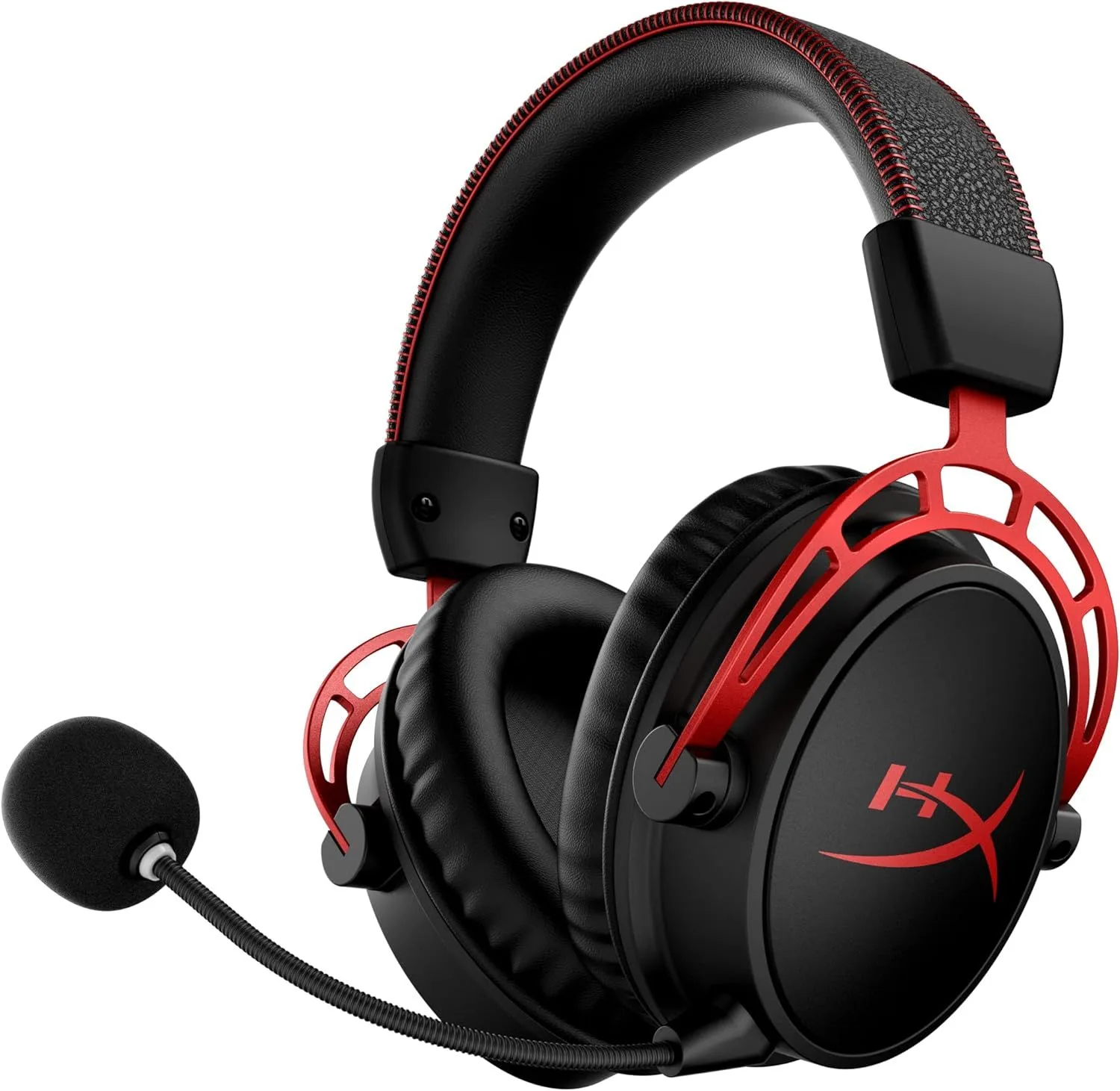
HyperX Cloud Alpha Wireless
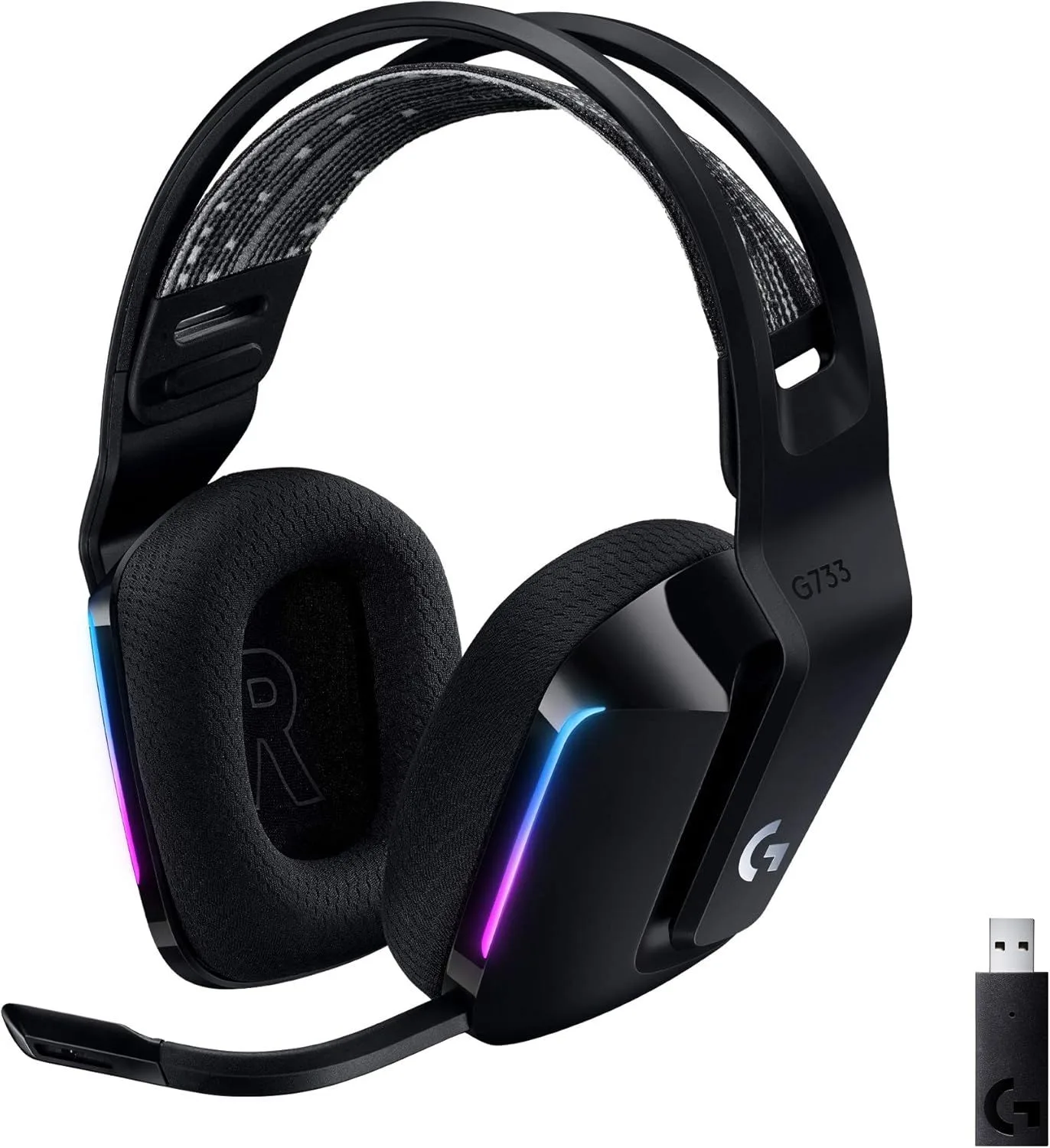
Logitech G733
The Cloud Alpha Wireless wins on battery, audio quality, and raw endurance — 300 hours vs 29 is a 10x gap that changes how you think about charging entirely. The G733 wins on microphone quality, visual design, and streaming-specific features that the HyperX does not attempt. Both sit at nearly identical prices — $119 and $118 respectively — making this a question of what you value, not what you can afford. Read our best gaming headsets roundup if you want to compare more options before narrowing down.
These two headsets represent opposite philosophies in PC gaming audio at the same price point. HyperX built a headset around a single engineering achievement: a battery so large and efficient that you charge it once a month. Everything else — the dual-chamber drivers, the minimal design, the absence of RGB — serves that mission. Logitech built a headset for the person who wants their setup to look as good on a Twitch stream as it sounds. LIGHTSYNC RGB across the front grille, five color options from the factory, and Blue VO!CE microphone processing borrowed from a dedicated broadcast microphone line.
Both headsets share a key limitation: they are dongle-only wireless. No Bluetooth on either. No phone pairing, no tablet audio, no switching between your PC and mobile device mid-session. These are purpose-built PC and console gaming tools. We cross-referenced 25,000+ combined Amazon reviews, forum threads on Reddit and Head-Fi, and expert teardowns to map where each headset earns its price and where it falls short. The individual reviews — HyperX Cloud Alpha Wireless review and Logitech G733 in-depth review — cover each product in full depth. This comparison isolates the head-to-head matchups category by category.
At a Glance
| Feature | HyperX Cloud Alpha Wireless Gaming Headset | Logitech G733 LIGHTSPEED Wireless Gaming Headset |
|---|---|---|
| Price Range | $100–$250 | $100–$250 |
| Driver Size | 50mm dual chamber | 40mm |
| Battery Life | 300 hrs (327 tested) | 29 hrs (RGB off) / 20 hrs |
| Weight | ~309g | ~278g |
| ANC Type | None | None |
| Connection | 2.4GHz USB dongle | LIGHTSPEED 2.4GHz dongle |
| Microphone | Detachable boom | Detachable boom (Blue VO!CE) |
| Platforms | PC, PS4, PS5 | PC, PS4, PS5 |
| Check Price | Check Price |
Battery Life: Not Even Close
The Cloud Alpha Wireless is rated at 300 hours. Independent testing pushed it to 327 hours before shutdown. At 4-6 hours of daily gaming, that is roughly 8-10 weeks between charges. Plug it in once, forget it exists for two months, and it will still be alive when you remember. No other wireless gaming headset on the market comes within 200 hours of this number. The engineering concession that makes this possible is visible: no RGB, no Bluetooth radio, no active noise cancellation — every milliwatt goes to audio and wireless transmission.
The G733 rates at 29 hours with RGB off. Turn the LIGHTSYNC lighting on — which most buyers do, because that is a primary purchase reason — and battery drops to approximately 20 hours. At 4-6 hours daily, that means charging every 3-5 days. The G733 is not bad by gaming headset standards; 29 hours sits comfortably in the middle of the wireless category. But next to the Cloud Alpha Wireless, the contrast is jarring. The Cloud Alpha Wireless lasts 15x longer with RGB factored in. For marathon gaming sessions, LAN events, or the simple peace of mind that comes from never seeing a low-battery warning mid-match, this category has one answer.
Sound: Dual-Chamber Engineering vs Competent 40mm
The Cloud Alpha Wireless uses a 50mm dual-chamber driver — a design that physically separates the bass and mid-high frequency chambers inside each ear cup. The practical effect is reduced bass bleed into the midrange, which means footsteps, voice chat, and environmental cues stay clear even when explosions and soundtrack bass are hitting hard. In competitive shooters where spatial audio determines whether you hear the flanker behind you, the Cloud Alpha beats the G733 with a wider, more separated soundstage than most gaming headsets at any price.
The G733 uses a standard 40mm driver. It sounds good — warm, full, with enough low-end presence for immersive single-player games and music listening between sessions. But the driver does not separate frequency ranges the way the dual-chamber design does. In dense audio scenes (battle royale final circles, MMO raids with 40 players casting abilities), the G733 compresses into a wall of sound where individual cues get lost. For casual and mid-intensity gaming, the difference is subtle. For competitive play where audio is a tactical tool, the Cloud Alpha Wireless pulls ahead.
Both headsets support software EQ — NGenuity for HyperX, G Hub for Logitech — but neither saves EQ settings to the headset hardware. Disconnect from your PC, plug the dongle into a PS5, and both revert to their default tuning. The Cloud Alpha's default tuning is better balanced out of the box. The G733's default tuning leans bass-heavy, which flatters music and cinematic games but muddies competitive audio. Read our gaming headset buying guide for more on why driver design matters for positional accuracy.
Microphone: The Cloud Alpha's Biggest Weakness, the G733's Secret Weapon
This is where the comparison flips. The Cloud Alpha Wireless ships with a detachable boom microphone that multiple reviewer communities describe as the weakest mic in the $100+ gaming headset category. Discord teammates frequently ask Cloud Alpha users to speak louder. The capsule captures a thin, low-volume signal that requires boosting in Windows settings, which introduces noise floor hiss. For casual voice chat among friends, it is acceptable. For competitive callouts where clarity saves rounds, or for any recording or streaming scenario, the mic is a genuine liability.
The G733 counters with Blue VO!CE microphone processing — technology borrowed from Blue Microphones (Logitech's professional audio subsidiary). Blue VO!CE applies real-time noise gate, compression, EQ shaping, and de-essing to your voice before it reaches Discord, OBS, or any other application. The result is a broadcast-adjacent mic quality from a gaming headset. Streamers can skip a standalone USB microphone for casual streams. Competitive players get crisp, consistent callouts regardless of background noise. The catch: Blue VO!CE requires G Hub running on your PC. On PS5 or without G Hub, the mic reverts to its raw, unprocessed output — still better than the Cloud Alpha's mic, but not by the margin that Blue VO!CE creates.
If microphone quality is a top-three priority for your gaming headset — streaming, content creation, competitive comms — the G733 wins this category outright. If you plan to use a standalone desk mic regardless, the Cloud Alpha's weak built-in mic becomes irrelevant. The Turtle Beach Stealth 600 Gen 3 sits between the two on mic quality with its TruSpeak AI processing, and adds multi-platform console support that neither of these headsets offers natively.
Comfort and Weight: The Marathon Factor
The G733 weighs 278g. The Cloud Alpha Wireless weighs 309g. That 31-gram difference is perceptible across a 6-hour session — not as a dramatic weight burden, but as accumulated pressure on the top of the head. The G733 uses a dual-layer memory foam headband with a suspended strap design that distributes weight across a wider contact area. Multiple long-session reviews confirm comfortable 8-hour stretches without hot spots or pressure ridges.
The Cloud Alpha Wireless uses a more traditional padded headband with leatherette ear cushions. Comfort is good for 3-4 hour blocks. Extended sessions past the 5-hour mark produce mild headband pressure at the crown that the lighter G733 avoids. The ear cushions on the Cloud Alpha are deeper, which accommodates larger ears better — but they also trap more heat during warm-weather gaming.
For daily sessions under 4 hours, both are comfortable and the weight difference is academic. For weekend marathon sessions, LAN parties, or workdays where the headset stays on between meetings and gaming, the G733's lighter build and suspended headband design give it the edge. Neither headset offers cooling gel or glasses-friendly channels — the Beats Studio Pro at $169 addresses the glasses comfort gap with a different ear cup geometry, though it is not a gaming headset.
Software: Both Dependent, Both Frustrating
G Hub is the G733's biggest weakness. The software controls everything — EQ, Blue VO!CE mic settings, LIGHTSYNC RGB patterns, surround sound configuration, button remapping. None of these settings save to the headset. Close G Hub, and the G733 reverts to factory defaults. G Hub also has a documented history of update failures, profile corruption, and settings that silently reset between sessions. The subreddit r/LogitechG contains years of complaints about G Hub reliability, and Logitech has not resolved the core issue: settings should persist on the headset hardware, not depend on desktop software that crashes.
NGenuity — HyperX's companion software — has similar dependency issues but a narrower scope. EQ adjustments, DTS:X Spatial Audio configuration, and sidetone control all require NGenuity. The interface is simpler than G Hub (fewer features to configure), which means less surface area for bugs. NGenuity's failure mode is less painful: the Cloud Alpha defaults to a reasonably balanced sound profile without software, while the G733 defaults to an unprocessed mic and no RGB without G Hub. Losing NGenuity costs you EQ customization. Losing G Hub costs you your mic quality, lighting, and sound profile simultaneously.
Design and Aesthetics: Invisible vs Statement
The Cloud Alpha Wireless is matte black. That is the full description. No color options, no lighting, no visual flair. It is designed to disappear — to be a tool that does its job without calling attention to itself. For gamers who do not stream, do not appear on camera, and do not care what their peripherals look like, this is ideal. The design is clean, professional, and would not look out of place on a video call in a work-from-home environment.
The G733 is one of the most visually distinctive gaming headsets available. Five factory color options — black, white, blue, lilac, and green — plus front-facing LIGHTSYNC RGB that syncs with other Logitech G peripherals. The reversible headband in a sporty fabric finish leans into the streamer aesthetic. On camera, the G733 is identifiable and adds personality to a stream setup. The RGB is visible from the front (audience-facing on a webcam), not just to the wearer. Logitech designed this for people who want their headset to be part of their visual identity.
Neither approach is objectively better. Aesthetic preference is personal. But if you are choosing between these two at the same price, and you stream or create content where your setup appears on camera, the G733 adds production value that the plain Cloud Alpha does not. If you prefer gear that works silently in the background, the Cloud Alpha's no-frills design is the point.
Platform Support: Similar Limits, Different Workarounds
Both headsets ship with a 2.4GHz USB dongle and support PC, PS4, and PS5 out of the box. Neither supports Xbox wirelessly without a third-party adapter. Neither has Bluetooth. This identical limitation narrows the audience for both: if you need a headset that works across Xbox and PlayStation, or between your PC and phone, neither of these is the right choice. The Turtle Beach Stealth 600 Gen 3 with dual wireless (2.4GHz plus Bluetooth 5.2) and native Xbox, PS5, Switch, and PC support fills that gap at $109.
The Cloud Alpha Wireless dongle uses USB-A, which requires an adapter for laptops and consoles with only USB-C ports. The G733 LIGHTSPEED dongle also uses USB-A. Both include a 3.5mm cable as a wired backup — useful for Nintendo Switch handheld mode, mobile gaming, or any situation where the dongle is impractical. Wired mode on both headsets bypasses the wireless circuitry entirely, meaning the Cloud Alpha's 300-hour battery becomes irrelevant (it does not drain in wired mode) and the G733's RGB turns off (no power draw through the 3.5mm connection).
Wireless Reliability and Latency
Both headsets use proprietary 2.4GHz wireless with sub-20ms latency — fast enough that competitive FPS players cannot perceive delay between audio cue and game action. The LIGHTSPEED protocol on the G733 has been refined across multiple Logitech generations and generally delivers rock-solid connectivity within the rated 20-meter range.
The Cloud Alpha Wireless uses HyperX's own 2.4GHz protocol, which performs similarly in most environments. Forum reports of interference issues are rare for both headsets compared to Bluetooth-based gaming headsets. Where the G733 has a documented weakness is in crowded wireless environments — multiple users report static, crackling, and momentary connection drops in apartments or shared spaces with many competing 2.4GHz devices (routers, mice, keyboards). If you game in a dense wireless environment, the Cloud Alpha Wireless has fewer reported connectivity complaints per user base size.
Build Quality and Longevity
The Cloud Alpha Wireless inherits the build DNA of the original Cloud Alpha wired headset — a metal headband frame with reinforced adjustment sliders. The yoke and hinge points feel solid, and the Cloud Alpha line has a strong long-term durability reputation across gaming communities. The leatherette ear cushions will need replacement after 12-18 months of heavy daily use, but the headband and frame should outlast multiple cushion sets.
The G733 uses an all-plastic construction with the suspended elastic headband. It is lighter and more flexible, which contributes to comfort, but the plastic yoke arms flex more under stress than the Cloud Alpha's metal frame. The reversible fabric headband is machine-washable (a genuine advantage for hygiene), but the elastic tension loosens over 18-24 months of daily wear, reducing clamping force. Replacement headbands are available. Neither headset has a widespread catastrophic failure pattern — no hinge snapping, no cable-disconnect-inside-the-cup issues. Both are reasonably durable for the $120 price tier.
Price and Value at Current Street Prices
The Cloud Alpha Wireless at $119 and the G733 at $118 are effectively the same price. Neither headset offers a cost advantage. The value proposition splits on what you are buying: the Cloud Alpha is a $119 investment in audio quality and battery independence. The G733 is a $118 investment in microphone quality, aesthetics, and streaming readiness.
The competitive context matters here. The Turtle Beach Stealth 600 Gen 3 at $109 costs $10 less than either and adds Bluetooth plus multi-platform console support — genuine functionality neither the Cloud Alpha nor G733 offers. At $10 more, it is worth evaluating whether Bluetooth connectivity and Xbox support are worth the compromise in battery life (vs Cloud Alpha) or mic quality (vs G733). Read our headphones for gaming guide for a broader look at how these three compare within the wireless gaming category.
The Dongle-Only Reality
Both headsets lock you into a single connection method: 2.4GHz wireless via USB dongle. Lose the dongle, and you lose wireless functionality — a $15-$25 replacement part that may not be in stock. Neither headset pairs with your phone. Neither takes calls between matches. Neither works as a travel headset for flights or commutes. These are desk-bound gaming tools.
For gamers who want a single headset for gaming and daily life, neither the Cloud Alpha Wireless nor the G733 fills that role. The Beats Studio Pro handles the lifestyle-plus-gaming overlap with Bluetooth, ANC, and a 40-hour battery, though it lacks the low-latency 2.4GHz connection that competitive gaming demands. The dongle-only approach is a deliberate design choice: it enables the sub-20ms latency that Bluetooth cannot match, at the cost of versatility. Accept that limitation before purchasing either headset.
Which One Matches Your Setup
Get the HyperX Cloud Alpha Wireless If...
- Battery anxiety is real for you — charging once every 8-10 weeks eliminates it permanently
- Audio fidelity in competitive games matters — the 50mm dual-chamber drivers separate spatial cues better than the G733's 40mm
- You already own a standalone microphone or plan to buy one — the built-in mic is a known weakness
- You prefer gear that works reliably without software running — the Cloud Alpha defaults are more usable than G733 defaults
- Visual aesthetics of your peripherals are irrelevant — the plain black design is functional, not fashionable
Get the Logitech G733 If...
- You stream or create content and want broadcast-quality mic processing built into your headset
- Setup aesthetics matter — 5 color options and front-facing RGB add personality to your desk and camera
- Comfort during 6-8 hour sessions is a priority — the 278g weight and suspended headband reduce fatigue
- You use other Logitech G peripherals and want LIGHTSYNC RGB synchronization across your setup
- You are willing to keep G Hub running to access the full feature set — the software dependency is the price of entry
Answering the Most Common Questions
Is the HyperX Cloud Alpha Wireless better than the Logitech G733?
Neither is universally better. The Cloud Alpha Wireless wins on battery life (300 hours vs 29), audio fidelity (50mm dual-chamber drivers), and long-term value. The G733 wins on microphone quality (Blue VO!CE processing), aesthetics (RGB lighting, 5 color choices), and weight (278g vs 309g). Both use 2.4GHz dongle wireless with no Bluetooth. Choose based on whether battery and audio or mic and aesthetics rank higher for your use.
How does the HyperX Cloud Alpha Wireless get 300 hours of battery?
HyperX achieves 300 hours (327 in independent testing) through three factors: no RGB lighting to drain power, a high-efficiency 2.4GHz wireless chipset, and a large internal battery cell. The G733 at 29 hours (20 with RGB on) dedicates significant power to its LIGHTSYNC RGB system. Removing all lighting from a wireless headset is the single biggest battery life gain possible.
Can I use the HyperX Cloud Alpha Wireless with Xbox?
Not directly. The Cloud Alpha Wireless ships with a USB-A 2.4GHz dongle compatible with PC, PS4, and PS5. Xbox requires a separate third-party wireless adapter or wired connection via the 3.5mm jack. The G733 has the same limitation. For native Xbox wireless support, the Turtle Beach Stealth 600 Gen 3 is the better option in this price range.
Does the Logitech G733 mic sound good without G Hub?
No. The G733 microphone defaults to a flat, unprocessed signal without G Hub running. Blue VO!CE processing — the noise gate, compression, and EQ that make the mic sound broadcast-ready — requires G Hub active on your PC. Settings do not save to the headset. If G Hub crashes or you game on PS5, you lose all mic enhancements and revert to the raw capsule output.
HyperX Cloud Alpha Wireless vs Logitech G733 — which should I buy for streaming?
The G733 for streaming setups where mic quality and on-camera aesthetics matter. Blue VO!CE gives you broadcast-style compression and noise gate without a standalone mixer. The RGB and color options look better on camera than the Cloud Alpha plain black design. For pure gameplay audio and never worrying about battery during a 12-hour marathon stream, the Cloud Alpha Wireless is the safer pick — but pair it with a dedicated desk mic like the HyperX QuadCast.
Price Drop Alerts
We'll notify you when prices drop or either product gets updated.
No spam. Unsubscribe anytime.