Headphones for Studying: Focus Longer, Retain More

A dorm neighbor blasting music through the wall at 11 PM. The library HVAC vent humming directly above your study carrel. Three separate group conversations in the campus coffee shop while you try to memorize organic chemistry mechanisms. These are the noise environments that students actually study in — and the reason a pair of headphones built for studying is different from a pair built for casual listening. The picks on this page were chosen for sustained concentration under real campus conditions, not for audiophile music appreciation in a quiet room.
We cross-referenced ANC measurements from RTINGS, comfort assessments from SoundGuys and What Hi-Fi, plus owner feedback from 145,000+ combined Amazon ratings filtered for study-specific mentions. Each pick earns its place based on how long you can wear it without discomfort, how much background noise it removes, whether the battery outlasts a full study day, and whether the price respects a student budget. Sound quality matters — but for studying, noise reduction and comfort outrank frequency response curves.
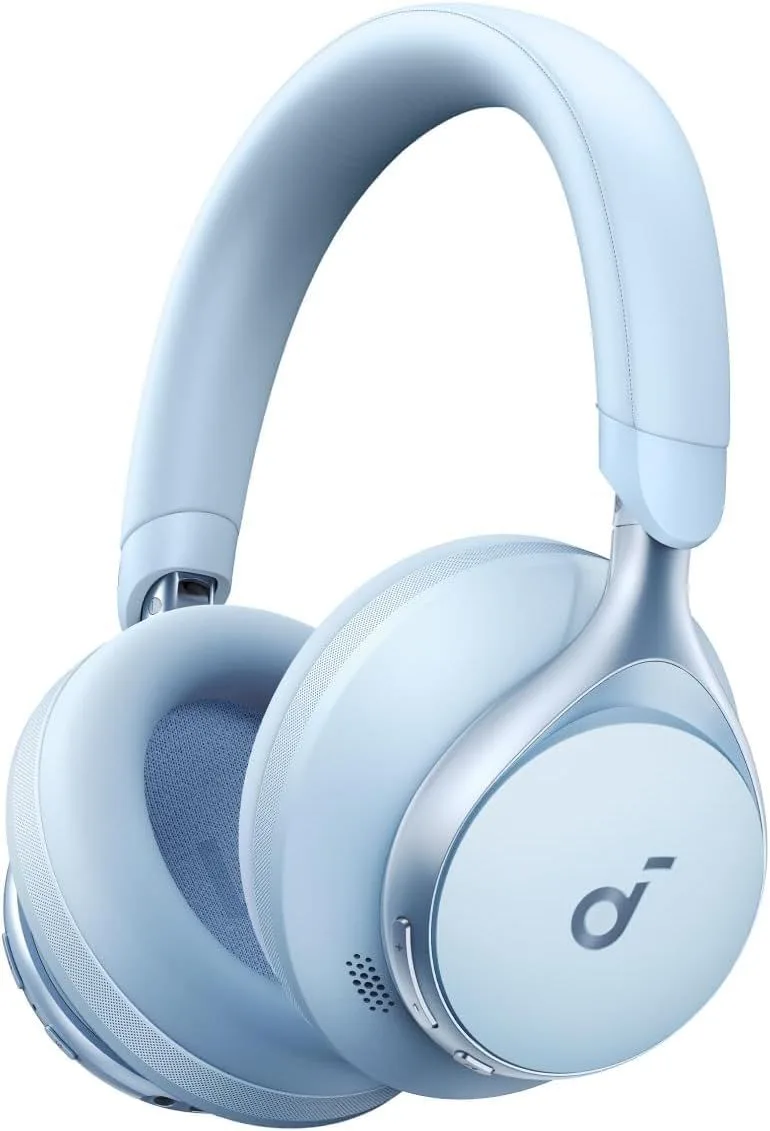
- Anker Soundcore Space One — Best overall for students (ANC + battery + price)
- Anker Soundcore Q30 — Lowest entry price with real ANC
- Sony WH-CH720N — Lightest option for marathon sessions
- Sony WH-1000XM5 — Premium ANC for graduate-level focus
- JBL Tune 520BT — Simplest option for casual use
Study Headphone Selection Criteria
Why Studying Puts Different Demands on Headphones
Study headphones solve a concentration problem, not a music problem. Focus is the product. The goal is sustained focus across three, four, sometimes eight hours of reading, note-taking, and problem-solving in environments where noise is unpredictable and often beyond your control. That shifts the priority stack compared to casual listening or commuting.
Library and dorm noise profiles differ from transit or office noise in one critical way: the distracting sounds are intermittent rather than constant. A subway car produces steady low-frequency drone that ANC handles well. A library produces sporadic coughs, whispered conversations, chair scrapes, and page turns — mid-frequency transients that break focus precisely because they are irregular.
One cough resets your concentration.
ANC still helps by lowering the ambient floor so those transients are less jarring against a quieter background, but the headphone also needs passive isolation from the ear cups themselves to dampen the sharp sounds that ANC algorithms cannot predict.
Comfort requirements escalate faster during studying than during any other headphone use case. A commuter wears headphones for 30-90 minutes. A podcast listener might wear them for two hours. A student preparing for midterms wears them for four to eight hours in a single session, often across multiple consecutive days.
Hour three is where most headphones fail.
Clamping force that feels secure during a half-hour bus ride becomes a vice grip after hour three. Ear cushion foam that breathes well enough for a walk across campus traps heat during a seated marathon in a warm library. Weight that is invisible for a quick phone call compounds into a dull headband ache by late afternoon.
And then there is price. Budget matters more for students than for most headphone buyers. A working professional choosing between a mid-range pair and a premium pair is weighing a one-time discretionary purchase.
A student choosing between headphones and textbooks, groceries, or next month's phone bill is making a fundamentally different calculation. The picks on this page range from roughly sixty to just under three hundred — and the sixty-dollar option delivers enough ANC and enough comfort to handle most campus noise environments. The premium option exists for students who already own the basics and want the best concentration tool available, not because every student needs to spend at that tier.
Four Specs That Predict Study Performance
Most specs are irrelevant here. Not every feature on a headphone spec sheet matters for studying. Codec support, spatial audio, and EQ presets are secondary concerns. The four metrics that determine whether a headphone helps or hinders concentration are ANC effectiveness against irregular noise, physical comfort past the two-hour mark, battery endurance across a full study day, and wired backup capability when the battery dies at the worst possible moment.
ANC for focus, not just quiet. The purpose of ANC during studying is not silence — it is consistency. A perfectly silent room and a room with steady white noise both support concentration. A room where noise spikes unpredictably does not. ANC lowers the baseline ambient level so that residual sounds (a distant conversation, a closing door) register as smaller deviations from the background. Hybrid ANC systems with both external and internal microphones — present on the Anker Soundcore Space One and Anker Soundcore Q30 — provide deeper reduction across more frequencies than single-microphone designs.
Comfort measured in hours, not minutes. The Sony WH-CH720N weighs 192 grams — lighter than most smartphones. That weight advantage matters during a 6-hour library session in a way it does not during a 30-minute commute. Ear cushion depth determines if your outer ear presses against the driver housing (uncomfortable after an hour) or floats inside the cup (comfortable for four). Clamping force below 4 Newtons avoids the headband-squeeze headache that makes students pull their headphones off mid-session and lose their focus rhythm.
Battery that outlasts exam week. Rated battery life with ANC active ranges from 40 to 57 hours across the picks on this page. Real-world drain at moderate volume reduces those numbers by 10-15%, but even the worst case — roughly 34 hours on the lowest-rated model — covers four consecutive 8-hour study days. The practical question: can you charge once on Sunday night and study through Thursday without thinking about it? At 40 hours rated, both Anker models answer yes.
Wired mode as a safety net. A dead battery during the quiet hours before an exam is not a minor inconvenience — it disrupts the focus routine you have built across weeks of study sessions. A 3.5mm wired cable turns a dead wireless headphone into a functioning wired one. The audio quality in wired mode is often slightly better because the signal skips Bluetooth compression. Three of the five picks on this page include a cable in the box. Check before you buy — not all student-priced headphones include this fallback.
Top Picks for Students
1. Anker Soundcore Space One — The Study Session Standard
The Anker Soundcore Space One sits at the intersection of effective ANC, long battery, and a price that does not require dipping into the grocery budget. RTINGS measurements confirm it cancels 70-80% of ambient noise across the frequency bands where campus distractions live — the 200-2000 Hz range covering human speech, keyboard clatter, and HVAC hum. That is not flagship-level cancellation, but it is enough to turn a noisy coffee shop into a tolerable study environment and a quiet library into a near-silent one.
Forty hours of battery with ANC active. In practice, expect 35-38 hours at the moderate volumes typical of study listening (background music or brown noise, not concert-level playback). That is a full week of 5-hour daily study sessions from a single charge. LDAC codec support is a bonus for Android users streaming from lossless sources, though during studying the codec matters less than the noise reduction. The Soundcore app provides a 22-band EQ if you want to shape the sound, but the stock tuning is balanced enough for study use without adjustments.
The compromises at this price point are physical, not electronic. Plastic construction feels lighter and less durable than metal-reinforced alternatives. The ear cushions are adequate but not plush — after three hours of continuous wear, some heat buildup is noticeable in warm rooms. A foldable design makes it packable for the walk between dorm and library, but the hinge mechanism is a long-term durability question mark. For a more detailed breakdown, read our Space One full review. If you need headphones that last two academic years of daily use, the build quality is the factor to watch. For one year of heavy study use at this price, the electronics deliver.
Check Price on Amazon2. Anker Soundcore Q30 — Lowest Price, Real ANC
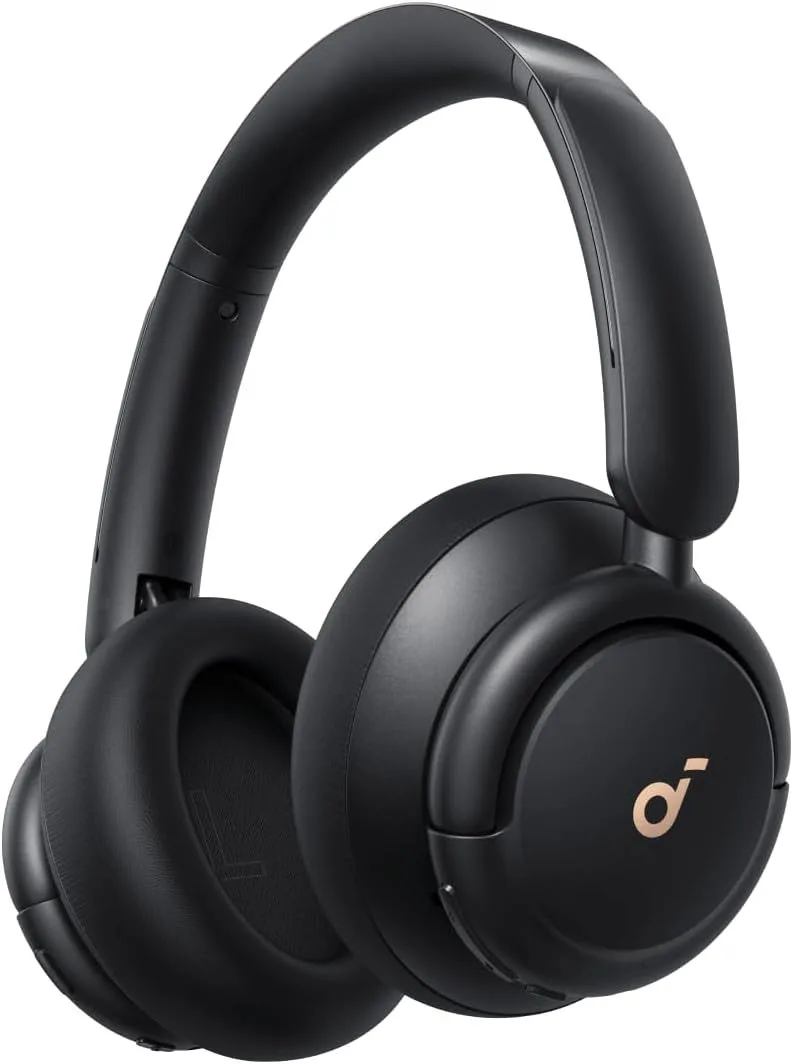
At roughly sixty dollars, the Anker Soundcore Q30 is the most affordable hybrid ANC headphone from a major brand. Three scene modes — Transport, Outdoor, and Indoor — let you match cancellation behavior to your study environment. Indoor mode targets the mid-frequency speech range that dominates library and dorm noise, while Transport mode digs deeper into low-frequency hum for studying in louder spaces like campus cafeterias or laundromats. Forty hours of battery with ANC matches its pricier sibling, and a 5-minute quick charge adds 4 hours — enough to rescue a dead battery before a morning study block.
The bass-heavy stock tuning is the primary audio weakness. Vocals and midrange instruments sound recessed out of the box, which can make spoken-word content (lecture recordings, audiobook study aids) sound muddy. The Soundcore app fixes this with a 22-band EQ — boosting 1 kHz and 4 kHz by 3-4 dB opens up the vocal range noticeably. Sound quality improves enough with EQ that several reviewers on Head-Fi describe it as punching well above its price class. Without the app adjustment, the stock sound is serviceable but not refined.
Build quality is the documented concern. Multiple long-term owners report hinge looseness starting around six months of daily use. The plastic construction wears visibly faster than metal-reinforced designs. Ear cushion padding compresses faster than premium alternatives — expect replacement pads around the 9-12 month mark (roughly ten dollars for a compatible set). For students on the tightest budgets who need functional ANC now and can accept replacing the headphones after 12-18 months of daily use, the Anker Soundcore Q30 delivers where it matters: noise cancellation and battery. Our full Q30 review covers durability data across extended ownership periods. For a direct comparison against the lightest option on this list, see the Q30 vs CH720N breakdown.
Check Price on Amazon3. Sony WH-CH720N — Featherweight Marathon Comfort
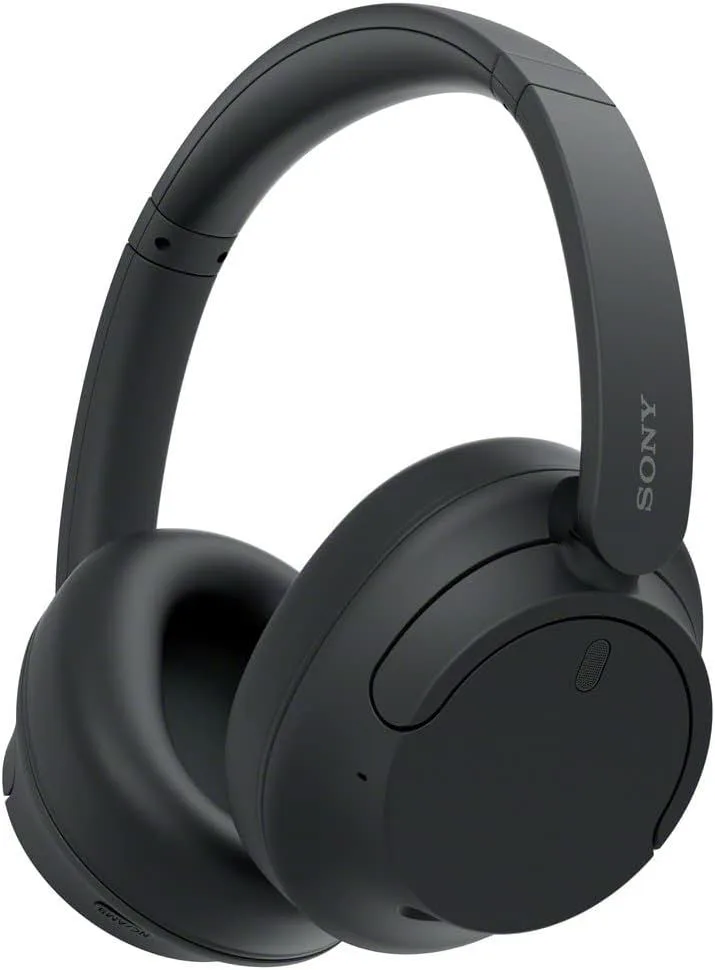
Light wins. At 192 grams, the Sony WH-CH720N is the lightest over-ear noise-cancelling headphone on the market. That spec becomes the defining feature during 4-6 hour study marathons. Weight compounds — a 260-gram headphone that feels fine at minute ten creates a noticeable headband hotspot by hour three. The Sony WH-CH720N avoids that trajectory entirely. Students who study for long blocks and have pulled off heavier headphones mid-session because of neck fatigue or headband pressure will notice the difference immediately. Sony achieved the weight reduction with a smaller 30mm driver (versus the standard 40mm) and ultra-light plastic construction.
Sony's audio tuning carries over from the premium line. The Sony WH-CH720N sounds balanced and warm out of the box — no EQ adjustment required for study-appropriate listening. Spoken-word content (lecture recordings, audiobooks, podcasts) comes through with clear vocal presence. DSEE upscaling reconstructs high-frequency detail lost in compressed audio streams, which benefits students listening to lower-bitrate lecture recordings. Battery exceeds the 35-hour rating in independent testing, typically delivering 40+ hours with ANC on — enough for a full exam week without charging.
ANC depth is the concession. Sony's dual noise sensor system provides about 20 dB of attenuation — enough to soften library background noise and reduce dorm hallway sounds, but noticeably weaker than the hybrid systems in the two Anker models. In a loud campus cafeteria or a dorm room adjacent to a party, the Sony WH-CH720N takes the edge off rather than creating isolation. For quiet-to-moderate study environments (library, bedroom, calm coffee shop), the ANC is sufficient. For loud environments, the Anker Soundcore Space One blocks more. Our CH720N deep-dive review covers ANC measurements and weight comparison data.
Check Price on AmazonOur #1 pick for studying: The Anker Soundcore Space One balances ANC depth, 40-hour battery, and a student-friendly price better than anything else on this list.
Check Price on AmazonWatch: SoundGuys's take on the Headphones for Studying

4. Sony WH-1000XM5 — Premium Focus Tool
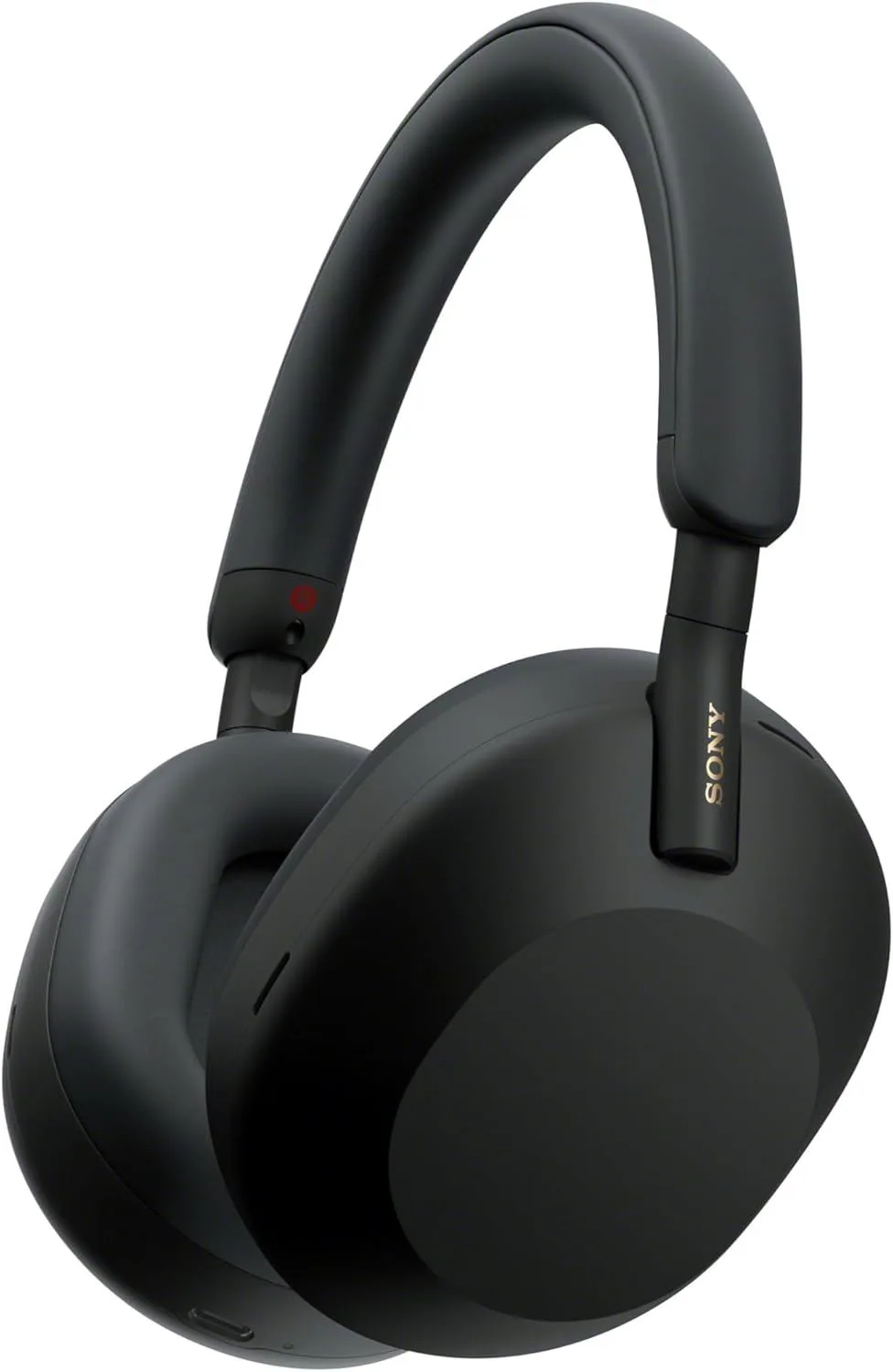
The Sony WH-1000XM5 exists on this list for students who have already tried affordable noise cancellation and want the deepest possible noise isolation for high-stakes study sessions — bar exam prep, medical board review, thesis writing in a shared apartment. Sony's 8-microphone hybrid ANC system cancels 30-35 dB across the speech-frequency range, which is roughly double what the sub-hundred-dollar picks achieve. In a loud environment, that gap is audible within seconds. The Sony WH-1000XM5 does not just reduce background conversation — it nearly eliminates it.
Comfort matches the cancellation depth. Sony redesigned the headband and ear cushions for this generation with softer synthetic leather and wider weight distribution. At 250 grams — heavier than the Sony WH-CH720N but lighter than most premium competitors — it sits comfortably through 4-hour sessions without adjustment. The 30-hour battery with ANC covers multiple study days per charge. Multipoint Bluetooth lets you stay connected to your phone and laptop simultaneously, switching between a lecture recording on one and a Spotify focus playlist on the other without manual re-pairing.
But the price is steep. At roughly two-and-a-half to three times the cost of the Anker Soundcore Space One, the Sony WH-1000XM5 delivers measurably better noise cancellation and noticeably better sound quality — but whether that increment justifies the budget impact depends on the student. For graduate students, professional exam candidates, or anyone who studies in consistently loud environments and has exhausted cheaper options, the investment pays back in focus quality. For undergraduates studying in typical library conditions, the Anker Soundcore Space One covers 80% of the benefit at a third of the cost. See the XM5 vs QC Ultra comparison for how Sony's ANC stacks up against Bose at the premium tier.
Check Price on Amazon5. JBL Tune 520BT — Simple and Affordable
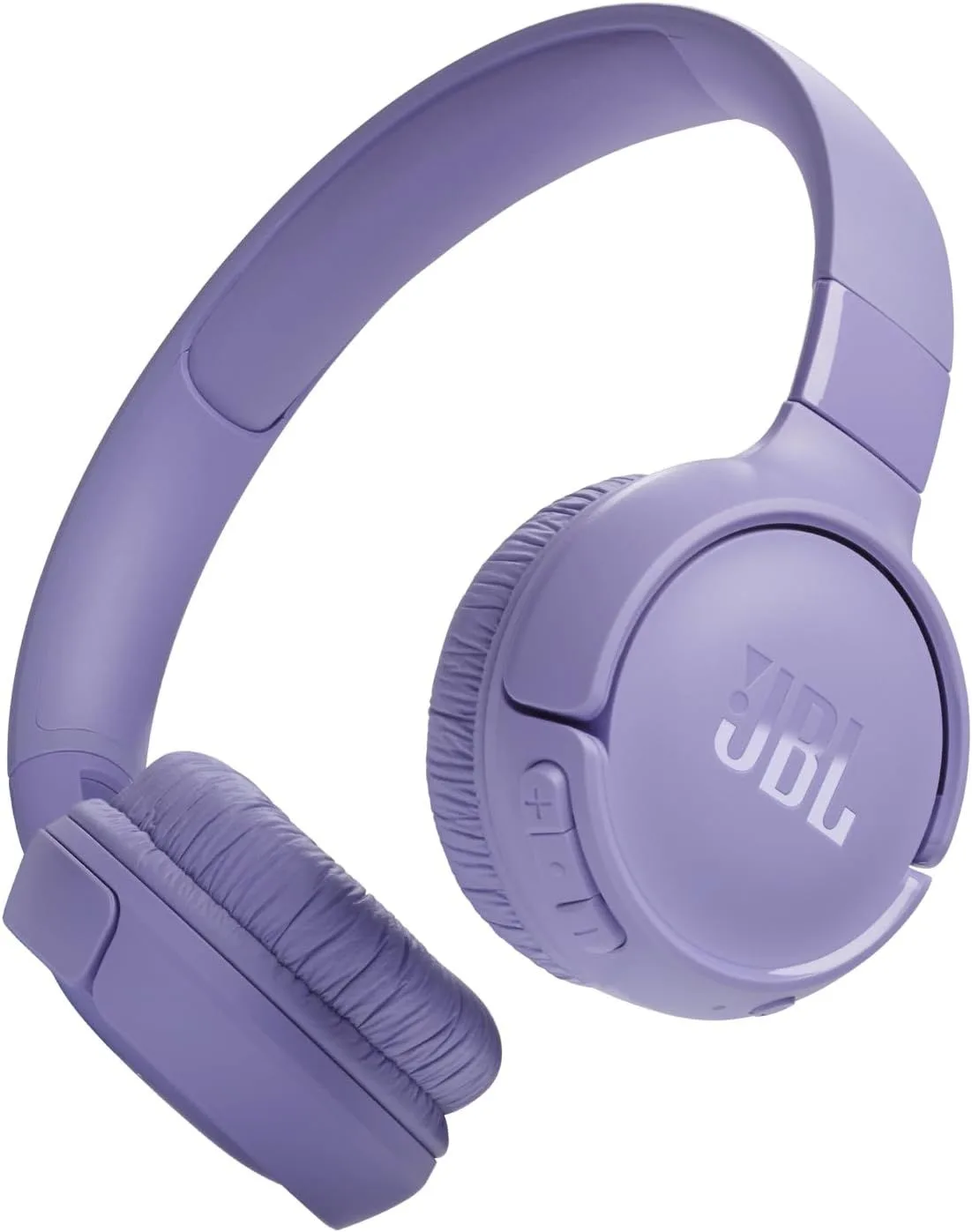
Sometimes simpler works. Not every student needs active noise cancellation. If you study in a quiet bedroom or a private corner of the library where ambient noise is already minimal, ANC adds cost without adding value. The JBL Tune 520BT strips the feature set down to the basics: Bluetooth 5.3 wireless with a 57-hour battery, JBL's bass-forward tuning, and an on-ear design that weighs less than most smartphones. At roughly sixty dollars, it matches the Anker Soundcore Q30 on price while trading ANC for dramatically longer battery life and simpler operation.
The on-ear fit is a polarizing choice for long sessions. On-ear cushions rest on the outer ear rather than around it, which some students find less fatiguing than over-ear cups (no heat buildup inside a sealed cup) and others find more fatiguing (sustained pressure on the ear cartilage). If you have never worn on-ear headphones for more than an hour, test the fit before committing to using them for a full study day. The JBL Tune 520BT also lacks a wired backup cable — when the battery dies, listening stops. At 57 hours of rated battery, that scenario is unlikely during a single study week, but it is a limitation to know about before buying.
Sound isolation comes entirely from the physical cushion pressing against your ear — there is no ANC and no sealed ear cup. In a quiet room, that is enough. In a noisy dorm or campus coffee shop, it is not. The JBL Tune 520BT is the right pick for students who study in controlled environments and want the longest possible battery life at the lowest possible price. It is the wrong pick for anyone who needs to block unpredictable noise. JBL's app offers EQ customization, but the stock tuning leans heavily toward bass — spoken-word content benefits from reducing the low end by a few decibels.
Check Price on AmazonStudy Tips That Pair With Good Headphones
Library etiquette with ANC on. Noise-cancelling headphones in a quiet library create a paradox: you block the ambient noise that was already low, and in doing so you lose awareness of the social environment. Keep one ear cup slightly off if you are in a shared study table area — this lets you hear if someone addresses you without sacrificing most of the ANC benefit in the other ear. In a private study carrel or solo desk, full ANC is appropriate. The goal is to match your isolation level to the social context of the space you occupy.
Dorm noise strategies beyond ANC. ANC has limits. Headphones handle steady-state noise (music through walls, hallway chatter) well but cannot fully block impulsive sounds (doors slamming, a neighbor dropping something heavy). For dorm studying, combine headphones with low-volume brown noise or a rain sounds track. The ANC removes the external noise floor while the audio layer masks the transient spikes that ANC misses. This double-layer approach is more effective than either strategy alone, and it works at listening volumes low enough to prevent ear fatigue across long sessions.
Exam prep focus blocks. During the final 48 hours before a major exam, consistency in your study environment matters more than optimization. Use the same headphones, the same audio (or no audio), and the same ANC setting for every study block. Your brain associates environmental cues with cognitive modes — a consistent auditory environment primes recall. Switching headphones, changing playlists, or toggling ANC modes between sessions introduces micro-disruptions that fragment the associative cues your memory relies on during the exam itself.
Online lectures and study groups. If you attend virtual lectures or join study group calls through your headphones, microphone quality matters. The Sony WH-CH720N has the best microphone processing on this page thanks to Sony's AI noise reduction on the mic feed — your study partners hear less background noise from your end. The Anker models are adequate for quiet rooms but struggle in noisier environments. The JBL Tune 520BT picks up more ambient sound on calls than any other model here. For students who split headphone time between solo studying and group calls, the Sony is the most versatile choice.
Extended Buying Considerations
Wired mode for library computer labs. Campus computer labs often prohibit Bluetooth connections on shared machines. A 3.5mm cable lets you plug directly into the audio jack without pairing — no Bluetooth, no driver installs, no IT policy conflicts. The Anker Soundcore Space One, Anker Soundcore Q30, and Sony WH-CH720N all include cables. If your study routine includes computer lab time, confirm your pick has a wired option before buying. Wired mode also preserves battery for the wireless portion of your day.
Multipoint for device switching. Students who listen to music on their phone during the walk to the library and switch to laptop audio for study sessions benefit from multipoint Bluetooth. The Anker Soundcore Space One and Sony WH-CH720N both connect to two devices simultaneously. Without multipoint, switching between phone and laptop requires manual disconnection and re-pairing — a small friction that adds up across dozens of daily transitions. The Sony WH-1000XM5 also supports multipoint with Sony's reliable implementation, and its full review page covers setup details.
Our Top Pick for Studying
The Anker Soundcore Space One is the best study headphone for most students because it solves the three problems they face most: it blocks enough noise to study in imperfect environments, its battery outlasts any realistic study day, and its price does not force a choice between focus and groceries. The cancellation is not flagship-grade — but for library, dorm, and coffee shop studying, it does not need to be. Read our full review for ANC measurements and long-term build quality notes.
Students who need the absolute lightest option for marathon sessions should start with the Sony WH-CH720N — its 192-gram weight is in a category of its own. Budget-constrained students who need ANC at the lowest possible price point start with the Anker Soundcore Q30. And students preparing for professional exams in loud environments who have already outgrown budget options should consider the Sony WH-1000XM5 — the ANC depth gap is real, and at that level of study intensity, it pays back in concentration quality. Our affordable ANC headphone rankings cover the broader category beyond these study-focused picks.
Frequently Asked Questions
Can noise-cancelling headphones help you focus while studying?
Yes — ANC removes the low-frequency background hum from HVAC systems, dorm hallways, and coffee shop ambience that fragments concentration. Research from the Journal of the Acoustical Society of America shows that steady-state background noise above 50 dB reduces reading comprehension by 5-10%. The Anker Soundcore Space One cancels enough of that ambient layer to drop perceived noise below the distraction threshold. You do not need silence — you need consistency, and ANC provides that by eliminating the unpredictable noise spikes that pull attention away from the page.
Are over-ear headphones or earbuds better for long study sessions?
Over-ear headphones distribute weight across the headband and around the ears, which most people find more comfortable past the two-hour mark. Earbuds press directly into the ear canal, and that pressure compounds during 4-6 hour study marathons. The Sony WH-CH720N at 192 grams is light enough to wear through an entire afternoon without neck strain. Earbuds win on portability — they fit in a pocket for the walk between classes — but for seated library sessions lasting three hours or more, over-ear designs cause less fatigue.
Do cheap wireless headphones have enough battery for a full study day?
The two Anker models on this page both deliver 40 hours of rated battery with ANC active. In practice, that means 35-38 hours at moderate volume — enough for an entire exam week of 8-hour study days without mid-session charging. The JBL Tune 520BT runs up to 57 hours without ANC. Even the most aggressive study schedule will not drain these batteries in a single day. If you forget to charge overnight, a 5-minute quick charge on the Anker Soundcore Q30 adds roughly 4 hours — enough for a morning exam prep session.
Should I use headphones with or without music while studying?
It depends on the material. For reading-heavy subjects (literature, history, law), silence or ANC without music preserves reading comprehension better than any soundtrack. For repetitive tasks (flashcard drilling, problem sets, data entry), low-tempo instrumental music or brown noise through ANC headphones can maintain alertness without competing for verbal processing bandwidth. Avoid lyrics during anything involving words — your brain cannot process two language streams simultaneously. Running ANC with no audio playing drops the ambient floor by 15-25 dB, creating a quieter study environment without any music at all.
What happens when wireless headphone battery dies during a study session?
Most over-ear wireless headphones include a 3.5mm audio cable for wired listening when the battery runs out. The Anker Soundcore Space One, Anker Soundcore Q30, and Sony WH-CH720N all ship with a cable in the box. Plug it into your phone or laptop and keep listening — sound quality actually improves slightly in wired mode because the signal bypasses Bluetooth compression. The JBL Tune 520BT is the exception: it is on-ear and does not include a wired backup cable, so a dead battery means silence. For long study days, a wired fallback option is worth prioritizing.
Our Top Recommendation
Based on our research, the Anker Soundcore Space One is our top pick — budget-conscious buyers who want maximum anc performance per dollar — the best noise cancellation at $99.
Get Picks Delivered
One email per week. Honest reviews, no spam.
No spam. Unsubscribe anytime.