Headphones for Running: Road, Trail, and Race Day Picks

Running creates a unique collision of demands that no other activity shares — you need to hear traffic and trail hazards for safety, your headphones absorb repeated footstrike impact at 1.5 G per step, and sweat production during a hard tempo run can exceed a liter per hour. A headphone that performs at a desk or even at the gym may fail on mile three of a summer road run. The picks on this page were selected specifically for runners, not adapted from a general fitness list.
We cross-referenced IP protection ratings, fit retention data from RTINGS and SoundGuys, plus 55,000+ combined Amazon owner ratings filtered for running-specific mentions (road running, trail running, marathon, 5K, tempo run, long run). Each pick below earns its spot through a specific running strength — open-ear awareness for road safety, wing tip lock for speed work, or IP57 tolerance for runners who train through rain and heat alike.
Running Headphone Selection Criteria
Why Running Demands Different Headphones
Running is different. And the stakes are higher. Running headphones must handle road traffic awareness, repetitive footstrike impact, and sustained sweat exposure — three demands that gym and commute listening never produce. These scenarios define what a running headphone must do, and they have almost nothing in common with stationary training.
The first non-negotiable is ambient awareness. Running on any surface shared with vehicles, cyclists, or other pedestrians requires hearing your environment. A car approaching from behind, a cyclist calling a pass, an intersection signal changing — these are split-second audio cues that sealed earbuds muffle or delay through electronic processing. The National Highway Traffic Safety Administration recorded 7,508 pedestrian fatalities in 2022, with distracted walking as a contributing factor. Running with sealed noise-cancelling earbuds on a busy road is a measurable risk, not a theoretical concern. Our bone conduction headphone review covers the physics of open-ear awareness in detail.
The second demand is fit security under rhythmic impact. Running is not a single explosive movement like a box jump — it is thousands of identical 1.5 G impacts delivered to the same ear canal friction point, stride after stride, for 30 minutes to 4 hours.
And sweat makes it worse.
An earbud that feels secure during the first kilometer loosens as sweat lubricates the silicone tip and repetitive vertical force works it free. The mid-run earbud adjustment — slowing pace, removing a glove, fishing out a loose bud — costs time, breaks rhythm, and on a trail creates a stumble risk. Fit retention over distance matters more for runners than for any other athlete.
The third demand is moisture survival. Running generates more sustained sweat exposure than most gym sessions because the duration is longer and there are no rest periods. A 90-minute long run at moderate effort produces continuous sweat flow with no towel breaks, no set changes, and no air-conditioned recovery between exercises. The headphone stays wet for the entire session. Salt accumulation on charging contacts and inside driver housings compounds with every run until corrosion degrades audio quality or kills a charging pin.
What to Look For in a Running Headphone
Five specs separate a running headphone from a general wireless earbud. Most matter more than sound quality. Sound quality matters, but these five determine whether the headphone keeps you safe on roads, stays in place over distance, and survives months of daily training runs.
Ambient awareness and safety. Bone conduction headphones deliver awareness as a physical property — sound reaches your inner ear through the cheekbone while both ear canals stay open to the environment. There is no processing delay, no microphone dependency, and no battery state that can disable it. You hear a car horn at the same instant you would without headphones. Electronic transparency modes on sealed earbuds capture ambient sound through microphones and play it back with 5-15 milliseconds of latency. For road running where a split-second reaction to a turning vehicle matters, bone conduction provides an advantage that no software update can close. For treadmill running where ambient awareness is optional, the distinction disappears.
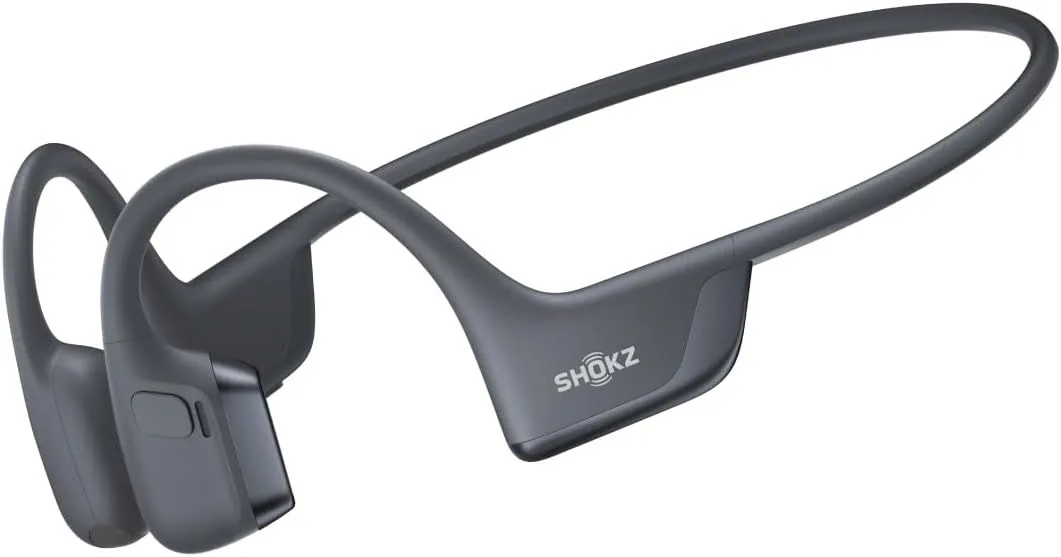
Secure fit under repetitive impact. Three retention designs exist: friction-fit silicone tips, wing tips that hook the outer ear cartilage, and wraparound bands that bypass the ear canal entirely. Friction-fit works for slow recovery runs but loosens during tempo work and speed intervals as sweat reduces canal friction. Wing tips like the Beats Fit Pro add mechanical retention that resists vertical footstrike forces — strong enough for sprint intervals and hill repeats. Wraparound bands like the Shokz OpenRun Pro 2 sit behind the head on a titanium frame and are physically impossible to dislodge at any pace. Match your retention choice to your fastest training pace, not your easy run pace.
Sweat and rain resistance. IPX4 is the floor for running — it protects against splashing water from any direction. IP55 adds dust protection and handles sustained low-pressure water jets, covering trail dust and heavy rain. Runners who train year-round through all weather conditions should target IP55 or higher. The practical difference between IPX4 and IP55 is small for fair-weather runners but measurable for those who log miles in rain, sleet, and humid summer heat. Check the sport headphone rankings for IP rating comparisons across the full category.
Weight and bounce. A headphone that weighs 6 grams more than its competitor creates a cumulative fatigue difference over a 2-hour long run. Bone conduction bands at 29 grams distribute load across the temples and behind the ears — no point contact, no bounce. Earbuds concentrate weight inside the ear canal, and heavier models amplify the loosening effect of each footstrike. If you run distances above 10 kilometers regularly, prioritize the lightest option in your preferred form factor.
Bone conduction vs sealed earbuds. This is the foundational choice for runners. Bone conduction sacrifices bass depth and maximum volume for always-on ambient awareness, zero ear canal contact, and ultralight weight. Sealed earbuds deliver fuller sound with deep bass and ANC isolation, but require electronic transparency for outdoor awareness and insert into the canal where sweat and friction work against retention. The bone conduction technology explainer covers the physics and compromises in full.
Top Picks for Running
- Shokz OpenRun Pro 2 — Best for road running safety and long-distance comfort
- Beats Fit Pro — Best wing tip lock for speed work and intervals
- Apple AirPods Pro 3 — Best crossover for runners who want one pair for everything
- Samsung Galaxy Buds3 Pro — Best water resistance for rain and extreme sweat
- Beats Studio Buds+ — Best budget option for casual runners
Shokz OpenRun Pro 2 — Open-Ear Safety for Every Road Mile
The Shokz OpenRun Pro 2 is the headphone that road runners, trail runners, and ultramarathoners reach for when safety and comfort outweigh everything else. Bone conduction transducers vibrate the cheekbones to deliver audio while leaving both ear canals completely open — you hear approaching traffic, passing cyclists, barking dogs, and course marshals without pressing a button or removing anything. On a road shared with vehicles, this is not a preference. It is the difference between hearing a turning car and not hearing it.
DualPitch technology pairs the bone conduction transducer with a dedicated air conduction bass driver, solving the thin sound that made earlier bone conduction models difficult to enjoy during long runs. Bass response is strong enough that uptempo running playlists land with real energy — a meaningful upgrade from the tinny output of older models. The 12-hour battery outlasts every sport earbud on this list and covers any training run, marathon, or ultramarathon event on a single charge. At approximately 29 grams, the titanium wraparound band distributes pressure across the temples with zero ear canal contact. Multiple ultramarathon runners confirm comfortable wear past 6 hours without hotspots.
IP55 handles sweat and rain for every land-based running scenario. USB-C charging works with any phone charger — no more proprietary cables lost in gym bags. The limitation that runners should know: wind noise. The air conduction bass driver picks up wind interference at faster paces and on exposed routes. Podcast listeners report speech becoming hard to follow in sustained gusts. For music at moderate volume, wind impact is manageable. For spoken word during windy runs, sealed earbuds handle wind better.
Check Price on AmazonBeats Fit Pro — Wing Tip Security for Speed Work
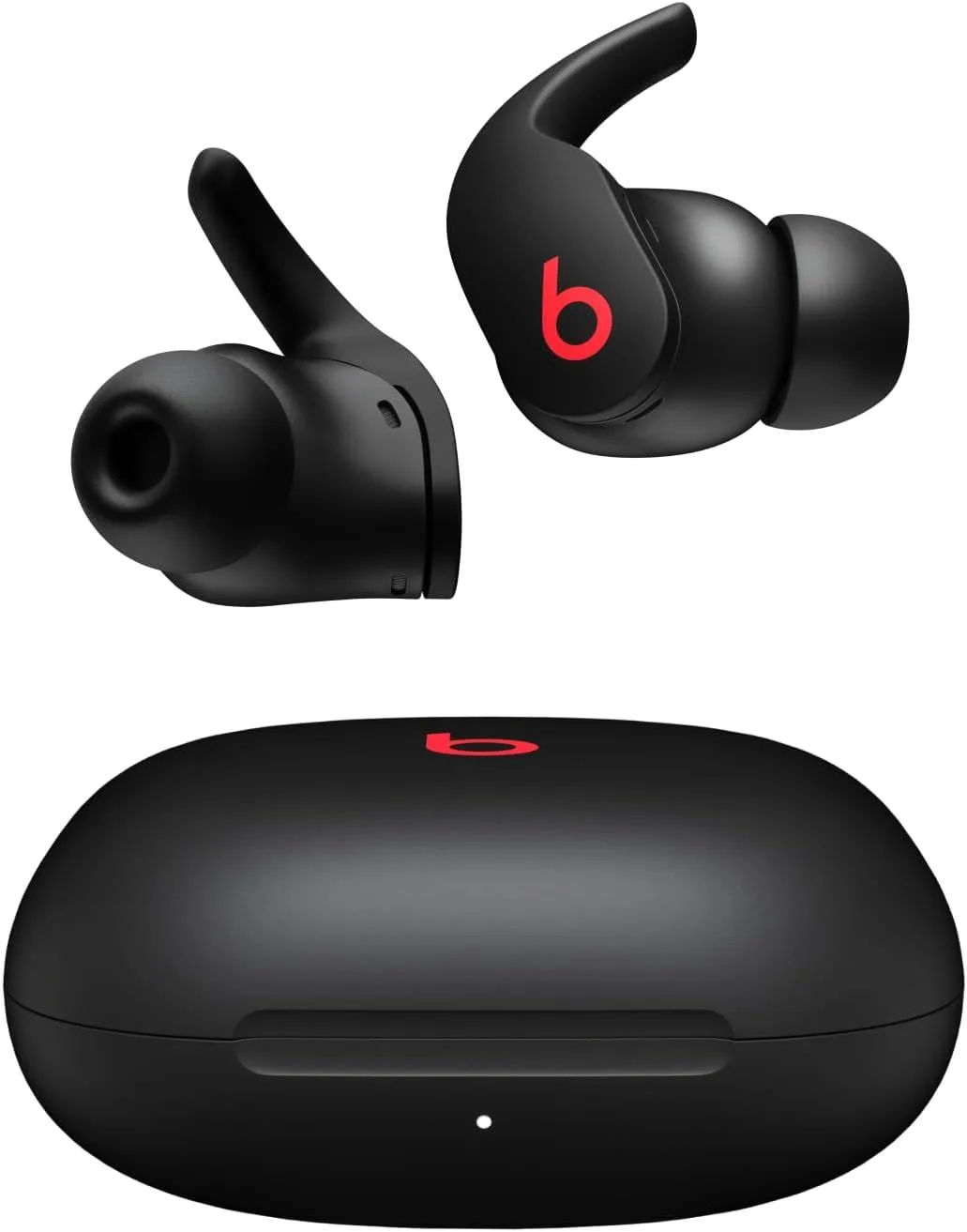
Speed work exposes every weakness in earbud retention. Tempo intervals, hill sprints, and fartlek sessions combine increased footstrike force with higher sweat output — the exact conditions that unseat friction-fit earbuds. The Beats Fit Pro solves this with a flexible silicone wing tip that hooks into the outer ear cartilage and maintains constant outward pressure through every pace change. Tom's Guide called them "Apple's best workout headphones." Runners confirm stable fit through interval sessions and half-marathon distances where standard ear tips failed.
Apple's H1 chip delivers adaptive ANC that blocks wind noise and road traffic rumble during sealed listening, plus a Transparency mode that opens up ambient awareness for road segments where hearing your surroundings matters. The ability to switch between isolation and awareness mid-run — ANC for a sheltered park loop, transparency for a road crossing — is something bone conduction cannot replicate. IPX4 handles running sweat without issues. Six hours of battery covers any standard training run. The wing tip comfort ceiling appears around 2-3 hours for some ear shapes. Runners doing long runs beyond 90 minutes should test fit endurance before race day. Read the full wing tip earbud review for detailed retention testing data.
Check Price on AmazonApple AirPods Pro 3 — One Pair From Training to Commute
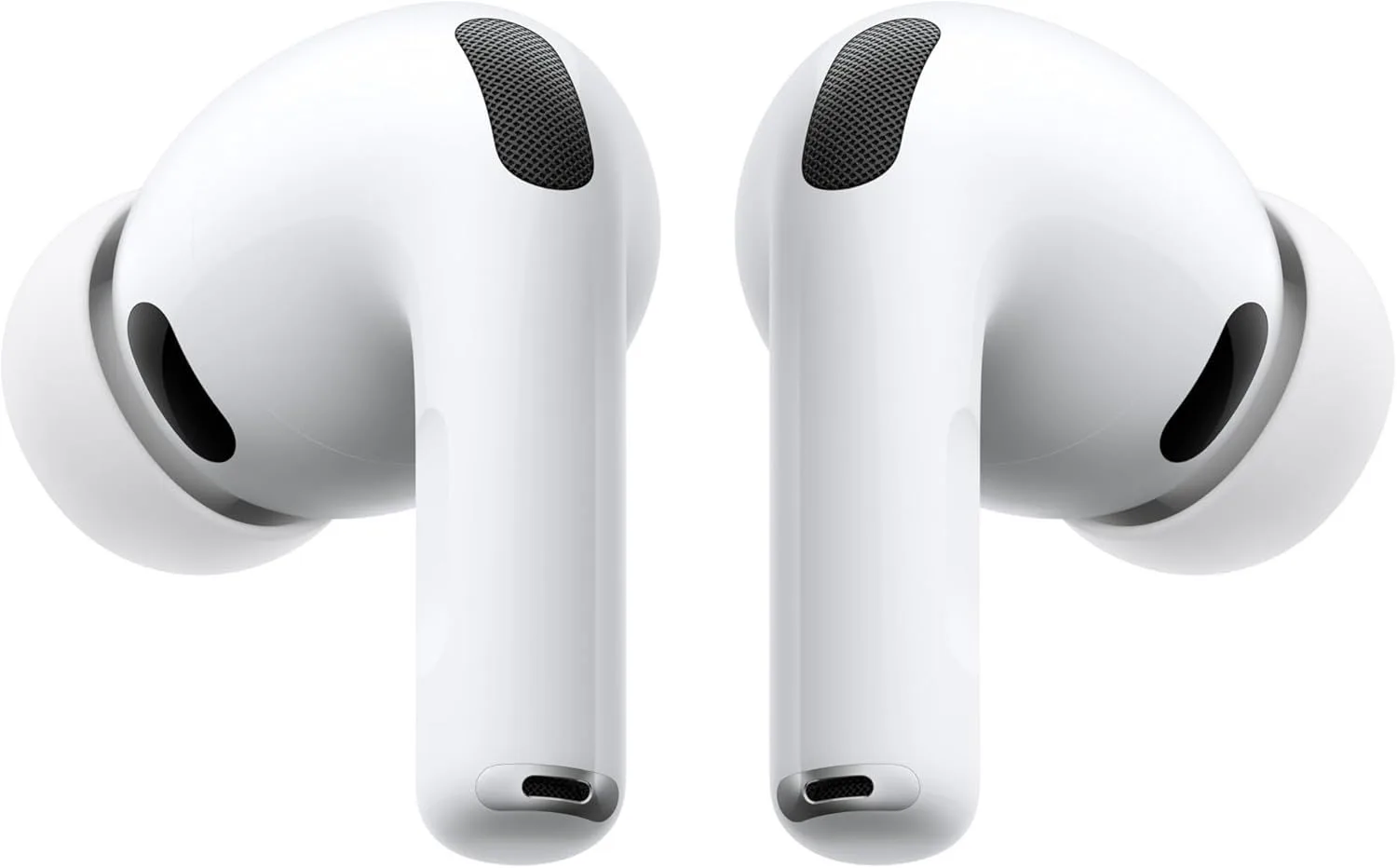
One pair for everything. Not every runner wants a dedicated running headphone sitting in a drawer between training days. The Apple AirPods Pro 3 bridges the gap — Adaptive Audio automatically blends ANC and transparency based on movement and environment, so the headphone adjusts itself when you transition from a quiet sidewalk to a busy intersection. Apple's H2 chip processes 48,000 ANC adjustments per second, and the result is a headphone that works for morning runs, commute listening, and office calls without swapping gear.
IPX4 handles running sweat. Silicone ear tips create a canal seal tighter than standard AirPods, and most runners report stable retention at steady training pace. The weak point surfaces during speed work — the silicone-only retention lacks the mechanical lock of the Beats Fit Pro's wing tip, and high-impact intervals can shift the seal for ear shapes where canal friction is marginal. Eight hours of battery with the case extending to 33 hours covers any training and commuting combination. For iPhone users who run 3-5 times per week and want a single headphone for all contexts, this is the most practical choice on the list. Read the full AirPods Pro 3 breakdown for ANC and fit measurements.
Check Price on AmazonSamsung Galaxy Buds3 Pro — Maximum Water Protection for All-Weather Runners
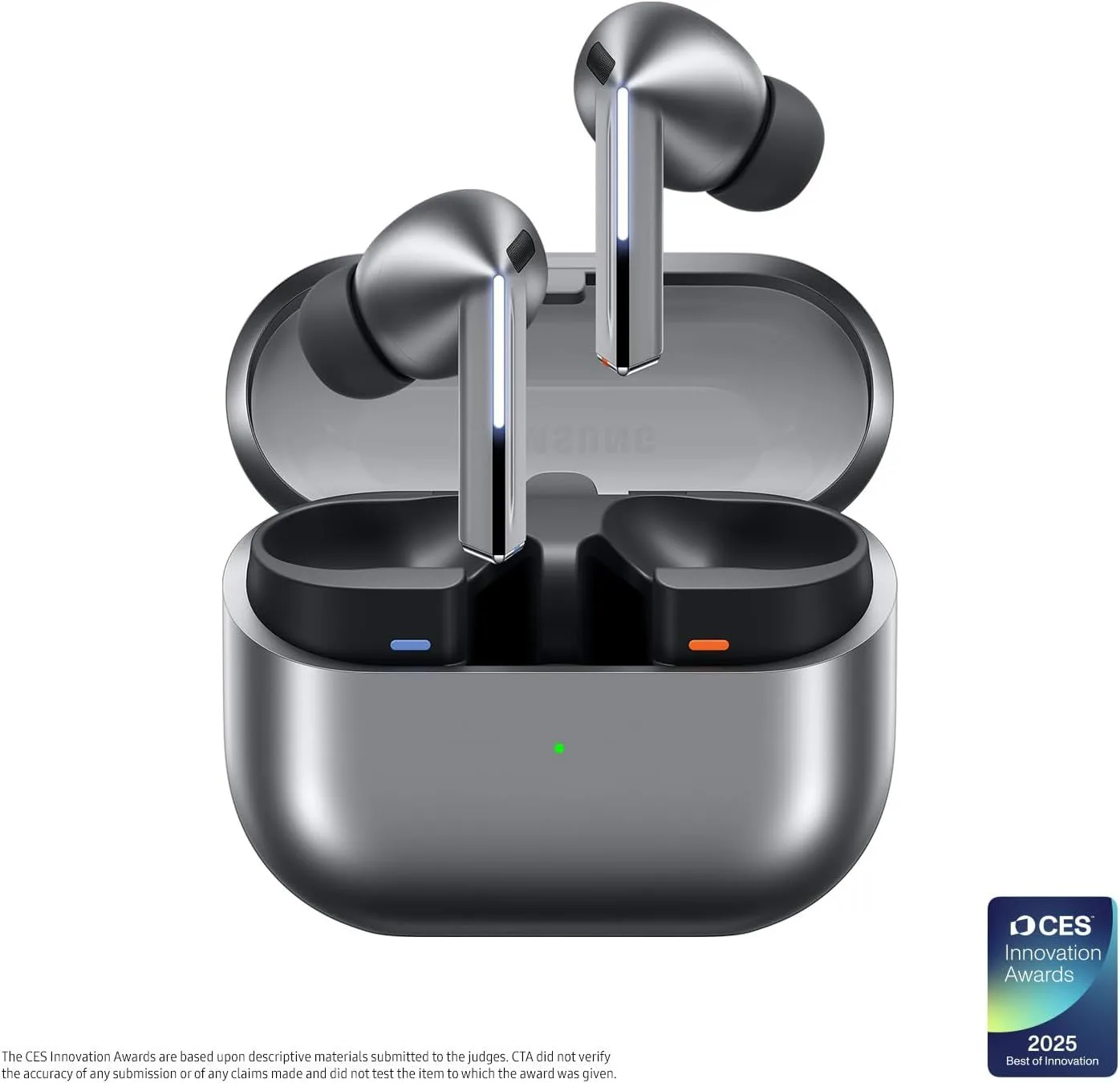
IP57 is the highest water resistance rating on this list. The second digit — 7 — means the Samsung Galaxy Buds3 Pro survived immersion in 1 meter of water for 30 minutes during certification testing. For runners who train through rain, run in humid subtropical conditions, or produce extreme sweat volumes during hot-weather training, that rating provides measurable margin above the IPX4 floor. The first digit — 5 — adds dust ingress protection for trail runners dealing with dry, dusty surfaces.
Samsung's adaptive ANC with 360 Audio processing delivers strong noise cancellation and spatial sound. The blade-style design sits flatter in the ear than traditional stem earbuds, reducing the chance of snagging on a running jacket hood or neck gaiter during cold-weather training. Galaxy phone users get automatic switching and SmartThings integration for smooth GPS watch pairing. The limitation versus the Beats Fit Pro: no wing tip retention. The Samsung Galaxy Buds3 Pro relies on silicone ear tip friction alone, which holds for most ear shapes at steady pace but may shift during aggressive speed work. For all-weather runners who prioritize moisture protection above all other specs, this is the pick.
Check Price on AmazonBeats Studio Buds+ — Budget Entry for Casual Runners
But not everyone races. Not every runner needs the top spec. Casual runners logging 3-4 easy runs per week at conversational pace face lower sweat volumes, lower footstrike forces, and less demanding fit requirements than competitive athletes doing interval work. The Beats Studio Buds+ delivers ANC and Transparency mode with cross-platform Bluetooth compatibility (no Apple or Samsung ecosystem lock-in) at a lower price tier than the other picks on this list.
The silicone ear tips provide adequate retention at easy to moderate pace. ANC blocks wind noise on sealed runs, and Transparency mode opens ambient awareness for road segments. Battery runs approximately 6 hours with ANC, and the compact case adds 18 hours. The Beats Studio Buds+ lacks the wing tip mechanical lock of its sibling and the water resistance ratings of the premium picks — casual runners training in fair weather on paved routes will not encounter those limits. Runners who plan to escalate to speed work, trail running, or all-weather training should start with one of the higher-rated picks.
Check Price on AmazonOur #1 running pick delivers open-ear road safety, 12-hour battery, and a titanium fit that never shifts at any pace.
Read Our Top Pick ReviewWatch: The Running Channel breaks down the Headphones for Running (192K views)

Running-Specific Tips by Terrain and Scenario
Road running. Road running is the highest-risk audio scenario for any runner. You share pavement with vehicles, cyclists, e-scooters, and other pedestrians — all producing audio cues that warn you before visual contact. Bone conduction is the safest form factor because ambient awareness is physical and instantaneous. If you prefer sealed earbuds, keep one earbud out on busy roads or use transparency mode with volume low enough to hear a car horn clearly at 30 meters. Run against traffic on roads without sidewalks so you can see approaching vehicles. Reflective headphone bands (the Shokz OpenRun Pro 2 has a subtle reflective strip on the titanium frame) add a small visibility margin during dawn and dusk runs.
Trail running. Trail terrain adds challenges that road running does not — exposed roots, rock gardens, stream crossings, and wildlife encounters. Hearing your environment matters differently here: approaching mountain bikers, rattlesnake warnings from other hikers, and creek sounds that signal water crossings ahead.
Bone conduction excels on trails because the open-ear design lets you hear terrain cues that help your footing — gravel shifting, branches cracking, water flowing. Dust is a factor on dry trails, making the IP55 dust protection on the Shokz OpenRun Pro 2 more relevant than on pavement. Sealed earbuds work on well-maintained, wide trails where foot placement is straightforward, but on technical singletrack, any mid-stride earbud adjustment creates a real fall risk.
Race day. Large races compress thousands of runners into shared space with course marshals, aid station volunteers, pace group leaders, and emergency vehicles. Hearing instructions — "water on the left," "course turns right in 200 meters," "medical, step aside" — is a functional requirement, not a courtesy. Bone conduction headphones let you hear every callout without removing anything. Many experienced marathoners also value hearing crowd support during late-race miles when mental energy is depleted. Check race rules before your event: most road races permit headphones for non-elite runners, and some specifically recommend open-ear designs. USA Track & Field Rule 144.3b governs headphone use in sanctioned events.
Additional Running Scenarios
Treadmill running. No cars. No weather. No terrain hazards. The treadmill removes every outdoor risk. This is the one running scenario where sealed ANC earbuds outperform bone conduction without compromise. ANC blocks gym noise (treadmill motors, weight room clatter, overhead music), and the stable indoor environment eliminates wind interference. Any retention mechanism that holds during outdoor running also holds on a treadmill. The Apple AirPods Pro 3 and Samsung Galaxy Buds3 Pro both deliver strong isolation and stable fit at indoor running pace. Battery demands are lower for treadmill sessions, so even the 6-hour picks cover any realistic indoor run.
Winter running. Cold weather introduces three headphone challenges that warm-season runners never face. First, battery capacity drops 10-20% in temperatures below freezing — a 12-hour battery may deliver 10 hours in January. Second, ear canal moisture changes in cold air can affect silicone tip seal and comfort.
But the layering problem catches most runners off guard.
Balaclavas, neck gaiters, and running hats physically interfere with over-ear hooks and earbud stems. The Shokz OpenRun Pro 2 sits behind the head and under most hats without interference — the titanium band flexes over beanies and under hood brims. Earbuds with stems (the Apple AirPods Pro 3) can catch on pulled-up neck gaiters. Test your winter layering system with your headphones before a cold-weather race.
GPS watch Bluetooth pairing. Most runners use a GPS watch (Garmin, COROS, Apple Watch, Polar) alongside their headphones. Both devices connect to the phone via Bluetooth, and connection stability varies. The Shokz OpenRun Pro 2 on Bluetooth 5.4 maintains stable dual-device coexistence with GPS watches during outdoor runs where Bluetooth traffic is lighter. In dense urban areas or crowded race starts with hundreds of active Bluetooth devices, occasional audio dropouts occur regardless of headphone brand. If your GPS watch supports onboard music storage (Garmin Music, Apple Watch), pairing headphones directly to the watch eliminates phone dependency entirely and reduces Bluetooth congestion to a single connection.
Our Top Pick for Running
The Shokz OpenRun Pro 2 is the headphone we recommend for most runners. Open-ear bone conduction provides road safety that no sealed earbud can match — you hear traffic, other runners, and course signals at full natural volume with zero electronic delay. The titanium wraparound band sits behind the head at 29 grams and physically cannot dislodge during any running pace, on any terrain, in any weather. IP55 handles sweat and rain across every season. The 12-hour battery covers ultramarathon distances on a single charge. And DualPitch bass makes it the first bone conduction headphone that delivers a running playlist with real energy.
For runners who prioritize sound quality and train primarily on treadmills or sheltered routes, the Beats Fit Pro delivers wing tip security and ANC isolation that blocks the sounds you did not choose. The Apple AirPods Pro 3 bridges training and daily listening for runners who want one pair across all contexts. The Samsung Galaxy Buds3 Pro at IP57 provides the highest moisture protection for all-weather runners. And the Beats Studio Buds+ covers casual runners at a lower price tier. Pick based on where you run, how fast you run, and what weather you run through. Our sport headphone rankings cover the broader category for runners still narrowing their options.
Running Headphone Questions
Are bone conduction headphones safe to wear while running on roads?
Yes — bone conduction headphones like the Shokz OpenRun Pro 2 are the safest option for road running because they leave both ear canals completely open. You hear approaching vehicles, cyclists, other runners, and intersection signals at full natural volume with zero processing delay. Sealed earbuds with transparency mode add 5-15 milliseconds of electronically mediated latency and depend on microphone quality, which degrades in wind. For any route that shares space with motor vehicles, bone conduction provides an irreducible safety margin that no electronic transparency mode can replicate.
What IP rating should running headphones have for sweat and rain?
IPX4 is the minimum — it protects against splashing water from any direction, which covers heavy sweat and light rain. IP55, the rating on the Shokz OpenRun Pro 2, adds dust ingress protection and survives sustained low-pressure water jets, giving extra margin for trail dust and heavy downpours. IP57 on the Samsung Galaxy Buds3 Pro adds brief submersion tolerance. For runners who train through all weather conditions, IP55 or higher provides the most reliable protection. Avoid any headphone without a published IP rating — running generates 800-1,400 ml of sweat per hour, and salt corrosion destroys unprotected electronics within months.
Do earbuds fall out during running from footstrike impact?
Standard friction-fit earbuds dislodge for roughly 25-30% of ear shapes during running because each footstrike generates 1.5 G of vertical force that jars the ear canal. Wing tip designs like the Beats Fit Pro hook into the outer ear cartilage and resist these forces through mechanical retention — multiple runners confirm stable fit through sprints and long runs. The Apple AirPods Pro 3 uses silicone ear tips that hold for most ear shapes at steady pace but can shift during speed work. Bone conduction bands like the Shokz OpenRun Pro 2 bypass the problem entirely — the titanium frame wraps behind the head and physically cannot dislodge at any running pace or on any terrain.
Can you wear headphones during a road race or marathon?
Most road races and marathons allow headphones, but policies vary by event and governing body. USA Track & Field Rule 144.3b permits headphones for non-elite participants in most sanctioned events. Some races prohibit sealed earbuds for safety reasons on courses that share roads with traffic. Bone conduction headphones are accepted at nearly every event because they leave the ear canal open — you hear marshal instructions, course warnings, and emergency vehicles. Check your specific race rules before registration. As a practical matter, many experienced racers prefer bone conduction at large events simply to hear crowd support and pace group callouts without removing earbuds.
How do you handle wind noise with headphones while running?
Wind noise affects bone conduction and sealed earbuds differently. The Shokz OpenRun Pro 2's air conduction bass driver picks up wind interference above moderate pace — podcast speech can become difficult to follow in gusts. Music at reasonable volume remains listenable. Sealed earbuds like the Beats Fit Pro and Samsung Galaxy Buds3 Pro block wind physically with the ear canal seal, making them better for spoken word content on windy routes. If you run in consistently windy conditions and listen to podcasts, sealed earbuds with transparency mode give you wind protection plus adjustable ambient awareness. For music-focused runners, bone conduction handles wind acceptably at most training paces.
Our Top Recommendation
Based on our research, the Shokz OpenRun Pro 2 is our top pick — safety-conscious runners, cyclists, and hikers who need ambient awareness while listening to music.
Get Picks Delivered
One email per week. Honest reviews, no spam.
No spam. Unsubscribe anytime.