Bose QC Ultra Earbuds vs Sony XM5: $70 Apart, Different Strengths
A tie with clear category winners. The Bose QC Ultra Earbuds win on comfort, ANC calibration, and price. The Sony WF-1000XM5 win on codecs, battery life, and weight. Both carry identical 3.8-star Amazon ratings — pick the strengths that match your daily routine.
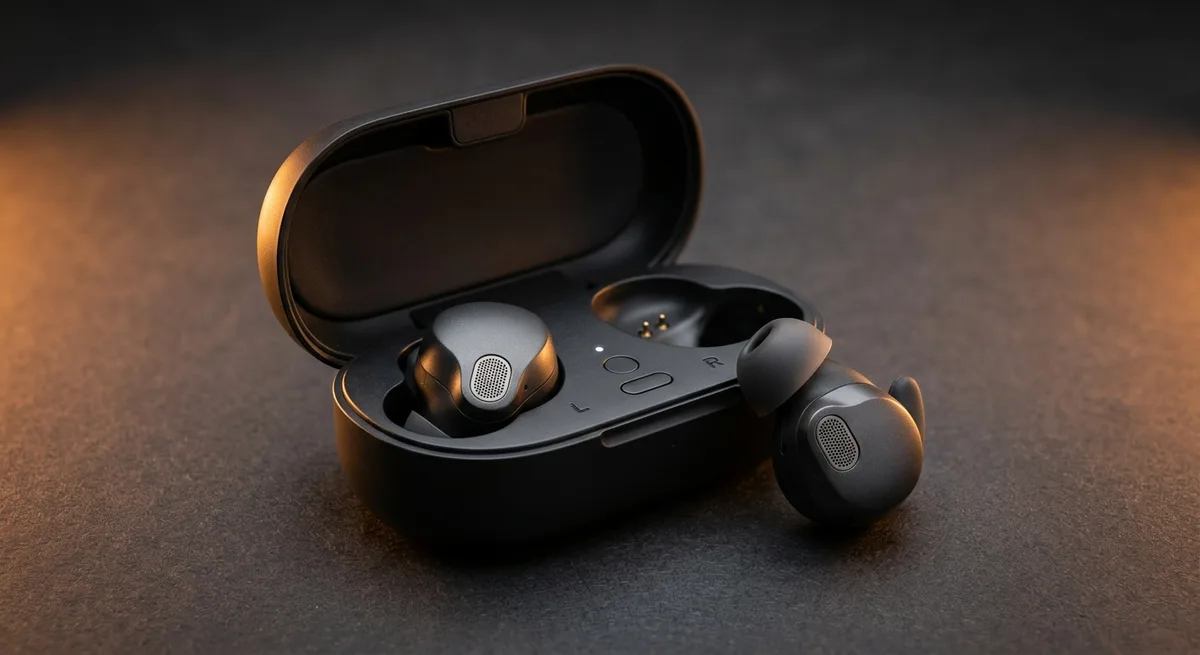
Bose QC Ultra Earbuds
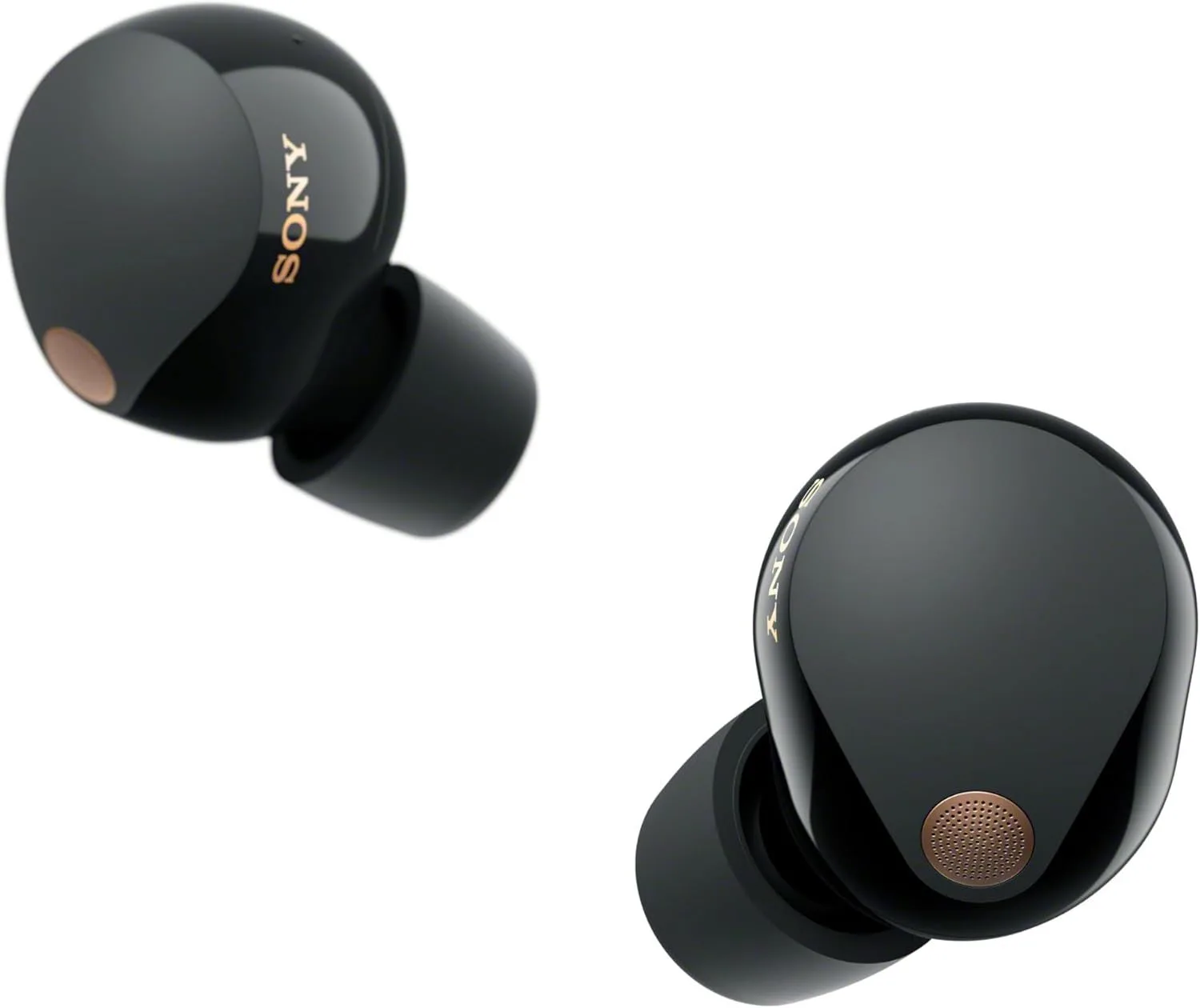
Sony WF-1000XM5
This matchup splits cleanly by category — no single winner, but definite winners per priority. The Bose QC Ultra Earbuds win on comfort, ANC consistency, and price at $70 less. The Sony WF-1000XM5 win on codec support (LDAC for high-res wireless), battery endurance (8 hours vs 6), and weight (1.2g lighter per bud). Both carry 3.8-star Amazon ratings — an unusual mirror for two premium earbuds from rival brands. Neither is locked to an ecosystem. Neither requires an iPhone or a Galaxy phone. This is a platform-agnostic comparison between two of the strongest true wireless earbuds on the market, separated by $70 and a fundamentally different design philosophy.
Bose built the QC Ultra Earbuds around fit. The oval nozzle and StayHear Max fins shape themselves to the ear canal rather than forcing a circular seal. CustomTune calibration fires a tone burst on every insertion, mapping your ear canal acoustics and adjusting ANC in real time. No app required. No manual optimization step. The result is ANC that adapts to your current seal quality automatically — a design that prioritizes consistency over maximum theoretical performance.
Sony built the WF-1000XM5 around audio fidelity. The 8.4mm driver paired with LDAC codec support delivers 24-bit/96kHz wireless audio on Android — a measurable advantage for listeners streaming lossless content. The foam and silicone tip options create a deep passive seal that supports the ANC processor. Sony's approach demands more from the user — tip selection, codec configuration, app-based EQ tuning — but rewards the effort with broader audio capability. Read our individual reviews for full deep dives: Bose QC Ultra Earbuds review and Sony WF-1000XM5 earbud review. Check our best wireless earbuds roundup if you want to expand your shortlist beyond these two.
At a Glance
| Feature | Bose QuietComfort Ultra Wireless Noise Cancelling Earbuds | Sony WF-1000XM5 Industry Leading Noise Canceling Truly Wireless Earbuds |
|---|---|---|
| Price Range | $100–$250 | $100–$250 |
| Driver Size | Bose proprietary | 8.4mm |
| Battery Life | 6 hrs / 24 hrs total | 8 hrs / 24 hrs total |
| Weight | 7.1g per earbud | ~5.9g per earbud |
| Bluetooth Codecs | AAC, SBC | LDAC, aptX, AAC, SBC |
| ANC Type | CustomTune, adaptive | QN2e processor, 8 mics |
| Water Resistance | IPX4 | IPX4 |
| Bluetooth | 5.3 | 5.3 |
| Check Price | Check Price |
Comfort and Fit: The Oval Nozzle Advantage
The $Bose QC Ultra Earbuds win this category, and the margin matters for daily wear. Bose's oval nozzle distributes pressure across a wider contact area than any circular-nozzle earbud — including the $Sony WF-1000XM5. The StayHear Max fins hook into the ear's antihelix ridge, holding the bud in place without relying on canal friction alone. The combination produces a fit that stays put during head turns, jaw movement, and light exercise without the plugged-up pressure feeling that deep-insertion earbuds create.
At 7.1g per bud, the QC Ultra Earbuds weigh more than the lighter 5.9g Sony WF-1000XM5 — a 1.2g gap per side. That weight difference is imperceptible during the first hour. By hour three, some users notice it. The Sony compensates with lighter mass but relies on a friction-fit seal from foam or silicone tips pushed into the canal. Foam tips create a tight passive seal and strong noise isolation, but they compress over months of use and need replacement. Silicone tips last longer but sacrifice some seal quality. The Bose fin design avoids the tip degradation issue entirely — the primary retention comes from the fin, not the canal seal.
For users with smaller ear canals, the Bose oval nozzle is often the more comfortable shape. Circular nozzles — used by the $Sony WF-1000XM5, the AirPods Pro 3, and most competitors — apply uniform radial pressure that can cause soreness during extended listening. The oval cross-section contacts less of the canal perimeter and relies more on the fin for retention. Ear shape varies enormously across individuals, so no universal recommendation is possible, but Amazon review data shows fewer fit complaints on the Bose (percentage of 1-2 star reviews mentioning fit discomfort is lower for the QC Ultra Earbuds than the WF-1000XM5).
Noise Cancellation: Automatic vs Adaptive
The QC Ultra Earbuds win on ANC consistency thanks to CustomTune — a system that plays a brief tone burst into each ear canal every time you insert the buds, then maps the acoustic response to calibrate the ANC algorithm to your current seal. No button press. No app. The calibration runs silently during the startup chime. The practical benefit: ANC performance stays stable regardless of tip wear, ear wax buildup, or how deeply you've seated the bud. If your seal shifts during a run, removing and reinserting the bud triggers a fresh calibration.
The WF-1000XM5 uses adaptive noise cancellation driven by the V2 integrated processor, analyzing ambient sound 700 times per second. The raw ANC capability is strong — among the best measured in the true wireless category. But Sony's system depends heavily on tip seal quality. A perfect foam tip seal produces ANC performance that matches or slightly exceeds the Bose. An imperfect seal — common with silicone tips, or when the foam tips have compressed after months of use — reduces ANC effectiveness noticeably. Sony's Headphones Connect app offers an NC Optimizer that tests seal quality, but most owners never run it.
In low-frequency noise environments — airplane cabins, train cars, HVAC systems — both earbuds perform at the top of the category. The separation becomes audible in mid-frequency noise: coffee shop conversation, open-office keyboard chatter, and street-level ambient sound. The Bose CustomTune system handles mid-frequency cancellation more evenly because the calibration accounts for individual ear canal resonance, which peaks in the 2-4kHz range where human conversation sits. The Sony handles the same frequencies well with a good seal, but mid-frequency ANC degrades faster when the seal is compromised.
Sound Quality and Codec Support: Sony's Technical Edge
The $Sony WF-1000XM5 win this category on paper and in practice for Android users. LDAC codec support delivers up to 990kbps of wireless bandwidth — roughly three times what AAC provides. On tracks mastered at 24-bit/96kHz, streamed through Tidal, Amazon Music HD, or Apple Music lossless, the difference is audible on the Sony: wider stereo separation, more defined high-frequency detail, and cleaner transient response on percussion and plucked strings. The 8.4mm driver — larger than the industry standard 6mm — moves more air, producing fuller bass extension without the boominess that smaller drivers compensate for with EQ boost.
The QC Ultra Earbuds lack LDAC over Bluetooth — no LDAC, no aptX, no aptX Adaptive. For iPhone users, this limitation is invisible because iOS only supports AAC regardless of earbud capability. For Android users streaming compressed Spotify content at 256kbps AAC, the limitation is also invisible — both earbuds sound identical at that bitrate. The codec gap only becomes audible when an Android user streams lossless content, which represents a specific but growing listener segment.
Bose's tuning leans warm and full-bodied — a sound signature that flatters pop, R&B, and electronic music by emphasizing bass presence and smoothing harsh high frequencies. Sony's default tuning is more neutral with a slight bass emphasis, revealing more detail in the midrange where vocals and acoustic instruments sit. The Sony Headphones Connect app offers a 5-band EQ, custom presets, and DSEE Extreme upscaling that processes compressed audio to approximate high-resolution quality. Bose's app offers a simpler 3-band EQ with bass, mid, and treble sliders. The customization depth favors Sony for listeners who enjoy shaping their sound profile.
The Samsung Galaxy Buds3 Pro with aptX Adaptive split the difference between these two with Samsung's 360 Audio — worth considering if you use a Samsung phone. The AirPods Pro 3 with Adaptive Audio offer Personalized Spatial Audio for Apple users, but are limited to AAC like the Bose for non-Apple devices. Read our full AirPods Pro 3 review if Apple's ecosystem is a factor in your decision.
Battery Life: Two Hours That Add Up
The $Sony WF-1000XM5 win on battery endurance with 8 hours of ANC playback per charge versus 6 hours for the $Bose QC Ultra Earbuds. Both cases extend total battery to 24 hours. The per-charge gap is the one that matters daily. Six hours covers a standard commute plus a work session. Eight hours covers a full workday of continuous listening without touching the case. For listeners who put earbuds in at 9am and remove them at 5pm — pausing for meetings but leaving them in — the Sony's 8-hour window fits the pattern; the Bose's 6-hour window requires a mid-day case recharge.
Quick charge performance: the Bose delivers 1 hour of playback from a 20-minute charge. The Sony delivers 60 minutes from a 3-minute charge — a faster emergency recovery ratio that helps when you grab the case on the way out and realize the buds are dead. Both cases charge via USB-C. Both support Qi wireless charging on compatible pads. The real-world battery difference is less about total capacity (tied at 24 hours) and more about how your listening day is structured. Continuous listeners need the Sony. Session-based listeners who return buds to the case between uses will never notice the per-charge gap because the case tops off between sessions.
Call Quality: Sony's Documented Weakness
Call quality is where the $Sony WF-1000XM5 show their most frequently cited weakness. Amazon reviews and expert tests document a pattern: the WF-1000XM5's microphone system struggles in windy outdoor environments, producing voice distortion and background noise leakage that callers can hear. Indoor call quality is acceptable — office environments, quiet rooms, and low-ambient settings produce clear voice transmission. But walking calls on a busy street or windy day expose the microphone limitations that Sony's beamforming algorithm does not fully compensate for.
The QC Ultra Earbuds handle calls better in mixed environments. Bose's microphone array and wind-noise reduction processing produce cleaner voice isolation during outdoor calls. The gap is not dramatic in quiet settings — both earbuds handle Zoom and Teams calls from a desk without issue. The gap widens in transitional environments: walking from an office lobby to a parking garage, taking a call while crossing a street, or speaking during a train platform announcement. If mobile calls in noisy or outdoor settings are a daily occurrence, the Bose delivers more reliable caller clarity.
Neither earbud matches the call quality of the AirPods Pro 3, which benefit from Apple's H2 chip and tighter hardware-software integration for voice isolation. For call-heavy workflows, the AirPods Pro 3 remain the category benchmark — but they require an iPhone to access the full feature set.
Build Quality and Water Resistance
Both earbuds carry IPX4 ratings — sweat and splash resistance, not submersion protection. The IPX4 certification covers gym workouts, light rain exposure, and humid environments. Neither should be worn in the shower or submerged in water. The Bose launched with documented firmware issues — Bluetooth connectivity drops, intermittent pairing failures, and occasional ANC glitches were widely reported in early Amazon reviews. Bose has addressed most of these through firmware updates, and the current firmware version (as of early 2026) resolves the worst offenders. But the early launch problems contributed to a higher proportion of 1-star reviews that still weigh on the overall Amazon rating.
The $Sony WF-1000XM5 had a smoother launch with fewer firmware complaints, but the call quality issues and occasional Bluetooth codec negotiation failures on certain Android phones represent their own reliability pattern. Sony's foam tip degradation also counts as a build consideration — the included foam tips compress and lose their seal properties after 3-6 months of daily use, requiring replacement at a recurring cost that the Bose fin design avoids. The charging cases are comparable in size and construction, with the Sony case slightly more compact due to the lighter, smaller buds inside.
Spatial Audio: Entertainment vs Music
Bose offers Immersive Audio with head tracking — a spatial audio experience that anchors sound sources in 3D space and adjusts as you turn your head. Three modes optimize for different scenarios: Still (seated listening), Motion (walking or moving), and Cinema (locks audio to a screen position for video content). The Cinema mode is the strongest use case — watching a movie on a tablet or laptop with Immersive Audio active produces a convincing surround-sound illusion from two earbuds. Music use cases are more polarizing; some listeners find the spatial effect adds depth to live recordings, while others find it fatiguing on studio-mixed tracks.
Sony offers 360 Reality Audio support for tracks mixed in Sony's object-based format, available on select streaming services. The library of 360 Reality Audio content is smaller than Dolby Atmos libraries, which limits practical utility. Sony also supports DSEE Extreme upscaling and a customizable EQ that gives more tonal control than Bose's spatial processing, but the head-tracking spatial effect is less pronounced than Bose's Immersive Audio. For movie and video content, Bose's implementation is more engaging. For music-first listeners who want spatial processing, neither platform is a clear winner — the technology remains a feature most owners try once and then disable for standard stereo listening.
Multipoint Connection: Both Support It, With Caveats
Both earbuds support simultaneous Bluetooth connections to two devices — phone plus laptop, tablet plus phone, or any two-device combination. The $Bose QC Ultra Earbuds added multipoint through a firmware update after launch; it was not available at release. The feature works but can introduce brief audio hiccups during device switching that native-multipoint earbuds (built with multipoint from the start) handle more smoothly. The $Sony WF-1000XM5 also support multipoint, with similar occasional switching delays.
For the most reliable multipoint experience in this price range, the Galaxy Buds3 Pro handle dual-device switching with fewer artifacts — Samsung optimized the Bluetooth stack specifically for Samsung phone plus Windows laptop workflows. But for general two-device use, both the Bose and Sony deliver functional multipoint that works across iOS, Android, Windows, and macOS without ecosystem restrictions.
App Ecosystem and Customization Depth
Sony Headphones Connect provides a 5-band equalizer, LDAC codec selection and bitrate control, Adaptive Sound Control (adjusts ANC based on detected activity), Speak-to-Chat (pauses music when you speak), DSEE Extreme upscaling, and Find My Earbuds location tracking. The app rewards time investment — spending 10 minutes configuring profiles for commute, office, and gym produces a noticeably better experience than the default settings.
Bose Music app offers a 3-band equalizer (bass, mid, treble), ANC mode selection (Quiet, Aware, Immersive Audio modes), shortcut customization for the touch controls, and firmware management. The interface is simpler, with fewer options and less depth. The simplicity is intentional: Bose's out-of-box sound and ANC tuning are optimized for most listeners without requiring app interaction. The CustomTune calibration runs automatically. The default EQ is tuned for mainstream preference. The result is an earbud that sounds excellent from the first pairing — no configuration session needed.
The customization gap mirrors the over-ear comparison between these brands. Sony assumes the listener wants control and provides every available parameter. Bose assumes the listener wants results and optimizes defaults. Neither assumption is wrong — they serve different user profiles. If you open companion apps for every audio product you own, Sony rewards that behavior. If your ideal earbud pairs once and never asks you to open an app again, Bose delivers that experience.
Price and Value at Current Street Prices
The QC Ultra Earbuds at $179 represent one of the strongest value propositions in the premium earbud category — a former $299 flagship now priced below most competitors while retaining top-tier ANC and comfort. The WF-1000XM5 at $248 holds its price more firmly, justified by LDAC support, larger drivers, and longer battery life per charge. The $70 gap is wide enough to matter for budget-conscious buyers, but the Sony offers genuine technical advantages that justify the premium for listeners who will use LDAC and value per-charge endurance.
The competitive context: the AirPods Pro 3 at $199 sit between them on price and offer the best call quality in the category with Apple's H2 chip — but only for iPhone users. The Galaxy Buds3 Pro with Samsung perks offer aptX Adaptive and ecosystem benefits at a similar price to the Sony. Read our full Galaxy Buds3 Pro review if ecosystem alignment is your primary decision factor. For platform-agnostic buyers — those without loyalty to Apple, Samsung, or Sony — the Bose at $179 is the best value in the premium earbud segment and wins on comfort for most ear shapes.
The 3.8-Star Mirror: What the Ratings Reveal
Both earbuds carry 3.8-star Amazon ratings — the $Bose QC Ultra Earbuds from 9,700+ reviews, the $Sony WF-1000XM5 from 5,700+ reviews. Identical ratings from different review volumes is unusual for premium earbuds, where ratings typically cluster between 4.0 and 4.5. The 3.8-star shared rating reflects a pattern: both products deliver exceptional performance in their core strengths but have documented issues that generate a higher-than-expected proportion of negative reviews.
For Bose, the negative reviews concentrate on early firmware problems — Bluetooth drops, pairing failures, and ANC inconsistency that have been largely resolved through updates. But early reviewers who rated 1-star during the launch window rarely update their reviews. The current firmware experience is substantially better than the aggregate rating suggests. For Sony, the negative reviews focus on call quality, foam tip durability, and occasional Bluetooth codec negotiation failures with certain Android phones. These issues persist in current firmware because they stem from hardware limitations rather than software bugs.
The rating parity makes the buying decision clearer, not harder. Both products have known weaknesses. Bose's weaknesses are largely fixed (firmware updates). Sony's weaknesses are structural (microphone hardware, tip wear). If the remaining issues on the Sony — call quality in wind, tip replacement costs — are irrelevant to your use pattern, the higher-fidelity audio and longer battery justify the price. If you want a more polished daily experience with fewer ongoing maintenance concerns, the Bose at $70 less is the pragmatic choice.
Which Earbuds Match Your Priorities
Get the Bose QC Ultra Earbuds If...
- Comfort during 4-6 hour listening sessions is your top priority — the oval nozzle and StayHear fins fit more ear shapes without canal pressure
- You want ANC that calibrates automatically on every insertion — CustomTune eliminates the manual optimization step
- Price matters and $179 for a former flagship is the value you want — $70 less than the Sony with comparable ANC
- You take outdoor calls regularly — the Bose microphone system handles wind and ambient noise more reliably
- You prefer earbuds that work perfectly out of the box without configuring a companion app
Get the Sony WF-1000XM5 If...
- You use an Android phone and stream lossless content — LDAC at 990kbps is a measurable audio quality advantage the Bose cannot match
- Per-charge battery life matters — 8 hours covers a full workday without touching the case; the Bose needs a mid-day top-up at 6 hours
- You want deeper app customization — 5-band EQ, codec selection, adaptive sound control, and DSEE upscaling reward the time investment
- Lighter weight is a priority — 5.9g per bud vs 7.1g reduces long-session fatigue for weight-sensitive listeners
- Sound fidelity on demanding recordings matters more than convenience — the 8.4mm driver resolves more detail in acoustic and classical content
Bose vs Sony Earbuds: Your Questions Answered
Are the Bose QC Ultra Earbuds better than the Sony WF-1000XM5?
Neither wins outright. The Bose QC Ultra Earbuds lead on comfort (oval StayHear nozzle, secure fins), ANC calibration (CustomTune adjusts automatically), and price ($179 vs $248). The Sony WF-1000XM5 leads on codec support (LDAC for high-res wireless), battery life (8 hours vs 6 hours ANC), and lighter weight (5.9g vs 7.1g per bud). Both share 3.8-star Amazon ratings and IPX4 water resistance. Choose Bose for fit and value; choose Sony for audio fidelity and endurance.
Do the Bose QC Ultra Earbuds support LDAC or aptX?
No. The Bose QC Ultra Earbuds support AAC and SBC only — no LDAC, aptX, or aptX Adaptive. For Android users streaming lossless content through Tidal or Amazon Music HD, this limits wireless audio quality to AAC compression. The Sony WF-1000XM5 supports LDAC at up to 990kbps, aptX, and AAC, giving Android listeners access to 24-bit/96kHz wireless audio that the Bose cannot match over Bluetooth.
Which earbuds have better noise cancellation — Bose QC Ultra or Sony XM5?
Both perform at the top of the true wireless ANC category. The Bose QC Ultra Earbuds use CustomTune calibration that measures your ear canal shape on every insertion, optimizing ANC to your specific seal — no manual steps required. The Sony WF-1000XM5 uses an 8.4mm driver with integrated processor for adaptive noise cancellation. Real-world ANC performance is close, but Bose is more consistent because CustomTune compensates for imperfect tip fit automatically.
Why are the Bose QC Ultra Earbuds cheaper than the Sony WF-1000XM5?
The Bose QC Ultra Earbuds launched at $299 but have dropped to $179 as the product ages and Bose prepares newer models. The Sony WF-1000XM5 has held closer to its launch price at $248. The price gap does not reflect a quality gap — it reflects market timing. Bose uses the lower price to compete against newer entrants like the AirPods Pro 3, while Sony maintains premium positioning on codec and driver technology.
Which earbuds are more comfortable — Bose QC Ultra or Sony WF-1000XM5?
Bose, for most ear shapes. The oval nozzle and StayHear Max fins distribute pressure across a wider contact area than the Sony circular nozzle with foam or silicone tips. Users with smaller ear canals especially favor the Bose fit. The Sony WF-1000XM5 compensates with lighter weight — 5.9g vs 7.1g per bud — which reduces fatigue during long sessions. For workouts and active use, the Bose fins provide more secure retention than the Sony friction-fit design.
Price Drop Alerts
We'll notify you when prices drop or either product gets updated.
No spam. Unsubscribe anytime.