AirPods Max 2 vs Bose QC Ultra: $549 Unproven vs $359 Proven
This one ends in a tie — but for unusual reasons. The Apple AirPods Max 2 wins on ecosystem intelligence features that no other headphone matches, but those features are unverified at launch and locked to Apple devices. The Bose QuietComfort Ultra wins on comfort, battery life, proven ANC, and value — all backed by 18,700+ owner reviews and independent lab measurements.
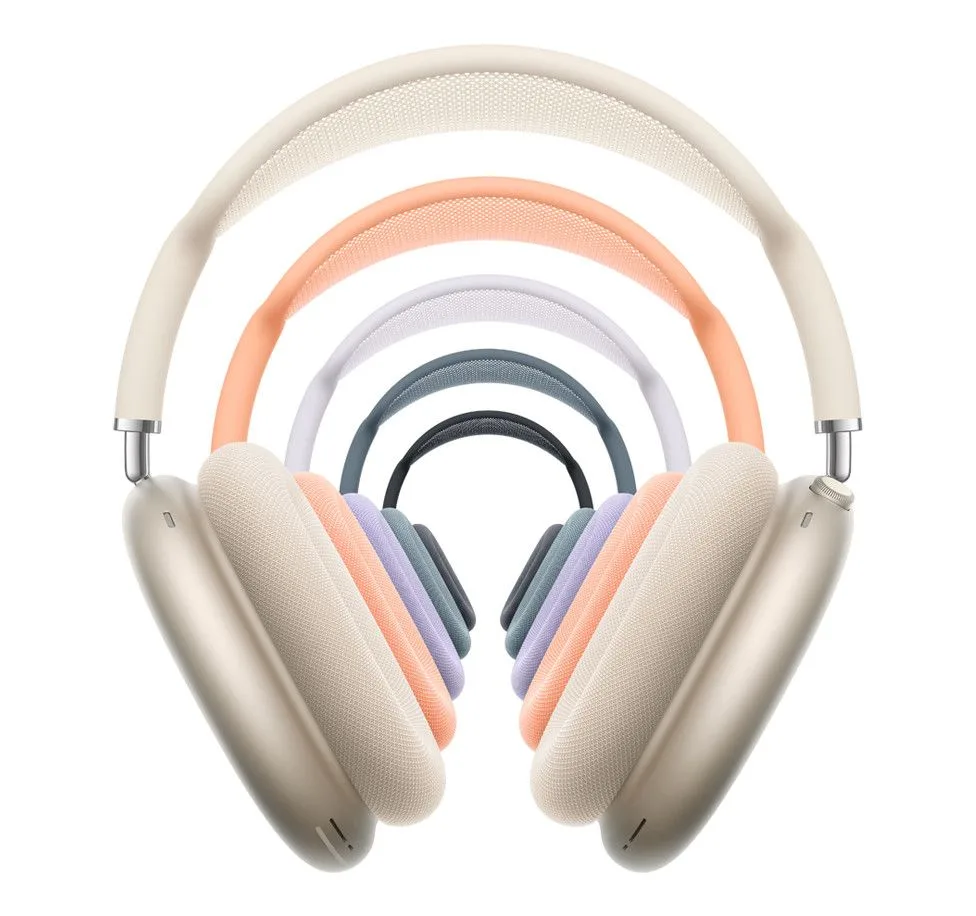
Apple AirPods Max 2
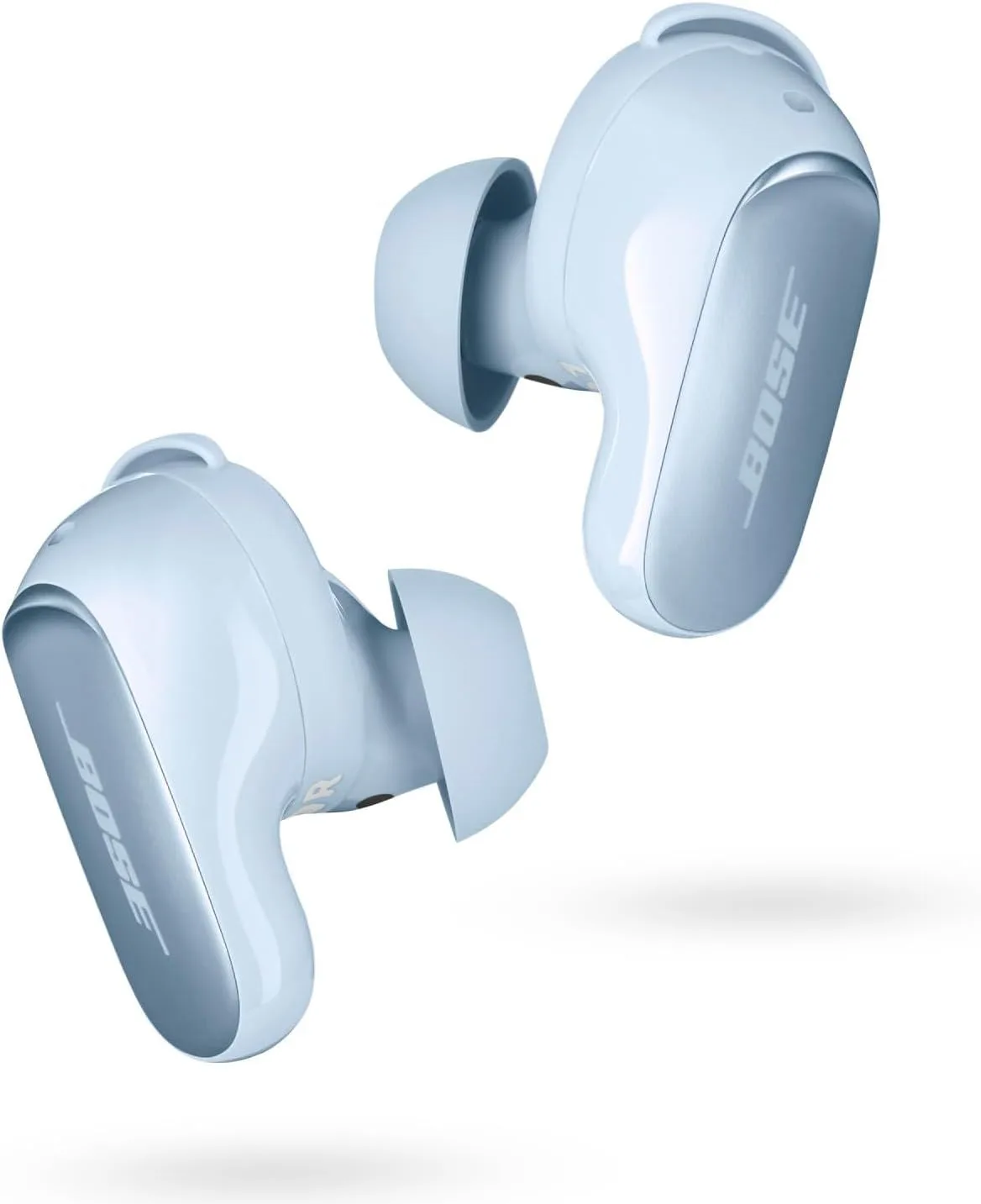
Bose QuietComfort Ultra
The Bose QuietComfort Ultra wins on comfort, battery life, proven ANC, and value; the Apple AirPods Max 2 wins on ecosystem intelligence and smart features no competitor matches. This comparison pits $549 of unverified promise against $359 of proven performance. The Apple AirPods Max 2 arrives with Apple's H2 chip, a claimed 1.5x improvement in active noise cancellation, Adaptive Audio, Conversation Awareness, and Live Translation — features that exist nowhere else in the headphone market. The Bose QC Ultra 2nd gen counters with 18,700+ Amazon reviews averaging 4.6 stars, independently measured ANC that matches or beats every competitor, 30 hours of battery life, and the most comfortable fit in the premium category. The price gap is $190. The question is whether Apple's software intelligence justifies that gap, or whether Bose's track record and comfort make it the smarter buy.
The split here is not about sound quality or noise cancellation in isolation. Both deliver flagship-tier audio. The split is about what you are paying for beyond audio. Apple sells an ecosystem — the Max 2 becomes a different product when paired with an iPhone, MacBook, and Apple TV versus used as a standalone Bluetooth headphone. Bose sells a headphone that works identically regardless of your phone, your laptop, or your ecosystem allegiance. One approach demands loyalty. The other demands nothing.
We analyzed Apple's product specifications, early hands-on previews, Bose's verified independent measurements, 18,700+ Bose owner ratings, and cross-referenced both against the current category leaders. The individual reviews — AirPods Max 2 and Bose QC Ultra — cover each product in full. This comparison isolates the head-to-head: where the $190 premium earns its keep, where it does not, and who should care. Our best over-ear ANC headphones roundup includes both alongside the full competitive field.
At a Glance
| Feature | Apple AirPods Max 2 — H2 Chip, Lossless Audio, Enhanced Active Noise Cancellation | Bose QuietComfort Ultra Wireless Noise Cancelling Headphones |
|---|---|---|
| Price Range | $500+ | $250–$500 |
| Driver Size | 40mm Apple dynamic | Bose proprietary |
| Battery Life | 20 hrs (ANC on) | 30 hrs (ANC on) |
| Weight | 392g | 260g |
| Bluetooth Codecs | AAC, Apple Lossless (USB-C) | AAC, SBC |
| ANC Type | H2 chip, 1.5x ANC | CustomTune, 6 mics |
| Water Resistance | None | None |
| Bluetooth | 5.3 | 5.3 |
| Check Price | Check Price |
Noise Cancellation: Verified Data vs Marketing Claims
Apple claims the Apple AirPods Max 2 delivers 1.5x better ANC than the original AirPods Max, powered by the H2 chip's computational audio processing. That is a marketing number without independent verification. No RTINGS measurement, no Crinacle frequency response, no controlled A/B testing has confirmed or denied this claim at the time of writing. The original AirPods Max measured well on ANC — competitive with the top tier — but "1.5x better" is a vague multiplier that could mean different things depending on the frequency range and methodology Apple used internally.
The Bose QC Ultra's ANC performance is independently verified. RTINGS measurements place it within 1-2 dB of the Sony WH-1000XM6 across the frequency spectrum — the two trade minor advantages depending on the noise type. Low-frequency cancellation (airplane engines, train rumble, HVAC systems) is where both excel. Bose's CustomTune calibration measures your ear canal geometry every time you put the headphones on, automatically optimizing the ANC seal without any user input. No button press. No app. Just put them on and the algorithm adjusts.
The practical difference for buyers: the Bose is a known quantity. You can read 18,700+ owner reviews describing real-world ANC performance in offices, airplanes, coffee shops, and commuter trains. The Apple AirPods Max 2's ANC might be better, equivalent, or slightly worse — nobody outside Apple's testing labs can confirm the 1.5x claim yet. If ANC is your primary purchase driver, buying the Bose means buying confirmed performance. Buying the Max 2 means buying a promise.
Weight and Comfort: 132 Grams Apart
The Apple AirPods Max 2 weighs 392g. The Bose QuietComfort Ultra weighs 260g. That 132g difference — roughly the weight of a deck of playing cards — sits on top of your head for every minute you wear these headphones. It is the single largest physical difference between the two products, and it compounds over time in a way that spec sheets cannot convey.
The original AirPods Max generated consistent complaints about weight-induced fatigue during sessions longer than 2-3 hours. The Max 2 retains the same aluminum ear cups and stainless steel headband that caused those complaints. Apple made no public claims about weight reduction or pressure distribution changes. At 392g, the Apple AirPods Max 2 is the heaviest premium ANC headphone on the market — heavier than the Sony WH-1000XM6 at 254g, heavier than the Sennheiser Momentum 4 at 267g, and 50% heavier than the Bose.
Bose's comfort advantage extends beyond weight. The QC Ultra's protein leather cushions use a deep memory foam that conforms to the ear rather than pressing against it. The clamping force distributes across a wider headband surface area, preventing the hot spots that develop at the crown of the head during extended wear. Glasses wearers — the group most affected by headphone clamping — report the Bose accommodates temple arms without creating pressure ridges. Multiple reviewers confirm 6-8 hour sessions without discomfort. For a full workday with headphones on, the Bose is in a different comfort class. The Max 2's premium materials look and feel expensive, but aluminum and stainless steel are not kind to scalps over long periods.
Battery Life: 30 Hours vs 20 Hours
The Bose QuietComfort Ultra delivers 30 hours with ANC active. The Apple AirPods Max 2 delivers 20 hours. That 10-hour gap translates to real-world differences: the Bose handles a full five-day work week of 6-hour daily sessions on a single charge. The Max 2 runs out on day four. For travel, the Bose covers a round-trip transatlantic flight (12-14 hours) with battery to spare. The Max 2 requires a mid-trip charge on anything longer than a coast-to-coast US flight.
Both use USB-C charging. Apple improved the Max 2's charging speed compared to the original Lightning-only Max, but specific quick-charge numbers (minutes to hours of playback) have not been independently verified at the time of writing. The Bose provides 2.5 hours of playback from a 15-minute charge — a spec confirmed by thousands of owners. Battery longevity over months and years tends to favor lighter usage cycles; the Bose's longer runtime means fewer charge cycles per week, which theoretically extends the battery's multi-year lifespan.
Sound Quality: Promised Lossless vs Delivered Lossless
Both headphones use AAC over Bluetooth — the highest quality wireless codec available on Apple devices. Neither supports LDAC. For iPhone users listening wirelessly, the audio pipeline is identical in codec terms. The Max 2's H2 chip handles the decoding differently than the Bose's processor, and Apple's Personalized Spatial Audio with head tracking creates a different spatial presentation. But the raw wireless codec is the same.
The wired story diverges. The Bose QuietComfort Ultra supports USB-C wired audio at 16-bit/48kHz — true lossless playback through a digital connection, available now, confirmed by measurements. The Apple AirPods Max 2 promises lossless audio support, but Apple has not confirmed whether this arrives at launch or through a future firmware update, nor what sample rate or bit depth the wired mode will support. The original AirPods Max offered a wired Lightning mode that was limited to AAC quality despite the physical cable — a decision that frustrated audiophile buyers. Whether Apple repeats that limitation with USB-C remains unknown.
For desktop listeners who plug into a DAC or computer, the Bose is the verified winner today. USB-C lossless means the QC Ultra doubles as a high-quality wired headphone for mixing, mastering reference checks, or simply bypassing Bluetooth compression during focused listening. The Max 2 may match or exceed this capability — but "may" is not "does." Read our Bluetooth codecs guide for the technical breakdown of what lossless actually means for perceivable quality differences.
Ecosystem Features: Apple's Strongest Card
The Apple AirPods Max 2's H2 chip enables features that the Bose cannot replicate at any price. Adaptive Audio blends ANC and transparency mode in real time based on environmental noise levels — no manual mode switching required. Conversation Awareness detects when you start speaking and automatically lowers media volume, amplifies the voice of the person you are talking to, and reduces background noise. When you stop talking, music resumes. Live Translation transcribes and translates spoken conversations in real time, displayed on your paired iPhone. Personalized Spatial Audio maps your ear shape using the iPhone's TrueDepth camera to create a custom spatial profile.
These are not incremental improvements. They represent a fundamentally different headphone experience — one where the headphones understand context and adapt without user input. No other manufacturer offers this combination. The Sony WH-1000XM6's Speak-to-Chat does something similar to Conversation Awareness but with less precision and a noticeable delay. No competitor matches Live Translation at all.
The catch: every one of these features requires an iPhone. On Android, the Max 2 loses Adaptive Audio, Conversation Awareness, Live Translation, Personalized Spatial Audio, automatic switching between Apple devices, and Find My tracking. What remains is a $549 Bluetooth headphone with AAC and basic ANC. The Bose QC Ultra delivers its full feature set on both iOS and Android, with CustomTune calibration working identically regardless of your phone. The Max 2's best features are extraordinary. They are also exclusive to a single ecosystem.
Build and Materials: Premium Metal vs Practical Polymer
The Apple AirPods Max 2 uses anodized aluminum ear cups and a stainless steel headband frame. The materials feel expensive — cold to the touch, rigid, weighty in the hand. Apple's industrial design is distinctive and immediately recognizable. The mesh headband canopy distributes weight across the crown, a design choice borrowed from high-end office chairs. The tradeoff is the 392g total weight and the susceptibility to condensation in cold environments — the original Max's aluminum cups fogged on the inside during winter outdoor use, and Apple has not announced a fix for the successor.
The Bose uses a combination of glass-filled nylon, soft-touch plastic, and protein leather. The materials feel comfortable rather than luxurious. They are also lighter, warmer to the touch in cold weather, and more resistant to showing scuffs and scratches. The QC Ultra does not fold — it swivels flat into a carrying case that is larger than a folding headphone's case but protects the ear cups effectively. Neither the Max 2 nor the QC Ultra folds flat; both use swivel-flat case designs.
Durability data favors the Bose through sheer volume of ownership history. With 18,700+ reviews spanning the QC Ultra's lifecycle, failure patterns are visible: the headphones hold up well under daily use, with no widespread hinge, driver, or cushion failures reported at scale. The Max 2 shares the original Max's construction approach, which proved durable for the aluminum and steel components but generated scattered reports of headband mesh stretching after 12-18 months. Long-term Max 2 durability data does not exist yet.
App Experience and Customization
Apple does not offer a dedicated headphone app. AirPods Max 2 settings live inside iOS Settings — a design choice that is either clean or limiting, depending on your perspective. You can adjust ANC modes, toggle Conversation Awareness, configure Personalized Spatial Audio, and manage device switching. There is no parametric EQ, no custom ANC tuning, and no way to save environment-specific profiles. Apple's philosophy: the H2 chip handles optimization automatically, so manual controls are unnecessary.
Bose Music offers 3-band EQ adjustment, Quiet/Aware mode toggles, Immersive Audio configuration, and firmware management. The controls are limited compared to Sony's 10-band parametric EQ, but the out-of-box defaults are tuned well enough that most owners never open the app after initial setup. CustomTune calibration is entirely automatic — no app interaction required.
The customization gap matters less than it appears. Neither headphone targets the tinkerer who wants per-frequency EQ sliders and codec bitrate toggles — that buyer should look at the Sony WH-1000XM6. Both the Max 2 and QC Ultra are designed for users who want headphones that work well immediately. Apple achieves this through computational audio; Bose achieves it through acoustic engineering and CustomTune. Different paths, similar destination.
The $190 Price Gap in Context
The Apple AirPods Max 2 at $549 is the most expensive consumer ANC headphone from a major manufacturer. The Bose QuietComfort Ultra at $359 sits at the premium tier's center, priced within $40 of the Sony WH-1000XM6 at $398. The $190 gap between the Max 2 and the QC Ultra is not a rounding error — it is the price of a pair of mid-range wireless earbuds, a quality Bluetooth speaker, or six months of a music streaming subscription.
What does $190 buy? On the Apple side: H2 chip processing, Adaptive Audio, Conversation Awareness, Live Translation, Personalized Spatial Audio, aluminum build materials, and the Apple ecosystem integration layer. On the Bose side at $190 less: 10 more hours of battery life, 132g less weight, proven ANC with 18,700+ owner confirmations, USB-C wired lossless (available now), and platform-agnostic full functionality.
The value question has an ecosystem answer. If you own an iPhone, MacBook, iPad, and Apple TV — and you use all of them daily — the Max 2 becomes a unified audio controller across your digital life. The integration layer, the automatic switching, and the computational audio features create compound value that partially justifies the price. If you own one Apple device or none, the $190 premium buys you aluminum ear cups and a heavier headphone. The Sennheiser Momentum 4 at $247 provides another reference point for budget-conscious buyers who want premium audio without the ecosystem tax.
Pre-Release Reality Check
The Apple AirPods Max 2 carries pre-release status throughout this comparison. Apple's published specifications and feature descriptions are the source for all Max 2 claims — not independent testing, not verified measurements, not long-term owner experience. Battery life, ANC performance, weight comfort, lossless audio implementation, and feature reliability have not been confirmed outside of Apple's controlled demos.
History offers some guidance. Apple's first-generation AirPods Max delivered on most of its headline promises — the ANC was truly excellent, the spatial audio was category-leading, and the build quality matched the premium price. It also arrived with a case design that became an internet punchline, condensation issues in cold weather, a Lightning port in a USB-C world, and a battery life that underperformed the competition by 10+ hours. Apple addressed some of these issues (USB-C is now standard), left others unresolved (the case design remains unconventional), and the weight complaints persisted throughout the product's lifecycle.
The Bose QC Ultra's claims require no historical extrapolation. Every specification cited in this comparison is verified by independent testing labs, confirmed by thousands of owners, and consistent across the product's retail availability period. That asymmetry — unverified versus verified — is the central tension of this comparison. For buyers who need proven noise cancellation today, we recommend the Bose as the lower-risk purchase.
Spatial Audio and Immersive Listening
Apple's Personalized Spatial Audio with dynamic head tracking uses the iPhone's TrueDepth camera to map your ear geometry, creating a custom HRTF (head-related transfer function) profile. The result: spatial audio tuned to your specific ear shape rather than a generic average. This is technically more advanced than any competitor's spatial implementation. Content availability is strong — Apple Music's entire Dolby Atmos catalog works with Personalized Spatial Audio, and Apple TV+ content is mixed natively for the feature.
Bose Immersive Audio offers three modes: Still (optimized for seated listening), Motion (adjusts for head movement), and Cinema (anchors the soundstage to a fixed screen position). Cinema Mode is the strongest use case for movie watching — the surround-sound effect with the soundstage locked to your laptop screen creates a convincing home theater experience. The effect does not require any ear scanning or personalization — it works immediately on both iOS and Android.
The philosophical difference mirrors the broader comparison. Apple's approach is more technically sophisticated but requires an iPhone and setup time. Bose's approach is simpler but works on any device without configuration. Both produce genuine spatial effects that enhance movie and TV content. For music, spatial audio remains polarizing — some listeners enjoy the expanded soundstage, others find it distracting. Neither implementation resolves that subjective divide.
The Ecosystem vs Value Decision
Get the Apple AirPods Max 2 If...
- You own three or more Apple devices and use them daily — the automatic switching and Adaptive Audio integration justify the premium in this specific scenario
- Conversation Awareness and Live Translation solve real problems in your daily routine — no other headphone offers these features
- Build materials and industrial design matter to you — the aluminum and stainless steel construction feels unlike anything else in the category
- You are comfortable buying pre-release hardware based on Apple's track record and are willing to wait for independent verification of the 1.5x ANC claim
- Weight and battery life are secondary to ecosystem integration — you accept 392g and 20 hours as tradeoffs for the H2 chip's feature set
Get the Bose QuietComfort Ultra If...
- Comfort during 6-8 hour sessions is your priority — at 260g with plush cushions, the Bose is the most comfortable premium ANC headphone available
- You want proven ANC performance backed by independent measurements and 18,700+ owner reviews — not marketing claims awaiting verification
- Battery life matters — 30 hours with ANC versus 20 hours changes how often you reach for the charging cable
- You use any combination of Apple and Android devices — the Bose delivers identical performance regardless of platform
- USB-C wired lossless audio for desktop listening is part of your workflow — this feature is confirmed and available now on the Bose, uncertain on the Max 2
- The $190 savings is better spent on a complementary audio product — earbuds for the gym, a portable speaker, or a streaming subscription
AirPods Max 2 vs Bose QC Ultra: Answered
Is the Apple AirPods Max 2 worth $190 more than the Bose QuietComfort Ultra?
Only for deep Apple ecosystem users. The $190 premium buys Adaptive Audio, Conversation Awareness, Live Translation, and tighter integration with iPhone, iPad, and Mac. If you use two or more Apple devices daily and value those software features, the price gap has a functional justification. If you use Android or want the best sound-per-dollar ratio, the Bose delivers equal or better audio quality at $359 with proven long-term reliability backed by 18,700+ reviews.
Which has better noise cancellation — AirPods Max 2 or Bose QC Ultra?
Apple claims 1.5x better ANC than the original AirPods Max via the H2 chip, but independent measurements are not yet available for the Max 2. The Bose QC Ultra has independently verified ANC performance measured within 1-2 dB of the category leaders by RTINGS. Until third-party testing confirms Apple's claims, the Bose is the safer ANC purchase based on verified data.
Are the AirPods Max 2 too heavy for long listening sessions?
At 392g, the AirPods Max 2 weighs 132g more than the Bose QC Ultra at 260g — roughly 50% heavier. First-generation Max owners frequently reported fatigue after 2-3 hours. The Max 2 retains the same aluminum and stainless steel construction. Bose's protein leather cushions and lighter build consistently earn the highest comfort ratings in 6-8 hour session tests across multiple review publications.
Does the AirPods Max 2 work well with Android phones?
Poorly compared to the Bose. On Android, the Max 2 loses Adaptive Audio, Conversation Awareness, Live Translation, Personalized Spatial Audio, automatic device switching, and Find My tracking. What remains is standard Bluetooth with AAC — the same codec the Bose offers, minus Bose's CustomTune ear canal calibration. The Bose QC Ultra delivers its full feature set on both iOS and Android.
Which sounds better — AirPods Max 2 or Bose QC Ultra?
The Bose QC Ultra supports USB-C wired lossless audio at 16-bit/48kHz — verified, measurable, available now. The AirPods Max 2 promises lossless via a future firmware update, but the timeline and implementation remain unconfirmed. Over Bluetooth, both use AAC. For wireless listening the two are comparable; for wired desktop use, the Bose currently wins with confirmed lossless playback.
Price Drop Alerts
We'll notify you when prices drop or either product gets updated.
No spam. Unsubscribe anytime.