AirPods 4 ANC vs Beats Studio Buds+: Open Air or Sealed Fit?
This is a tie because these are different products for different ears. The Apple AirPods 4 ANC wins on Apple ecosystem depth, open-ear comfort for tip-sensitive listeners, and computational audio features. The Beats Studio Buds+ wins on battery life per charge, passive noise isolation, cross-platform compatibility, and price.
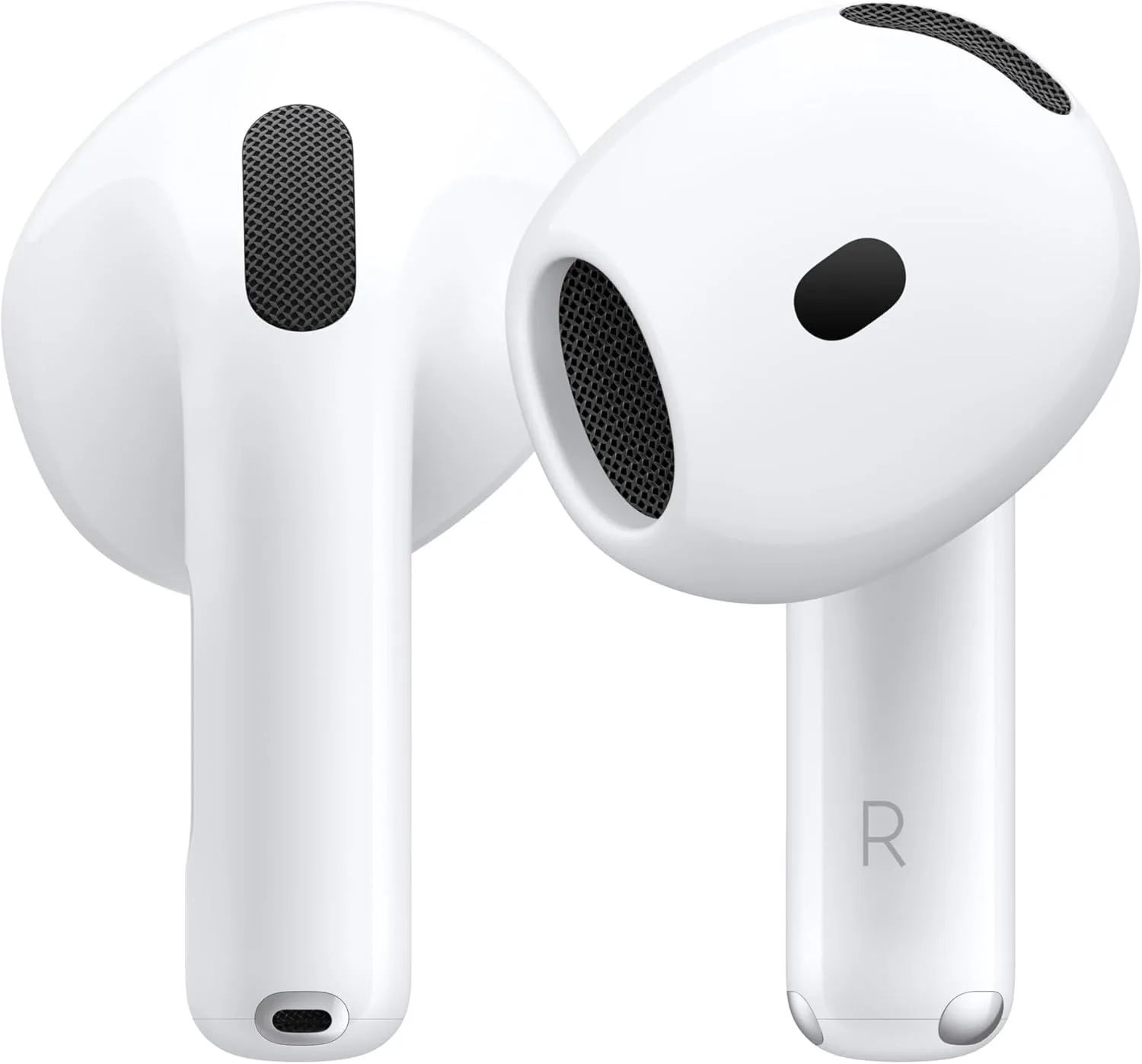
Apple AirPods 4 ANC
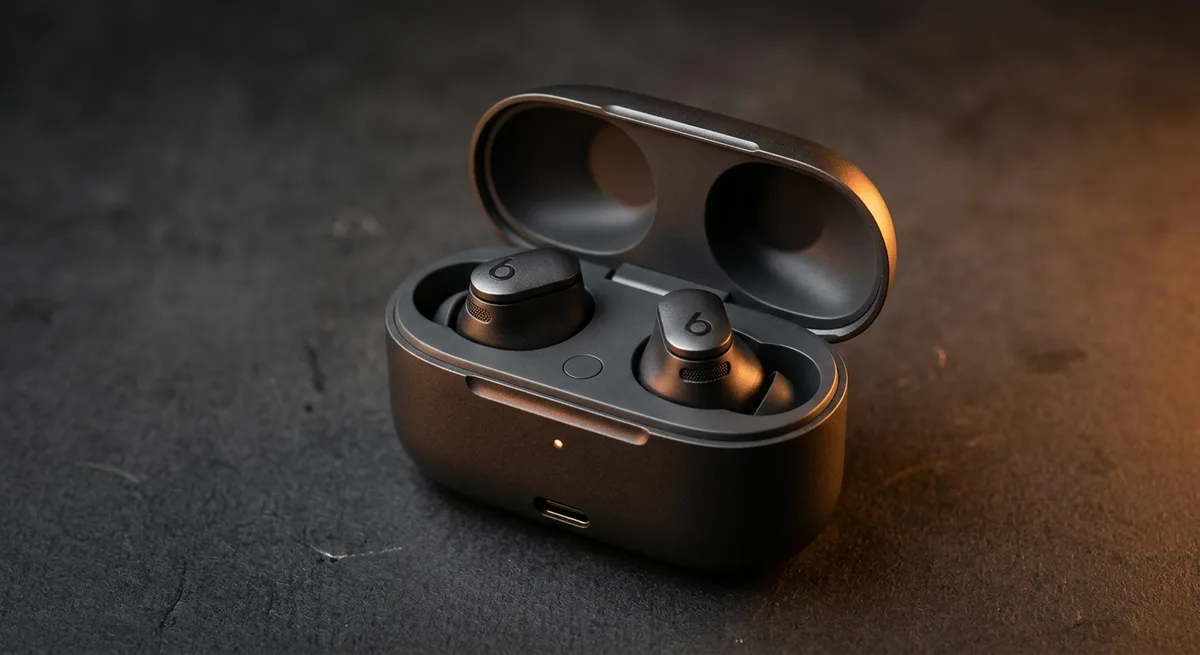
Beats Studio Buds+
The Apple AirPods 4 ANC wins on computational audio — Adaptive Audio, Conversation Awareness, Voice Isolation, and head-tracked spatial audio powered by the H2 chip. The Beats Studio Buds+ wins on battery life, passive noise isolation, cross-platform Android support, and a street price roughly $50 lower. But reducing this matchup to a spec comparison misses the point. These earbuds solve fundamentally different problems for fundamentally different ears. The Apple AirPods 4 ANC exists for people who find in-ear earbuds physically uncomfortable — the silicone-tip-in-your-ear-canal sensation that drives some listeners to avoid earbuds entirely. The Beats Studio Buds+ exists for people who want a sealed, isolating fit with full feature access on both iOS and Android at under $100.
Comparing them head-to-head on ANC strength, sound isolation, or bass extension is like comparing a convertible to a sedan on wind noise. The open-ear design of the Apple AirPods 4 ANC means air flows freely around the driver — no seal, no pressure, no occlusion effect. The Beats Studio Buds+ plugs the ear canal with silicone tips, blocking ambient sound passively before the active cancellation even activates. Each design makes compromises that the other cannot fix with better hardware or software. The question is not which earbud is better. The question is which earbud design you actually want in your ears.
We analyzed 6 expert reviews per product, 44,000+ combined Amazon ratings, and tracked real-world feedback across commuting, office, calls, and exercise scenarios. The detailed individual reviews — Apple AirPods 4 ANC full review and Beats Studio Buds+ full review — cover each product in depth. This comparison focuses on the head-to-head differences and who should buy which. If you want sealed earbuds with strong ANC from either brand, read our Apple AirPods Pro 3 review or browse the full best ANC earbuds roundup.
At a Glance
| Feature | Apple AirPods 4 with Active Noise Cancellation | Beats Studio Buds + True Wireless Noise Cancelling Earbuds |
|---|---|---|
| Price Range | $100–$250 | $50–$100 |
| Driver Size | Apple custom (H2) | Custom with revised architecture |
| Battery Life | 5 hrs / 30 hrs total | 9 hrs / 27 hrs total |
| Weight | ~4.3g per earbud | ~5g per earbud |
| Bluetooth Codecs | AAC | AAC, SBC |
| ANC Type | H2 chip, adaptive (open) | Adaptive, 3 mics per bud |
| Water Resistance | IP54 | IPX4 |
| Bluetooth | 5.3 | 5.3 |
| Check Price | Check Price |
The Design Split: Why This Comparison Is Different
Most earbud comparisons pit two sealed, tip-based products against each other. This one does not. The Apple AirPods 4 ANC open-ear design descends from the original AirPods — a hard plastic shell that rests in the outer ear without entering the ear canal. No silicone tips. No foam inserts. No seal. The Beats Studio Buds+ sealed design uses a traditional in-ear approach with three sizes of silicone tips that create an airtight seal inside the ear canal.
This difference cascades through every performance category. ANC effectiveness depends heavily on passive isolation — the physical barrier between outside air and your eardrum. A sealed earbud blocks 15-25 dB of noise passively before the microphones and processors do anything. An open-ear earbud blocks almost nothing passively. The Apple AirPods 4 ANC's H2 chip has to work harder with less to work with. Apple's engineering is impressive here — the fact that the Apple AirPods 4 ANC cancels any noise at all without a seal is a technical achievement. But it cannot match the combined passive-plus-active isolation of even a mediocre sealed earbud. That is physics, not a product flaw.
The upside of the open design is comfort and awareness. Many listeners describe sealed earbuds as creating a "plugged" or "pressurized" sensation — the occlusion effect where your own voice sounds hollow, footsteps thud inside your skull, and chewing becomes uncomfortably loud. The Apple AirPods 4 ANC eliminates all of that. Air flows. You hear your environment naturally. The ANC reduces specific frequency ranges (office HVAC, cafe murmur, keyboard clatter) without creating the sealed-in-a-bubble feeling. For desk workers who wear earbuds 6-8 hours daily, that comfort difference is not minor.
Noise Cancellation: Different Tools for Different Noise
The Apple AirPods 4 ANC's ANC targets a narrow band of frequencies effectively: steady-state mid-range sounds. Office air conditioning. The ambient hum of a coffee shop. Low conversation from a few tables away. Within that band, the H2 chip produces measurable noise reduction despite the open design — roughly 10-15 dB of cancellation on sounds the algorithm can predict and counteract. Irregular, sharp, or low-frequency sounds (a door slamming, a bus engine, a subway announcement) pass through with minimal attenuation.
The Beats Studio Buds+ starts with the passive advantage — silicone tips blocking roughly 18-22 dB before active processing begins. The active noise cancellation adds another layer on top, targeting low-frequency rumble and mid-range drone. Multiple reviews note the Beats Studio Buds+'s ANC is weak relative to its price class — it trails the Apple AirPods Pro 3 for ANC depth, the Samsung Galaxy Buds3 Pro, and even the Bose QC Ultra Earbuds by a wide margin on active cancellation. The combined passive-plus-active result still blocks more total noise than the Apple AirPods 4 ANC in almost every scenario, but the Beats Studio Buds+ is not the earbud to buy if strong ANC is your primary requirement.
For commuters on buses, trains, or airplanes, neither earbud is the right choice. The Apple AirPods 4 ANC cannot seal out engine drone. The Beats Studio Buds+ seals but cancels weakly. Commuters needing real noise isolation should look at the Apple AirPods Pro 3 with sealed ANC or the Sony WF-1000XM5 with LDAC. For office and cafe environments where you want to reduce background murmur without total isolation, the Apple AirPods 4 ANC's open ANC is surprisingly effective. For the same environments with more blocking preferred, the Beats Studio Buds+'s sealed passive isolation does the job even with mediocre active cancellation.
Sound Quality: Physics Favors the Seal
Bass response requires air pressure against the eardrum. A sealed earbud creates a pressurized chamber between the driver and the eardrum, allowing low frequencies to develop fully. An open-ear earbud lets low-frequency sound waves escape into the surrounding air before reaching the eardrum at full amplitude. The Beats Studio Buds+ delivers noticeably deeper bass extension and fuller low-end warmth than the Apple AirPods 4 ANC. This is not a driver quality difference — the Apple AirPods 4 ANC's H2-powered driver is technically capable. It simply cannot overcome the acoustic limitations of an unsealed chamber.
Mid-range and treble performance narrows the gap. The Apple AirPods 4 ANC's Adaptive EQ continuously tunes the frequency response based on the fit detected in your ear, compensating for the open design's acoustic leakage in real-time. Vocals sound clear, present, and natural — closer to "speakers in a room" than "drivers plugged into your head." The Beats Studio Buds+ delivers a more traditional in-ear sound signature: punchy, direct, slightly forward in the upper mids. Beats' tuning has matured past the bass-heavy caricature of earlier years, but the Beats Studio Buds+ still favors energy over neutrality. Pop, hip-hop, and electronic music sound exciting. Acoustic and classical recordings lack the spatial separation the Apple AirPods 4 ANC delivers.
Both earbuds support AAC as their highest-quality Bluetooth codec. Neither supports LDAC, aptX, or aptX Adaptive. For iPhone users, AAC is the native codec and both earbuds perform identically on codec quality. For Android users, AAC decoding is handled by the phone's software rather than hardware — some Android devices decode AAC well, others introduce latency or quality loss. The Beats Studio Buds+ also supports SBC as a fallback, which matters for older Bluetooth devices and some smart TVs. Neither earbud is an audiophile product. Read our Sony WF-1000XM5 review for LDAC if broader codec support matters.
Apple Ecosystem vs Cross-Platform Freedom
The Apple AirPods 4 ANC is an iPhone accessory that happens to also work as Bluetooth earbuds. Pair them with an iPhone running iOS 17 or later and you get: Adaptive Audio (blends ANC and transparency dynamically based on environment), Conversation Awareness (detects when you start speaking and lowers media volume while boosting voices), Voice Isolation (suppresses background noise during calls), Personalized Spatial Audio with dynamic head tracking, automatic switching between Apple devices signed into the same iCloud account, "Hey Siri" hands-free activation, and Find My network tracking with precision finding on iPhone 15 and later.
Pair the Apple AirPods 4 ANC with an Android phone and you get: music playback and phone calls over Bluetooth. No Adaptive Audio. No Conversation Awareness. No Voice Isolation. No spatial audio. No automatic device switching. No hands-free Siri (obviously). No Find My. The Apple AirPods 4 ANC becomes a $149 pair of open-ear Bluetooth earbuds with basic ANC — functional, but stripped of every feature that justifies the price.
The Beats Studio Buds+ takes the opposite approach. On iOS, they support one-touch pairing, Find My, "Hey Siri," and the Beats app for EQ and ANC customization. On Android, they support Google Fast Pair, Find My Device, Google Assistant, and the same Beats app with identical feature access. The experience gap between platforms is minimal. For households with mixed devices — an iPhone owner and an Android owner sharing earbuds, or a single person carrying both an iPad and an Android phone — the Beats Studio Buds+ is the clear winner on cross-platform flexibility. The Beats Fit Pro offers similar cross-platform parity with the addition of secure-fit wing tips for workouts.
Battery Life: Beats Wins Per Charge, Apple Wins Per Case
The Beats Studio Buds+ delivers 9 hours per charge with ANC active — the longest session life in the sub-$200 earbud category and nearly double the Apple AirPods 4 ANC's 5 hours with ANC. That 4-hour gap is the difference between lasting a full workday without recharging and needing a mid-afternoon top-up. For a cross-country flight, a long study session, or a full day of calls, the Beats Studio Buds+'s battery is the safer choice.
Total battery tells a different story. The Apple AirPods 4 ANC's case holds 30 hours of total charge — enough for six full earbud refills. The Beats Studio Buds+'s case holds 27 hours total — three full refills. In weekly usage patterns (charge the case once or twice a week, listen 2-4 hours daily), the total battery difference is invisible. Both cases charge via USB-C. The Apple AirPods 4 ANC case also supports MagSafe wireless charging and Apple Watch charger compatibility — convenient if your desk already has a MagSafe puck.
Quick charging favors the Apple AirPods 4 ANC: 5 minutes in the case provides approximately 1 hour of listening. The Beats Studio Buds+ needs 5 minutes for roughly 40-45 minutes. The practical difference is small, but for the "grabbing earbuds on the way out the door" scenario, every minute of quick-charge efficiency matters.
Call Quality: Three Mics Per Bud vs Open-Air H2
The Beats Studio Buds+ packs 3 microphones into each earbud — 6 total — with dedicated voice-isolation algorithms. Call quality approaches the level of earbuds at double the price. Background noise separation is effective in moderate environments: an office with conversation, a quiet street, a home with household noise. Multiple Amazon reviewers specifically praise call clarity as a standout feature relative to the price.
The Apple AirPods 4 ANC uses the H2 chip's computational audio for voice isolation during calls. In quiet environments, call quality is excellent — the H2's processing cleans up voice artifacts and delivers clear, natural-sounding speech. In noisy environments, the open-ear design becomes a liability. Without a physical seal between the microphones and the environment, ambient sound leaks into the mic array more aggressively than with sealed earbuds. Wind noise is a particular weakness. The Apple AirPods 4 ANC handles indoor calls well. Outdoor calls on a breezy day are a problem.
For professionals who take frequent calls in varied environments — walking between meetings, calling from cafes, working from shared spaces — the Beats Studio Buds+'s sealed design and 6-mic array provides more consistent call quality across conditions. For desk-based calls in a quiet home office, both earbuds handle the task without issues.
Comfort and Fit: The Core Decision
This category is where the buying decision actually lives. The Apple AirPods 4 ANC weighs approximately 4.3g per earbud — among the lightest ANC earbuds available. The open-ear design creates zero ear canal pressure. No tip soreness after hours of wear. No suction-cup sensation. No adjusting the seal every 20 minutes. For listeners who have tried and rejected in-ear earbuds, the Apple AirPods 4 ANC removes every discomfort trigger.
The downside is fit security. Apple offers one size. No tips, no wings, no hooks. If your ears happen to match Apple's reference geometry, the Apple AirPods 4 ANC stays put through walking, head turns, and desk work. If your ears are smaller, larger, or differently shaped, the earbuds may shift or fall out during movement. There is no way to customize the fit. Third-party silicone covers and ear hooks exist, but they compromise the aesthetic and sometimes interfere with the charging case.
The Beats Studio Buds+ at approximately 5g per earbud is marginally heavier. The silicone tips create a seal that holds them in place more securely during movement, but that same seal produces the occlusion effect and ear canal pressure that some listeners find fatiguing after 2-3 hours. Beats includes three tip sizes (S/M/L). Most ears fit one of the three, but the tip-only design (no wing tips like the Beats Fit Pro with wings) means secure fit during exercise is not guaranteed. For workouts, the Beats Fit Pro with integrated wing tips is the better Beats option.
Water and Dust Resistance
The Apple AirPods 4 ANC carries IP54 certification — protected against dust ingress and water splashes from any direction. This is a clear step up from previous non-Pro AirPods and covers sweat, light rain, and dusty environments like hiking trails or construction-adjacent sidewalks. The Beats Studio Buds+ carries IPX4 — splash resistance only, no dust protection rating. Both earbuds survive gym sessions and light rain. Neither should be submerged or worn in a shower.
The practical difference: IP54 on the Apple AirPods 4 ANC means you can wear them during dusty outdoor activities (yard work, trail walking, beach proximity) with more confidence. IPX4 on the Beats Studio Buds+ protects against sweat and rain but not fine particulate ingress. For indoor use and urban environments, both ratings are adequate.
Build Quality and Long-Term Durability
The Apple AirPods 4 ANC uses Apple's standard glossy plastic construction with aluminum accents. The charging case is compact, MagSafe-compatible, and has a built-in speaker for Find My locating. Build quality matches the AirPods Pro line — tight tolerances, satisfying click when seating in the case, no rattles or creaks. Long-term durability data is limited (the product launched in late 2024), but Apple's track record with AirPods cases is strong — minimal hinge failures reported across generations.
The Beats Studio Buds+ uses a translucent case design that shows the internal battery and components — a distinctive aesthetic choice. The earbuds themselves are matte-finish plastic with a pill-shaped profile. Build quality is solid for the price. Some Amazon reviewers note the case lid feels slightly less premium than the AirPods case, with a softer click and marginally looser tolerances. At $50 less, this is an expected compromise, not a defect.
Price and Value at Current Street Prices
The Apple AirPods 4 ANC at the $130-$150 range costs roughly 50% more than the Beats Studio Buds+ in the sub-$100 tier. The price gap reflects Apple's H2 chip premium — the silicon that powers Adaptive Audio, Conversation Awareness, and Voice Isolation adds component cost that Beats avoids with simpler processing hardware.
Value depends entirely on platform. For an iPhone user, the Apple AirPods 4 ANC's $50 premium buys a worthwhile feature set: computational audio features that no other earbud at this price offers, and an open-ear design for tip-sensitive ears. For an Android user, the Apple AirPods 4 ANC's premium buys an open-ear design and not much else — every H2 feature disappears. The Beats Studio Buds+ becomes the stronger value for Android users regardless of ear preference, and the obvious choice for mixed-platform households. The Apple AirPods Pro 3 in the sub-$200 range sits above both — sealed ANC, H2 chip, and longer battery than the Apple AirPods 4 ANC — for buyers willing to spend more and accept an in-ear fit.
Transparency and Awareness Modes
The Apple AirPods 4 ANC's Adaptive Audio is its strongest single feature. Rather than toggling between ANC and transparency as binary modes, Adaptive Audio blends both continuously. Walk from a quiet office into a hallway conversation and the earbuds shift toward transparency automatically. Step into a noisy kitchen and they lean back toward cancellation. Conversation Awareness takes this further — start talking and the earbuds lower music volume, reduce ANC, and amplify the voice in front of you. Stop talking and they return to your previous settings within seconds. These features require an iPhone to function.
The Beats Studio Buds+ offers standard ANC and Transparency toggle modes — press the earbud button to cycle between them. Transparency mode passes external sound through the microphones to let you hear your environment while wearing the earbuds. The implementation is competent but static. There is no adaptive blending, no conversation detection, no automatic adjustment based on environment. You choose a mode; the earbuds stay in that mode until you press the button again. For most listeners, this is perfectly fine. The Apple AirPods 4 ANC's adaptive approach is more elegant but also more complex — and some users prefer the predictability of a manual toggle.
Which Earbud Fits Your Life
Get the Apple AirPods 4 ANC If...
- You use an iPhone and want Adaptive Audio, Conversation Awareness, and Voice Isolation — these features only exist on the H2 chip
- In-ear earbuds with silicone tips cause discomfort, pressure, or the plugged-ear sensation after 30+ minutes
- You work in an office or cafe and want reduced background noise without feeling sealed off from your surroundings
- MagSafe or Apple Watch charger compatibility matters for your charging setup
- IP54 dust protection is needed for outdoor activities beyond rain and sweat exposure
Get the Beats Studio Buds+ If...
- You use an Android phone — the Beats Studio Buds+ delivers full features on Android while the Apple AirPods 4 ANC loses every computational audio feature
- Battery life per charge matters more than case total — 9 hours vs 5 hours is a workday-length difference
- You prefer sealed passive isolation to reduce noise even without activating ANC
- Your budget is under $100 and you want the best call quality available at that price
- You switch between iOS and Android devices and need consistent performance on both
AirPods 4 ANC vs Beats Studio Buds+ Questions
Are AirPods 4 ANC better than Beats Studio Buds+ for noise cancellation?
Neither excels at ANC. The AirPods 4 ANC use an open-ear design with no ear canal seal, which means physics limits how much noise the H2 chip can cancel — mostly mid-frequency sounds like office chatter. The Beats Studio Buds+ seal the ear canal with silicone tips, giving them a passive isolation advantage, but their active noise cancellation hardware is weak compared to premium earbuds. For strong ANC, both lose to the AirPods Pro 3 or Sony WF-1000XM5.
Do Beats Studio Buds+ work with Android phones?
Yes — full feature access on Android, not just basic Bluetooth pairing. The Beats Studio Buds+ support one-touch Google Fast Pair, Find My Device integration, in-app customization through the Beats app for Android, and automatic switching between Android devices. This is the primary reason to choose the Beats Studio Buds+ over any AirPods model if you use an Android phone or switch between iOS and Android regularly.
Why are AirPods 4 ANC more expensive than Beats Studio Buds+?
The AirPods 4 ANC carry Apple pricing for the H2 chip, which powers Adaptive Audio, Conversation Awareness, Voice Isolation, and Personalized Spatial Audio — features absent from the Beats Studio Buds+. The H2 chip also enables head-tracked spatial audio with dynamic position updates. The Beats use a simpler processor that handles basic ANC and transparency but lacks the computational audio stack Apple reserves for AirPods.
Can I use AirPods 4 ANC for running or workouts?
With caution. The AirPods 4 ANC carry an IP54 rating (dust and sweat resistant), but their open-ear design means they sit loosely in some ear shapes. There are no tips, wings, or hooks to lock them in place. Light jogging on flat surfaces works for most ears. Sprinting, trail running, or lateral movement sports risk dislodging them. The Beats Studio Buds+ have IPX4 and silicone tips for a tighter seal, but also lack wing tips — the Beats Fit Pro is the better workout earbud from either brand.
Which should I buy — AirPods 4 ANC or Beats Studio Buds+?
Buy the AirPods 4 ANC if you use an iPhone, dislike the feeling of earbuds inside your ear canal, and value Apple ecosystem features like Adaptive Audio and Conversation Awareness. Buy the Beats Studio Buds+ if you use an Android phone (or switch between platforms), want longer battery life per charge, prefer sealed passive isolation, or need to stay under $100. These are fundamentally different products solving different problems.
Price Drop Alerts
We'll notify you when prices drop or either product gets updated.
No spam. Unsubscribe anytime.