Space One vs JBL Tune 770NC: $100 ANC King Meets Battery Marathon Runner
Two different philosophies at two different prices. The Anker Soundcore Space One wins on ANC depth, LDAC codec support, and price — the best feature-per-dollar ratio under $100. The JBL Tune 770NC wins on battery endurance, lighter weight, and punchy V-shaped sound. Neither replaces a premium headphone, but both compete well above their price.
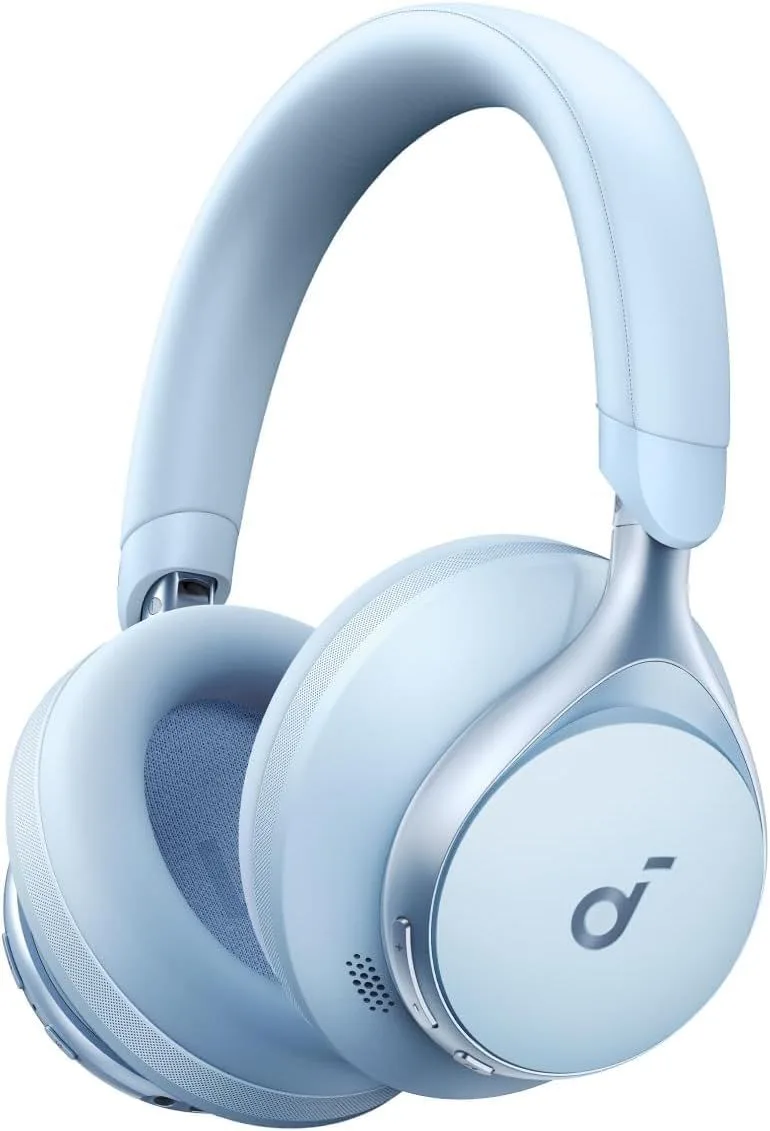
Anker Soundcore Space One
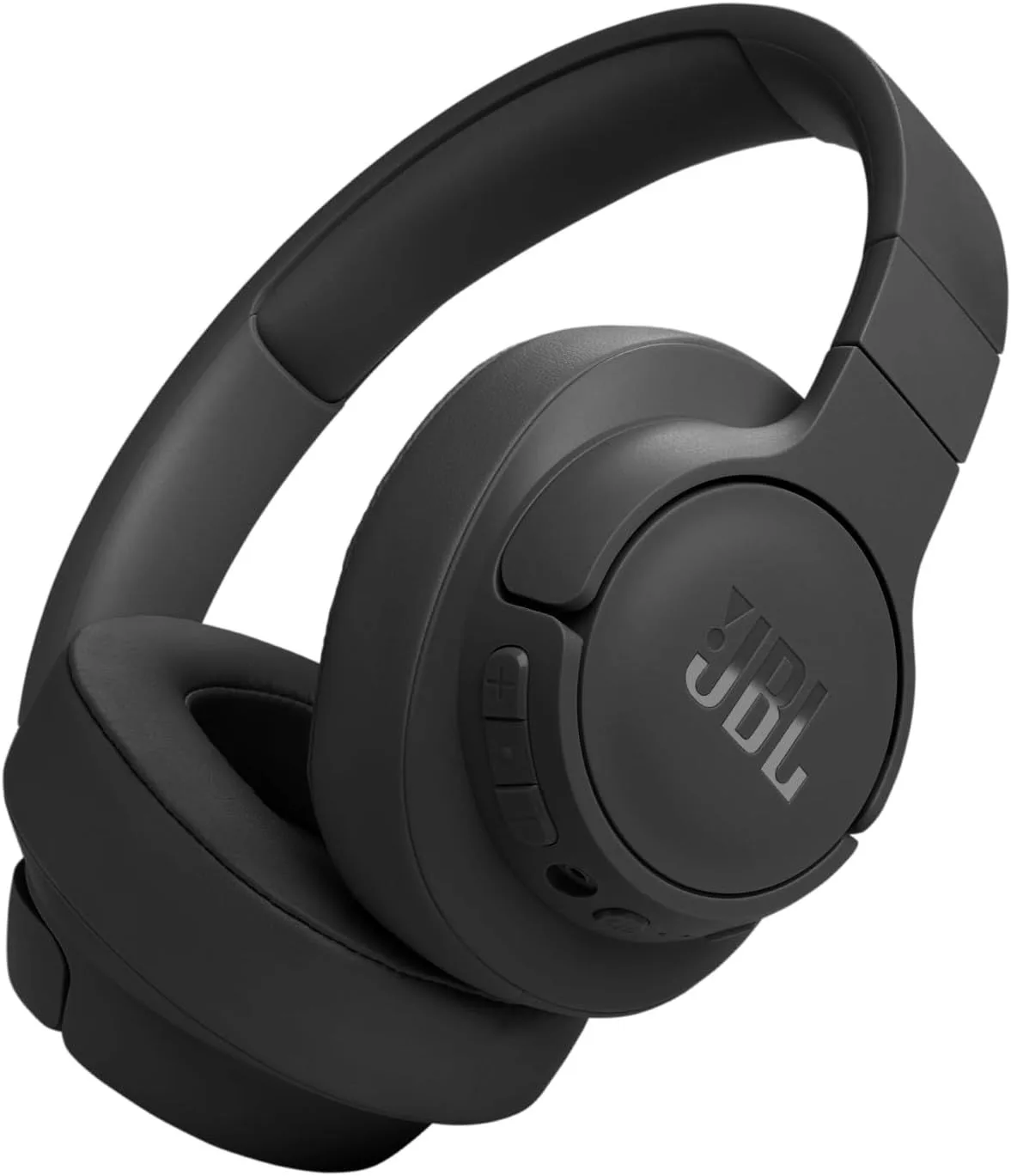
JBL Tune 770NC
The Space One wins on ANC depth, LDAC codec support, and a $50 lower price tag. The JBL Tune 770NC wins on battery life — 70 hours without ANC is a number most headphones at any price cannot match — along with lighter weight and a punchier sound profile. This is not a contest between a clear winner and a clear loser. It is a matchup between two headphones that each dominate different aspects of the affordable ANC price range, separated by $50 and aimed at different daily routines.
The price gap frames the entire comparison. At roughly $100, the Anker Soundcore Space One is the only ANC headphone under that threshold shipping with LDAC — a codec that pushes wireless audio to 990kbps on Android, nearly four times what AAC delivers. That single spec puts it in a different technical class than every other sub-$100 competitor. At roughly $150, the JBL Tune 770NC counters with 70-hour battery life (ANC off) and a V-shaped sound signature that JBL has spent decades perfecting. The question is not which headphone is better. It is which $50 increment buys you the features you will actually use every day.
We analyzed 7 expert reviews, 18,000+ combined Amazon ratings, and tracked real-world performance differences across commuting, desk work, calls, and travel use cases. The detailed individual reviews — Anker Soundcore Space One and JBL Tune 770NC — cover each product in depth. This comparison strips out everything except the head-to-head: where each wins, where each loses, and what the $50 gap buys or saves you. For more options at this price level, see our Anker Q30 review at $60 or the Sony CH720N at similar pricing.
At a Glance
| Feature | Anker Soundcore Space One Wireless Over-Ear Noise Cancelling Headphones | JBL Tune 770NC Adaptive Noise Cancelling Wireless Over-Ear Headphones |
|---|---|---|
| Price Range | $50–$100 | $100–$250 |
| Driver Size | 40mm | 40mm |
| Battery Life | 40 hrs ANC / 55 hrs off | 44 hrs ANC / 70 hrs off |
| Weight | ~253g | 222g |
| Bluetooth Codecs | LDAC, AAC, SBC | AAC, SBC |
| ANC Type | 98% reduction claim, 6 mics | Adaptive ANC, 2 mics |
| Water Resistance | None | None |
| Bluetooth | 5.3 | 5.3 |
| Check Price | Check Price |
Noise Cancellation: Six Mics vs Two, and the Gap Is Audible
The Space One deploys 6 microphones in a hybrid feedforward-feedback configuration — the same architecture used in headphones at three to four times the price. Anker claims 98% ambient noise reduction, and while that marketing number should be taken with a grain of salt, real-world testing confirms the Anker Soundcore Space One punches hard on ANC. Low-frequency drone on airplanes and trains drops to a faint murmur. Mid-frequency office noise — keyboards, conversations across the room, the constant hum of HVAC — gets reduced to near silence. The depth of cancellation at this price point is the Anker Soundcore Space One's single strongest selling point.
The JBL Tune 770NC uses 2 microphones with Adaptive ANC that adjusts intensity based on your environment automatically. No modes to select, no app to configure — the algorithm reads ambient noise levels and responds in real time. The convenience is genuine. The depth of cancellation is not in the same class. In a quiet home office, both headphones perform similarly because there is less noise to cancel. On a city bus or a crowded train, the Anker Soundcore Space One's 6-mic array silences the cabin. The JBL Tune 770NC's 2-mic system reduces it. The difference is not subtle during commuting — it is the gap between "I can't hear the engine" and "I can hear the engine less."
One downside of the Anker Soundcore Space One's aggressive ANC deserves mention. Multiple reviewers note that activating noise cancellation alters the sound signature — bass gets slightly boosted and midrange clarity drops a notch. This is a common side effect of deep ANC processing at budget price points, where the DSP cannot fully compensate for the phase interactions between the cancellation signal and the music. The JBL Tune 770NC's lighter ANC processing introduces fewer sonic artifacts, keeping the music closer to its intended tuning even with cancellation active. For listeners who keep ANC on permanently, this coloration matters. For listeners who toggle ANC based on environment, it is a minor adjustment.
Sound Quality: V-Shaped Fun vs Neutral Accuracy
JBL knows how to tune a headphone for instant enjoyment. The JBL Tune 770NC ships with a V-shaped frequency response — boosted bass, recessed mids, and lifted treble — that makes pop, hip-hop, electronic music, and anything with a beat sound immediately exciting. Pick up the Tune 770NC, press play on a Dua Lipa track, and the bass hits with authority that the price tag does not suggest. This is JBL's core competency: making music feel alive at any budget. SoundGuys and multiple reviewers confirmed the bass-forward signature as both the headphone's greatest strength and its most polarizing quality.
The Anker Soundcore Space One takes a more measured approach. Its 40mm drivers produce a flatter, more neutral response that treats bass, mids, and treble with more equal attention. Vocals sit forward in the mix rather than getting buried under bass weight. Podcasts and audiobooks sound clearer without the low-end emphasis competing with speech frequencies. Acoustic guitar, piano, and jazz recordings reveal detail that the JBL Tune 770NC's V-curve smooths over. For analytical listening — catching every instrument in a mix, following lyrics without strain — the Anker Soundcore Space One's tuning wins.
Neither tuning is objectively wrong. They serve different listening preferences. The JBL Tune 770NC rewards casual, energy-first listening where you want to feel the music in your chest. The Anker Soundcore Space One rewards attentive listening where you want to hear every layer the artist recorded. The JBL Tune 770NC's weakness is small ear cups — several Amazon reviewers with average-to-large ears report the cushions sitting on the ear rather than around it, creating pressure during extended sessions and slightly degrading the bass seal. The Anker Soundcore Space One's ear cups are deeper and wider, maintaining a better acoustic seal across more head shapes.
The LDAC Factor: Why $100 Buys What $150 Cannot
LDAC at $100 is the Anker Soundcore Space One's killer feature. No other ANC headphone under $100 ships with LDAC — a codec that transmits wireless audio at up to 990kbps, nearly four times AAC's 256kbps ceiling. For Android users streaming high-resolution tracks on Tidal, Amazon Music HD, or Apple Music, the difference between LDAC and AAC is audible on well-mastered recordings. High-frequency detail that AAC compresses away — cymbal shimmer, the air around a vocal, the decay of a piano note — survives the LDAC transmission intact.
The JBL Tune 770NC at $150 supports AAC and SBC only. No LDAC. No aptX. No aptX Adaptive. For a headphone that costs 50% more, the codec limitation is a hard pill to swallow for Android users who care about wireless audio quality. iPhone users will not notice the difference — Apple routes all Bluetooth audio through AAC regardless of headphone capability — but the Android market is where LDAC creates a measurable quality gap. The Anker Soundcore Space One delivers better wireless audio quality to Android phones than the JBL Tune 770NC despite costing $50 less. That is a value inversion that JBL's other strengths need to justify.
A practical note: LDAC at 990kbps consumes slightly more battery than AAC. At the highest quality setting, expect the Anker Soundcore Space One's 40-hour ANC battery to drop to approximately 35-37 hours. The difference is small enough that it should not deter LDAC use, but worth knowing if you are planning a long-haul flight and want every hour. The Soundcore app lets you toggle LDAC quality between three tiers — 330kbps (connection stability priority), 660kbps (balanced), and 990kbps (quality priority) — so you can match codec performance to your battery needs on the fly. Read our Bluetooth codecs guide for the full breakdown of what each bitrate setting means in practice.
Battery Life: 70 Hours Changes the Charging Conversation
The JBL Tune 770NC's 70-hour battery life with ANC off is not just a spec advantage — it redefines the relationship between headphone and charger. Seventy hours means two full work weeks of 5-hour daily use without plugging in. It means a round-trip international flight with days of hotel use before the battery indicator moves. It means forgetting where you put the charging cable because you have not needed it in two weeks. Even with ANC active, the 44-hour rating exceeds the Anker Soundcore Space One's 40-hour ANC rating by a meaningful margin.
The Anker Soundcore Space One at 40 hours with ANC and 55 hours without is not a weakness by any normal standard — most premium headphones at $300+ deliver 30-hour ANC battery. But against the JBL Tune 770NC's marathon numbers, 40 hours looks merely adequate. For daily commuters who charge weekly, both headphones eliminate battery anxiety entirely. For travelers and students who charge irregularly, the JBL Tune 770NC's extra runway provides a buffer that the Anker Soundcore Space One cannot match. The difference between 55 and 70 hours ANC-off is the difference between "probably fine for the trip" and "definitely fine for the trip."
Both headphones support quick charging over USB-C. The Anker Soundcore Space One provides roughly 4 hours of playback from a 5-minute charge — a ratio that rescues a dead headphone before a commute. The JBL Tune 770NC delivers approximately 3 hours from a 5-minute charge, a slightly lower ratio but still enough to cover a morning of listening from a dead-empty state. Neither headphone makes charging a daily concern. The JBL Tune 770NC makes it a biweekly concern at most.
Comfort and Fit: Weight vs Ear Cup Design
The JBL Tune 770NC weighs 222g — 31 grams lighter than the Anker Soundcore Space One's 253g. That gap is perceptible during extended sessions. By hour 3, the lighter headphone produces less top-of-head pressure. By hour 5, the difference compounds. For all-day wear — remote workers, students in long study sessions, travelers on overnight flights — the JBL Tune 770NC's weight advantage reduces fatigue accumulation in a way that specs alone cannot convey.
But weight is only half the comfort equation. The JBL Tune 770NC's most persistent criticism in Amazon reviews is small ear cups. Buyers with medium-to-large ears report the cushions pressing on the ear rather than enclosing it — an on-ear experience marketed as over-ear. This creates two problems: localized pressure that becomes painful after 90 minutes, and a compromised acoustic seal that lets bass leak and ambient noise enter. The Anker Soundcore Space One's larger ear cups accommodate more ear shapes without contact, maintaining both comfort and sound quality over longer sessions. For buyers with smaller ears, the JBL Tune 770NC's fit is fine. For average-to-large ears, try before committing.
Build quality separates the two as well. The JBL Tune 770NC feels plasticky in the hand — lightweight construction that achieves the 222g target at the cost of perceived durability. Flex the headband and it bends more than inspires confidence. The Anker Soundcore Space One uses denser materials that add weight but create a more solid feel during daily handling. Both headphones fold for portability — the Anker Soundcore Space One folds inward, the JBL Tune 770NC folds flat — and neither includes a hard case. For bag commuters, a third-party hard case is worth the $12 investment regardless of which headphone you choose.
Bluetooth and Microphone: The Spec Sheet Gap
The Anker Soundcore Space One ships with Bluetooth 5.3 — the newest standard at this price tier. The JBL Tune 770NC uses Bluetooth 5.3 as well, matching the connection stability and low-latency benefits. Both support multipoint for simultaneous pairing with two devices. On connectivity alone, neither headphone holds an advantage over the other.
The microphone gap is where the spec sheet diverges. The Anker Soundcore Space One's 6-microphone array serves dual duty — ANC sampling and voice isolation during calls. The result is call clarity that outperforms every other headphone under $100 in noisy environments. Background traffic, wind, and crowd noise get suppressed while your voice remains clear to the listener on the other end. The JBL Tune 770NC's 2 microphones handle calls in quiet environments adequately but struggle to isolate your voice in outdoor or transit settings. For buyers who take phone calls during commutes, the Anker Soundcore Space One's mic array is a functional advantage that the JBL Tune 770NC cannot match through software.
Neither headphone carries an IP rating for water or sweat resistance. Gym use is not recommended for either. Rain caught without an umbrella will not immediately damage either product, but sustained moisture exposure — sweat from a run, steam from a hot shower — is a risk both manufacturers decline to warranty. If exercise is a primary use case, look at sport-focused models with IPX4 or higher.
App Ecosystem: Soundcore Depth vs JBL Simplicity
The Soundcore app gives the Anker Soundcore Space One a software advantage that punches above the $100 price. Full parametric EQ with per-frequency adjustment, custom ANC modes, transparency level control, LDAC bitrate selection, and a library of community-created EQ presets. For a headphone at this price, the app depth matches products costing two to three times more. The ability to fine-tune LDAC quality settings — balancing audio fidelity against connection stability — is a feature the JBL Tune 770NC physically cannot offer because it lacks the codec.
The JBL Headphones app provides basic EQ with presets, ANC level adjustment, and firmware updates. It is functional, clean, and fast — but shallow compared to Soundcore's offering. JBL does include a "Personi-Fi" hearing test feature that adjusts the sound profile to your hearing sensitivity, which is a thoughtful inclusion for a budget headphone. The practical impact varies by listener — those with noticeable hearing asymmetry between ears benefit most. For most buyers under 40, the adjustment is subtle. The app gap mirrors the product philosophy: Anker gives you more levers to pull. JBL gives you fewer levers but sets the defaults well.
Who the $50 Gap Actually Serves
The Space One at roughly $100 delivers more measurable technology per dollar than any other ANC headphone in its price range. LDAC, 6-mic ANC, Bluetooth 5.3, and a capable app — feature density that belongs on a $200 product. The Tune 770NC at roughly $150 delivers a battery life number that no competitor at any price matches among wireless noise-cancelling headphones, paired with JBL's signature bass-forward sound that makes casual listening enjoyable.
The $50 you save by choosing the Anker Soundcore Space One buys dinner. The $50 you spend on the JBL Tune 770NC buys 30 extra hours of battery life (ANC off), 4 extra hours with ANC, 31 fewer grams on your head, and JBL's tuning expertise. Whether that $50 is well spent depends entirely on how you weigh battery and weight against ANC depth and LDAC. For Android users who stream hi-res music and commute on noisy transit, the Anker Soundcore Space One is the obvious choice — LDAC alone justifies the purchase. For listeners who care about battery anxiety disappearing completely and want bass that shakes without distorting, the JBL Tune 770NC earns its premium.
The broader competitive context adds perspective. The Anker Soundcore Q30 at roughly $60 saves $40 over the Anker Soundcore Space One but sacrifices LDAC, uses Bluetooth 5.0, and delivers slightly weaker ANC. The Sony WH-CH720N at a similar price to the Space One offers the lightest weight in the ANC category at 192g but also lacks LDAC and delivers gentler noise cancellation. Neither alternative matches the Anker Soundcore Space One's feature density or the JBL Tune 770NC's battery endurance — they compete on different merits. The tier below this one focuses on even tighter budgets with different compromises.
Durability and Long-Term Ownership
Budget headphones carry budget durability expectations, and both products sit squarely in that reality. The Anker Soundcore Space One's folding hinge is the primary stress point — Amazon reviews from 8-month and 12-month owners report loosening at the pivot. The denser materials add durability compared to the Q30's documented hinge issues, but the mechanism is still plastic-on-plastic and will wear over time with daily folding. Keeping the headphones in a case when not worn extends the hinge lifespan measurably.
The JBL Tune 770NC's lighter construction is both a comfort advantage and a durability question mark. The plastic headband and hinges flex under moderate pressure in ways that do not inspire long-term confidence. Drop the JBL Tune 770NC onto a hard floor from desk height and the impact sounds concerning — though no widespread reports of breakage from single drops exist. Both headphones lack water resistance, so sweat and rain exposure remains an owner-managed risk. Ear cushion replacement after 12-18 months of daily use is expected for both — aftermarket pads for the Anker Soundcore Space One are already available, while the JBL Tune 770NC's aftermarket options are fewer but growing.
Amazon Rating Patterns: What 18,000 Reviews Reveal
The Anker Soundcore Space One's 4.4 stars across 13,800 reviews tells a consistent story. The most praised attribute: ANC performance for the price — the phrase "can't believe this is $100" appears in hundreds of reviews. The most common criticism: ANC affecting music quality, with a subset of reviewers noting the bass boost and midrange dip described earlier. Build quality complaints are present but not dominant, suggesting the durability concerns are real but affect a minority of units.
The JBL Tune 770NC's 4.5 stars across 4,500 reviews skews slightly higher, though the smaller sample size makes the rating less statistically stable. The most praised attribute: battery life, with "I charge it once a month" becoming a recurring theme. The most common criticism: ear cup size, with "too small for my ears" appearing across enough reviews to flag a genuine fit limitation. A secondary complaint cluster targets the plasticky feel — buyers expected more premium materials at the $150 price point and were disappointed by the lightweight construction.
Your Daily Routine Decides
Get the Anker Soundcore Space One If...
- You use an Android phone and want LDAC high-res wireless audio — the only sub-$100 ANC headphone with it
- Deep noise cancellation for commuting and travel is your daily priority — the 6-mic hybrid system outperforms everything at the price
- Price drives your decision and $100 is the ceiling — the JBL Tune 770NC costs 50% more for fewer core features
- You take phone calls in noisy environments — the 6-microphone array isolates voice far better than 2-mic systems
- You enjoy fine-tuning EQ and ANC settings through the Soundcore app's deep customization options
Get the JBL Tune 770NC If...
- Battery life is your top priority — 70 hours ANC-off and 44 hours with ANC are unmatched at any price in the over-ear category
- You want bass-forward sound that makes pop, hip-hop, and electronic music feel alive without EQ tweaking
- Weight matters for all-day wear — 222g reduces fatigue during 6+ hour sessions compared to 253g
- You charge headphones irregularly and want the longest possible runway between charges
- You primarily use an iPhone where LDAC provides no advantage and sound signature is the deciding factor
Affordable ANC Matchup Questions
Is the Anker Soundcore Space One better than the JBL Tune 770NC?
Neither wins across every category. The Space One leads on noise cancellation depth (98% reduction claim with 6 mics vs 2), LDAC codec support for high-res wireless audio on Android, and price — $50 less at roughly $100. The JBL Tune 770NC leads on battery life (44hr ANC / 70hr off vs 40hr / 55hr), lighter weight (222g vs 253g), and raw sound energy with its V-shaped tuning. Buy the Space One for ANC and codec value. Buy the JBL Tune 770NC for battery marathon sessions and bass-forward listening.
Does the JBL Tune 770NC support LDAC?
No. The JBL Tune 770NC supports AAC and SBC only — no LDAC, no aptX, no aptX Adaptive. For Android users streaming high-resolution audio from Tidal, Amazon Music, or Apple Music, this limits wireless quality to AAC compression. The Anker Soundcore Space One is the only headphone under $100 with LDAC, delivering up to 990kbps wireless audio versus AAC's 256kbps ceiling.
Which has better noise cancellation — Space One or JBL Tune 770NC?
The Space One has deeper measured ANC. Its 6-microphone hybrid system claims 98% ambient noise reduction, and real-world testing confirms strong attenuation of low-frequency drone on planes and trains. The Tune 770NC uses 2 microphones with Adaptive ANC that adjusts automatically based on environment — convenient but less aggressive. In quiet offices, both perform similarly. On public transit or airplanes, the Space One silences more ambient noise. The JBL's advantage is set-and-forget automatic adjustment without mode switching.
Why is the JBL Tune 770NC more expensive if it has fewer features?
Brand positioning and sound tuning account for the price gap. JBL prices the JBL Tune 770NC at roughly $150 based on its 70-hour battery life (ANC off), JBL's established audio reputation, and the Adaptive ANC convenience factor. The Space One undercuts by offering LDAC, deeper ANC, and Bluetooth 5.3 at $50 less — a value strategy Anker uses to gain market share. The JBL premium buys you lighter weight, longer battery, and the JBL sound signature that many buyers specifically want.
Anker Soundcore Space One vs JBL Tune 770NC — which should I buy?
Buy the Space One if you use an Android phone and want LDAC high-res audio, prioritize ANC depth for commuting or travel, or want to spend $50 less. Buy the JBL Tune 770NC if battery life is your top priority (70 hours without ANC is unmatched at the price), you prefer a bass-forward V-shaped sound, or you want a lighter headphone for all-day wear. Both fold for portability. Neither has an IP rating for sweat or rain protection.
Price Drop Alerts
We'll notify you when prices drop or either product gets updated.
No spam. Unsubscribe anytime.