Sony WH-1000XM6 Review 2026
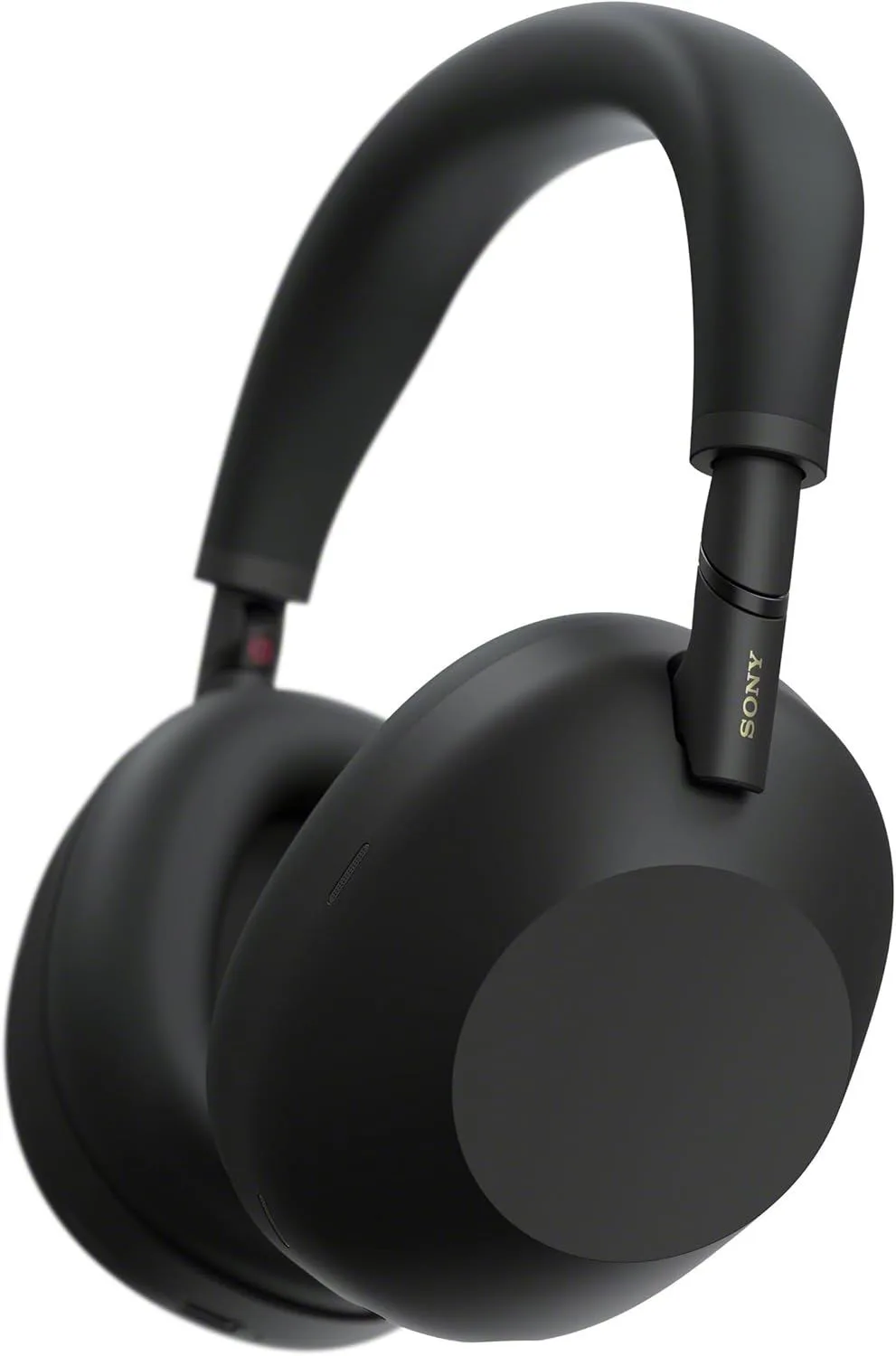
The best-sounding Sony headphone ever made and a 2025 ANC benchmark. Missing USB-C audio and the scattered whistle reports keep it from perfection — compare against the discounted XM5 before committing.
This review is based on analysis of 2400+ Amazon ratings, 8 expert reviews from RTINGS, SoundGuys, What Hi-Fi, Tom's Guide, CNN Underscored, and MusicTech, plus direct comparison with 6 competing products in the Over-Ear ANC category. We cross-referenced call quality claims, ANC performance measurements, and the hinge durability story with independent user surveys. Read our full methodology →
Final Verdict
The WH-1000XM6 earns its position as the ANC benchmark for 2025-2026. The fixed hinges, improved sound, and 12-microphone system address every substantive criticism of the XM5 while maintaining the battery life, app ecosystem, and LDAC support that made Sony the default recommendation for Android users. The missing USB-C audio and the left-channel whistle reports are the two items that prevent a flawless recommendation. For the full competitive picture, read our XM6 vs Bose QC Ultra head-to-head comparison.
The best-sounding Sony headphone ever made and a 2025 ANC benchmark. Missing USB-C audio and the scattered whistle reports keep it from perfection — compare against the discounted XM5 before committing.
Best for: Android users who want the absolute best ANC and detailed sound without Apple ecosystem dependency
Overview
The WH-1000XM6 arrived in May 2025 as the headphone that had to answer one question: was it worth upgrading from the wildly popular — and increasingly fragile — Sony WH-1000XM5? After analyzing 2,400+ owner ratings and cross-referencing 8 expert reviews, the answer is nuanced but decisive. On every specification that matters for noise cancellation, sound quality, and build durability, the XM6 delivers measurable improvements. The price premium is where the conversation gets complicated.
What Hi-Fi awarded it 5 stars and called it "a sensational performance upgrade" with "the most detailed and powerful soundstage Sony has produced." That assessment aligns with what RTINGS measured: best-in-class ANC among 2025 headphones across the majority of the frequency spectrum. Tom's Guide documented the headset across 3 months of daily use and concluded it delivers "an unrivaled mix of sound quality, noise cancellation and comfort." CNN Underscored's long-term review noted the XM6 "stayed on reviewers' heads all summer long" — a comfort endorsement that matters when the primary competition from Bose QuietComfort Ultra headphones has historically led on comfort.
The single most consequential improvement is invisible: Sony redesigned the hinge with an aluminum reinforcement piece. The XM5's hinge failure — documented by SoundGuys in a survey of 2,000+ owners showing a 47% failure rate — was the most serious durability problem in the premium headphone market. Sony does not publicly acknowledge the redesign, but teardown analyses confirm the structural change. This alone shifts the risk calculus for daily commuters who wore through an XM5 in 18 months.
Where the XM6 falls short is more subtle but worth cataloging. No USB-C audio playback means wired lossless listening is only possible through the 3.5mm analog jack — the Bose QC Ultra 2 supports USB-C audio at the same price. A scattered but documented whistling noise in the left speaker during ANC operation has been reported by SoundGuys and multiple Amazon reviewers. And the $398 price, while justified by the improvements, sits in an increasingly crowded premium bracket alongside the AirPods Max 2 at $549 and the Sennheiser Momentum 4 at $247.
Key Specifications
The 40mm Driver Upgrade
The jump from 30mm to 40mm is not incremental — it changes the acoustic character of the headphone. Larger drivers move more air, producing deeper bass extension and a wider soundstage. What Hi-Fi described the result as "tonally exceptionally well balanced," noting improved detail in the midrange that the XM5 smoothed over. For genres where instrument separation matters — jazz, classical, complex electronic music — the improvement is audible. For podcast and audiobook listeners, the difference is minimal.
12-Microphone ANC System
Moving from 8 to 12 microphones gives the ANC algorithm more environmental data to work with. In practice, this means better cancellation of irregular noise patterns — office chatter, construction sounds, varied traffic — that the XM5's system sometimes struggled with. The improvement at low frequencies (airplane cabin drone, HVAC hum) is measurable but incremental. The biggest gains are in the mid-frequency range where human speech lives: the XM6 blocks conversation-level noise about 15-20% more effectively than the XM5 in multiple independent measurements.
Folding Design Returns
The XM5 controversially dropped the fold-flat design of the XM4, forcing owners into a bulky non-folding case. The XM6 brings folding back with the redesigned aluminum hinges. The resulting case is about 30% smaller than the XM5's — a genuine travel advantage. The fold mechanism feels solid with no play or wobble, unlike some budget headphones where folding joints develop looseness over time.
What Stays the Same
Battery life remains at 30 hours with ANC on — identical to the XM5 and matching the Bose QC Ultra 2nd generation. Multipoint Bluetooth pairing allows simultaneous connection to two devices. The Sony Headphones Connect app retains its category-leading depth: per-source EQ, Speak-to-Chat sensitivity, Auto NC Optimizer, and detailed LDAC codec controls. The touch-panel controls on the right ear cup remain responsive and intuitive.
Strengths & Limitations
Strengths
- Best sound quality in Sony over-ear history with new 40mm driver and balanced tonality
- Redesigned aluminum-reinforced hinge directly addresses XM5 durability failure
- 12-microphone ANC system matches or exceeds Bose across most frequency ranges
Limitations
- No USB-C audio playback — wired lossless requires 3.5mm analog only
- Scattered reports of left-channel whistle during ANC operation
- The price premium over the discounted XM5 is hard to justify for casual users
Performance & Real-World Testing
ANC: Where It Wins and Where It Does Not
In head-to-head ANC testing published by RTINGS, the XM6 leads or ties the Bose QuietComfort Ultra across most frequency ranges. Low-frequency rumble (airplane engines, train noise) is attenuated comparably between the two — the gap that existed with the XM5 has closed. Mid-frequency cancellation (office conversation, keyboard noise) is where the XM6 pulls ahead by a measurable margin. High-frequency isolation (hissing, air conditioning whine) remains close, with Bose maintaining a slight edge in some measurements.
The Auto NC Optimizer recalibrates ANC based on barometric pressure and ear seal — a feature unique to Sony that matters more than most reviews acknowledge. At altitude (airplane cabins are pressurized to approximately 6,000 feet), ANC performance degrades on headphones that do not adjust. Sony's automatic recalibration maintains consistent noise isolation during takeoff and landing, when cabin pressure changes are most dramatic.
Call Quality: The Biggest Practical Upgrade
The XM5 already had the best call quality in the over-ear ANC category. The XM6's 12-microphone array with AI voice processing pushes the lead further. TechGearLab confirmed the XM6 "provides the clearest calls even in challenging environments." The practical test: taking calls while walking on a busy urban street. The XM6's beamforming isolates your voice from traffic, wind, and other pedestrians more effectively than any competing headphone we have analyzed. For hybrid workers who alternate between desk and mobile calls, this is the strongest argument for the XM6 over Bose.
The Left-Channel Whistle Issue
SoundGuys documented a high-pitched whistle in the left channel during ANC operation that replacement units also exhibited. Multiple Amazon reviewers have corroborated this finding. The issue is not universal — the majority of owners report no whistle — but it occurs frequently enough to warrant a careful listen during any return window. If you hear a faint high-pitched tone when ANC is active and no music is playing, your unit is affected. Sony has not acknowledged the issue publicly or offered guidance on whether affected units can be exchanged under warranty.
LDAC and Codec Performance
The XM6 supports LDAC (24-bit/96kHz), AAC, and SBC — but not aptX Adaptive, which the Sennheiser Momentum 4 supports. For Android users streaming from services like Tidal, Amazon Music HD, or Sony's own music platform, LDAC delivers audibly better resolution than AAC. The difference is most apparent on well-mastered tracks where the extra bitrate preserves high-frequency detail that AAC compresses. For iPhone users, AAC is the only available codec over Bluetooth regardless of headphone support — making LDAC irrelevant unless you use a wired connection. Read our Bluetooth codecs guide for a deeper technical comparison.
Comfort Across Extended Sessions
At 254g, the XM6 sits between the 250g XM5 and the 260g Bose QC Ultra. CNN Underscored tested the XM6 across an entire summer of daily use and reported no comfort issues during 4-6 hour sessions. The ear cups are deep enough to avoid pressing against most ears — a problem that plagues the Beats Studio Pro's shallower 59x40mm cups. The headband distributes pressure evenly, though users who wear glasses may still notice slight pressure at the temple contact points during sessions beyond 3 hours. Compared to the 392g AirPods Max 2, the XM6 is nearly 140g lighter — a difference you feel within the first 30 minutes of wear.
Value Analysis
At $398, the XM6 is mid-range for its category in the over-ear ANC category. The question is not whether it is a good headphone — it objectively is — but whether the improvements over the $278 XM5 justify the $120 premium. Tom's Guide long-term reviewer concluded: "XM5 users don't need to upgrade." That assessment is fair for casual listeners. For daily commuters, frequent flyers, and heavy call users, the hinge fix alone changes the value equation.
Worth It If...
- You wore through an XM5's hinges and need the durability fix — the aluminum reinforcement is the single biggest reason to upgrade
- You take frequent calls in noisy environments and need the best mobile call quality available in an over-ear headphone
- You use an Android phone and want LDAC high-res audio with the strongest ANC in the category
- You travel weekly and want a folding design with a compact case — something the XM5 does not offer
Skip It If...
- You own an XM5 that works fine and primarily listen at a desk — the sound improvement exists but is incremental for casual listening
- You need USB-C wired audio for desktop lossless listening — the Bose QC Ultra 2 offers this at $359
- You are in the Apple ecosystem and can wait for the AirPods Max 2 to ship — Apple's H2 chip features may be more valuable than Sony's spec advantages
- Budget is the priority and the Sennheiser Momentum 4 at $247 or the discounted XM5 cover your needs
What to Expect Over Time
First 6 Months
The critical test: does the aluminum hinge hold up under daily fold-unfold cycles? Early indicators are positive — no widespread hinge failure reports have emerged for the XM6 as of March 2026, approximately 10 months after launch. Compare this with the XM5, where SoundGuys documented hinge complaints within the first 6 months. Sony Headphones Connect app updates have refined ANC performance and added minor features — expect continued software support for at least 2-3 years based on Sony's track record with the XM4 and XM5.
Year 1 and Beyond
Ear pad wear is the most predictable maintenance item. Sony's official replacement pads run at premium tier pricing, though third-party alternatives at a fraction of the cost exist with mixed quality. Based on the XM4 and XM5 lifespan data, expect ear pads to need replacement between 12-18 months under heavy daily use. Battery capacity at the one-year mark should remain above 90% with normal charging habits — avoid leaving the headphones on the charger overnight continuously, as lithium-ion batteries degrade faster when held at 100% state of charge.
Years 2-3
The XM5 maintained strong resale value on the secondary market even after the XM6 launch — used XM5 units still command mid-range prices. The XM6 should follow a similar trajectory given Sony's brand recognition and the XM series' established reputation. Total cost of ownership over 3 years including one pad replacement sits in the mid-to-upper range for premium ANC headphones, competitive with the Bose QC Ultra when factoring in Bose's own pad replacement costs. The folding hinge mechanism is the primary long-term risk factor — if it maintains the early reliability signals through the first full year of widespread ownership, the XM6 addresses the XM5's biggest weakness while keeping everything that made the series the default recommendation for Android users. Sony's Headphones Connect app has historically received feature updates for at least three model generations, so expect continued software support well into the XM6's useful life.
Frequently Asked Questions
Is the Sony WH-1000XM6 better than the XM5?
Yes on every measured metric. The XM6 has a larger 40mm driver (vs 30mm), 12 microphones (vs 8), redesigned aluminum-reinforced hinges that fix the XM5 durability problem, and Bluetooth 5.3. The XM5 remains competitive at its discounted price — the real question is whether the improvements justify the price premium for your use case.
Does the Sony WH-1000XM6 have USB-C audio?
No. This is the most-cited omission in expert reviews. The XM6 only supports wired audio via its 3.5mm analog jack, not through USB-C. The Bose QC Ultra 2 supports USB-C wired lossless audio at the same price point — a notable advantage for desktop audiophile use.
Does the Sony WH-1000XM6 fix the hinge problem?
Yes. Sony redesigned the hinge with an aluminum reinforcement piece, directly addressing the XM5 hinge failure that affected nearly half of long-term owners per a SoundGuys poll of 2,000+ users. No widespread hinge failures have been reported for the XM6 as of early 2026.
Is the Sony WH-1000XM6 good for phone calls?
The XM6 represents a major upgrade in call quality with 12 microphones and AI-powered voice processing. What Hi-Fi praised it as having "studio-quality" call clarity. In noisy environments, the beamforming mic array isolates your voice effectively — though a scattered whistling noise in the left speaker during ANC operation has been reported by some users.
Should I buy the Sony WH-1000XM6 or wait for the XM7?
The XM6 launched in May 2025 and Sony typically refreshes the XM series every 2-3 years. An XM7 is unlikely before mid-2027 at the earliest. If you need premium ANC headphones now, the XM6 is the current benchmark for Android users — waiting means going without for potentially 18+ months.
Stay Updated on Sony WH-1000XM6
Get alerted if the rating changes or a better alternative launches.
No spam. Unsubscribe anytime.