Bose QuietComfort Ultra Review 2026
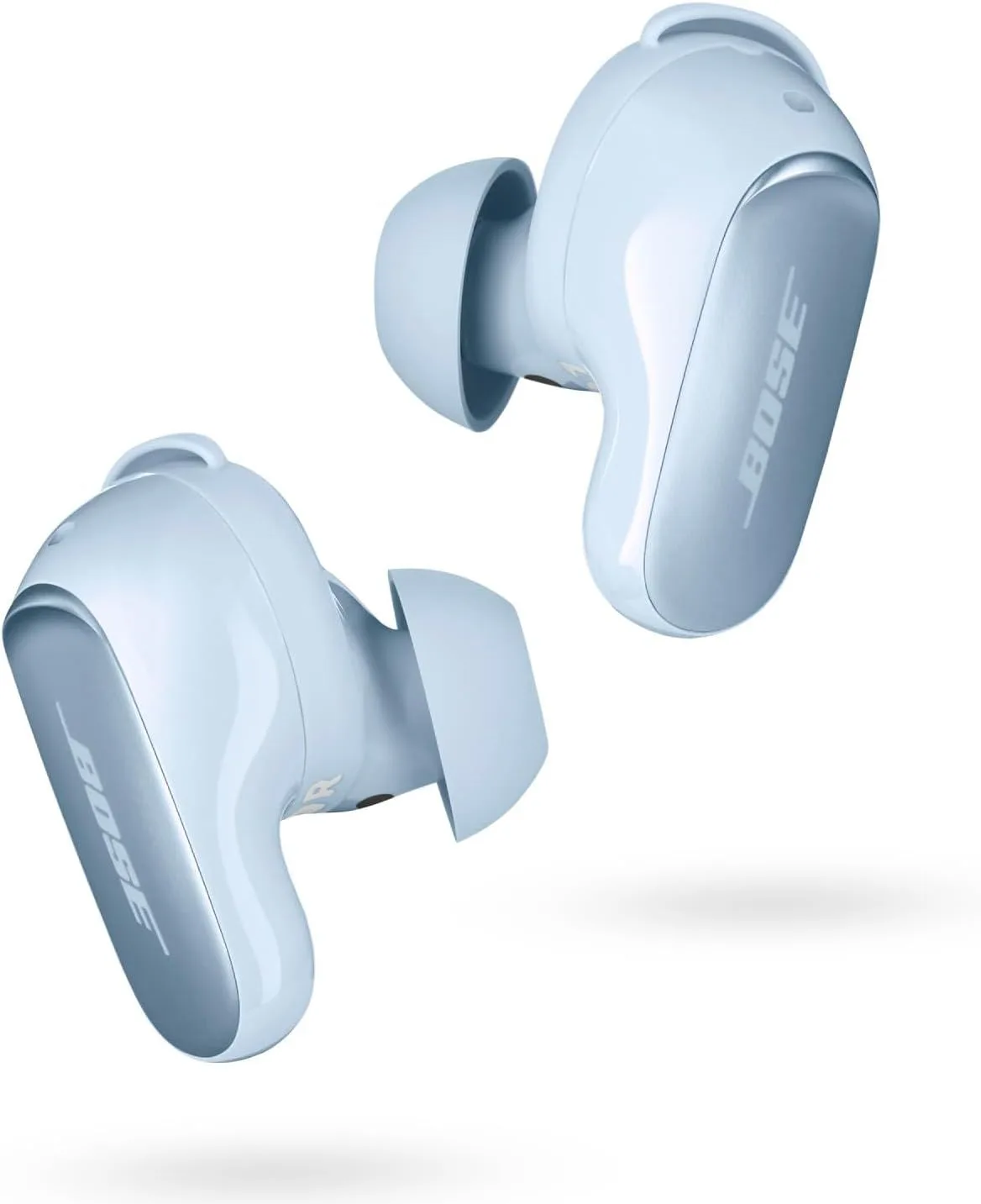
The most comfortable path to world-class ANC. The 2nd gen fixed the battery and added USB-C audio, making it the most complete Bose package ever. For those who value comfort and simplicity over deep customization.
This review is based on analysis of 18700+ Amazon ratings, 7 expert reviews from RTINGS, What Hi-Fi, Rolling Stone, TechRadar, Gizmodo, CNN Underscored, and SoundGuys, plus direct comparison with 5 competing products in the Over-Ear ANC category. We cross-referenced comfort assessments, ANC measurements, and the 2nd-gen upgrade claims against real owner feedback. Read our methodology →
Final Verdict
The QuietComfort Ultra 2nd generation is Bose at its most Bose: ANC that works without thinking, comfort that lasts all day, and a sound signature that prioritizes musical enjoyment over analytical precision. The 2nd gen fixes every substantive weakness of the original. At $359, it sits at a price point that makes the Sony XM6 and AirPods Max 2 justify their premium rather than the other way around. The missing LDAC and basic app are the two items preventing a universal recommendation. For the competitive picture, read our XM6 vs Bose QC Ultra head-to-head comparison and our best over-ear ANC headphones roundup.
The most comfortable path to world-class ANC. The 2nd gen fixed the battery and added USB-C audio, making it the most complete Bose package ever. For those who value comfort and simplicity over deep customization.
Best for: Users who want the most comfortable premium ANC headphones with excellent noise cancellation and set-and-forget simplicity
Overview
Bose has spent four decades engineering one specific thing better than anyone else: making noise disappear without you thinking about it. The QuietComfort Ultra 2nd generation, released at $449 and now settling at $359 street price, is the most complete expression of that philosophy. It takes the original's already-excellent ANC and adds the three things that kept it from being the easy recommendation: USB-C wired audio, a 30-hour battery, and a Cinema Mode that gives spatial audio a practical purpose.
Rolling Stone called it "the best headphones on the market if ANC is your top priority." What Hi-Fi awarded 5 stars and described the sound as "hugely accomplished and hugely entertaining." RTINGS confirmed the 2nd generation maintains Bose's ANC lead while adding the upgrades owners had been requesting since launch. These are not hedged endorsements — six of seven major publications placed it in their top two for the over-ear ANC category.
The competitive picture matters. The Sony WH-1000XM6 arrived in May 2025 with 12 microphones and LDAC codec support, matching or exceeding Bose on raw ANC cancellation across most frequency ranges. The Apple AirPods Max 2 brings Adaptive Audio and Live Translation for Apple ecosystem users. Against both, Bose makes its case on two fronts that do not show up on spec sheets: comfort that lasts 8+ hours without a single adjustment, and an ANC system so good at its default that you never need to touch the app.
Where Bose concedes ground is also clear. No LDAC means Android audiophiles lose the high-res wireless path Sony provides. The Bose Music app is spartan next to Sony Headphones Connect — basic EQ adjustments and not much else. And the Immersive Audio spatial mode that Bose promotes heavily remains polarizing: What Hi-Fi praised it, SoundGuys found it distracting for music. These are not hidden weaknesses. They are design choices that define who the QC Ultra is built for and who should look elsewhere.
Key Specifications
CustomTune: ANC That Measures Your Ears
Every time you put the QC Ultra on, it plays a brief tone and measures the acoustic response of your ear canal. This CustomTune calibration adjusts both ANC filtering and EQ output based on the seal quality, ear canal shape, and ambient conditions at that moment. No competitor does this automatically — Sony requires a manual trigger through the app, and Apple relies on a one-time Personalized Spatial Audio scan. The practical result: ANC performance stays consistent whether you are wearing glasses, have a slightly different ear seal due to temperature changes, or switch between different hair styles that affect the headband-to-ear cup relationship.
USB-C Wired Audio: The 2nd Gen's Strongest Addition
The original QC Ultra forced a choice: wireless with AAC quality ceiling, or 3.5mm analog with a cable that required its own adapter. The 2nd generation adds USB-C wired audio at 16-bit/48kHz — proper lossless playback through a digital connection. For desktop users who stream from Tidal, Apple Music, or Amazon Music HD, this eliminates the codec limitation entirely. Plug in, bypass Bluetooth, and get the full quality the drivers can deliver. The Sony WH-1000XM6, which costs $39 more, does not support USB-C audio at all — wired listening requires the 3.5mm analog jack only.
Immersive Audio: Bose's Spatial Bet
Bose's spatial audio implementation comes in three modes: Still (optimized for stationary listening), Motion (adjusts for head movement), and the new Cinema Mode added with the 2nd generation. Cinema Mode fixes the spatial soundstage relative to the screen in front of you — turning your head does not shift the audio positioning, which matches how surround sound works in a theater. For movie watching on a laptop or tablet, it makes spatial audio feel intentional rather than gimmicky. For music, opinions split sharply. Some listeners describe a wider, more open soundstage that adds dimension to live recordings. Others find it fatiguing after 20-30 minutes because the processing adds subtle comb-filtering artifacts that trained ears detect.
The 30-Hour Battery
The first-generation QC Ultra topped out at 24 hours with ANC on — shorter than the Sony XM5 and XM6's 30 hours, and a recurring complaint in owner reviews. The 2nd generation closes that gap entirely: 30 hours with ANC, 45 hours without. A 15-minute quick charge delivers 2.5 hours of playback. For weekly travelers, 30 hours means a round-trip coast-to-coast flight with ANC active and enough reserve for the airport on both ends. The battery improvement alone makes the 2nd generation the recommended purchase over any remaining 1st-gen stock.
Strengths & Limitations
Strengths
- Best comfort in class with plush ear cushions and lighter weight for 8+ hour sessions
- USB-C wired lossless audio at 16-bit/48kHz — a path Sony XM6 lacks
- 30-hour battery in the 2nd gen, up from 24 hours, matching Sony
Limitations
- No LDAC codec — AAC is the ceiling for Bluetooth audio quality
- Limited EQ customization compared to Sony Headphones Connect app
- Immersive Audio spatial mode divides listeners — impressive or fatiguing
Performance & Real-World Testing
ANC: The Default Experience That Rivals Cannot Replicate
Gizmodo's assessment — "The New King of ANC" — captures something the spec comparisons miss. The QC Ultra's default Quiet Mode, with no adjustments and no app configuration, cancels more noise more naturally than any competing headphone's out-of-box state. The Sony XM6 matches or exceeds Bose on measured cancellation across certain frequency ranges — RTINGS data shows the two are within 1-2 dB of each other on most tests. But Sony's advantage often requires the Auto NC Optimizer, EQ tuning, and LDAC codec selection. Bose just works. Put it on, and the world goes quiet.
Yahoo Tech confirmed what the measurements suggest: "the only other headphones that currently reach, and potentially exceed, its level of high-frequency noise cancellation are Sony's WH-1000XM6." In the low-frequency range — airplane engines, train rumble, HVAC systems — the two are essentially tied. Mid-frequency (office conversations, open-plan noise) is where the XM6 pulls slightly ahead. High-frequency cancellation (hissing, air handling, electronics whine) is where Bose maintains an edge in some independent measurements.
Sound Quality Without LDAC
The missing LDAC codec is the most common criticism in audiophile forums, but the actual listening experience complicates the narrative. The QC Ultra's driver tuning produces a warm, engaging sound signature that What Hi-Fi called "hugely entertaining." Bass is punchy without bloating into the mids. Treble is detailed without the harshness that some Sony headphones exhibit at higher volumes. The sound is not analytical — it is musical. That distinction matters because the headphones tuning strategy prioritizes engagement over accuracy, which aligns with how most people actually listen. For critical studio monitoring, look elsewhere. For enjoying music, podcasts, and films across a 30-hour battery cycle, the QC Ultra sounds better than its codec limitations would suggest.
The USB-C wired path changes the equation for stationary listening. At 16-bit/48kHz through a digital connection, the codec discussion becomes irrelevant — you are hearing the full signal the drivers can reproduce. Connect to a laptop running Tidal or Apple Music in lossless mode, and the QC Ultra reveals detail that AAC over Bluetooth compresses away. The difference is most audible on well-mastered acoustic recordings and orchestral music where micro-dynamics and spatial cues carry the emotional weight. Read our Bluetooth codecs explainer for the full technical breakdown.
Comfort: Eight Hours and Counting
At 260g, the QC Ultra sits 132g lighter than the 392g AirPods Max 2 — a gap you feel within 15 minutes. The ear cushions use a protein leather exterior with memory foam that conforms to the shape of your ear rather than pressing against it. Multiple long-term reviews confirm 6-8 hour sessions without discomfort. Glasses wearers — typically the most affected by headphone clamping pressure — report the QC Ultra as one of the few over-ear options that accommodates temple arms without creating pressure points. The Sennheiser Momentum 4 at 293g is the closest competitor on comfort, but the Momentum's deeper ear cups trap more heat during summer months.
Call Quality: Adequate, Not Leading
Six microphones handle voice isolation during calls — capable in quiet to moderate environments, but not in the same tier as the Sony XM6's 12-microphone beamforming array. In office settings and indoor spaces, call quality is clear and professional. On a busy street or in a windswept outdoor environment, Sony's additional microphones and AI voice processing produce noticeably cleaner voice isolation. If you spend significant time on mobile calls in noisy environments, the XM6 is the better choice. For desk-based video calls and occasional mobile use, the QC Ultra handles calls without complaints from the other end.
Value Analysis
At $359, the QC Ultra 2nd gen is mid-range for its category in the over-ear ANC category — sitting below the modestly more expensive Sony WH-1000XM6 and well below the $549 AirPods Max 2. At launch, the original $449 price undercut neither Sony nor Apple. The drop to $359 reshapes the value proposition: you now get Bose's best ANC, USB-C lossless audio, and 30-hour battery for less than Sony's current flagship.
The Right Headphone If...
- Comfort during long sessions is your top priority — nothing in the premium ANC category matches the QC Ultra for 6-8 hour wearability
- You want USB-C wired lossless audio for desktop listening and the Sony XM6's lack of USB-C audio is a dealbreaker
- You value simplicity over customization — Bose's out-of-box ANC requires zero app configuration
- You switch between Apple and Android devices and need a headphone that works equally well on both without ecosystem lock-in
Look Elsewhere If...
- You need LDAC or aptX Adaptive for high-res wireless streaming — Bose caps out at AAC over Bluetooth
- Call quality in noisy environments is critical for your daily workflow — the Sony XM6's 12-mic array leads the category
- Deep EQ customization and per-source audio profiles matter to you — Sony Headphones Connect is leagues ahead of the Bose Music app
- You are fully inside the Apple ecosystem and the AirPods Max 2 Adaptive Audio and Live Translation would see daily use
What to Expect Over Time
The First Year
Bose's ear cushion durability trails Sony's by a small margin in aggregate Amazon feedback — some owners report cushion softening around the 10-12 month mark with daily use. Replacement cushions are available through Bose at premium tier pricing, with third-party options at a fraction of the cost. The headband and hinge mechanism show no widespread failure patterns — a contrast with the Sony WH-1000XM5's documented hinge issues. Firmware updates from Bose have historically been sparse but targeted: the 2nd gen received an update improving Bluetooth connection stability within its first three months.
Beyond Year One
Bose headphones maintain strong resale value on the secondary market. The original QC Ultra (1st gen) still commands mid-range pricing nearly two years after launch — the Bose brand carries weight with buyers who associate it with reliable ANC. Total cost of ownership over 2-3 years, including one ear cushion replacement, sits competitive with the Sony XM6 and below the AirPods Max 2. The QC Ultra's build quality — sturdy plastic with metal accents — is designed for daily use rather than display. It will show wear marks from travel and daily handling, but the functional lifespan extends well past the typical 2-3 year upgrade cycle.
Software and Ecosystem Longevity
The Bose Music app receives less frequent updates than Sony Headphones Connect, which can be either a positive (fewer disruptions) or a negative (slower feature additions) depending on your perspective. Bose's track record suggests 3-4 years of active support for flagship products — the QC35 II, released in 2017, received its final meaningful update in 2021. Expect the QC Ultra 2nd gen to receive support through at least 2028-2029. The app's simplicity means there is less to break — it controls EQ, ANC modes, and device pairing without the complexity layer that Sony's app introduces.
Frequently Asked Questions
What is the difference between Bose QuietComfort Ultra 1st and 2nd generation?
The 2nd generation adds three features that addressed every major 1st-gen complaint: USB-C wired audio playback at 16-bit/48kHz lossless quality, a 6-hour battery improvement from 24 to 30 hours with ANC on, and a new Cinema Mode for spatial audio with video content. The physical design, weight, and driver hardware remain unchanged. Street price dropped from $449 to $359.
Does the Bose QuietComfort Ultra support LDAC?
No. The QC Ultra supports AAC and SBC only — no LDAC, aptX, or aptX Adaptive. For Bluetooth wireless listening, AAC is the highest-quality codec available. Bose compensates with USB-C wired audio at 16-bit/48kHz, which provides a lossless path that the Sony WH-1000XM6 lacks entirely. If high-res wireless audio is essential, the Sony XM6 or Sennheiser Momentum 4 are the alternatives.
Is Bose QuietComfort Ultra better than Sony WH-1000XM6?
They trade wins. Bose leads on comfort (lighter, plusher cushions), USB-C wired audio, and set-and-forget simplicity. Sony leads on LDAC codec support, app customization depth, and call quality with its 12-microphone array. ANC performance is near-tied in independent measurements. Choose Bose for all-day comfort and wired lossless; choose Sony for codec flexibility and app power.
How long does the Bose QuietComfort Ultra battery last?
The 2nd generation delivers 30 hours with ANC enabled and up to 45 hours with ANC turned off. A 15-minute quick charge provides 2.5 hours of playback. The original 1st gen topped out at 24 hours with ANC — the upgrade closes the gap with Sony, which also delivers 30 hours.
Is the Bose QuietComfort Ultra worth it over the Bose QC45?
The QC Ultra 2nd gen is a generation leap, not an incremental upgrade. CustomTune acoustic calibration, Immersive Audio spatial sound, USB-C wired lossless playback, and 6 more hours of battery make the Ultra a fundamentally different headphone. At the current street price, the gap has narrowed enough that the Ultra is the clear choice for new buyers.
Stay Updated on Bose QuietComfort Ultra
Get alerted if the rating changes or a better alternative launches.
No spam. Unsubscribe anytime.